
Understanding Gait Analysis in Podiatry
At Freedom Clinics Canary Wharf, podiatric gait analysis is a comprehensive biomechanical assessment that examines how your body moves during walking and running.
By analysing foot posture, limb alignment, and movement patterns, our podiatrists detect issues such as overpronation, plantar fasciitis risk, or flat feet — conditions that can impact performance, comfort, and long-term joint health.
The findings guide treatment pathways, including custom orthotics and rehabilitation exercises to restore optimal movement.
Medically reviewed by: Dr Priya Anand DPM. Last update: 18th May 2026
Book your appointment
What is Gait Analysis in Podiatry?
Gait analysis is the systematic study of human movement performed by our podiatry and biomechanics specialists. It evaluates how your feet, ankles, knees, hips, and spine coordinate during the gait cycle.
At Freedom Clinics, we combine Vicon-grade 3D motion capture, pressure mapping systems, and force plate analysis to capture:
- Foot posture patterns (overpronation, supination)
- Joint angles and limb alignment
- Weight distribution and force loading
- Stride length, cadence, and symmetry
This level of precision allows us to pinpoint biomechanical abnormalities that may cause heel pain, knee strain, hip instability, or lower back discomfort.
In the 1986 publication ‘Gait Analysis, An Introduction’ by M.W. Whittle, the methodology is described as “Gait analysis is a scientific method for evaluating normal and abnormal gait, aiding in clinical gait assessment and understanding gait disorders.”

Why Gait Analysis Matters for Foot & Lower Limb Health
A Freedom Clinics gait assessment delivers more than a basic foot check:
- Detects biomechanical issues early before they cause chronic pain or sports injury
- Improves movement efficiency for athletes and active individuals
- Supports custom orthotics prescriptions with accurate biomechanical data
- Addresses root causes of pain rather than only treating symptoms
Who Should Consider Gait Analysis?
Our podiatric gait analysis is suitable for:
- Athletes & Runners – To optimise stride mechanics, reduce injury risk, and enhance performance
- Children – To detect flat feet, in-toeing, or gait irregularities early for proactive treatment
- Patients with Chronic Pain – To uncover the biomechanical cause of heel pain, knee pain, hip issues, or lower back discomfort
At Freedom Clinics, we integrate clinical expertise, advanced gait technology, and tailored orthotic solutions to ensure every assessment results in better movement, comfort, and foot health.
How Gait Analysis Works at Freedom Clinics
At Freedom Clinics Canary Wharf, our podiatric gait analysis process combines expert clinical observation with advanced biomechanical technology to deliver a precise understanding of how you move.
This structured approach identifies the root causes of foot posture issues, injury risks, and performance inefficiencies — enabling tailored treatment such as custom orthotics and rehabilitation.
Initial Clinical Assessment
Every gait analysis begins with a comprehensive podiatry consultation, which includes:
- Medical history review — looking for patterns of injury, discomfort, or prior orthotic use
- Footwear analysis — examining shoe wear patterns for signs of overpronation or supination
- Baseline gait observation — evaluating walking and running style before advanced testing
This foundational assessment ensures that the next stage — advanced biomechanical analysis — is targeted and clinically relevant.
Advanced Gait Assessment Technologies
2D Motion Capture (Baseline Visual Analysis)
- High‑speed video captures a visual overview of your gait
- Ideal for before-and-after comparisons following treatment
- How 2D analysis informs orthotic fitting

Vicon‑Grade 3D Motion Capture (Gold Standard in Biomechanics)
- Multi‑camera infrared motion tracking captures joint angles, stride length, and limb symmetry
- Delivers quantitative movement data essential for athletes, chronic pain patients, and orthotics prescriptions
- Plantar Fasciitis solutions informed by gait data
In‑Shoe Pressure Sensors & Force Plate Testing
- Measures pressure distribution, load patterns, and stability during walking/running
- Detects Plantar Fasciitis, Achilles Tendinopathy, and metatarsalgia risk factors
- Data informs custom orthotics fabrication and targeted treatment plans
Video Feedback & Biofeedback Systems
- Provides real‑time playback so patients can visually understand gait mechanics
- Enhances rehabilitation compliance by showing corrective improvements over time
Phases of the Gait Cycle in Clinical Analysis
Our podiatrists analyse each phase of the gait cycle to detect imbalances:
- Heel Strike (Initial Contact) — Detects early signs of overpronation, supination, or alignment issues
- Midstance (Weight Transfer) — Stability analysis reveals arch collapse or balance problems
- Toe Off (Propulsion) — Examines push‑off efficiency to identify needs for orthotic support or targeted exercises
Understanding these phases ensures that Freedom Clinics’ gait analysis is diagnostically precise and directly informs treatment recommendations.
Conditions Detected Through Gait Analysis
At Freedom Clinics Canary Wharf, our podiatric gait analysis identifies the underlying causes of pain, imbalance, and movement inefficiency.
Using Vicon‑grade 3D motion capture, force plate analysis, and expert podiatric interpretation, we detect a wide range of foot, ankle, knee, and hip conditions. These findings guide precise treatments such as custom orthotics, rehabilitation, or sports performance optimisation.
Foot Posture Abnormalities Detected During Gait Analysis
Abnormal foot posture is one of the most common findings in gait analysis:
- Overpronation (excessive inward roll) — detected during the heel strike phase; linked to Plantar Fasciitis, shin splints, and knee pain
- Supination (excessive outward roll) — identified during midstance; associated with ankle instability and repetitive strain injuries
- Flat Feet (Pes Planus) — revealed through force plate pressure mapping; often linked to arch collapse and fatigue
- High Arches (Pes Cavus) — identified in 3D gait tracking; associated with forefoot overload, instability, and pain

Heel & Arch Disorders Identified via Gait Analysis
- Plantar Fasciitis — gait analysis reveals abnormal heel loading patterns that cause inflammation
- Heel Spurs — aggravated by repetitive heel impact detected during stance phase
- Arch Pain — caused by structural or functional imbalances visible in gait cycle assessment
Lower Limb Conditions Revealed by Gait Analysis
- Achilles Tendinopathy — excessive strain during the propulsion phase identified in gait cycle
- Shin Splints — linked to overpronation, supination, or poor shock absorption
- IT Band Syndrome — caused by hip‑knee misalignment evident in stride mechanics
- Patellofemoral Pain Syndrome (Runner’s Knee) — detected via 3D analysis of knee alignment and movement symmetry
Paediatric Gait Conditions Detected Early
Gait analysis in children allows early identification of developmental gait variations:
- In-Toeing (Pigeon Toes)
- Out-Toeing
- Flatfoot Development
- Asymmetrical Gait Patterns
At Freedom Clinics, early diagnosis ensures timely interventions to prevent long‑term musculoskeletal complications.
Treatment Pathways After Gait Analysis
At Freedom Clinics Canary Wharf, your podiatric gait analysis results are transformed into a precise treatment plan tailored to your unique biomechanics.
Whether your goal is to relieve pain, improve performance, or prevent future injuries, our approach ensures every recommendation is directly tied to your gait findings.
Custom Orthotics Based on Gait Analysis Findings
When gait analysis identifies overpronation, flat feet, or high arches, we often prescribe custom orthotics:
- Designed using Vicon 3D gait data and force plate pressure mapping
- Correct biomechanical misalignments that contribute to Plantar Fasciitis, knee pain, and Achilles Tendinopathy
- Improve foot stability, reduce strain, and enhance athletic performance
Targeted Rehabilitation & Strengthening Programs
For issues like Achilles Tendinopathy, IT Band Syndrome, or Runner’s Knee, gait analysis results inform:
- Physiotherapy‑led rehabilitation to restore natural gait mechanics
- Strengthening exercises for muscle groups identified as weak during analysis
- Flexibility protocols to improve stride efficiency and reduce the risk of reinjury
Sports Performance Optimisation
For competitive and recreational athletes, gait analysis provides a performance edge:
- Stride optimisation for speed and power efficiency
- Load balancing to prevent overuse injuries
- Performance-specific orthotics customised for running, cycling, or triathlon events
Preventive Care & Ongoing Gait Assessments
Maintaining correct biomechanics requires periodic review:
- Follow-up gait analysis every 6–12 months to track changes
- Orthotics adjustments as biomechanics evolve
- Preventive strategies to correct emerging issues before they cause pain

Gait Analysis vs Other Assessments
At Freedom Clinics Canary Wharf, our podiatric gait analysis provides a level of precision and detail unmatched by standard assessments.
While traditional 2D observation or static foot scans offer basic insights, our use of Vicon‑grade 3D motion capture, in‑shoe pressure sensors, and force plate diagnostics delivers a comprehensive biomechanical profile to support accurate diagnosis and treatment.
Why Freedom Clinics’ Advanced Gait Analysis Is Superior
- Comprehensive Motion Data — Our 3D gait analysis captures joint angles, stride symmetry, and force distribution in real‑time.
- Dynamic Testing vs Static Scans — Unlike static scans, gait analysis evaluates movement under load, revealing problems that only appear in motion.
- Technology + Expert Interpretation — Podiatrists at Freedom Clinics analyse data from Vicon 3D systems, force plates, and pressure mapping to design effective treatment pathways, including custom orthotics.
Comparative Assessment Overview
2D Video Observation
- Technology: Standard digital video
- Best For: Quick visual overview of gait pattern
- Limitations: Does not provide joint angle tracking
Force Plate Testing
- Technology: Measures ground reaction forces and stability
- Best For: Assessing load balance and shock absorption
- Limitations: Lacks full gait cycle analysis
Vicon 3D Motion Capture (Freedom Clinics Standard)
- Technology: Infrared multi‑camera motion tracking system
- Best For: Precision biomechanics, orthotic prescriptions, complex injury diagnosis
- Limitations: Requires advanced equipment and specialist interpretation
Choosing the Right Assessment at Freedom Clinics
For most patients — particularly athletes, those with persistent pain, or anyone needing orthotics — the Vicon 3D gait analysis combined with pressure and force testing provides the most accurate biomechanical insight.
This comprehensive approach ensures:
- Accurate diagnosis of root biomechanical issues
- Precise orthotic prescription tailored to gait findings
- Optimised rehabilitation and performance plans for long‑term benefits

Case Studies & Real Results from Gait Analysis at Freedom Clinics
At Freedom Clinics Canary Wharf, our podiatric gait analysis delivers measurable results — from pain relief to improved sports performance.
By combining Vicon 3D motion capture, force plate testing, and expert podiatry interpretation, we achieve precise diagnoses and targeted treatments that produce lasting improvements in function, comfort, and mobility.
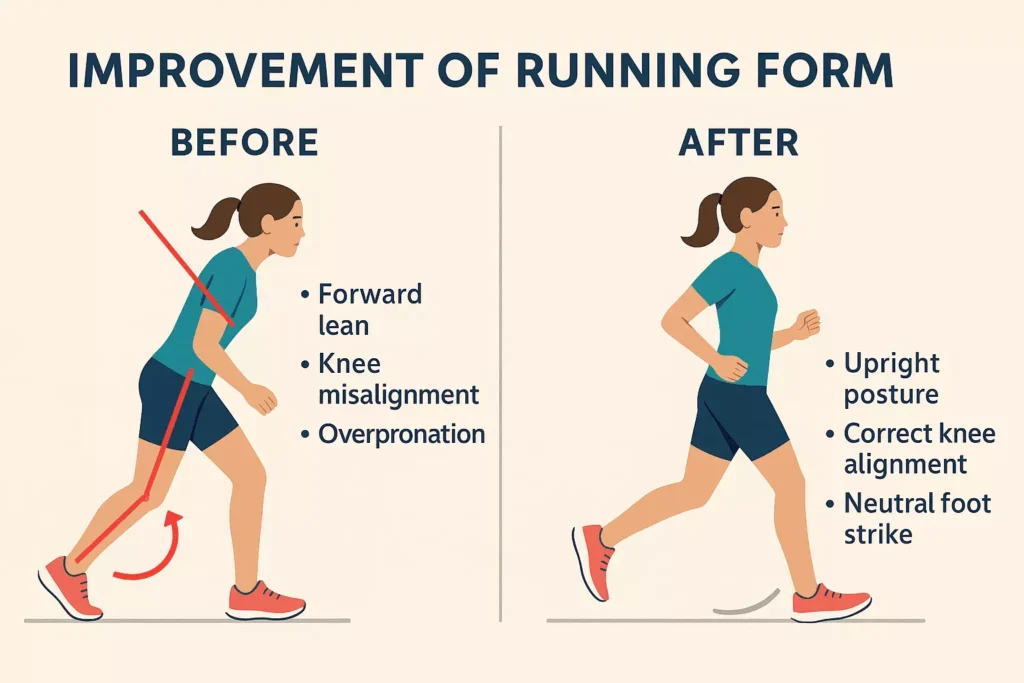
Case Study 1 – Runner with Chronic Knee Pain
Presentation: A 32‑year‑old recreational runner reported persistent knee pain despite trying different footwear.
Gait Analysis Findings: 3D motion capture revealed excessive overpronation during heel strike, placing undue stress on the knee joint.
Treatment: Custom orthotics and a targeted rehabilitation programme to correct lower limb alignment.
Outcome: Pain reduced by 80% within 6 weeks; returned to pain‑free running within 3 months.
Case Study 2 – Paediatric Flatfoot Detection
Presentation: A 9‑year‑old child experienced foot fatigue and reduced endurance during sports activities.
Gait Analysis Findings: Force plate testing identified collapsed medial arches consistent with severe flatfoot.
Treatment: Custom paediatric orthotics combined with strengthening exercises for arch support.
Outcome: Improved foot alignment, reduced fatigue, and enhanced activity levels within 4 months.
Case Study 3 – Professional Athlete Performance Enhancement
Presentation: Elite triathlete sought to improve running efficiency and reduce injury risk during competition season.
Gait Analysis Findings: Vicon 3D motion capture revealed stride length asymmetry and inefficient propulsion phase.
Treatment: Performance‑specific orthotic adjustment and gait retraining programme.
Outcome: Increased running economy, improved race times, and fewer overuse injuries.
FAQs About Gait Analysis at Freedom Clinics
Patients often want to know how gait analysis at Freedom Clinics Canary Wharf works, what it measures, and how it helps.
These answers are drawn from our expertise in podiatry and biomechanics, backed by our advanced gait analysis technology.
What does gait analysis measure?
At Freedom Clinics, our podiatric gait analysis measures:
- Foot posture — identifying overpronation, supination, and flat feet
- Joint angles and limb symmetry using Vicon 3D motion capture
- Force and pressure distribution through force plate testing
This biomechanical data informs targeted treatments like custom orthotics and rehabilitation.
How long does a gait analysis take?
A complete gait analysis at Freedom Clinics takes around 30–60 minutes:
- Initial podiatry assessment
- Advanced diagnostic testing (3D motion capture, force plate, pressure sensors)
- Treatment planning based on your gait profile
Is gait analysis worth it for non‑athletes?
Yes. While athletes benefit from performance optimisation, non‑athletes gain:
- Pain relief for conditions such as Plantar Fasciitis or knee pain
- Improved comfort for daily walking and standing
- Preventive benefits by addressing gait imbalances early
Can gait analysis prevent future injuries?
Absolutely. Freedom Clinics’ gait analysis identifies risk factors like overpronation, arch collapse, or stride asymmetry.
By addressing these issues with custom orthotics and rehabilitation programmes, we significantly reduce injury risk.
Do I need gait analysis before orthotics?
Yes. The most effective custom orthotics are prescribed based on precise gait analysis data.
At Freedom Clinics, we ensure orthotics align perfectly with your foot posture, movement patterns, and activity needs.
What equipment is used in gait analysis at Freedom Clinics?
We use an integrated diagnostic suite:
- Vicon 3D motion capture for skeletal and joint tracking
- In‑shoe pressure sensors for load mapping
- Force plate testing for balance and ground reaction forces
This combination ensures the most accurate gait diagnosis in Canary Wharf.
Book Your Gait Analysis Appointment at Freedom Clinics Canary Wharf
If you are experiencing foot pain, knee discomfort, or movement inefficiencies — or if you want to enhance your sports performance — now is the ideal time to book a podiatric gait analysis at Freedom Clinics Canary Wharf.
Our team uses Vicon‑grade 3D motion capture, force plate diagnostics, and advanced biomechanical assessment to identify the root cause of your movement issues.
Following your analysis, we create a tailored treatment plan that may include custom orthotics, rehabilitation programmes, and performance optimisation strategies.
Location & Contact Information for Freedom Clinics Canary Wharf
Freedom Clinics – Canada Place Shopping Mall, 34 North Colonnade, Canary Wharf, London E14 5HX
Telephone: 0203 197 9100
Email: canarywharf@freedomclinics.com
Opening Hours & Appointment Availability
Our Canary Wharf podiatry clinic offers extended hours to suit your schedule:
- Monday–Friday: 7 am–8 pm
- Saturday–Sunday: 10 am–4 pm
How to Prepare for Your Gait Analysis Appointment
To ensure the most accurate results during your gait analysis:
- Wear your usual footwear (running shoes, work shoes, or daily wear)
- Bring any current orthotics or insoles you are using
- Wear comfortable clothing suitable for walking or running assessment
Our Podiatrists & Chiropodists


References
- Whittle, M. (1986). Gait Analysis: An Introduction.

