
Neck Pain — Chiropractic Care at Freedom Clinics
Neck pain often reflects issues in the cervical spine (C1–C7): facet joint irritation, muscular overload, posture-related stress, or discogenic mechanisms. This hub explains how chiropractors assess and manage neck pain and routes you to detailed pages for common neck-pain subtypes.
Book your appointmentMedically reviewed by Tanesa Mohan (MChiro LRCC). Last update: 04 February 2026.
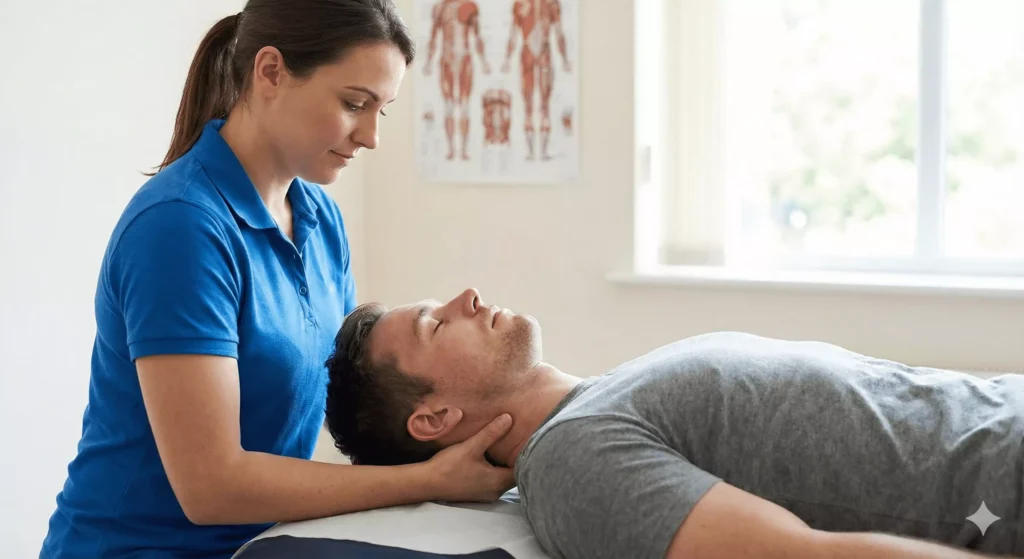
Neck-Pain Conditions
- Cervical Facet Syndrome — localised neck pain that worsens with extension/rotation; typically facet-joint mediated.
- Cervical Sprain or Strain — ligament/muscle injury from trauma or postural load; stiffness and guarding are common.
- Temporomandibular Joint (TMJ) Disorder — jaw–neck interplay with suboccipital involvement; clicking, jaw tension, and neck stiffness.
- Torticollis (Wry Neck) — acute painful tilt/rotation due to spasm; gentle mobilisation and soft-tissue care indicated.
How Chiropractors Approach Neck Pain
- History & screening: red flags, symptom behaviour, trauma, aggravators/relievers.
- Exam: posture & ROM, joint function, neuro/ortho tests to differentiate facet, disc, or radicular drivers.
- Plan: education, manual therapy (manipulation/mobilisation), soft-tissue care, graded exercise, ergonomics, and milestones.
- Imaging (if indicated): trauma, neuro deficit, suspected pathology, or poor progress.
Condition Overviews
Cervical Facet Syndrome
Pain from the facet joints with sharp, non-radiating discomfort; worse on extension/rotation. Care may include cervical HVLA, mobilisation, and postural retraining. → Cervical Facet Syndrome
Cervical Sprain or Strain
Overstretching/tearing of cervical ligaments or muscles (e.g., post-whiplash or desk-strain). Managed with soft-tissue therapy, neuromuscular re-education, and progressive rehab. → Cervical Sprain or Strain
TMJ Disorder (with cervical involvement)
Shared jaw–upper-cervical mechanics can produce jaw clicking, neck stiffness, and referred pain. Management blends manual TMJ techniques with cervical adjustments and posture. → Temporomandibular Joint (TMJ) Disorder
Torticollis (Wry Neck)
Acute protective spasm causing abnormal head tilt/rotation. Gentle mobilisation, trigger-point work, and functional rehab guide recovery. → Torticollis (Wry Neck)
Techniques commonly used for neck pain
- HVLA cervical adjustment
- Spinal mobilisation
- Flexion-distraction (selected disc/radicular cases)
- Traction / decompression
Rehab, ergonomics & adjuncts
- Rehab exercises (deep neck flexors, scapular stability, motor control)
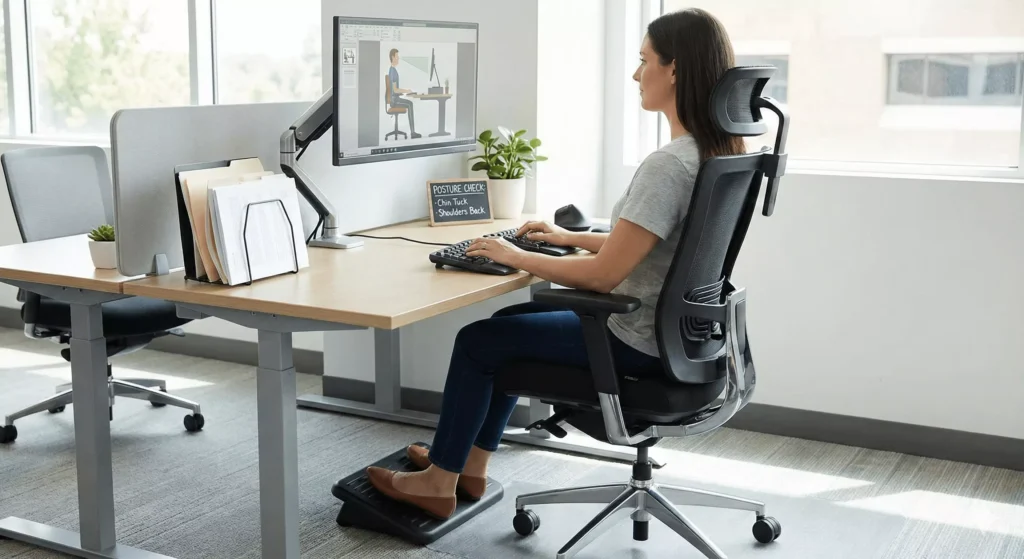
- Ergonomics & posture (desk setup, pillow, movement breaks)
- Treatment planning (progress checks, review milestones)
- Safety, consent, contraindications
Frequently Asked Questions
Are cervical adjustments safe?
Yes when clinically appropriate and consented after screening; lower-force options exist (mobilisation, traction). → Safety and risks, mobilisation.
Do I need an X-ray or MRI first?
Not routinely. Imaging is reserved for red flags or non-responsive/atypical cases. → Imaging
Jaw clicking with neck pain — is it TMJ or my neck?
They often coexist due to jaw–upper-cervical coupling; assessment decides next steps. → Temporomandibular Joint Disorder
Neck pain with arm tingling — what does that mean?
Could indicate cervical radiculopathy (disc/foraminal narrowing). Chiropractors test and select techniques like traction or flexion-distraction when appropriate. → Traction and Flexion distraction.
How many sessions will I need?
Varies by driver (facet vs. disc vs. myofascial) and response; plans are reviewed against pain/function milestones. → Treatment Plan
Next step
Start with a new patient chiropractic visit to get a diagnosis and personalised plan. → New patient visit


