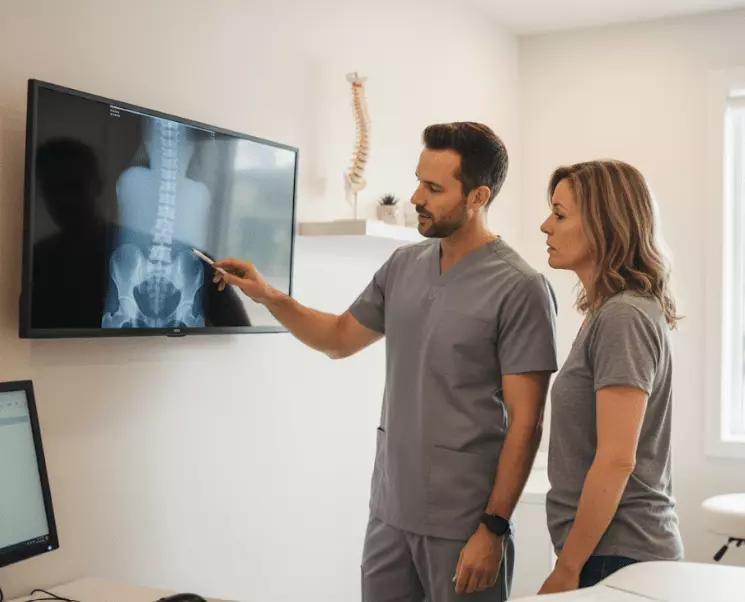
Back Pain — Chiropractic Care at Freedom Clinics
Back pain is a common musculoskeletal complaint spanning joint, disc, nerve, and soft-tissue causes. This hub explains how chiropractors assess back pain, outlines typical management options, and routes you to detailed pages for specific conditions such as thoracic rib dysfunction, scoliosis, and thoracic spine pain.
Book your appointmentMedically reviewed by Tanesa Mohan (MChiro LRCC). Last update: 04 February 2026.

Back-Pain Conditions (Quick Index)
| Condition | Description | Guide |
|---|---|---|
| Thoracic rib dysfunction | Rib–vertebra joint irritation that can cause sharp mid-back pain, painful breathing, or “stabbing” discomfort with rotation. | Understanding Thoracic Rib Dysfunction |
| Scoliosis | Three-dimensional spinal curvature; may present with asymmetric posture, muscular imbalance, and back pain during activity. | What Is Scoliosis? |
| Thoracic spine pain | Mid-back mechanical pain related to facet joints, paraspinal tissues, or postural loading. | What Is the Thoracic Spine? |
How Chiropractors Approach Back Pain (at a glance)
- History & screening: red-flag check, pain behavior, aggravators/relievers, functional impact.
- Examination: posture, range of motion, segmental joint function, neuro screen (if indicated).
- Management plan: education, manual therapy (manipulation/mobilisation), graded exercise, ergonomics, and load management with review milestones.
- When imaging is considered: trauma, neurological deficit, suspected pathology, or non-responsive cases.
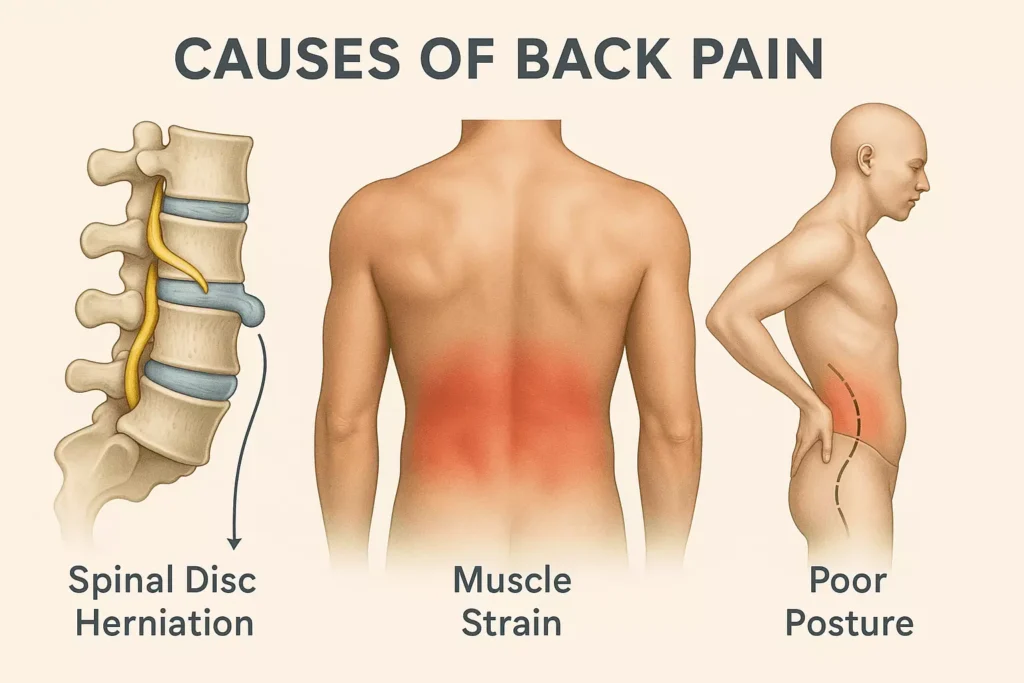
Thoracic Rib Dysfunction (overview)
What it is: Restricted or irritated costovertebral/costotransverse joints causing focal thoracic pain, often worse with deep breath or rotation.
Typical signs: Sharp, pinpoint pain; painful inhalation; tenderness over rib angle; protective spasm.
Chiropractic focus: Joint mobilisation/manipulation, breathing mechanics, thoracic mobility drills, and postural/ergonomic cues.
Deep dive: Thoracic rib dysfunction
Scoliosis (overview)
What it is: A 3D spinal deformity; in adults, pain often stems from asymmetrical loading and muscle imbalance rather than the curve magnitude alone.
Typical signs: Visible asymmetry (shoulder/rib prominence), endurance fatigue, unilateral tightness.
Chiropractic focus: Pain management, mobility/segmental care, curve-friendly strengthening, breathing and rib mobility, plus co-management when appropriate.
Deep dive: Scoliosis
Thoracic Spine Pain (overview)
What it is: Mechanical thoracic pain from facet joints, interspinous tissues, or paraspinals; commonly posture- or load-related.
Typical signs: Achy mid-back, stiffness with extension/rotation, desk- or lifting-related flare-ups.
Chiropractic focus: Thoracic manipulation/mobilisation, soft-tissue techniques, motor-control and extension/rotation tolerance work, plus workstation changes.
Deep dive: Thoracic spine pain
Techniques commonly used for back pain
- HVLA manipulation (spinal adjustments)
- Spinal mobilisation (low-velocity oscillatory techniques)
- Flexion-distraction (disc/facet decompressive movements)
- Traction / decompression (selected presentations)
FAQs
Is chiropractic safe for back pain?
Yes when appropriately screened. Your clinician rules out red flags and selects suitable techniques.
Will I get adjusted on the first visit?
Only if indicated after assessment and with consent.
Do I need an X-ray or MRI first?
Not routinely. Imaging is reserved for specific clinical triggers or poor progress.
How many sessions will I need?
It depends on the driver (e.g., rib joint vs. postural intolerance) and response to care; plans are reviewed against function and symptoms.
Next step
Prefer a structured, evidence-informed plan? Start with the new patient chiropractic visit to get a diagnosis and tailored pathway.