
Cervicogenic Headache (Neck-Related Headache)
What Is a Cervicogenic (Neck‑Related) Headache?
A cervicogenic headache is a secondary headache that originates from dysfunction in the cervical spine, most commonly within the upper cervical vertebrae (C1–C3), the facet joints, and the surrounding soft tissues and cervical nerves. Unlike migraines or tension‑type headaches, a cervicogenic headache does not start in the brain — the pain begins in the neck and is referred upward into the head.
Medically Reviewed by the Freedom Clinics Chiropractic Team
Shahin Babayi, GCC Registration | Expertise: Spinal Mechanics & Acute Care
Tanesa Mohan, GCC Registration | Expertise: Diagnostic Differentiation & MSK Chain
Clinical Review & Governance Notice
- Topical Domain: Cervicogenic & Neck-Origin Headache Protocols
- Evidence Alignment: Verified against International Headache Society (IHS) diagnostic criteria and current musculoskeletal safety data.
“This page has been clinically reviewed to ensure it accurately reflects our safety-first approach to diagnosing and managing neck-related head pain. We have verified the clinical pathways for isolating upper cervical dysfunction (C1–C3 facet joints, suboccipital muscles, and cervical nerves) and validated the triage markers used to differentiate secondary cervicogenic headaches from primary migraines or tension episodes.
Furthermore, our team has audited the diagnostic parameters of the Cervical Flexion-Rotation Test (CFRT) and confirmed that all treatment protocols—ranging from High-Velocity Low-Amplitude (HVLA) adjustments to integrated trigger point therapies—strictly meet evidence-based clinical safety standards.”
Book your appointment
Cervicogenic vs Tension Headaches
Usually, with cervicogenic headaches, it’s a result of you know some of these joints, your facet joints, not moving and becoming really irritated, and they can then cause pain in the head.
Most of the time with tension-type headaches, what I’ve noticed in the clinic is that it’s because of a lot of tension that gets stored in our muscles, stress, anxiety or just life, I call it in general.
These muscles then tend to reproduce pain into the neck, and that usually feels like someone squeezing your head; it’s a lot of pressure. And usually by, you know, a lot of people then massage the scalp or, you know, drink lots of water, take painkillers, assuming that would help their problem.
In reality, it’s just masking it because you’re not actually addressing the root cause of the problem, which is, you know, the muscles being irritated for whatever reason, it might be, you know, long working hours, sitting, bad posture, weak muscles. So if we can address those muscles by, you know, trigger point therapy, deep tissue, and the adjustments to get the joints moving, that’s usually what I’ve seen makes a massive difference in terms of people having less frequent headaches or the intensity is less.
So the adjustments and deep-tissue work really go a long way with cervicogenic or tension-type headaches.
"In the clinic, I often observe that patients treat headaches with temporary solutions like painkillers or superficial massage, which unfortunately only mask the underlying issue. True cervicogenic or neck-related headaches stem directly from mechanical restriction and irritation within the upper cervical spine facet joints and surrounding soft tissues. By combining precise chiropractic adjustments to restore facet joint motion with deep tissue trigger point therapy, we address the root mechanical drivers of this referred pain. This multi-modal approach effectively lowers both the frequency and intensity of these episodes instead of simply hiding the symptoms."
Shahin Babayi, Registered Chiropractor
People with cervicogenic headache often feel pain at the base of the skull, which can travel to the temple, forehead, or behind the eye on one side. The headache is typically triggered or worsened by neck movement, prolonged forward‑head posture, or sustained positions such as working at a desk, driving, or looking down at a phone.
This condition is especially common in people with poor posture, repetitive neck strain, or a history of neck injury, including whiplash. Dysfunction of the facet joints, irritation of cervical nerves, and tightness in the suboccipital and upper trapezius muscles all contribute to the referred pain patterns that define cervicogenic headache.
At Freedom Clinics in Canary Wharf, our chiropractors specialise in identifying and treating neck‑related headaches by restoring healthy cervical spine mechanics using chiropractic adjustments, soft tissue therapy, and postural rehabilitation.
How Cervicogenic Headaches Differ from Other Headaches
Cervicogenic headaches are often misdiagnosed as migraines or tension headaches. Understanding the difference ensures you receive the correct treatment.
| Feature | Cervicogenic Headache | Migraine | Tension‑Type Headache |
|---|---|---|---|
| Source of pain | Cervical spine, facet joints, nerves | Neurological & vascular | Muscle tension & stress |
| Main trigger | Neck movement, posture, stiffness | Light, food, hormones, stress | Fatigue, screen time |
| Side of head | Usually one‑sided | Often one‑sided | Both sides |
| Neck stiffness | Very common | Less common | Sometimes |
| Response to chiropractic & manual therapy | Highly effective | Limited | Often helpful |
If your headache changes when you move your neck, improves with manual therapy, or is associated with neck stiffness, it is more likely to be a cervicogenic (neck‑related) headache rather than a migraine or tension headache.
Who Is Most at Risk of Cervicogenic Headaches?
You are more likely to develop cervicogenic headaches if you:
- Work long hours at a desk or computer
- Use phones or tablets frequently (“tech‑neck” posture)
- Have had a whiplash injury or previous neck trauma
- Have forward head posture or rounded shoulders
- Experience cervical spine degeneration or facet joint arthritis
- Have tight neck and upper‑back muscles
These factors place excessive mechanical load on the cervical spine, leading to joint restriction, muscle imbalance, and nerve irritation. Over time, this dysfunction produces the referred head pain characteristic of cervicogenic headache.
Causes and Triggers of Cervicogenic Headaches
1. Postural Dysfunction and Cervical Biomechanical Stress
Sustained poor posture, particularly forward head posture, disrupts the alignment and mechanics of the cervical spine. This causes excessive strain on the C1–C3 vertebrae, compresses the facet joints, and overstretches or weakens key stabilising muscles like the deep neck flexors.
In response, overactivity develops in superficial postural muscles such as the levator scapulae, upper trapezius, and suboccipital muscles, leading to chronic tension and the formation of myofascial trigger points. These points refer pain to the base of the skull, temples, and forehead—hallmark signs of cervicogenic headache.
2. Facet Joint Dysfunction in the Upper Cervical Spine
The cervical facet joints, especially at the C1–C3 levels, are small synovial joints that guide neck motion. When these joints become restricted, irritated, or arthritic, they can produce pain signals that are transmitted via the trigeminocervical nucleus, resulting in referred head pain.
This neurological link explains why dysfunction in the neck often manifests as a headache in the frontotemporal or occipital regions. Chiropractic adjustments and mobilisation techniques are effective in restoring mobility to these segments and reducing cervicogenic headache frequency.
3. Intervertebral Disc Degeneration and Cervical Instability
Degenerative disc disease—common in C4–C5 and C5–C6—can result in loss of disc height, bulging, or herniation, which in turn alters the biomechanics of the cervical spine. This places adjacent joints and muscles under compensatory strain, contributing to neck stiffness and referred pain patterns seen in cervicogenic headache.
Disc-related symptoms may co-occur with radiculopathy, but even in the absence of nerve compression, altered mechanics can cause pain through muscular guarding and decreased joint mobility.
4. Whiplash and Neck Trauma
Whiplash injuries from motor vehicle accidents, falls, or contact sports result in rapid acceleration-deceleration forces that strain ligaments, disrupt facet joint alignment, and impair muscle coordination.
Many individuals with unresolved whiplash-associated disorder (WAD) develop persistent cervicogenic headaches due to ongoing dysfunction in the upper cervical spine and sensitisation of pain pathways. Symptoms may surface weeks or even months after the initial trauma.
At Freedom Clinics, we assess for post-traumatic segmental instability, monitor movement patterns, and apply rehabilitative strategies to restore cervical function.
5. Muscular Imbalance and Myofascial Trigger Points
Chronic overload or underuse of neck muscles can result in myofascial dysfunction, where tight bands within the muscle fibers form painful trigger points. These are especially common in the sternocleidomastoid, trapezius, scalenes, and suboccipitals.
These points often refer pain in a pattern identical to tension or migraine-type headaches—but the origin is clearly myogenic and linked to postural stress and spinal compensation. Chiropractors address these through soft tissue mobilisation, instrument-assisted techniques, and neuromuscular re-education.
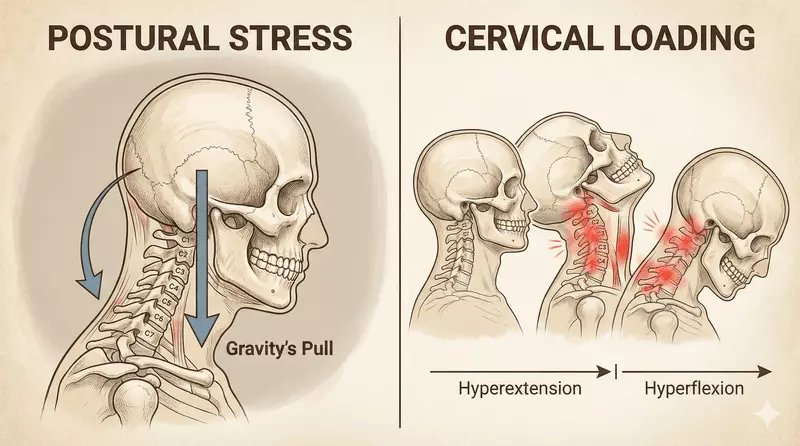
Summary: Biomechanical and Neurological Overlap
Cervicogenic headache is a result of dysfunction within the cervical spine’s interconnected systems:
- Joint dysfunction (esp. facet joints at C1–C3)
- Disc degeneration and segmental instability
- Whiplash trauma and neuromuscular disorganisation
- Muscle imbalance and referred pain patterns
- Postural overload from daily habits
Our chiropractors at Freedom Clinics Canary Wharf utilise a multifactorial assessment model to identify and address each of these contributors, using tailored manual therapy, rehabilitative exercises, and ergonomic coaching to resolve the root cause—not just the symptom.
Signs and Symptoms of Cervicogenic Headache
1. Unilateral Headache Originating in the Neck
A key symptom of cervicogenic headache is unilateral head pain—meaning pain on one side of the head—that begins in the neck or upper cervical spine and radiates toward the forehead, temple, around the eye, or top of the head.
According to the International Headache Society, cervicogenic headache is characterised by unilateral head pain that originates in cervical structures and spreads to the fronto-temporal and orbital regions, reflecting referred pain from upper cervical joints and soft tissues rather than a primary cranial disorder. The pain often follows a consistent path and does not shift sides, which distinguishes it from migraine.
This referred pain is caused by dysfunction in the C1–C3 vertebrae, which are neurologically linked to cranial pain pathways via the trigeminocervical nucleus.
2. Pain Worsens with Neck Movement or Posture
Unlike migraines, cervicogenic headaches are mechanically provoked. Pain typically increases with:
- Turning the head
- Looking up or down
- Holding the neck in one position for long periods, such as when reading, using a phone, or working at a desk
These movements stress the cervical facet joints, muscles, and ligaments, amplifying headache symptoms. Relief with manual therapy or cervical adjustments further confirms a mechanical source.
3. Limited Cervical Range of Motion
Another hallmark symptom is restricted movement of the neck, especially during rotation, extension, or lateral flexion. This restriction typically occurs on the same side as the headache and suggests facet joint dysfunction, segmental stiffness, or muscle guarding in the upper cervical spine.
Clinically, chiropractors use the Cervical Flexion-Rotation Test (CFRT) to assess this mobility and diagnose cervicogenic headache.
4. Myofascial Trigger Points and Referred Pain Patterns
Tender, tight knots known as myofascial trigger points in muscles like the suboccipitals, sternocleidomastoid (SCM), and upper trapezius can reproduce headache symptoms when pressed. These points often refer pain to predictable zones:
- Behind the eye
- Across the forehead
- From the base of the skull toward the temple
These muscular contributors are commonly involved and can be effectively treated with soft tissue therapy, trigger point release, or dry needling.
5. Neck Stiffness and Muscle Tension
Many patients report a persistent sense of neck tightness, particularly in the posterior cervical muscles and shoulders. This stiffness may build gradually and act as a precursor to a full headache episode.
Muscle groups often involved include:
- Levator scapulae
- Upper trapezius
- Paraspinals
- Rhomboids
Prolonged postural strain, especially in sedentary occupations, contributes to these symptoms.
6. Absence of Classic Migraine Symptoms
Cervicogenic headaches do not typically present with:
- Aura
- Nausea
- Photophobia (light sensitivity)
- Phonophobia (sound sensitivity)
The absence of these signs, combined with neck-related triggers, helps distinguish cervicogenic headache from migraine or tension-type headache during clinical assessment.

Diagnosis and Assessment of Cervicogenic Headache
How Is a Cervicogenic Headache Diagnosed?
Cervicogenic headaches are diagnosed by identifying mechanical dysfunction in the cervical spine, particularly in the C1–C3 segments, that reproduce headache symptoms through joint irritation, nerve referral, or muscular tension. Since these headaches often mimic migraines or tension-type headaches, distinguishing them requires precise clinical testing and a detailed symptom profile.
At Freedom Clinics Canary Wharf, we follow a structured assessment protocol to confirm whether your headache is cervicogenic in origin.
1. Clinical History and Symptom Pattern Recognition
A comprehensive health history helps identify key markers:
- Unilateral headache beginning in the neck
- Triggers involving neck movement or poor posture
- History of neck injury, whiplash, or occupational strain
- Lack of migraine-like features (e.g., no aura, nausea, photophobia)
Understanding how the pain behaves in relation to neck mechanics is critical in guiding the next diagnostic steps.
2. Cervical Motion Testing for Segmental Dysfunction
Using active and passive range of motion testing, we assess:
- Cervical flexion, rotation, and extension
- End-range limitations, asymmetries, or discomfort
- Pain reproduced during movement
Particular attention is given to rotation deficits or joint restriction at C1–C2 and C0–C1, common sites of cervicogenic dysfunction.
3. Cervical Flexion-Rotation Test (CFRT)
The Cervical Flexion-Rotation Test (CFRT) is a key diagnostic tool. It isolates movement at the C1–C2 joint, which is often involved in cervicogenic headache.
- The neck is flexed fully, then rotated side to side
- A difference of more than 10° between sides, or pain reproduction, indicates a positive result
The CFRT is clinically validated to differentiate cervicogenic headache from migraine and tension-type headache.
A 2021 systematic review and meta-analysis conducted at Hebei Medical University confirmed that the Cervical Flexion-Rotation Test maintains high diagnostic accuracy, specifically identifying C1-C2 dysfunction with a pooled sensitivity of 83% and specificity of 91% across clinical trials. This research emphasises that the test’s ability to isolate the atlanto-axial joint makes it a superior physical examination tool for distinguishing neck-origin headaches from other primary headache disorders.
The CFRT provides our team with a reliable baseline for clinically addressing neck pain.
4. Manual Palpation and Pain Provocation
Chiropractors use hands-on palpation to examine:
- Facet joint tenderness along the cervical spine
- Myofascial trigger points in muscles like the suboccipitals, SCM, and trapezius
- Referred pain patterns that replicate headache symptoms
This process confirms the segmental pain generators in the cervical region and helps tailor manual therapy strategies.
5. Neurological Screening and Red Flag Exclusion
We also perform neurological evaluations to rule out:
- Sensory deficits, muscle weakness, or reflex changes
- Intracranial causes (e.g., space-occupying lesions, vascular issues)
- Systemic conditions (e.g., infection, inflammatory disorders)
If red flags are present, we promptly refer for MRI, CT scans, or neurology referral.
Excluding red flags helps us confirm that your headache is not a symptom of an underlying disc injury.
Our Cervicogenic Headache Assessment Protocol at Freedom Clinics
Your diagnostic process includes:
- Thorough health history and symptom mapping
- Cervical spine mobility and movement testing
- CFRT and orthopaedic evaluation
- Palpation and pain provocation techniques
- Postural and ergonomic analysis
This multifactorial approach enables our chiropractors to accurately determine whether your headache is cervicogenic, and develop a personalised treatment plan that targets its mechanical origin.

Chiropractic Treatment Options for Cervicogenic Headache
Evidence-Based Relief for Headaches Originating in the Neck
At Freedom Clinics Canary Wharf, we specialise in treating cervicogenic headaches by correcting dysfunction in the cervical spine, particularly the upper cervical segments (C1–C3). Our chiropractors focus on resolving the mechanical, muscular, and neurological drivers of pain through a comprehensive treatment plan tailored to your specific presentation.
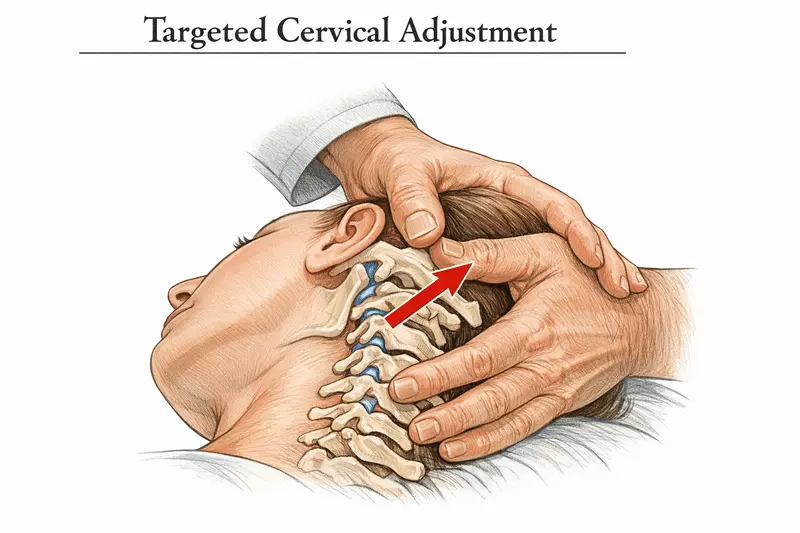
1. Cervical Spinal Manipulation to Restore Joint Function
Chiropractic spinal adjustments target restricted motion and irritation in the facet joints, especially at the C1–C3 levels. These joints are often responsible for referring pain through the trigeminocervical nucleus, which links cervical input to head pain.
- High-velocity, low-amplitude (HVLA) adjustments release joint restrictions
- Improve proprioception and reduce neurological sensitisation
- Often lead to immediate or short-term headache relief
Research supports spinal manipulation as a front-line therapy for cervicogenic headaches with mechanical origin.
Targeting the upper cervical segments remains a core component of our specialised chiropractic care.
2. Cervical Mobilisation for Controlled Range of Motion Recovery
Where manipulation is not appropriate, we use gentle joint mobilisation techniques:
- Low-force, rhythmic movement increases segmental range of motion
- Enhances synovial joint lubrication and mechanoreceptor activation
- Ideal for patients with post-whiplash instability, anxiety, or osteoporosis
This passive approach is often combined with soft tissue techniques for synergistic results.
3. Myofascial Release and Trigger Point Therapy
Tight and tender muscles in the suboccipitals, sternocleidomastoid (SCM), and upper trapezius frequently refer pain into the head and behind the eye. Our chiropractors perform:
- Manual trigger point therapy
- Instrument-assisted soft tissue mobilisation (IASTM)
- Active Release Techniques (ART)
This reduces muscle tension, restores circulation, and deactivates pain-referring trigger points.
4. Postural Rehabilitation and Ergonomic Correction
Many cervicogenic headaches stem from forward head posture, poor workstation setup, and repetitive static positioning. We perform:
- Postural analysis and biomechanical assessments
- Guidance on ergonomic alignment at workstations
- Prescription of corrective exercises to realign the cervical spine
Postural retraining improves spinal load distribution and reduces strain on pain-sensitive structures.
Stabilising the cervical spine often yields broader benefits for the management of back pain.
5. Neuromuscular Re-Education and Stability Training
To prevent recurrence and improve motor control, we focus on deep cervical flexor activation and scapular stabilisation through:
- Sensorimotor control drills
- Isometric neck flexor endurance training
- Dynamic coordination and proprioceptive tasks
These exercises improve neck function, reduce compensation patterns, and promote lasting relief.
6. Integrated, Individualised Chiropractic Management
Each treatment plan at Freedom Clinics may combine:
- Spinal manipulation or mobilisation
- Soft tissue and trigger point therapy
- Postural correction strategies
- Movement-based rehabilitation
- Lifestyle and ergonomic coaching
Our goal is to not only relieve the headache symptoms, but to address the underlying biomechanical causes, restoring full cervical function and preventing future flare-ups.
This comprehensive plan is frequently used to treat patients suffering from referred shoulder pain.
Supporting Research and Evidence for Cervicogenic Headache Treatment
Scientific Basis for Cervical Spine–Related Head Pain
The connection between the cervical spine—especially the upper cervical segments (C1–C3)—and headache symptoms is supported by decades of clinical research. The key neuroanatomical mechanism is the trigeminocervical nucleus, where sensory input from both cervical nerves and the trigeminal nerve converge. This neural overlap explains how dysfunction in the neck can generate pain perceived in the head, temple, or eye.
Clinical Evidence Supporting Chiropractic Interventions
Randomised controlled trials (RCTs) and systematic reviews consistently highlight the effectiveness of chiropractic care, including spinal manipulation, in managing cervicogenic headaches.
Key Findings:
- A 2016 meta-analysis in Spine Journal found that manual therapy, including cervical manipulation and mobilisation, significantly reduced headache frequency, duration, and intensity.
- The Journal of Manipulative and Physiological Therapeutics (JMPT) reported meaningful improvements in pain relief, cervical range of motion, and functional outcomes following upper cervical spinal adjustments.
- Longitudinal studies demonstrate that combining spinal manipulation with rehabilitative exercise outperforms passive care or single-modal treatment.
These outcomes validate the use of C1–C3 segment adjustments, myofascial therapy, and functional rehabilitation as effective components in cervicogenic headache treatment.
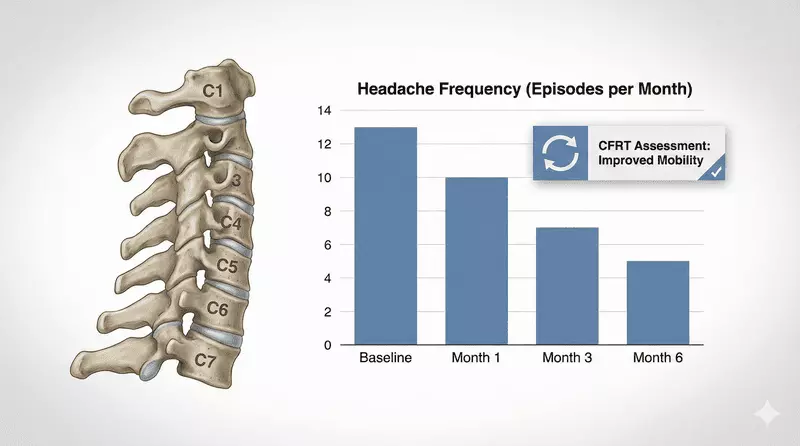
Superiority of Multimodal Treatment Approaches
The most effective strategy is a multimodal approach, integrating:
- Cervical spinal mobilisation or manipulation
- Trigger point therapy for myofascial contributors
- Postural re-education and ergonomic correction
- Neuromuscular stability training
Measured outcomes include:
- Reduced Neck Disability Index (NDI) scores
- Improved Cervical Flexion-Rotation Test (CFRT) results
- Decreased frequency and severity of headache episodes
- Enhanced long-term recovery with maintained exercise adherence
Recommendations from Authoritative Clinical Guidelines
Leading clinical organisations recommend manual therapy and chiropractic care for cervicogenic headache:
- The Canadian Chiropractic Guideline Initiative (CCGI) supports spinal manipulation, mobilisation, and motor control training.
- The American Physical Therapy Association (APTA) endorses joint mobilisation and neuromuscular retraining for neck-induced headache conditions.
- Consensus guidelines emphasise the need for red flag screening, segmental assessment, and movement-based rehabilitation.
At Freedom Clinics Canary Wharf, our protocols adhere to these best practices, delivering care that is both clinically validated and individually tailored.
Self-Care, Lifestyle, and Prevention Strategies for Cervicogenic Headache
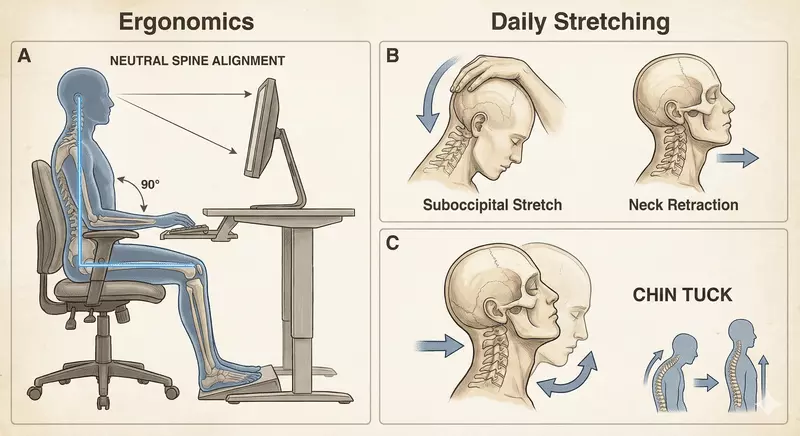
1. Correct Cervical Alignment Through Daily Postural Awareness
Maintaining optimal cervical spine alignment is essential for preventing facet joint overload and tension in the suboccipital muscles, which are major contributors to cervicogenic headache. Recommended practices include:
- Keeping the head aligned over the shoulders
- Avoiding prolonged forward head posture
- Taking frequent micro-breaks during computer or phone use
- Regularly monitoring sitting and standing posture
2. Reduce Muscle Tension with Targeted Stretching and Mobility Exercises
Stretching and mobility exercises relieve myofascial trigger points and promote flexibility in the upper cervical and thoracic muscles:
- Chin tucks to strengthen deep cervical flexors
- Upper trapezius and levator scapulae stretches
- Suboccipital release techniques
- Scapular retraction drills for improved shoulder alignment
3. Ergonomic Optimisation at Work and Home
Proper ergonomics reduce strain on the cervical spine and prevent mechanical headache triggers:
- Adjust computer monitors to eye level
- Use lumbar support to maintain natural spinal curvature
- Position devices to reduce forward neck flexion
- Incorporate frequent movement breaks to avoid static posture overload
4. Lifestyle Practices to Support Cervical Health
Daily lifestyle habits directly influence cervical spine function and headache frequency:
- Maintain hydration to support intervertebral disc health
- Engage in low-impact exercise to strengthen postural muscles
- Use stress reduction techniques such as mindfulness or deep breathing
- Ensure proper sleep posture with an ergonomically suitable pillow
5. Preventive Maintenance and Self-Monitoring
Proactive self-care reduces recurrence and improves long-term outcomes:
- Keep a headache diary to identify triggers and symptom patterns
- Perform daily posture and mobility checks
- Schedule periodic chiropractic assessments to correct minor cervical dysfunction before it becomes problematic
Frequently Asked Questions About Cervicogenic Headache
1. Can chiropractors effectively treat cervicogenic headaches?
Yes. Chiropractors specialise in identifying cervical spine dysfunction, particularly in the C1–C3 segments, which can cause referred head pain. Treatments include:
- Cervical spinal manipulation
- Facet joint mobilisation
- Trigger point therapy targeting suboccipital muscles
- Postural correction and ergonomic guidance
Clinical studies demonstrate that these interventions reduce headache frequency, intensity, and associated neck stiffness.
Our evidence-based protocols also provide targeted relief for sciatica.
2. How many sessions are typically required for improvement?
The number of sessions depends on the severity, duration, and underlying cervical dysfunction. Many patients experience relief within 2–6 visits. A personalised plan may combine:
- Manual therapy
- Rehabilitation exercises
- Lifestyle and posture interventions

3. Are cervical spine adjustments safe?
Yes. When performed by a licensed chiropractor, cervical spinal adjustments are safe. Safety is ensured through:
- Comprehensive diagnostic evaluation, including range-of-motion testing and Cervical Flexion-Rotation Test (CFRT)
- Screening for red flags such as neurological symptoms or recent trauma
- Customised technique selection based on patient anatomy and condition
4. What lifestyle changes help prevent cervicogenic headaches?
Effective strategies include:
- Maintaining proper cervical posture
- Performing targeted stretching and strengthening exercises
- Applying ergonomic adjustments at workstations
- Practicing stress management techniques
- Ensuring adequate hydration and sleep quality
These measures reduce mechanical stress on the facet joints, cervical discs, and suboccipital muscles, preventing headache recurrence.
5. How is a cervicogenic headache diagnosed?
Diagnosis involves:
- Detailed clinical history (triggers, headache patterns, posture)
- Cervical range-of-motion testing
- Cervical Flexion-Rotation Test (CFRT)
- Palpation of facet joints and suboccipital trigger points
- Exclusion of migraine and tension-type headache features
6. Can exercises and posture correction help long-term?
Yes. Targeted exercise and postural retraining improve:
- Deep cervical flexor activation
- Scapular and cervical stabilisation
- Cervical mobility and neuromuscular control
These interventions complement chiropractic care and significantly reduce the risk of recurring cervicogenic headaches.

Our Chiropractors


References
- Headache Classification Committee of the International Headache Society. (2018). The International Classification of Headache Disorders (3rd ed.). Cephalalgia, 38(1), 1–211. https://journals.sagepub.com/doi/10.1177/0333102417738202
- Li, J., Feng, S., & Yan, Y. (2021). Diagnostic accuracy of the cervical flexion-rotation test for cervicogenic headache: A systematic review and meta-analysis. Journal of Pain Research, 14, https://doi.org/10.1016/j.math.2006.06.016

