
What Is Chronic Limb-Threatening Ischemia (CLTI)?
Definition & Terminology Evolution
Chronic Limb-Threatening Ischemia (CLTI)—previously referred to as Critical Limb Ischemia (CLI)—is the most advanced and dangerous stage of Peripheral Artery Disease (PAD). It occurs when the arteries supplying blood to the lower limbs become so narrowed or blocked that oxygenated blood can no longer reach the tissues, resulting in rest pain, non-healing foot ulcers, or gangrene.
The shift in terminology from CLI to CLTI reflects the medical community’s evolving understanding of this disease: CLTI emphasises the chronic, multifactorial nature of the condition and its potential to cause limb loss or death without urgent medical and podiatric intervention.
CLTI is not simply “poor circulation.” It’s a life- and limb-threatening vascular emergency often seen in patients with diabetes, peripheral neuropathy, and long-standing PAD.
Medically reviewed by: Dr Priya Anand DPM. Last update: 18th May 2026
Book your appointment
CLTI as the End-Stage of Peripheral Artery Disease (PAD)
CLTI is classified as the terminal phase of PAD, where long-term atherosclerosis—the buildup of fatty deposits in arterial walls—has severely obstructed blood flow to the feet and legs. As a result, the affected tissues suffer from ischemia, a state of oxygen deprivation, which can quickly lead to necrosis, ulceration, and infection.
Patients with early PAD may initially report intermittent claudication—pain when walking—but over time, and especially in those with uncontrolled diabetes or chronic vascular conditions, this can silently progress to CLTI.
How CLTI Differs from Claudication or Mild PAD
It’s critical to distinguish CLTI from early-stage PAD. While PAD symptoms may improve with rest, CLTI presents with persistent foot pain, often at night, and visible signs of tissue damage.
| Condition | Common Symptoms | Disease Stage |
|---|---|---|
| Peripheral Artery Disease | Leg cramps while walking (claudication) | Early / Moderate |
| Chronic Limb-Threatening Ischemia | Constant foot pain, ulcers, tissue breakdown | Advanced / Critical |
CLTI is a progressive vascular disorder, not a sudden onset event. This underscores the need for early detection—especially in patients with diabetes, peripheral neuropathy, or a history of vascular insufficiency.
The Role of Freedom Clinics in Early Detection
At Freedom Clinics in Canary Wharf, our podiatric specialists are trained to recognise early signs of vascular insufficiency, including those linked to CLTI. Through detailed foot assessments, vascular screenings, and referrals to vascular surgeons when necessary, we help patients avoid ulceration, infection, and ultimately, amputation.
Our clinic takes a proactive approach to identifying patients at risk for Chronic Limb-Threatening Ischemia, combining clinical expertise, diagnostic precision, and compassionate care in the heart of London.
Risk Factors, Causes & Epidemiology of Chronic Limb-Threatening Ischemia (CLTI)
Chronic Limb-Threatening Ischemia (CLTI)—previously known as Critical Limb Ischemia (CLI)—is not an isolated condition. According to the American Heart Association, chronic limb‑threatening ischemia represents the most advanced and severe stage of peripheral artery disease. It is the final, most dangerous stage of Peripheral Artery Disease (PAD), a progressive disorder in which narrowed or blocked arteries restrict blood flow to the lower limbs. Understanding the risk factors and causes of CLTI is essential for early detection, prevention, and effective podiatric care.
What Causes CLTI? The Vascular Chain of Events
The underlying cause of CLTI is advanced PAD, which stems from atherosclerosis—a process in which fatty deposits (plaque) build up in arterial walls. Over time, this leads to critical ischemia, in which the feet and legs are deprived of oxygen and nutrients.
This vascular insufficiency causes tissue damage, ulceration, and if left untreated, can escalate to infection, gangrene, and ultimately, limb amputation.
PAD → CLTI → Ischemia → Ulcers → Gangrene → Amputation.

Primary Risk Factors That Accelerate PAD and CLTI
The following conditions are strongly associated with the development of Chronic Limb-Threatening Ischemia:
- Diabetes Mellitus
A major driver of vascular damage, diabetes accelerates both macrovascular (arteries) and microvascular (capillaries) complications. When combined with peripheral neuropathy, it dramatically increases the risk of diabetic foot ulcers and unperceived injury. - Atherosclerosis
The primary mechanism behind PAD, atherosclerosis leads to narrowed arteries, limiting blood flow and oxygen delivery. - Smoking
Smoking promotes inflammation and plaque buildup, hastening the progression of PAD and increasing the severity of ischemic complications. - Chronic Kidney Disease (CKD)
CKD contributes to arterial calcification, increasing the risk of ischemia and poor wound healing. - Hypertension & Hyperlipidemia
These conditions damage the vascular endothelium, reducing arterial flexibility and exacerbating atherosclerotic changes. - Peripheral Neuropathy
Nerve damage causes patients to miss warning signs such as pain or discomfort, allowing minor injuries to evolve into non-healing ulcers.
Who Is Most at Risk of Developing CLI?
CLTI disproportionately affects vulnerable populations:
- Adults over 60 – aging arteries and declining circulation increase PAD risk.
- Men – statistically, CLI is more prevalent in men.
- People with long-standing diabetes – especially those with poor glucose control.
- Ethnic minorities – including Afro-Caribbean and South Asian populations, due to higher rates of diabetes and hypertension.
- Low-income individuals – limited access to early screening, prevention, and treatment services.
Diabetic patients who smoke are up to 10 times more likely to develop CLI.
UK Epidemiology of CLI and Its Public Health Impact
In the United Kingdom:
- PAD affects over 20% of adults over 60.
- Of these, up to 12% will develop CLTI if left untreated.
- Annual CLI incidence is ~500 per million population.
- 1-year amputation rates range from 20–30% in diagnosed cases.
- 1-year mortality is 25%, rising to 60% at 5 years—a prognosis worse than many cancers.
Despite its high morbidity and mortality, CLI remains underdiagnosed and under-treated, especially in diabetic populations where neuropathy masks early warning signs.
Prevention Through Early Intervention at Freedom Clinics
At Freedom Clinics, located in Canary Wharf, London, we are on the frontline of CLI prevention and early diagnosis. Our podiatric approach includes:
- Peripheral Artery Disease screening using ABI and Doppler ultrasound
- Diabetic foot assessments to detect pre-ulcerative signs
- Patient education around foot care, circulation, and wound vigilance
- Referral pathways to vascular surgeons when ischemic signs are identified
- Custom offloading footwear and gait correction solutions to prevent ulcer recurrence
We serve at-risk populations and provide accessible vascular foot care in central London, helping reduce CLI-related complications through proactive podiatric management.
Recognising the Symptoms of Chronic Limb-Threatening Ischemia (CLTI)
According to the Global Vascular Guidelines, chronic limb‑threatening ischemia represents the most severe clinical stage of peripheral artery disease. Its symptoms often develop gradually, making early detection challenging. However, these subtle indicators are medically significant and must not be ignored. The sooner ischemic symptoms are recognised and treated, the higher the chance of avoiding ulceration, infection, and amputation.
At Freedom Clinics, our podiatrists in Canary Wharf, London, specialise in identifying early vascular warning signs—particularly in patients with diabetes, peripheral neuropathy, and a history of PAD.
Key Limb-Based Symptoms of CLTI
Rest Pain in the Feet or Toes
One of the earliest and most defining symptoms of CLTI is ischemic rest pain—a persistent, burning or throbbing pain that continues even while lying down, especially at night. This pain results from severely restricted blood flow to the tissues and is often worse when the limb is elevated.
Non-Healing Wounds or Ischemic Foot Ulcers
Small cuts, blisters, or pressure injuries—particularly on the toes or heels—that fail to heal within 2–3 weeks may be signs of arterial insufficiency. These are classified as ischemic ulcers, and they represent a serious red flag for CLTI, especially in diabetic patients with impaired healing.
Discolouration, Thin Skin, and Loss of Hair
CLTI can cause visible skin changes due to poor oxygen delivery:
- Blue or purple skin (cyanosis)
- Dry, shiny, or thin skin
- Reduced hair growth on legs and toes
- Thickened or brittle toenails
These are direct indicators of chronic ischemia affecting the lower limb’s microcirculation.

Coldness and Numbness
A foot that feels persistently cold, especially when compared to the other foot, may indicate arterial blockage. This may also be accompanied by numbness or tingling, often made worse in the presence of peripheral neuropathy.
Systemic Signs That Should Not Be Ignored
Altered Gait and Reduced Mobility
Many patients with CLI unconsciously adjust how they walk to reduce discomfort, leading to a shuffling gait, reduced stride, or frequent rest stops due to fatigue or leg pain.
Weak Pulses and Delayed Capillary Refill
CLTI reduces the strength of pedal pulses, which may be faint or absent. Toes may show delayed capillary refill (taking longer than 3 seconds), further indicating vascular insufficiency.
Infection, Odour, or Tissue Breakdown
In later stages, wounds may become infected or begin to break down into necrotic tissue. The presence of blackened areas, foul-smelling discharge, or signs of wet/dry gangrene requires immediate vascular intervention.
If untreated, these symptoms often lead to limb loss.
Clinical Detection at Freedom Clinics
At Freedom Clinics, our vascular podiatry team follows a comprehensive CLI detection protocol, which includes:
- Visual and tactile examination for ulcers, discolouration, and temperature differences
- Doppler ultrasound and ABI (Ankle-Brachial Index) testing to measure arterial blood flow
- Digital thermography to detect cooler zones in ischemic feet
- Neurological assessments to distinguish CLI from peripheral neuropathy
- Photo documentation for ulcer tracking and progression monitoring
We also work closely with vascular surgeons for further imaging (CTA/MRA) and intervention planning when necessary.
Patient-Centric FAQs
What does CLI foot pain feel like?
CLI pain is often burning or throbbing, especially at night, and does not resolve with rest.
Can ulcers be caused by poor circulation?
Yes. Ischemic ulcers form when the blood supply is so limited that tissue cannot heal.
Is it normal for one foot to feel colder than the other?
No. A cold foot—especially with other symptoms like discolouration or numbness—may indicate CLI.
How Chronic Limb-Threatening Ischemia (CLTI) Is Diagnosed
Diagnosing Chronic Limb-Threatening Ischemia (CLTI)—also referred to as Critical Limb Ischemia (CLI)—requires a methodical, multi-level approach that integrates podiatric clinical assessment, vascular testing, and advanced imaging. Accurate and timely diagnosis is crucial to prevent amputation, particularly in patients with underlying Peripheral Artery Disease (PAD) or diabetes.
At Freedom Clinics, located in Canary Wharf, London, we utilise best-in-class tools and protocols to confirm CLTI and coordinate care with vascular specialists.
Clinical Examination – The First Step in CLTI Diagnosis
Our podiatric diagnostic process begins with a full lower limb assessment, including:
- Visual examination for skin discolouration, ulcers, and tissue changes
- Palpation of pedal pulses (dorsalis pedis and posterior tibial arteries)
- Temperature comparison between feet to detect ischemic coldness
- Wound analysis for non-healing ulcers, depth, infection signs, and necrosis
- Dermatological inspection of skin thinning, hair loss, and nail changes
In patients with diabetes and peripheral neuropathy, CLI symptoms may go unnoticed—making expert foot checks essential.
Non-Invasive Vascular Tests Used to Confirm CLI
Ankle-Brachial Index (ABI)
This test compares the blood pressure in the ankle to the arm. A result below 0.9 signals Peripheral Artery Disease. A result below 0.4 is consistent with severe ischemia, commonly seen in CLTI.
Toe-Brachial Index (TBI)
In patients with calcified arteries (often due to diabetes or kidney disease), ABI readings may be unreliable. TBI provides more accurate diagnostic information in such cases.
Handheld Doppler Ultrasound
A Doppler device is used to detect arterial blood flow and assess waveform patterns. Weak, monophasic waveforms or absence of signal indicate obstructed blood flow characteristic of CLI.
Pulse Volume Recording (PVR)
This technique measures blood volume changes in the leg, providing further insights into the location and severity of blockages.
Transcutaneous Oxygen Pressure (TcPO₂) & Skin Perfusion Pressure (SPP)
These tests are particularly useful in wound healing prognosis. A TcPO₂ reading below 30 mmHg strongly suggests critical ischemia and reduced healing potential.
Advanced Vascular Imaging – Confirming the Diagnosis
For detailed vascular mapping, patients may be referred for:
- CT Angiography (CTA) – High-resolution 3D imaging to identify arterial blockages
- Magnetic Resonance Angiography (MRA) – Useful for patients with renal impairment
- Digital Subtraction Angiography (DSA) – The gold standard for planning surgical intervention
These imaging techniques help vascular surgeons assess revascularisation options such as angioplasty or bypass grafting.
CLI Classification Systems Used in Medical Triage
To gauge the severity and urgency of CLI:
- Rutherford Classification
Grades CLI from rest pain to major tissue loss (Grades 4–6) - WIfI Score (Wound, Ischemia, and Foot Infection)
Predicts amputation risk and helps determine whether limb salvage is possible
These scoring systems support multidisciplinary decision-making and streamline treatment pathways.
Freedom Clinics’ Diagnostic Protocol for CLTI
At Freedom Clinics in London, we follow a structured CLI diagnostic protocol:
- ABI and TBI measurement at first presentation
- Doppler waveform analysis for real-time vascular flow evaluation
- Thermal mapping and digital documentation of foot changes
- In-house podiatric triage and referral to vascular specialists
- Follow-up wound assessments using photographic progression and perfusion data
Early diagnosis at Freedom Clinics empowers patients with actionable treatment options before limb damage becomes irreversible.

Treatment Options & Multidisciplinary Management of Chronic Limb-Threatening Ischemia (CLTI)
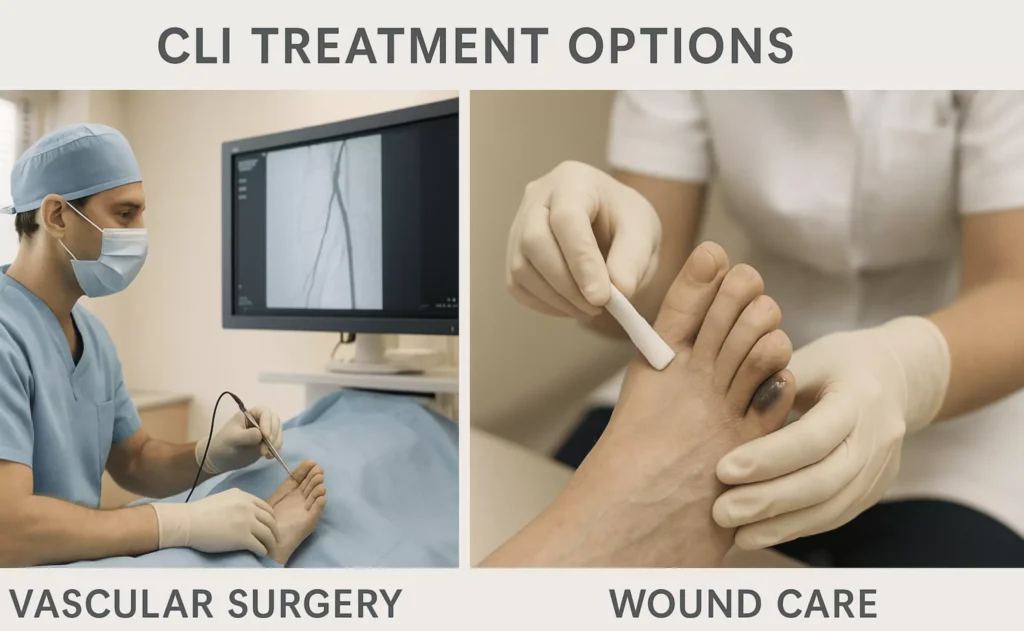
Chronic Limb-Threatening Ischemia (CLTI)—also referred to as Critical Limb Ischemia (CLI)—requires urgent and coordinated intervention to preserve limb function and prevent amputation. Management is multifaceted, involving vascular restoration, podiatric wound care, and systemic disease control. At Freedom Clinics, located in Canary Wharf, London, we lead a proactive care model grounded in limb salvage and functional recovery.
Medical and Conservative Management Strategies
Stabilising Peripheral Artery Disease (PAD)
Since CLTI represents the end-stage of PAD, controlling cardiovascular risk factors is foundational. Our conservative management plan includes:
- Smoking cessation programmes
- Hypertension and lipid control (e.g., statins, ACE inhibitors)
- Glycaemic optimisation for patients with diabetes
- Antiplatelet agents (aspirin or clopidogrel) to reduce thrombosis risk
- Structured exercise therapy for select patients with mild ischemia
Addressing systemic contributors slows CLI progression and improves revascularisation success.
Podiatric Wound Management – Healing Ischemic Ulcers
At Freedom Clinics, podiatrists play a critical role in local limb preservation by managing non-healing foot ulcers, often present in CLTI patients.
Key interventions include:
- Sharp debridement of devitalised tissue to prevent infection spread
- Pressure offloading via custom orthotics or total contact casts
- Moist wound dressings and topical antimicrobial agents
- Regular wound monitoring with photo documentation and thermography
Healing is only possible when perfusion is restored—podiatric care bridges this crucial window.
Revascularisation Procedures – Restoring Blood Flow
Endovascular Intervention
Minimally invasive procedures performed by vascular specialists include:
- Balloon angioplasty to dilate narrowed arterial segments
- Stent placement to maintain patency
- Atherectomy to excise plaque build-up
These are preferred for short, focal lesions, especially in diabetic CLI.
Open Surgical Bypass
For extensive or multilevel arterial blockages, bypass grafting (using vein or synthetic conduit) provides durable perfusion restoration. Often considered in Rutherford Class 5–6 CLI with tissue loss.
Without adequate revascularisation, wound care alone is insufficient for limb salvage.
Multidisciplinary Limb Salvage and Amputation Prevention
Clinical Priorities:
- Restore distal perfusion
- Control local infection
- Accelerate wound closure
- Preserve ambulatory function
Clinical Contributors:
- Podiatrists – ulcer management, gait correction
- Vascular surgeons – endovascular and surgical interventions
- Diabetologists – metabolic control
- Wound care nurses – dressing changes and infection surveillance
- Orthotists – pressure offloading and rehabilitation planning
Studies show that coordinated CLI care reduces major amputations by over 50%.
Freedom Clinics – A Hub for CLI Management in London
As a podiatric-led multidisciplinary care provider, Freedom Clinics delivers:
- Frontline screening and diagnosis of PAD and CLI
- Ulcer care and infection control to stabilise tissue health
- Referral pathways to London-based vascular surgery units
- Integrated rehab and follow-up post-revascularisation
Located at Canada Place Shopping Mall, Canary Wharf, we are strategically positioned to support patients across East and Central London seeking advanced lower limb vascular care.
Long-Term Prognosis, Monitoring & Patient Education for Chronic Limb-Threatening Ischemia (CLTI)
Chronic Limb-Threatening Ischemia (CLTI)—historically referred to as Critical Limb Ischemia (CLI)—poses significant long-term risks to both limb integrity and overall survival. Beyond acute care, ongoing monitoring and patient education are essential to prevent disease recurrence, reduce the risk of major amputation, and ensure sustainable outcomes.
At Freedom Clinics, based in Canary Wharf, London, we provide patients with comprehensive vascular aftercare, helping them manage their condition with confidence, knowledge, and support.
CLTI Prognosis – Understanding Risk and Recovery
Without prompt intervention, CLTI has a one-year limb loss rate exceeding 25% and a five-year mortality rate approaching 50%, often due to comorbid cardiovascular disease.
However, with timely revascularisation, podiatric-led wound care, and structured follow-up, patients can experience:
- Preservation of limb function
- Healing of ischemic ulcers
- Improved walking ability and quality of life
- Reduced readmission and surgical revision rates
CLTI is medically urgent—but with proactive care, positive outcomes are achievable.
Post-Revascularisation Monitoring – What to Expect
Following angioplasty, bypass surgery, or endovascular therapy, patients are enrolled in Freedom Clinics’ monitoring pathway, including:
- Regular ABI (Ankle-Brachial Index) and TBI (Toe-Brachial Index) assessments
- Podiatric foot checks every 2–4 weeks during wound healing
- Thermal imaging and ulcer staging to detect recurrence early
- Gait analysis and footwear reviews to minimise pressure injuries
- Immediate referral to vascular surgeons for signs of graft restenosis
Post-operative surveillance is essential to ensure long-term vascular patency and tissue recovery.
Self-Monitoring and Prevention of CLI Recurrence
Daily Foot Checks
- Use a mirror or carer assistance to inspect all surfaces of the feet
- Watch for colour changes, swelling, cracks, or wounds
- Report any symptoms of foot coldness or rest pain immediately
Lifestyle Commitments
- Maintain strict blood glucose control (for diabetic patients)
- Adopt a low-sodium, high-fibre, heart-friendly diet
- Avoid tobacco and limit alcohol
- Follow a customised walking or rehabilitation plan
Footwear & Hygiene
- Wear custom pressure-relieving footwear
- Avoid barefoot walking and inspect shoes for debris
- Keep feet clean and moisturised to prevent skin breakdown
Patient Education at Freedom Clinics
We empower patients with the tools to take control of their vascular health through:
- Educational sessions on CLI, PAD, and ulcer prevention
- Custom self-care plans tailored to comorbidities and mobility levels
- Printed and digital foot care checklists
- Training for carers and family members
- Reminders and scheduling support for follow-ups and Doppler testing
Educated patients experience lower recurrence rates and report higher confidence in managing chronic conditions.
Our Role in Lifelong CLI Support – Freedom Clinics, London
Located in Canary Wharf, Freedom Clinics serves as a central point of access for:
- Post-operative vascular surveillance
- Podiatric-led ulcer management
- Long-term wound photography and progression tracking
- Gait correction and orthotic fitting
- Coordination with GPs, community nurses, and vascular teams
Our goal is to help patients maintain their mobility, independence, and limb health—even years after their initial diagnosis.

When to Seek Urgent Help for Chronic Limb-Threatening Ischemia (CLTI)
Chronic Limb-Threatening Ischemia (CLTI)—previously termed Critical Limb Ischemia (CLI)—is a medical emergency when symptoms progress rapidly or when new signs of acute vascular insufficiency appear. Early recognition and immediate escalation are vital to prevent irreversible tissue loss, infection, and major amputation.
At Freedom Clinics, located in Canary Wharf, London, we operate a podiatric-led triage model that enables fast-track diagnosis and referral to vascular specialists across London.
Red Flag Symptoms – When CLI Becomes an Emergency
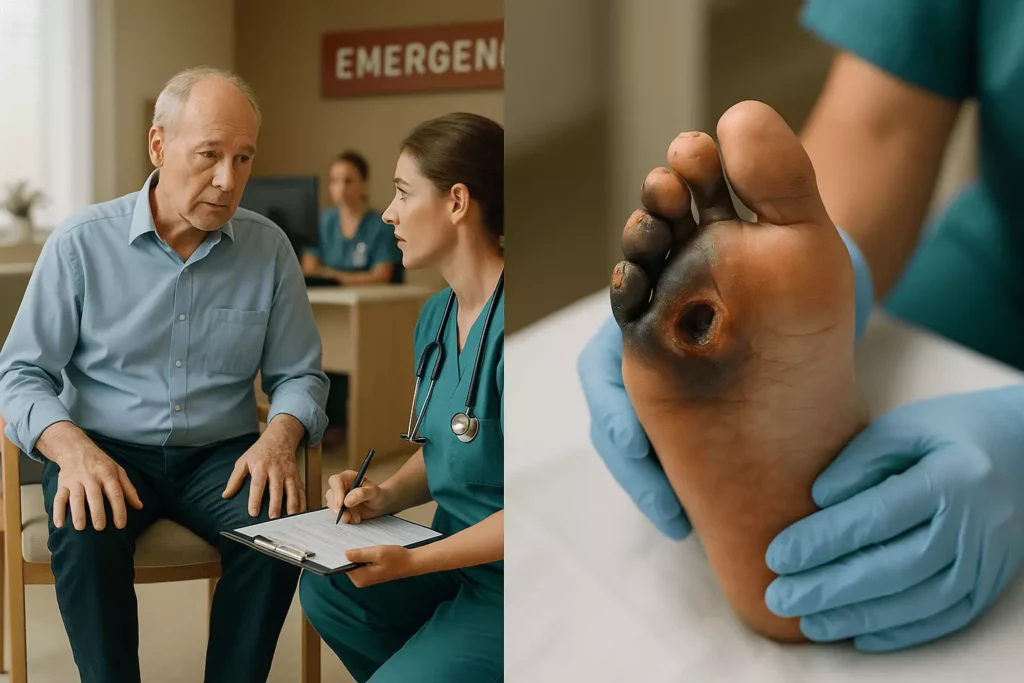
Contact a medical professional immediately or call 999 if you notice:
- Severe rest pain, especially at night or when elevating your leg
- Sudden ulcer worsening or the appearance of new, non-healing wounds
- Foot or toe discolouration—blue, purple, or black
- Loss of sensation, numbness, or coldness in the foot
- Spreading infection—including redness, swelling, pus, or fever
- Sudden deterioration in walking ability or foot function
These symptoms are consistent with acute limb ischemia or advancing CLTI—act immediately to protect limb and life.
Emergency Actions for Patients Experiencing CLI Worsening
Contact Freedom Clinics
Our podiatric team will provide immediate assessment and Doppler evaluation. Where CLI is confirmed or suspected, we activate vascular referral pathways the same day.
Avoid At-Home Treatments
Do not use heat packs, creams, or attempt home ulcer dressings. CLI requires medical-grade wound and vascular intervention.
Protect the Affected Foot
Elevate gently if tolerable; avoid pressure from tight socks or footwear. Maintain hygiene and avoid further skin trauma.
Fast-Track CLI Pathways at Freedom Clinics – London
We partner with vascular surgeons and hospital teams to ensure:
- Same-day Doppler and ABI/TBI assessments for high-risk CLI patients
- Clinical triage letters and records forwarded to NHS and private vascular consultants
- Hospital coordination for urgent surgical planning where tissue loss is imminent
- Continued monitoring post-discharge to ensure revascularisation success
Freedom Clinics is more than a podiatry centre—we’re a frontline defence against limb loss.
When to Call 999 or Visit A&E Immediately
Call 999 or go to the nearest A&E department if you experience:
- Complete loss of sensation or movement in the leg or foot
- Visible gangrene or blackening of toes
- Uncontrolled bleeding from a foot wound or ulcer
- CLI symptoms accompanied by chest pain, breathlessness, or collapse
These signs may indicate sepsis, arterial occlusion, or cardiac complications associated with advanced PAD.
Freedom Clinics – Your Emergency CLI Partner in Canary Wharf
Located at Canada Place Shopping Mall, Canary Wharf, Freedom Clinics offers:
- Urgent podiatric assessments for CLI symptom escalation
- Fast access to vascular diagnostics (Doppler, ABI, TBI)
- Referral coordination to London’s leading vascular surgery teams
- Support for patients post-hospital discharge with wound care and follow-up monitoring
- Educational resources to help patients and carers recognise CLI warning signs
Frequently Asked Questions About Chronic Limb-Threatening Ischemia (CLTI / CLI)
This section answers the most common patient and caregiver questions about Chronic Limb-Threatening Ischemia (CLTI)—also called Critical Limb Ischemia (CLI). These responses follow evidence-based guidelines and reflect the multidisciplinary model offered at Freedom Clinics, Canary Wharf, London.
What is Chronic Limb-Threatening Ischemia (CLTI)?
CLTI is the most severe form of Peripheral Artery Disease (PAD). It occurs when arterial blockages severely restrict blood flow to the lower limbs, leading to rest pain, non-healing ulcers, and potential tissue loss. Without treatment, it can result in amputation.
How do I know if I have CLI?
Early warning signs of CLI include:
- Persistent foot or toe pain at rest
- Ulcers or wounds that do not heal within 2 weeks
- Cold, pale, or discoloured feet
- Shiny skin, hair loss, or slow nail growth on the toes
- Numbness or burning sensations in the lower limbs
If you experience these, contact Freedom Clinics for a vascular podiatry assessment.
How is CLI diagnosed?
Diagnosis involves:
- Ankle-Brachial Index (ABI) and Toe-Brachial Index (TBI) to assess blood flow
- Doppler ultrasound and angiography for arterial imaging
- Foot examination to identify ischemic changes and wound severity
- Thermographic scans in some advanced cases
Our clinic offers same-day diagnostic triage for at-risk patients.
Is CLI a medical emergency?
Yes. CLI requires urgent treatment. Delays increase the risk of:
- Infection, including cellulitis and sepsis
- Tissue necrosis leading to gangrene
- Major limb amputation
- Cardiovascular complications
Freedom Clinics can rapidly escalate CLI cases to vascular surgery units across London.
What treatment options exist for CLI?
CLI treatment typically includes:
- Endovascular therapy – angioplasty and stenting
- Surgical bypass grafting
- Podiatric wound care – offloading, debridement, and dressing
- Risk factor control – smoking cessation, diabetes management, cholesterol and blood pressure optimisation
We coordinate a multidisciplinary limb salvage plan tailored to each patient.
Can CLI be reversed without surgery?
In very early stages, CLI symptoms may be stabilised with:
- Medication and exercise therapy
- Glycaemic and lipid control
- Podiatric offloading and ulcer care
However, most moderate to severe CLI cases require revascularisation to prevent limb loss.
What is the difference between PAD and CLI?
- PAD (Peripheral Artery Disease) refers to general narrowing of the arteries, often asymptomatic.
- CLI / CLTI is the end-stage of PAD, where blood flow is critically reduced, causing pain, ulcers, and risk of gangrene.
CLI always requires urgent clinical attention.
What are the survival chances for someone with CLI?
- 1-year limb loss risk: up to 25%
- 1-year mortality rate: 20–30%
- 5-year mortality rate: approximately 50%
Timely diagnosis, revascularisation, and structured aftercare at centres like Freedom Clinics significantly improve outcomes.
Where can I get treated for CLI in London?
Freedom Clinics, based in Canary Wharf, provides:
- CLI screening using Doppler, ABI, and TBI
- Ulcer care and podiatric management
- Referral pathways to leading vascular surgeons in London
- Education and follow-up to prevent recurrence
Contact our clinic for fast-track CLI support.

Our Podiatrists & Chiropodists


References
- American Heart Association. (2019). Perfusion assessment in critical limb ischemia: Scientific statement. Circulation. Retrieved from https://www.ahajournals.org/doi/10.1161/CIR.0000000000000703
- Conte, M. S., Bradbury, A. W., Kolh, P., White, J. V., Dick, F., Fitridge, R., Mills, J. L., & Ricco, J.‑B. (2019). Global Vascular Guidelines on the management of chronic limb‑threatening ischemia. European Journal of Vascular and Endovascular Surgery. Retrieved from https://www.ejves.com/article/S1078-5884(19)30380-6/fulltext

