
Can You Prevent Bunions? Expert Advice from Freedom Clinics London
Bunion prevention is possible — and more effective when approached early, holistically, and with professional guidance. At Freedom Clinics, our expert podiatrists in London specialise in identifying the risk factors that lead to bunion formation and providing tailored strategies to keep your feet aligned, supported, and pain-free.
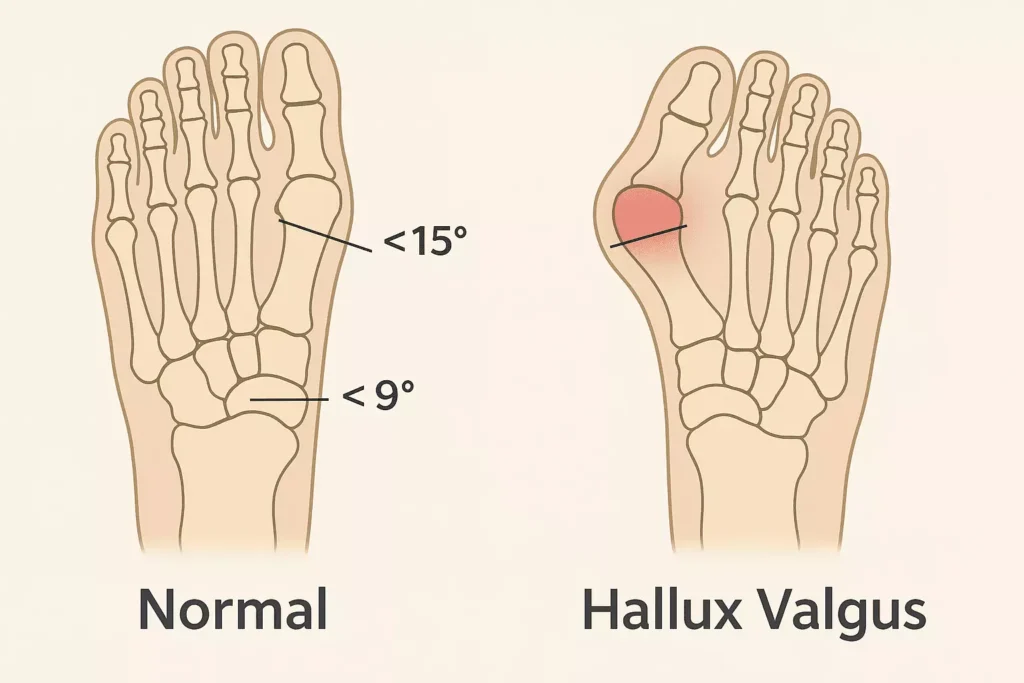
Bunions, or hallux valgus, are a structural deformity of the big toe joint that develops gradually due to biomechanical imbalances, poor footwear, and sometimes inherited foot shapes. As the joint shifts outward, it creates a painful bump that can restrict movement, alter gait, and complicate footwear choices.
Preventing bunions begins with understanding how they develop, recognising early symptoms, and acting quickly. Our podiatric approach focuses on:
- Custom orthotics that correct overpronation and distribute pressure evenly
- Gait analysis to assess walking patterns that contribute to bunion risk
- Footwear recommendations to reduce forefoot compression
- Education on foot exercises that enhance joint stability and mobility
By embedding bunion prevention into your daily routine — and aligning it with evidence-based podiatry — you can protect your foot health for years to come. Whether you’re already noticing early signs or simply want to take preventive steps, Freedom Clinics in Canary Wharf provides the insights and interventions you need to stay ahead.
Medically reviewed by: Dr Priya Anand DPM. Last update: 18th May 2026
Book your appointment
Understanding Bunions (Hallux Valgus)
What Is a Bunion (Hallux Valgus)?
A bunion, medically known as hallux valgus, is a progressive misalignment of the big toe joint, specifically the first metatarsophalangeal (MTP) joint. It occurs when the metatarsal bone shifts outward while the big toe deviates inward toward the second toe, creating a prominent bony bump on the inner edge of the foot.
This deformity is more than cosmetic — it reflects a deeper biomechanical imbalance that, over time, affects walking patterns, posture, and even the distribution of weight across the foot. While bunions can be painful, especially in later stages, many people begin to develop them without noticing symptoms, making early recognition and intervention crucial.
Hallux valgus is one of the most common foot deformities seen by podiatrists and is highly influenced by genetics, gait mechanics, and footwear choices.
How the Big Toe Joint Changes Over Time
As a bunion progresses, the MTP joint experiences structural stress:
- The joint capsule stretches and inflames
- The bursa, a fluid-filled sac near the joint, becomes irritated
- Tendons and ligaments are pulled out of alignment
- The foot’s arch mechanics and toe push-off are altered
A review by the Lucian Blaga University of Sibiu’s Faculty of Engineering demonstrated that progressive hallux valgus deformity involves complex biomechanical disruption to the first metatarsophalangeal joint, including altered tendon alignment, ligament strain, and deviation of the first metatarsal—core contributors to joint instability and structural stress.
These changes can lead to:
- Intermittent or chronic pain
- Restricted joint mobility
- Compensatory gait changes that affect the ankles, knees, and hips
Left untreated, bunions may progress to advanced hallux valgus, potentially requiring surgical correction. This is why bunion prevention strategies — including gait correction, orthotic support, and early podiatric assessment — are so important.
Conditions Commonly Linked with Bunions
Bunions often don’t develop in isolation. They are frequently associated with or contribute to:
- Hammertoes – Misaligned toes due to crowding or pressure
- Metatarsalgia – Pain in the ball of the foot from shifted weight
- Plantar Fasciitis – Heel or arch pain due to altered foot mechanics
- Tailor’s Bunion – Similar deformity affecting the outer side of the foot
These secondary issues often emerge as the body compensates for joint misalignment and instability. Recognising them early enhances treatment outcomes and helps podiatrists develop a comprehensive care plan.
Freedom Clinics’ Diagnostic Approach
At Freedom Clinics in Canary Wharf, our London podiatry team uses advanced diagnostic tools to evaluate bunion risk and progression:
- 3D gait analysis to identify walking imbalances
- Custom orthotic scans to offload pressure points
- Joint flexibility testing to detect early structural shifts
Our approach is proactive: we focus on bunion prevention and early correction to preserve joint integrity, reduce discomfort, and avoid surgery whenever possible.
What Causes Bunions to Form?
A bunion, clinically referred to as hallux valgus, is a progressive deformity of the metatarsophalangeal (MTP) joint — the joint at the base of the big toe. This condition doesn’t appear overnight. Instead, it’s caused by a combination of inherited traits, biomechanical issues, poor footwear, and lifestyle habits that gradually shift the alignment of the big toe. At Freedom Clinics London, we assess these factors during our podiatric consultations to help patients stop bunions before they start.
Are Bunions Hereditary?
Genetics is one of the most common underlying causes of bunion development. If bunions run in your family, you may inherit:
- Flat feet or high arches
- Joint laxity (loose ligaments)
- A wider forefoot or abnormal bone structure
This structural predisposition increases pressure on the inside of the foot and sets the stage for bunion formation. Even though you can’t change your genetics, understanding your risk early allows for preventive measures such as custom orthotics, footwear adjustments, and gait correction therapy.
According to a pedigree study by the Department of Surgery (Foot and Ankle) at the Hospital Universitari Vall d’Hebron and collaborators, 90% of hallux valgus patients reported a family history of the deformity, with transmission patterns suggesting an autosomal dominant inheritance model with incomplete penetrance.
How Foot Mechanics Contribute to Bunion Formation
The way your foot functions biomechanically can directly lead to hallux valgus. Common structural contributors include:
- Overpronation – inward rolling of the foot, placing stress on the medial forefoot
- Flat feet – reduce natural shock absorption and stability
- Hypermobile first ray – instability in the big toe’s metatarsal segment
These imbalances shift body weight toward the inner forefoot, forcing the MTP joint to deviate and the big toe to lean inward. Over time, this misalignment causes the formation of the bunion bump and progressive joint dysfunction.
At Freedom Clinics, our 3D gait analysis identifies and corrects these biomechanical flaws before they result in permanent joint changes.
Footwear Mistakes That Trigger Bunions
Inappropriate footwear is a key external trigger. Shoes that:
- Are too narrow in the toe box
- Have heels higher than 2 inches
- Lack supportive insoles or arch contour
…contribute to forefoot compression and alter the foot’s natural motion path. This leads to deviation of the big toe and eventual bunion development.
Health Conditions That Lead to Hallux Valgus
Chronic medical conditions can compromise joint health and increase the likelihood of bunions:
- Rheumatoid arthritis – joint inflammation and destruction
- Osteoarthritis – age-related joint degeneration
- Ehlers-Danlos or Marfan syndrome – connective tissue laxity
In these cases, the first MTP joint is vulnerable to destabilisation, making early intervention by a podiatrist essential.
Is Lifestyle Stress a Bunion Risk Factor?
Absolutely. Daily habits and repetitive foot stress can hasten bunion formation, especially when combined with other risk factors. Common contributors include:
- Standing for long hours on hard surfaces
- Sports that involve repetitive foot impact (e.g., running, ballet)
- Wearing unsupportive or inappropriate shoes
Even subtle imbalances, if repeated often, can shift joint alignment. Identifying these stressors is a core part of our bunion prevention program.
How Freedom Clinics Helps You Manage Bunion Risk
Our podiatric team in Canary Wharf, London provides comprehensive evaluations to determine your individual risk profile. This includes:
- Gait and posture analysis
- Custom orthotic fittings
- Footwear consultations
- Joint range-of-motion assessments

How to Identify the Early Signs of a Bunion (Hallux Valgus)
Detecting a bunion — or hallux valgus — in its early stages is the key to effective, non-surgical prevention. At Freedom Clinics in London, we stress the importance of identifying subtle changes in the big toe joint, or metatarsophalangeal (MTP) joint, before they progress into chronic pain or joint deformity.
Early Bunion Symptoms: What to Watch For
Early signs of bunion formation may appear gradually and include:
- A slight bump at the base of the big toe
- Localised swelling, redness, or tenderness on the MTP joint
- Discomfort after wearing tight shoes or standing for long hours
- Inward drifting of the big toe toward the second toe
- Decreased mobility in the toe joint
These symptoms often come and go, leading many to overlook them. However, they are indicative of underlying joint misalignment and early-stage hallux valgus development.
Visual Signs of Bunion Formation
You may notice visible changes in foot alignment such as:
- A noticeable protrusion on the inner side of the forefoot
- Crowding or overlapping of the first and second toes
- Callus buildup on the inner edge of the big toe joint
- Asymmetry between feet when viewed side-by-side
- Uneven wear patterns on the soles of your shoes
Use a mirror or compare both feet in natural stance — subtle differences could reveal early bunion progression.

Functional Symptoms That Signal Early Bunion Development
Bunions affect more than appearance — they interfere with function. Watch for:
- Pain when wearing shoes that previously felt comfortable
- Foot fatigue at the end of the day
- Instability or imbalance when walking or standing
- Altered walking posture due to subconscious weight-shifting
- Difficulty pushing off with the big toe during steps
These symptoms indicate biomechanical compensation and suggest that the MTP joint is becoming compromised.
Don’t Confuse Bunions with These Conditions
Bunion symptoms often resemble other foot disorders. Commonly confused conditions include:
| Condition | Similar Symptoms |
|---|---|
| Metatarsalgia | Pain or burning under the ball of the foot |
| Plantar Fasciitis | Arch or heel pain, especially in the morning |
| Sesamoiditis | Pain under the big toe joint |
| Tailor’s Bunion | Bump on the outside of the foot (fifth toe) |
Accurate diagnosis is essential — and requires evaluation by a qualified podiatrist.
How Freedom Clinics Identifies Bunions Early
At Freedom Clinics, Canary Wharf, our podiatry specialists provide comprehensive assessments for early bunion detection:
- 3D Gait Analysis: Detects abnormal foot mechanics that precede bunion formation
- Digital Foot Scanning: Maps joint pressure and foot structure in real time
- Joint Flexibility Testing: Evaluates the range of motion of the big toe
- Orthotic Evaluation: Determines the need for early-stage foot support
Bunion Prevention Strategies That Work
Preventing a bunion — also known as hallux valgus — starts with understanding the biomechanical and lifestyle triggers that cause misalignment in the big toe joint, specifically the first metatarsophalangeal (MTP) joint. At Freedom Clinics in London, we offer a proactive, evidence-based bunion prevention program that combines custom interventions with education and support.
Footwear Features That Prevent Bunions
Shoes that crowd the toes or destabilise the arch can fast-track bunion formation. To protect your toe joints and alignment, choose footwear that offers:
- Wide toe boxes to prevent lateral toe drift
- Structured arch support to reduce overpronation
- Shock-absorbing soles to reduce forefoot pressure
- Low heels (under 2 inches) to minimise joint loading
How Orthotics Stop Bunion Progression
Custom orthotics are a foundational bunion prevention tool. These medical-grade insoles help:
- Correct overpronation and abnormal gait
- Redistribute pressure away from the MTP joint
- Support the medial longitudinal arch
- Prevent compensatory toe alignment changes
At Freedom Clinics, we use 3D scanning and gait analysis to prescribe orthotics tailored to your foot’s exact biomechanical needs.
Bunion Prevention Exercises You Can Do Daily
Simple daily exercises can build strength, flexibility, and balance across the foot and ankle:
| Exercise | Targeted Benefit |
|---|---|
| Toe stretches | Improve joint mobility |
| Towel scrunches | Strengthen intrinsic foot muscles |
| Marble pickups | Enhance toe dexterity and control |
| Calf raises with toe extension | Improve gait and propulsion alignment |
Aim for 10–15 minutes per day, ideally barefoot or in minimal footwear to engage stabilising muscles.
Everyday Habits That Support Bunion Prevention
Long-term bunion prevention involves subtle but consistent adjustments to your lifestyle:
- Alternate footwear daily to avoid repeated pressure patterns
- Avoid walking barefoot on hard surfaces without support
- Use foot massagers or rollers to ease tension in the plantar fascia
- Replace shoes when the soles wear unevenly — especially under the big toe or medial arch
Freedom Clinics offers personalised gait and pressure assessments to help identify hidden contributors to bunion development.
When Should You Start Preventing Bunions?
Prevention is most effective when started before symptoms develop. You should consider bunion prevention if:
- You have a family history of bunions or toe deformities
- You notice toe crowding, joint stiffness, or unusual shoe wear
- You regularly wear tight, narrow, or high-heeled shoes
- You’ve been diagnosed with flat feet or overpronation
- You participate in impact-heavy activities like running or dance
The sooner you begin, the better your chances of avoiding progression and surgery.
Bunion Prevention Plan at Freedom Clinics London
Our Canary Wharf clinic provides a full-spectrum prevention protocol that includes:
- Digital gait and foot pressure scanning
- Big toe mobility and joint range testing
- Custom orthotic design and fitting
- Footwear advice and injury risk evaluation
- Home exercise program tailored to your structure
Every bunion prevention plan is built around your body, lifestyle, and goals — for results you can feel.

Do Orthotics Help Prevent Bunions?
Yes — custom orthotics are one of the most effective, non-surgical tools available for bunion prevention. By correcting biomechanical misalignment and reducing joint stress, orthotics help maintain the natural positioning of the big toe and protect the metatarsophalangeal (MTP) joint — the site where hallux valgus, or bunion formation, typically begins.
At Freedom Clinics London, orthotic therapy is a cornerstone of our personalised bunion prevention plans, developed by expert podiatrists using advanced gait diagnostics and pressure mapping.
How Orthotics Prevent Bunion Formation
Bunions often result from mechanical factors such as overpronation, poor arch support, or instability in the first ray (big toe metatarsal). Orthotics prevent bunions by:
- Correcting pronation and gait abnormalities
- Supporting the medial longitudinal arch to improve weight distribution
- Stabilising the big toe joint and limiting medial drift
- Reducing plantar pressure at the MTP joint
By aligning foot structure and restoring optimal biomechanics, orthotics reduce the mechanical triggers that cause hallux valgus progression.
Who Should Consider Orthotics for Bunion Prevention?
Orthotics may be recommended for individuals who:
- Show early signs of bunion development (e.g., a bump near the big toe)
- Have flat feet, high arches, or hypermobility
- Experience foot fatigue, balance issues, or toe stiffness
- Participate in sports or stand for long hours daily
- Have a family history of bunions or toe deformities
Even if you’re asymptomatic, a podiatrist can assess your gait and foot posture to determine your risk profile and preventative options.
Custom Orthotics vs Generic Insoles
| Feature | Custom Orthotics (Freedom Clinics) | Over-the-Counter Insoles |
|---|---|---|
| Tailored Fit | ✔ Based on 3D scans & gait analysis | ✖ Standardised sizing |
| Medical Evaluation | ✔ By podiatrists | ✖ Not required |
| Long-Term Benefit | ✔ Designed for corrective impact | ✖ Temporary relief only |
| Material Quality | ✔ Durable, semi-rigid/rigid options | ✖ Basic cushioning |
| Hallux Valgus Prevention | ✔ Clinically aligned | ✖ No biomechanical support |
Custom orthotics offer precise functional correction that generic insoles cannot match — particularly when aiming to prevent bunion progression.
Can Orthotics Reverse an Existing Bunion?
Orthotics can’t reverse a fully developed bunion, but they can:
- Slow further joint deviation
- Alleviate pain and inflammation
- Prevent secondary deformities like hammertoes
- Improve posture and walking efficiency
- Delay or eliminate the need for surgery
Orthotic intervention is most powerful when initiated at the earliest signs of toe misalignment — ideally during the first stages of hallux valgus.
Our Orthotics Process at Freedom Clinics Canary Wharf
Our London-based podiatry team uses a multi-step clinical model to ensure optimal outcomes:
- Gait and pressure analysis
- 3D digital foot scanning
- Joint range-of-motion and foot posture assessment
- Prescription of custom-fitted orthotics
- Follow-up adjustments for long-term results
When Should You See a Podiatrist to Prevent Bunions?
Seeing a podiatrist before a bunion becomes painful or visibly deformed is one of the most effective ways to stop its progression. Bunions — clinically referred to as hallux valgus — begin with subtle joint misalignments at the first metatarsophalangeal (MTP) joint. Early podiatric intervention can correct biomechanical imbalances, provide custom orthotic support, and help you avoid surgery down the road.
At Freedom Clinics London, our podiatry service specialises in early-stage bunion prevention, using advanced diagnostic tools and personalised treatment plans to keep your feet pain-free and properly aligned.
Early Signs That Warrant a Podiatry Visit
You should consult a podiatrist if you experience:
- A small bump forming at the base of your big toe
- Toe stiffness or discomfort when walking
- Soreness or swelling over the MTP joint
- Difficulty fitting into shoes that once felt comfortable
- Inward drifting of the big toe toward the second toe
- A family history of bunions or foot deformities
- Persistent foot fatigue or imbalance
These symptoms may indicate early hallux valgus — a condition best addressed with early professional care.
What to Expect During a Bunion Prevention Consultation
At Freedom Clinics, your bunion risk assessment includes:
- Big toe alignment check and joint structure evaluation
- MTP joint mobility testing to assess flexibility and restriction
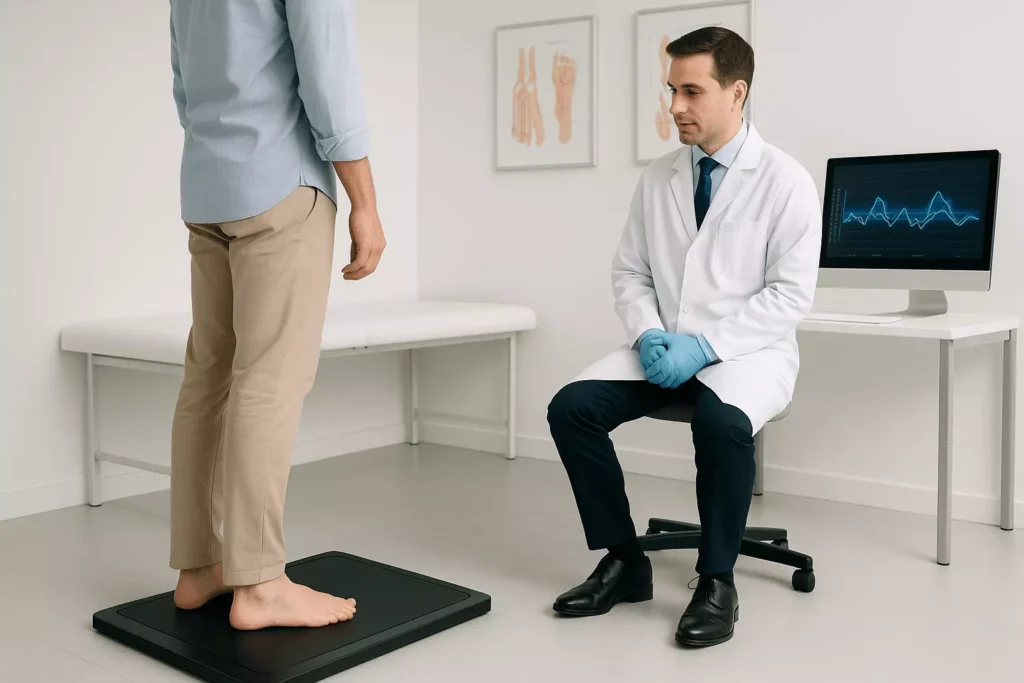
- Digital gait analysis to detect pronation and weight distribution
- Footwear and lifestyle risk audit
- A tailored bunion prevention plan that may include:
- Custom orthotics
- Foot exercises
- Footwear recommendations
- Load management strategies
We combine biomechanical data and clinical expertise to prevent bunions before they affect your quality of life.
Why Seeing a Podiatrist Early Matters
Postponing a podiatry visit increases the risk of:
- Progressive big toe misalignment
- Chronic foot and joint pain
- Development of secondary issues like hammertoes or metatarsalgia
- Reduced mobility and footwear limitations
- Potential surgical intervention
Proactive care from a podiatrist prevents irreversible joint changes and supports long-term foot health.
Trust Freedom Clinics for Podiatrist-Led Bunion Prevention in London
Located in Canary Wharf, Freedom Clinics offers expert podiatrist-led bunion prevention services, including:
- 3D gait and pressure scanning
- Custom orthotic design and fitting
- Footwear evaluations
- Clinical assessment of hallux valgus risk factors
Our Podiatrists & Chiropodists


References
- Cofaru & Brănescu. (2021). A review on biomechanics of the hallux valgus pathology and its surgical treatments. IOP Conference Series: Materials Science and Engineering, 1009(1), 012015. https://doi.org/10.1088/1757-899X/1009/1/012015
- Piqué-Vidal, C., Solé, M. T., & Antich, J. (2007). Hallux valgus inheritance: pedigree research in 350 patients with bunion deformity. Journal of Foot and Ankle Surgery, 46(3), 149–154. https://doi.org/10.1053/j.jfas.2006.10.011

