
Choosing the Right Footwear for Optimal Foot Health
Choosing the right footwear isn’t just a matter of style—it’s essential for protecting your foot health, improving your biomechanics, and preventing painful conditions like plantar fasciitis, bunions, or diabetic foot complications. At Freedom Clinics Canary Wharf, we see patients every day whose symptoms are directly linked to poor shoe choices.
If you experience arch pain, heel discomfort, or need custom orthotics, your shoes may be worsening the issue. Footwear acts as the foundation of every step—supporting your body, absorbing shock, and aligning your posture.
Whether you’re managing an existing condition or simply seeking daily comfort, understanding what makes a shoe orthotic-compatible, activity-appropriate, and fit-sensitive is critical.
Located in London’s Canary Wharf, Freedom Clinics offers biomechanical assessments and custom orthotic services designed to match the unique needs of your feet—and your shoes.
Book your appointment
Understanding How Footwear Affects Your Feet
Biomechanics and Gait Explained
Every foot moves through a complex series of motions while walking. These include heel strike, midfoot loading, and toe-off phases, all of which rely on appropriate footwear to manage stress and maintain alignment.
Poorly structured shoes can distort this process, causing:
- Overpronation or underpronation (supination)
- Imbalanced weight distribution
- Stress on the plantar fascia, Achilles tendon, or first metatarsal
Choosing footwear with correct arch support, adequate heel counter stability, and sole flexibility ensures your gait remains efficient and pain-free.
Consequences of Poor Footwear
Improper shoe selection can trigger or worsen several foot-related issues:
- Plantar fasciitis from lack of heel support
- Bunions and clawed toes from narrow toe boxes
- Neuropathy risks in diabetic patients from shoes that chafe or compress
- Lower limb misalignment, contributing to hip or knee strain
Understanding these risks enables proactive choices. You don’t need to wait until pain sets in to choose better shoes—preventive footwear decisions can dramatically reduce your risk of injury and discomfort.
Uncovering How Footwear Affects Your Feet
Choosing the right footwear is essential for maintaining proper biomechanics, protecting your joints, and reducing the risk of injury. At Freedom Clinics Canary Wharf, we help patients uncover how their current footwear affects their foot function, gait pattern, and overall postural alignment.
A review published by the University of Bayreuth’s Chair of Biomechanics (2025) demonstrated that more than one‑third of common shoe heels are poorly designed, leading to altered gait mechanics and increased loading across the knee and hip joints.

How Footwear Influences Biomechanics and Gait
Phases of the Gait Cycle and the Role of Footwear
Your gait cycle includes heel strike, midfoot loading, and toe-off. At each stage, your footwear plays a stabilising and shock-absorbing role.
Wearing shoes with insufficient:
- Heel cushioning can lead to impact-related heel pain.
- Arch support may result in overpronation and stress on the plantar fascia.
- Toe spring rigidity can restrict toe-off efficiency and cause metatarsalgia.
Footwear should work in harmony with your anatomy to support foot motion, distribute plantar pressure, and accommodate orthotics when needed.
How Shoes Shape Lower Limb Alignment
The design of a shoe—including heel drop, medial posting, and midsole stiffness—can influence how force transfers through your:
- Ankles
- Knees
- Hips
- Lower back
Over time, poorly aligned footwear may:
- Cause or worsen hip misalignment and knee tracking issues
- Increase spinal compression due to altered postural compensation
- Lead to functional leg length discrepancy if soles are uneven
The Medical Risks of Inadequate Footwear
Conditions Triggered or Worsened by Shoe Design
Inappropriate footwear is a common contributor to a wide range of conditions:
- Plantar Fasciitis – due to lack of heel and arch support
- Bunions & Clawed Toes – exacerbated by narrow or shallow toe boxes
- Metatarsalgia – caused by hard-soled shoes without forefoot padding
- Diabetic Neuropathy – worsened by internal seams or pressure points
These issues are not limited to athletes or active individuals—they affect office workers, runners, and even children wearing unsupportive school shoes.
Footwear Misalignment and Systemic Impacts
The effects of poor shoe structure extend beyond the foot:
- Misaligned shoes contribute to postural instability
- Chronic discomfort can reduce activity levels, impacting cardiovascular health
- Uneven weight distribution may result in secondary injuries like shin splints or IT band syndrome
Foot Conditions That Require Supportive Footwear
Many common foot conditions are aggravated by poorly designed shoes. At Freedom Clinics Canary Wharf, we regularly treat patients with flat feet, plantar fasciitis, bunions, and diabetic neuropathy—all of which require specialised footwear features to prevent worsening and support recovery.
This section outlines how the right footwear can alleviate pain, promote mobility, and work in tandem with custom orthotics.
Flat Feet & Overpronation
According to the NCBI Bookshelf’s StatPearls entry on pes planus, flat feet lack a medial arch and frequently cause overpronation during walking, which disrupts normal biomechanics. Without proper arch support, this can lead to ankle instability, knee pain, and posterior tibial tendon strain.
Recommended Footwear Features:
- Structured medial arch support to reduce overpronation
- Dual-density midsoles to guide foot alignment
- Orthotic-compatible interiors for custom inserts
- Motion control technology to stabilise gait
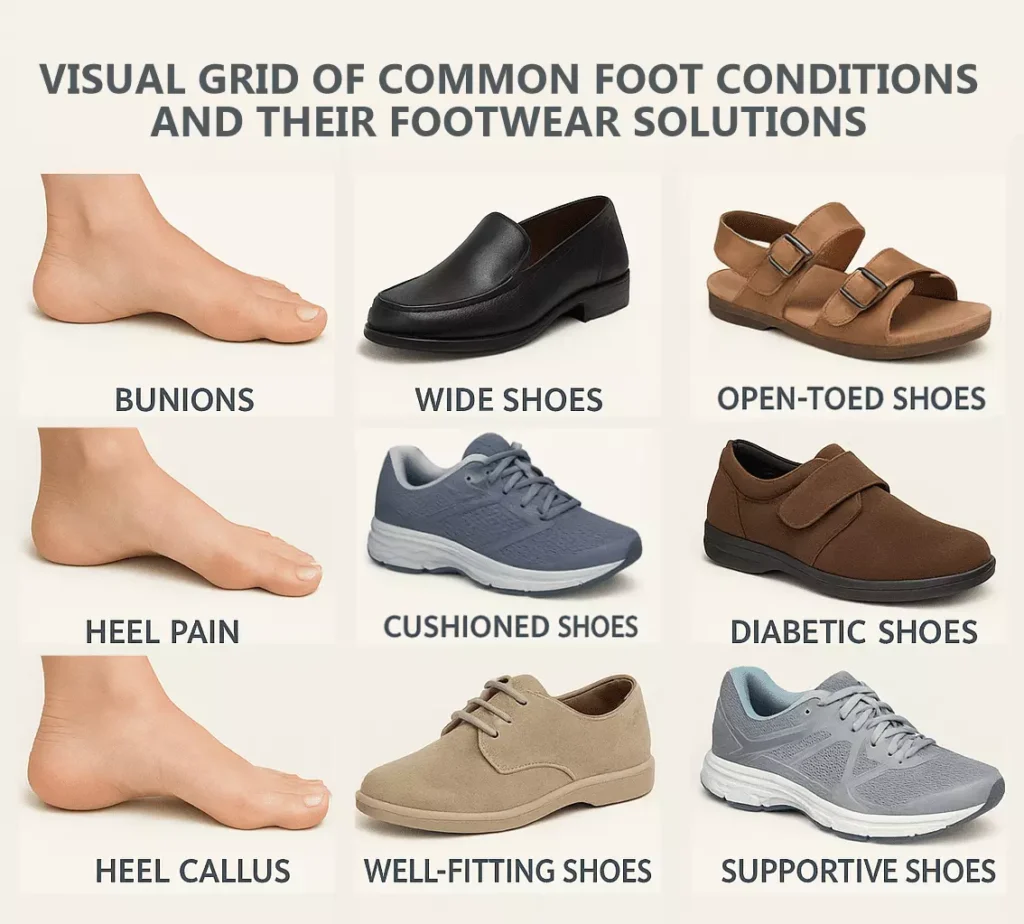
Plantar Fasciitis & Heel Pain
Plantar fasciitis causes intense heel pain, especially during the first steps in the morning. This condition is often exacerbated by walking on hard surfaces or wearing unsupportive shoes.
Essential Footwear Components:
- Deep heel cups to cradle and stabilise the heel
- Shock-absorbing outsoles to reduce impact
- Contoured footbeds that evenly distribute pressure
- Elevated heel drop (in some cases) to offload the fascia
Bunions & Forefoot Deformities
Bunions (medically known as hallux valgus) and related forefoot issues like hammer toes or metatarsalgia are highly sensitive to shoe structure. Constrictive, narrow shoes can cause chronic irritation and misalignment.
Best Shoe Features for Bunions:
- Wide toe boxes to eliminate compression
- Stretchable uppers that adapt to deformity shape
- Cushioned metatarsal pads for ball-of-foot support
- Extra depth footwear to accommodate swelling or orthotics
Diabetic Neuropathy & Sensitive Feet
Patients with diabetes often experience neuropathy, reducing sensation in the feet. This increases the risk of blisters, ulcers, and even infection—especially when wearing rigid or tight shoes.
Diabetic-Friendly Footwear Should Include:
- Seamless linings to avoid friction and skin breakdown
- Extra width and depth for swelling and insole adjustments
- Protective rocker soles to reduce plantar pressure
- Custom insole compatibility for precise offloading
Key Features of Orthotic-Friendly Footwear
For patients using custom orthotics or suffering from structural foot issues, footwear must do more than provide comfort—it must function as a clinical support device. At Freedom Clinics Canary Wharf, we emphasise the importance of orthotic-compatible shoes that work with, not against, your biomechanics.
Orthotic-friendly footwear supports both the foot’s anatomy and the therapeutic role of orthotic inserts, enabling better alignment, stability, and injury prevention.
What Makes a Shoe Orthotic-Compatible?
Orthotic compatibility depends on the shoe’s ability to:
- Securely house an orthotic insert without displacing the foot
- Maintain the intended gait mechanics when the insert is used
- Prevent friction and instability caused by poor fit or depth
Essential Features:
| Feature | Functionality |
|---|---|
| Removable Insole | Allows replacement with custom orthotics |
| Adequate Internal Depth | Prevents heel lift, ensuring the orthotic sits securely |
| Firm Heel Counter | Adds rearfoot stability, especially for overpronation |
| Rigid Sole Base | Supports alignment and resists torque during gait |
| Supportive Midsole | Distributes plantar pressure and enhances comfort |
| Wide Toe Box | Prevents constriction, supports bunions and forefoot deformities |
| Adjustable Fastening | Laces or Velcro to secure the shoe around the foot and orthotic insert |
Critical Components Supporting Biomechanics
Orthotics are typically designed to correct or support specific gait issues, including:
- Flat feet or fallen arches
- Plantar fasciitis and heel pain
- Diabetic foot pressure redistribution
The shoe must accommodate the biomechanical intent of the orthotic, not interfere with it.
Example: An overpronation control orthotic should be paired with a motion-control shoe with reinforced midfoot stability, not a flexible trainer.
Conditions That Require Orthotic-Friendly Footwear
Several medical conditions demand integration between orthotic function and shoe design:
- Flat Feet: Needs arch support + removable insoles
- Bunions: Benefits from wide toe box and soft upper
- Plantar Fasciitis: Requires heel stabilisation + cushioning
- Diabetic Neuropathy: Calls for seamless interiors and pressure offloading
Shoes without these accommodations may render orthotics ineffective—or worse, introduce new problems.
Matching Shoe Design to Orthotic Purpose
| Orthotic Type | Best Matched Footwear Design |
|---|---|
| Rigid Orthotics | Structured walking or running shoes with arch stability |
| Cushioned Orthotics | Footwear with soft midsoles and rocker forefoot for heel pain |
| Postural Correction | Motion-control shoes with reinforced heel counters |
| Diabetic Insoles | Extra-depth shoes with seamless lining and shock-dispersing soles |
Activity-Based Footwear Guidance
Footwear should match the physical demands of your day. Whether you’re walking to work, running for fitness, standing for long shifts, or engaging in sport, your shoes must support your gait mechanics, accommodate any orthotic devices, and align with your activity-specific biomechanics.
At Freedom Clinics Canary Wharf, we tailor our footwear advice to your lifestyle, medical needs, and foot structure—ensuring you’re protected, aligned, and pain-free.
Footwear for Walking and Daily Commutes
Walking shoes need to be both flexible and supportive. Many patients with flat feet, plantar fasciitis, or arch fatigue benefit from shoes that guide proper foot movement and absorb repetitive ground forces.
Key Footwear Features:
- Flexible forefoot zones to promote toe-off during walking
- Arch-contouring insoles to support the medial arch
- Deep heel cups for stability during stride transition
- Orthotic-friendly interiors to accommodate inserts
Running Footwear for Impact and Alignment Control
Running shoes must balance cushioning, motion control, and structural integrity. They support the body during repetitive high-impact activity and compensate for overpronation, underpronation, or orthotic needs.
Ideal Design Elements:
- Shock-absorbing midsoles (EVA or gel-based)
- Heel-to-toe drop that complements your running style and orthotic setup
- Reinforced heel counter for rearfoot control
- Breathable mesh uppers to manage heat and moisture
Note: Not all athletic shoes work with orthotics. Look for models with removable insoles and extra interior depth.
Shoes for Standing Work Environments
Professionals in healthcare, education, or retail often spend 8–12 hours on their feet. Standing shoes should minimise fatigue and maintain postural alignment throughout the day.
Features That Matter:
- Cushioned midsoles to absorb microshocks from hard floors
- Contoured footbeds to support the arch and reduce pressure
- Forefoot padding to alleviate ball-of-foot stress
- Supportive heel counters to stabilise the ankle and improve balance
Workplace orthotic consultations are available at Freedom Clinics—book now to prevent cumulative strain.
Sport-Specific and High-Performance Footwear
Footwear for activities like tennis, basketball, or trail hiking must align with your sport’s movement patterns. These shoes should integrate features that enhance performance while protecting joints and soft tissues.
Must-Have Elements:
- Lateral stability for multidirectional movement
- Responsive cushioning for quick impact transitions
- Traction-optimised outsoles for varied surfaces
- Ankle bracing or higher collar design (if required)
Planning to integrate sport orthotics? Ensure your shoes allow for insole customisation and lateral flexibility.

How to Test If Shoes Are a Good Fit
Shoe fit is more than just size—it’s about how your footwear supports your foot shape, works with orthotic devices, and aligns your biomechanics. At Freedom Clinics Canary Wharf, we help patients avoid foot pain, deformities, and injury by identifying misfits and ensuring that shoes meet clinical standards for support, stability, and comfort.
A good fit enhances the effect of custom orthotics, preserves your gait pattern, and prevents unnecessary pressure or instability.
Essential Footwear Fit Indicators
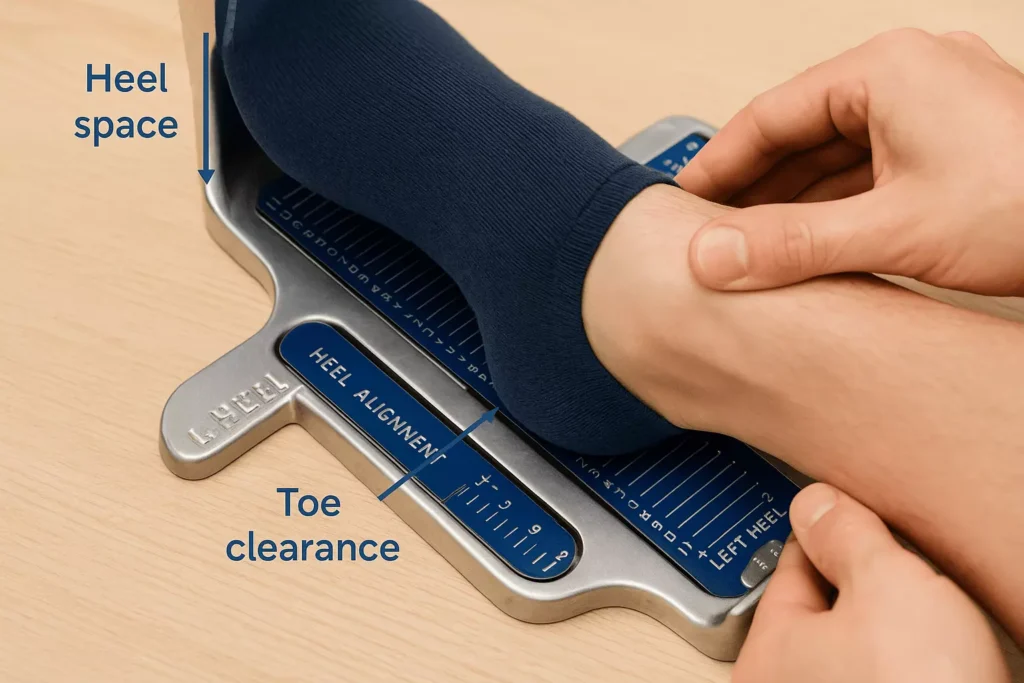
Your shoes should support each part of the foot without causing restriction or overcompensation. Evaluate these five zones every time you try on new footwear:
| Fit Zone | What to Look For | Why It Matters |
|---|---|---|
| Toe Box | 10mm clearance from the longest toe to the shoe’s end | Prevents nail trauma, bunion pressure, and rubbing |
| Width | Foot sits flat without spilling over the sole or squeezing | Avoids forefoot compression and neuroma irritation |
| Heel Hold | No slippage while walking; heel remains secure | Enhances gait stability, prevents blistering |
| Midfoot Fit | Snug hold without tightness across instep | Maintains arch support, prevents overpronation |
| Insole Integration | Orthotic sits flush and doesn’t buckle or shift | Ensures orthotic function and postural alignment |
Functional Fit Tests You Can Perform at Home
Use these quick, biomechanically grounded tests to assess your footwear:
- The Toe Wiggle Test
- Your toes should move freely when standing and walking. Restricted motion = bad fit.
- The Finger Test (Heel Gap)
- Slide one finger behind your heel. Too tight? Likely discomfort. Too loose? Risk of instability.
- Weight Transfer Test
- Shift your weight forward and back. Pressure should feel evenly distributed—not concentrated at the heel or forefoot.
- Insole Stability Test
- Insert your orthotic and walk. If it shifts or curls, the shoe may lack the internal depth or structural support required.
Matching Shoe Fit to Your Foot Shape and Orthotics
Different feet require different footwear fits:
- Flat Feet
- Need shoes with firm arch support, tight heel control, and deep midsoles to house orthotics.
- High Arches
- Prefer cushioned footbeds, shock-absorbing soles, and less structured midsoles.
- Bunions & Wide Feet
- Require a wide toe box and seamless interior linings.
- Diabetic Feet
- Benefit from extra depth, soft interiors, and non-restrictive upper materials.
If your foot shape isn’t matched to your shoe structure, you risk worsening your condition—even with high-quality orthotics.
When to Consult a Specialist About Footwear
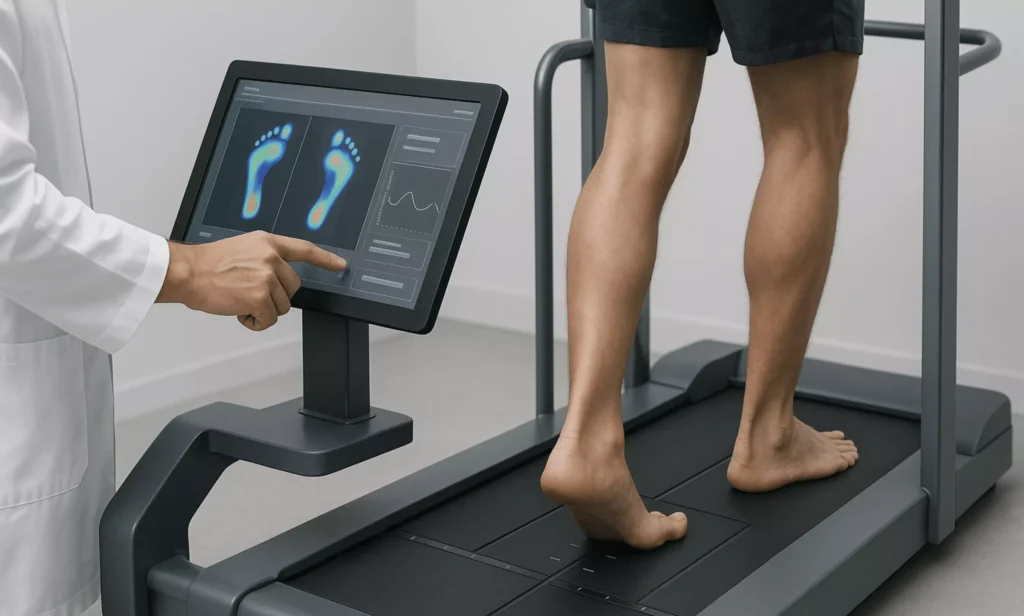
Not all footwear issues can be resolved by simply buying new shoes. Persistent pain, gait changes, or orthotic discomfort may signal a deeper biomechanical problem or a mismatch between your foot condition and your current footwear setup. At Freedom Clinics Canary Wharf, we specialise in identifying these mismatches through clinical footwear consultations, gait analysis, and orthotic assessments.
Signs Your Footwear or Symptoms Need Professional Review
Consider consulting a podiatrist or footwear specialist if you experience:
- Chronic foot pain in the heel, arch, or ball of foot—even after switching shoes
- Orthotics that no longer fit properly or cause new pressure points
- Posture or gait abnormalities, such as limping, foot rolling, or asymmetrical steps
- Worsening of structural conditions like bunions, clawed toes, or flat feet
- Diabetic symptoms, including numbness, tingling, or unexplained skin changes on the feet
These symptoms often stem from underlying biomechanical misalignments, which require more than off-the-shelf solutions.
Common Foot Conditions That Require Clinical Footwear Oversight
Some conditions are simply too complex to be addressed with general shoe recommendations:
- Plantar Fasciitis
Requires precise heel stabilisation and custom orthotics matched to foot shape - Flat Feet / Overpronation
Needs corrective footwear with motion control and gait-guided orthotic support - Diabetic Neuropathy
Demands seamless shoes with offloading insoles and depth for swelling accommodation - Post-Surgical Rehabilitation
Often involves phase-specific footwear solutions and progressive orthotic adjustment
Each of these conditions may worsen without specialist intervention, especially if the wrong footwear is used.
What Freedom Clinics Offers
At Freedom Clinics, we provide comprehensive services designed to align footwear with clinical needs:
| Service | Purpose |
|---|---|
| Podiatry Consultation | Diagnose conditions, assess structural issues |
| Gait & Biomechanics Analysis | Identify movement-based misalignments and risk patterns |
| Custom Orthotics Fitting | Match orthotic devices to gait, anatomy, and shoe structure |
| Footwear Compatibility Review | Ensure current or new shoes work with orthotics and foot type |
| Diabetic Foot Check | Monitor neuropathic symptoms and prevent pressure injuries |
About Freedom Clinics – Canary Wharf
Freedom Clinics – Canary Wharf is a leading provider of podiatry, custom orthotics, and biomechanical gait assessments in London. Located in the heart of East London’s business district, our clinic serves patients seeking expert care for foot pain, gait dysfunction, diabetic foot conditions, and footwear-related issues.
We specialise in the diagnosis, treatment, and ongoing management of complex foot health conditions, ensuring our patients receive personalised, evidence-based solutions tailored to their foot structure, lifestyle, and activity level.
Your Local Expert in Foot Health and Biomechanics
As a trusted London podiatry clinic, our Canary Wharf location is known for its holistic approach to lower limb care, integrating advanced diagnostics with hands-on clinical expertise.
We support patients experiencing:
- Plantar fasciitis and persistent heel pain
- Flat feet, overpronation, and gait instability
- Bunions and structural forefoot conditions
- Diabetic neuropathy, ulcer risk, and pressure imbalance
- Post-operative recovery requiring orthotic realignment
Our specialists offer clinical footwear consultations, orthotic compatibility reviews, and custom prescription devices aligned with your biomechanical profile.
Contact and Booking Information
| Category | Details |
|---|---|
| Address | Canada Place Shopping Mall, 34 North Colonnade, London E14 5HX |
| Phone | 0203 197 9100 |
| info@freedomclinics.com | |
| Opening Hours | Open 7 days a week |
Explore Our Podiatry & Orthotic Services
| Service Offering | Purpose |
|---|---|
| Custom Orthotic Fabrication | Tailored inserts for foot posture correction, gait realignment |
| Biomechanics & Gait Analysis | Diagnose movement inefficiencies and overuse patterns |
| Diabetic Foot Screening | Prevent neuropathy-related injury and ulceration |
| Postural Alignment Therapy | Reduce musculoskeletal compensation from footwear misalignment |
| Footwear Fit & Compatibility Review | Assess current shoes for orthotic accommodation and biomechanical support |
Our Podiatrists & Chiropodists


References
- University of Bayreuth Biomechanics Chair. (2025). Analysis shows many running shoes may increase injury risk due to heel flaws. Bioengineering. Retrieved from https://medicalxpress.com/news/2025-05-analysis-injury-due-heel-flaws.html
- StatPearls Publishing. (2024). Pes planus (flatfoot). In StatPearls. Retrieved from https://www.ncbi.nlm.nih.gov/books/NBK430802/

