
Flexion-Distraction Therapy in Canary Wharf
Flexion-Distraction Therapy is a targeted, non-surgical chiropractic technique offered at Freedom Clinics, Canary Wharf, designed to treat spinal disc injuries, sciatica, and nerve-related back pain. This gentle, table-assisted method applies controlled flexion and spinal distraction to decompress intervertebral discs, reduce pressure on spinal nerves, and restore healthy motion. It is ideal for patients who require a low-force alternative to traditional spinal adjustments or wish to avoid surgery and medication.
Book your appointmentMedically reviewed by Tanesa Mohan (MChiro LRCC). Last update: 30 January 2026.
What Is Flexion-Distraction Therapy?
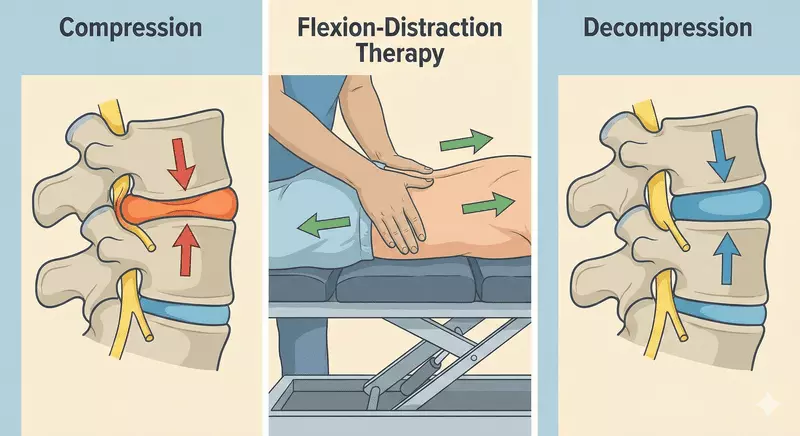
Flexion-Distraction is a chiropractic decompression therapy performed using a specialised segmented table that allows for rhythmic motion of the lumbar spine. Chiropractors guide the table through a precise pattern of flexion (bending) and distraction (gentle stretching), creating negative pressure inside spinal discs. This encourages bulging or herniated disc material to retract, alleviating nerve impingement and reducing pain.
As a table-based spinal therapy, Flexion-Distraction is safe, non-invasive, and does not involve forceful thrusting or joint cavitation. It offers a high level of comfort, particularly for older adults, post-surgical patients, or those with sensitive spinal conditions.

The Purpose of Flexion-Distraction
This technique targets both the mechanical dysfunctions of the spine and the neurological symptoms caused by disc-related conditions. Its therapeutic objectives include:
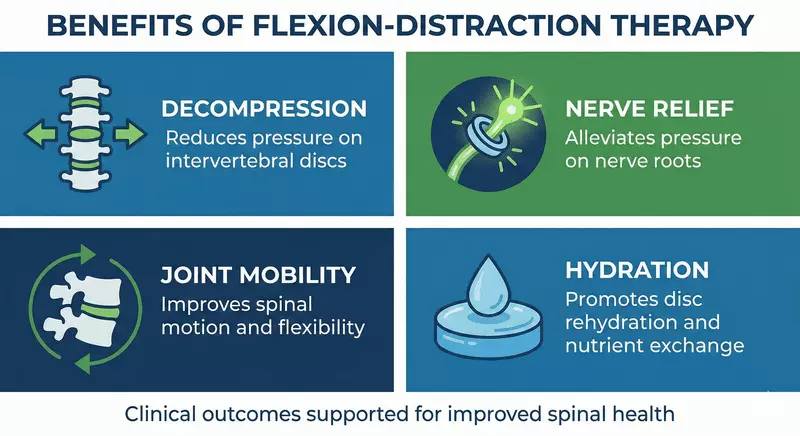
- Decompressing intervertebral discs to relieve disc bulges and herniations
- Reducing nerve root compression responsible for sciatica and leg pain
- Restoring segmental mobility in the lumbar spine
- Improving disc hydration and nutrient transport
- Minimising muscle guarding and surrounding soft tissue tension
Research from the Department of Orthopaedic Surgery at Loyola University Medical Center demonstrated that flexion-distraction significantly enhances fluid exchange within intervertebral discs, supporting disc hydration and nutrient transport that are essential for disc health and recovery.
By addressing both the structural and functional aspects of spinal disorders, Flexion-Distraction enhances spinal health and improves overall movement quality.
How Flexion-Distraction Differs from Traditional Adjustments
Flexion-Distraction differs significantly from the more commonly known high-velocity, low-amplitude (HVLA) chiropractic adjustments:
| Technique Feature | Flexion-Distraction | HVLA Adjustment |
|---|---|---|
| Movement Type | Rhythmic flexion + distraction | High-velocity thrust |
| Force Level | Low-force, controlled | Moderate to high |
| Table Used | Segmented flexion-distraction table | Standard flat bench |
| Audible Joint Release | No cracking sounds | Often produces a “pop” |
| Ideal For | Disc herniations, sciatica, spinal stenosis | Joint stiffness, restricted motion |
At Freedom Clinics, this approach allows chiropractors to provide highly personalised care for patients who may not tolerate more forceful spinal manipulation techniques. It is especially effective for those with degenerative disc disease, spinal stenosis, or recovering from spinal surgery.
Why Choose Flexion-Distraction at Freedom Clinics?
Located in the heart of Canary Wharf, Freedom Clinics provides evidence-based spinal care using advanced chiropractic techniques like Flexion-Distraction. Our practitioners are trained in gentle decompression therapies that relieve disc-related symptoms without surgery or medication. Whether you are managing a herniated disc, recovering from spinal surgery, or seeking a safer alternative to traditional adjustments, our team can help you regain function and reduce pain through this trusted, research-backed therapy.
Conditions Treated by Flexion-Distraction Therapy
Flexion-Distraction Therapy is a targeted, non-surgical spinal decompression method used by chiropractors at Freedom Clinics in Canary Wharf to relieve pressure on spinal nerves, treat disc injuries, and restore spinal mobility. This gentle, table-assisted chiropractic technique is highly effective for a range of conditions involving intervertebral disc dysfunction, nerve root irritation, and chronic spinal pain — without the need for surgery or medication.
Spinal Conditions Treated with Flexion-Distraction
Disc Herniation and Bulging Discs
A herniated disc occurs when disc material escapes through the outer layer and compresses nearby spinal nerves. Flexion-Distraction creates negative intradiscal pressure, allowing the disc to retract and relieve nerve impingement — commonly at the L4-L5 or L5-S1 spinal levels. This makes it an effective therapy for:
- Leg or arm pain caused by nerve compression
- Numbness and tingling in extremities
- Difficulty walking or standing
Degenerative Disc Disease (DDD)
As spinal discs age, they may lose height and hydration, causing stiffness, pain, and reduced shock absorption. Flexion-Distraction restores motion and enhances disc nutrition by improving fluid exchange within the disc. It’s ideal for:
- Age-related lumbar stiffness
- Chronic low back pain
- Disc thinning and joint degeneration
Spinal Stenosis
Spinal stenosis — the narrowing of the spinal canal — can cause nerve crowding, resulting in sciatic pain, weakness, or numbness. This condition often affects older adults and is difficult to treat with traditional manipulations.
Flexion-Distraction gently opens the spinal canal, creating space for compressed nerves and improving neural function.
- Relieves back and leg pain worsened by walking
- Enhances comfort without surgical intervention
Clinical investigations conducted at Loyola University Chicago Stritch School of Medicine found that flexion-distraction produces measurable increases in spinal canal dimensions and reduces compressive forces on neural structures, supporting improved nerve function in patients with lumbar spinal stenosis.
Sciatica and Nerve Root Compression
Sciatica typically arises when a bulging disc or narrowing canal compresses the sciatic nerve. Patients feel radiating pain from the lower back down the leg.
Chiropractors use Flexion-Distraction to:
- Reduce disc and nerve pressure
- Alleviate leg pain and numbness
- Improve hip and lower limb mobility
A controlled clinical trial led by researchers at National University of Health Sciences demonstrated that flexion-distraction therapy significantly reduces lumbar nerve root compression and improves sciatic pain outcomes by lowering intradiscal and foraminal pressure.

Facet Syndrome and Joint Dysfunction
Facet syndrome involves inflammation or stiffness in the facet joints of the spine. Flexion-Distraction gently mobilises these joints, reducing pain and improving range of motion — especially in the lumbar spine.
- Reduces localised back pain from joint strain
- Improves spinal articulation without forceful adjustment
Post-Surgical Spinal Rehabilitation
For patients recovering from procedures like laminectomy, discectomy, or fusion surgery, Flexion-Distraction offers a safe way to restore function without stressing surgical sites.
- Promotes healing through controlled movement
- Reduces scar tissue stiffness
- Allows early-stage mobility in rehab programs
Patient Profiles Suited to Flexion-Distraction Therapy
Older Adults with Spinal Degeneration
- Osteoporosis or osteopenia makes high-force techniques unsafe
- Flexion-Distraction avoids bone stress while improving mobility
Patients with Chronic Disc-Related Pain
- Long-term pain from herniation or DDD
- Avoiding opioids or surgical interventionAvoiding opioids or surgical intervention
Post-Surgical or Medically Complex Cases
- Fusions, implants, prior surgeries
- Inflammation and motion restriction in scar zones
Individuals Seeking Non-Surgical Spinal Therapy
- Avoid injections or painkillers
- First-line conservative treatment for sciatica or back pain
Flexion-Distraction Use Cases: Conditions, Symptoms, and Mechanisms
| Condition | Symptoms | How Flexion-Distraction Helps |
|---|---|---|
| Disc Herniation | Numbness, tingling, leg pain | Decompresses disc and retracts herniation |
| Degenerative Disc Disease | Stiffness, aching, fatigue | Improves fluid flow and joint function |
| Spinal Stenosis | Cramping, walking difficulty | Opens canal space, reduces nerve pressure |
| Sciatica | Radiating leg pain | Relieves sciatic nerve impingement |
| Facet Syndrome | Sharp localised pain | Mobilises joints without cracking |
| Post-Surgical Recovery | Pain, motion loss | Safe mobilisation for healing tissues |
Spinal Care at Freedom Clinics, Canary Wharf
Our experienced chiropractors in Canary Wharf personalise Flexion-Distraction treatment plans based on your diagnosis and condition severity. Whether you’re struggling with disc compression, recovering from back surgery, or managing chronic lumbar pain, this technique offers a comfortable, evidence-based path to relief.
How Flexion-Distraction Therapy Decompresses the Spine
At Freedom Clinics in Canary Wharf, Flexion-Distraction Therapy is applied by expert chiropractors to gently decompress the spine and reduce pressure on vital neural structures. This technique uses a specialised segmented flexion-distraction table to achieve non-surgical spinal decompression, offering safe and effective relief from conditions like herniated discs, sciatica, and spinal stenosis.
How Flexion-Distraction Reduces Disc and Nerve Pressure
Controlled Lumbar Motion with a Segmented Table
Unlike traditional traction devices, Flexion-Distraction employs a motorised or manually adjusted table with movable segments that allows the chiropractor to gently flex and distract specific spinal segments.
- The lower lumbar section moves in rhythm with the patient’s breathing and resistance
- This motion mimics natural flexion while applying gentle axial traction
- Creates space between vertebrae and improves intersegmental mobility
Negative Intradiscal Pressure Promotes Disc Rehydration
As the vertebrae are distracted, the therapy generates negative intradiscal pressure — reducing the internal pressure of spinal discs.
- This allows herniated or bulging discs to retract naturally
- Relieves compression on the adjacent nerve roots
- Improves fluid and nutrient diffusion into the disc, aiding recovery
Nerve Root Decompression at the L4-L5 and L5-S1 Levels
Flexion-Distraction Therapy is especially effective at decompressing lumbar nerve roots, which are often compressed by disc herniation or stenosis at L4-L5 and L5-S1.
- Reduces symptoms of sciatica including radiating leg pain, numbness, and tingling
- Improves lower limb function by relieving nerve irritation
- Helps patients avoid surgery or reliance on medications
The Chiropractor’s Role in Flexion-Distraction Therapy
Unlike passive mechanical traction, Flexion-Distraction is an active, manually guided therapy.
Chiropractor-Led Precision Therapy Includes:
- Monitoring spinal resistance and adjusting force accordingly
- Guiding flexion through specific ranges to protect vulnerable segments
- Modifying movement angles based on the patient’s condition and response
This interactive approach allows for real-time adjustments, enhancing both safety and clinical effectiveness — especially for patients with post-surgical or degenerative conditions.
Clinical Benefits of Flexion-Distraction Spinal Decompression
| Therapeutic Mechanism | Spinal Structure Affected | Resulting Benefit |
|---|---|---|
| Intradiscal Pressure Reduction | Intervertebral Disc | Disc retraction, herniation relief |
| Canal Expansion | Spinal Canal | Nerve decompression (esp. stenosis) |
| Joint Mobilisation | Facet Joints | Improved lumbar flexibility |
| Tissue Fluid Exchange | Disc & Surrounding Tissues | Enhanced healing and rehydration |
What to Expect During a Flexion-Distraction Session
At Freedom Clinics, each session is guided by a trained chiropractor and tailored to your diagnosis. A typical visit includes:
- 15–30 minutes of targeted spinal motion
- Lying face-down on the flexion-distraction table
- The chiropractor applying rhythmic, gentle movements
- No cracking or abrupt adjustments
- Progressive relief often noticed after a few sessions
What Happens During a Flexion-Distraction Chiropractic Session?
At Freedom Clinics in Canary Wharf, a Flexion-Distraction session is a precisely controlled, chiropractor-guided procedure designed to deliver gentle yet effective spinal decompression. This therapy targets disc-related conditions like herniated discs, sciatica, and spinal stenosis, using a specialised segmented flexion-distraction table. Each session is non-invasive, comfortable, and tailored to your spinal health profile.
Step-by-Step Breakdown of a Flexion-Distraction Session
1. Personalised Spinal Assessment
Your chiropractor begins with a brief evaluation to determine the optimal approach for your session. This includes:
- Reviewing your spinal diagnosis (e.g., L5-S1 disc herniation, sciatic nerve compression)
- Assessing pain intensity, nerve involvement, and mobility
- Identifying the target spinal segment (typically lumbar or lumbosacral spine)
This clinical insight guides the therapeutic plan and ensures safety throughout the treatment.
2. Positioning on a Segmented Chiropractic Table
You will lie face-down on a specialised flexion-distraction table, engineered to move specific spinal segments with precision.
- The lower section of the table gently flexes downward
- Controlled motion applies axial traction to decompress the spine
- Cushioning and ergonomic design ensure optimal comfort
This table enables targeted spinal motion that’s both safe and therapeutic — especially for post-operative patients and those with disc fragility.
3. Chiropractor-Guided Spinal Decompression
Using manual control, the chiropractor guides the table’s flexion and distraction cycles while monitoring spinal tension.
- Flexion lowers disc pressure by increasing vertebral spacing
- Distraction gently stretches the spinal segment, relieving nerve compression
- Particularly effective for sciatic symptoms and spinal stenosis
This step is customised in real time based on your tissue response and comfort level, ensuring optimal results without the risks of high-force adjustments.
4. Continuous Monitoring and Adaptive Care
Throughout the session, your chiropractor assesses:
- Resistance to movement
- Signs of inflammation or irritation
- Real-time patient feedback
They adjust angles, range of motion, and duration to maintain comfort while maximising therapeutic decompression. This ensures precision treatment without aggravating your condition.
5. Duration, Aftercare, and Results
- Treatment Duration: 15 to 30 minutes
- Post-Treatment Sensation: Most patients report feeling relaxed, mobile, and less compressed
- Aftercare Plan: Your chiropractor may recommend ice therapy, spinal stretches, or ergonomic guidance for continued relief
Some patients experience immediate improvement, while others require a treatment series, especially in cases involving disc bulges or post-surgical rehabilitation.
How Flexion-Distraction Differs from Traditional Adjustments
| Feature | Flexion-Distraction Therapy | High-Velocity Spinal Adjustments |
|---|---|---|
| Motion Type | Rhythmic flexion + axial traction | Quick thrust to joints |
| Force Level | Low-force, no cracking | Moderate to high force |
| Best For | Disc herniation, sciatica, surgical recovery | Joint stiffness, spinal fixation |
| Comfort | High – no audible popping | Variable – some find it intense |
| Personalisation | Fully adaptive during session | Less adaptive in real time |
Trusted Chiropractic Care in Canary Wharf
Freedom Clinics offers expert, patient-centred care using advanced techniques like Flexion-Distraction Therapy. Our chiropractors treat disc and nerve conditions with precision, ensuring safe spinal decompression for patients with diverse needs — including sciatica, lumbar disc herniation, and post-operative care.
Whether you’re managing chronic back pain or recovering from spinal surgery, our clinic in Canary Wharf provides evidence-based chiropractic care that’s gentle, targeted, and highly effective.
Benefits of Flexion-Distraction Therapy for Spinal Health
At Freedom Clinics in Canary Wharf, Flexion-Distraction Therapy offers a clinically proven, non-invasive approach to treating spinal conditions — targeting both structural disc damage and nerve root compression. This technique provides a unique blend of therapeutic motion, decompression, and neurological relief, tailored by expert chiropractors to suit a wide range of patient needs.
Non-Surgical Relief for Disc Herniation and Bulging Discs
One of the most significant benefits of Flexion-Distraction is its ability to treat herniated discs and disc bulges without surgical intervention.
- By applying rhythmic flexion and axial distraction, the therapy creates negative intradiscal pressure, drawing bulging disc material away from compressed nerve roots
- Particularly effective in the lumbar spine at levels L4-L5 and L5-S1, where disc issues frequently cause sciatica, numbness, or radiating leg pain
- Reduces the need for spinal injections, medications, or invasive procedures
For a clearer picture of when disc symptoms point to a more specific problem, see our guide to disc injury assessment and care.
Decompression of the Sciatic Nerve and Nerve Roots
Flexion-Distraction Therapy relieves pressure on the sciatic nerve by expanding the intervertebral foramen — the space where nerves exit the spinal column.
- Reduces inflammation, nerve irritation, and compression at the root
- Alleviates symptoms like burning, tingling, and muscle weakness in the lower limbs
- Supports improved neurological function and faster return to activity
Safe and Comfortable for Sensitive Spines and Post-Surgical Care
Unlike forceful spinal adjustments, Flexion-Distraction uses low-force, controlled motion that is:
- Safe for seniors, osteoporotic patients, and individuals with spinal hardware or prior surgeries
- Adaptable to fragile or inflamed spines without triggering flare-ups
- Ideal for post-operative rehabilitation, helping restore mobility without overstressing healing tissues
If you’re weighing options for ongoing symptoms, our overview of gentle back pain treatment options explains where low-force care can fit.
Improved Spinal Mobility, Posture, and Long-Term Disc Health
In addition to immediate symptom relief, Flexion-Distraction promotes lasting spinal wellness.
- Restores joint mobility and lumbar flexibility, enhancing posture and range of motion
- Encourages disc hydration by improving fluid and nutrient flow into the intervertebral discs
- Helps prevent recurrence of disc bulges, misalignments, and degenerative changes
Comfortable, Personalised Chiropractic Care Experience
At Freedom Clinics, every Flexion-Distraction session is delivered by a qualified chiropractor who adapts the technique to your condition, pain tolerance, and goals.
- Treatment is pain-free, with no cracking or jarring movements
- Suitable for patients of all ages and physical conditions
- Offers a relaxing, therapeutic experience that supports both recovery and prevention
To compare this approach with other regulated methods, explore our wider list of chiropractic technique options.
Why Canary Wharf Patients Choose Freedom Clinics
Freedom Clinics, located in the heart of Canary Wharf, specialises in advanced, evidence-based chiropractic treatments. Our Flexion-Distraction Therapy is trusted by professionals, seniors, and post-surgical patients seeking:
- Non-invasive treatment for back pain and sciatica
- Expert chiropractic care tailored to complex spinal conditions
- Safe, comfortable, and clinically effective results
Safety, Risks, and Suitability of Flexion-Distraction Therapy
At Freedom Clinics in Canary Wharf, patient safety is the foundation of our chiropractic approach. Flexion-Distraction Therapy is considered one of the safest forms of spinal care, particularly for individuals who are not suitable for forceful manipulations or are recovering from spinal injuries or surgery. This gentle, chiropractor-guided decompression therapy delivers precision treatment without joint cracking or thrusting.
According to a safety review conducted by the Canadian Memorial Chiropractic College, flexion-distraction is associated with a low incidence of adverse events due to its controlled, low-force application, making it particularly suitable for patients who are not candidates for high-velocity spinal manipulation.
Is Flexion-Distraction Safe?
Yes. Flexion-Distraction is a low-force, controlled spinal therapy delivered using a segmented flexion-distraction table. The chiropractor controls the movement and intensity, adapting it to the patient’s condition in real time.
- No high-velocity thrusts or sudden motions
- Avoids audible “popping” of joints
- Enables safe, targeted spinal decompression without strain
Because of its gentle mechanical application, Flexion-Distraction is widely accepted in both chiropractic and rehabilitation medicine as a conservative treatment option.
If you’d like to understand how we assess suitability before any hands-on care, visit our main page on chiropractic care at Freedom Clinics.
Who Is Flexion-Distraction Suitable For?
Flexion-Distraction is ideal for a wide range of patients seeking relief from spinal and nerve-related conditions.
Patients with Herniated or Bulging Discs
- Reduces intradiscal pressure and retracts bulging material
- Alleviates compression at L4-L5 and L5-S1 spinal segments
- Prevents escalation to surgical intervention
Individuals with Sciatica or Nerve Root Compression
- Relieves pressure on the sciatic nerve by expanding intervertebral space
- Reduces leg pain, numbness, and tingling caused by nerve impingement
Older Adults and Osteoporotic Patients
- Avoids forceful adjustments that could stress fragile vertebrae
- Provides gentle decompression and joint mobilisation
Post-Surgical Spinal Patients
- Suitable for recovery after spinal fusion, discectomy, or laminectomy
- Restores controlled spinal motion without compromising healing tissue
Patients Seeking Non-Invasive Treatment
- Avoids drugs, injections, or surgery
- Offers a natural pathway to pain relief and spinal health

When Flexion-Distraction May Not Be Recommended
While Flexion-Distraction is broadly safe, certain conditions may contraindicate its use:
- Acute spinal fractures
- Severe spinal instability
- Active spinal infection or tumour
- Unstable post-surgical hardware
- Severe osteoporosis with compression fractures
At Freedom Clinics, every patient undergoes a comprehensive spinal assessment before beginning care. Where necessary, diagnostic imaging and medical consultations are used to determine the safest treatment path.
How Freedom Clinics Ensures Chiropractic Safety
Our team of licensed chiropractors follows rigorous protocols to protect patients during Flexion-Distraction sessions.
- Real-time feedback and spinal resistance testing
- Adjustments to distraction angle, intensity, and session duration
- Special consideration for post-surgical zones and degenerative changes
- Collaborative care with GPs or spinal surgeons if needed
We prioritise patient comfort, responsiveness, and informed consent, ensuring that every session is both therapeutic and secure.
Aftercare & What to Expect
Following your session, you may feel:
- Mild post-treatment soreness or stiffness (usually temporary)
- Increased mobility and decreased nerve sensitivity
- Greater comfort during walking, sitting, or bending
Your chiropractor will provide personalised aftercare guidance, including posture advice, spinal stretches, and a treatment plan to prevent recurrence.
If you experience unusual discomfort or symptoms after a session, notify your chiropractor immediately for evaluation.
Flexion-Distraction Suitability Summary
| Patient Type | Suitability | Benefit |
|---|---|---|
| Herniated Disc | Ideal | Decompression, non-surgical relief |
| Sciatica | Effective | Nerve root decompression |
| Post-Surgery | With clearance | Controlled recovery support |
| Osteoporotic | With monitoring | Gentle joint mobilisation |
| Spinal Instability | Not advised | Alternative therapy needed |
Chiropractic Safety You Can Trust — Canary Wharf
At Freedom Clinics, Canary Wharf, our chiropractors use evidence-based protocols to ensure your safety throughout every Flexion-Distraction session. We specialise in:
- Gentle spinal decompression for disc, nerve, and joint conditions
- Safe therapy for senior, post-surgical, and sensitive patients
- Personalised care aligned with your spinal diagnosis and goals
Book your spinal assessment today by calling 0203 197 9100 or emailing canarywharf@freedomclinics.com
Comparison – Flexion-Distraction Therapy vs Other Spinal Treatments
When exploring treatment options for spinal pain, disc herniation, or nerve root compression, it’s crucial to compare available therapies. Flexion-Distraction Therapy, performed by chiropractors at Freedom Clinics in Canary Wharf, is often chosen for its gentle, precise, and safe decompression benefits—especially for patients seeking alternatives to high-force adjustments or invasive procedures.
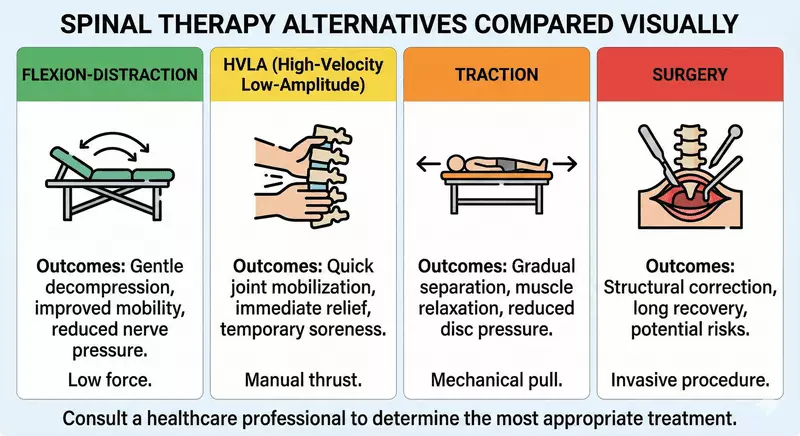
| Treatment Type | Technique & Delivery | Force Level | Key Indications | Pros | Limitations |
|---|---|---|---|---|---|
| Flexion-Distraction Therapy | Segmented-table, rhythmic spinal flexion/distraction by chiropractor | Low-force, gentle | Herniated discs, sciatica, spinal stenosis, post-surgical care | Precision targeting, segmental decompression, nerve relief, safe for sensitive spines | Multiple sessions required; slower onset than surgery |
| Spinal Traction / Mechanical Decompression | Static or intermittent traction (machine or inversion-based) | Variable; less targeted | General disc pressure, mild nerve tension | Non-invasive, accessible | Lack of segmental control; may cause discomfort or overstretching |
| HVLA Chiropractic Adjustment | High-velocity thrusts (manual manipulation with audible cavitation) | High-force, rapid | Joint stiffness, misalignment | Fast results, joint mobilisation | Not safe for disc herniation, osteoporosis, or post-surgical patients |
| Surgical Interventions (e.g. discectomy, spinal fusion) | Operative removal/fusion of spinal structures | Invasive | Severe disc injury, instability, progressive neurological symptoms | Structural correction, nerve decompression | Risk of complications, long recovery, mobility loss |
Why Choose Flexion-Distraction First?
Safe for Complex & Sensitive Cases
- Ideal for patients with osteoporosis, post-surgical implants, or disc degeneration
- Avoids thrusting, cavitation, and high-impact movement
- Monitored in real time by a qualified chiropractor
Precision Decompression & Segmental Targeting
- Focused decompression at levels like L4-L5 or L5-S1
- Unique segmented-table allows controlled movement in specific regions
Broad Therapeutic Range
- Simultaneously addresses disc health, nerve pressure, joint mobility, and muscle tension
- Enhances hydration of intervertebral discs—critical for long-term disc integrity
When Flexion-Distraction Is Preferred Over Other Therapies
| Condition / Scenario | Best Option | Why |
|---|---|---|
| Herniated / Bulging Disc | Flexion-Distraction | Direct segmental decompression without risk of rupture |
| Sciatica / Nerve Root Compression | Flexion-Distraction | Widening of foraminal space relieves impinged nerves |
| Post-Surgical Recovery | Flexion-Distraction (with clearance) | Mobilises healing segments without stressing surgical sites |
| Elderly / Osteoporotic Patients | Flexion-Distraction | Safe, low-force technique protects brittle bones |
| Quick Alignment Fix | HVLA (when no disc involvement) | Joint cavitation offers rapid relief for mild stiffness |
| Advanced Instability or Fracture | Surgery | Structural correction needed when conservative care fails |
When leg pain is the main driver, our page on sciatica-focused chiropractic care helps you match treatment to the pattern of symptoms.
Frequently Asked Comparison Questions
Is spinal traction as effective as Flexion-Distraction?
No. While traction can reduce general spinal tension, it lacks the precision of chiropractor-guided segmental decompression that Flexion-Distraction provides—making it less suitable for herniated discs and sciatica.
Can HVLA adjustments treat disc bulges or nerve pain?
No. High-velocity thrusts may worsen disc injuries or compress nerve roots. Flexion-Distraction is safer and more appropriate for nerve-related conditions.
When is surgery necessary?
Only when conservative methods—including Flexion-Distraction—fail, or when neurological symptoms worsen (e.g., weakness, loss of bladder control). Surgery addresses structural issues directly but should be a last resort.
Why Freedom Clinics Is Trusted for Flexion-Distraction Therapy
At Freedom Clinics, Canary Wharf, we provide:
- Modern flexion-distraction tables for segment-specific decompression
- Skilled chiropractors trained in low-force spinal therapies
- Holistic treatment plans that combine decompression, posture correction, and aftercare
- Safety protocols for post-operative, elderly, and complex spinal cases
Book Your Flexion‑Distraction Therapy at Freedom Clinics, Canary Wharf
If you’re experiencing spinal pain, disc issues, or nerve compression and want a non-surgical, low-force treatment, booking a Flexion‑Distraction Therapy consultation at Freedom Clinics in Canary Wharf is your first step toward relief. Here’s how to begin, what to expect, and why this therapy is the preferred conservative care option.
How to Schedule Your Flexion‑Distraction Appointment
Step 1: Contact the Clinic
- Phone: 0203 197 9100
- Email: canarywharf@freedomclinics.com
Just mention “Flexion‑Distraction Therapy” and our team will guide you through available appointment times.
Step 2: Pre-Visit Screening
We may ask about:
- Spinal conditions (e.g., disc herniation, sciatica, degenerative disc disease)
- Previous surgeries
- Bone health (e.g., osteoporosis)
This helps our chiropractor tailor your spinal assessment for safety and precision.
Step 3: Appointment Confirmation
You’ll receive:
- Date/time confirmation
- Our clinic address: Canada Place Shopping Mall, 34 North Colonnade, Canary Wharf, London E14 5HX
- What to bring: imaging reports (if available), wear comfortable clothing, and optionally a pain journal
What to Expect at Your First Visit
Comprehensive Chiropractic Evaluation
Your session begins with a full chiropractic assessment:
- Posture and mobility analysis
- Orthopaedic and neurological testing
- Review of any imaging or previous diagnoses
We evaluate if Flexion‑Distraction is the right therapy for your condition, especially for those with:
- Herniated or bulging discs
- Sciatica or nerve root compression
- Post-surgical spinal healing
- Age-related spinal degeneration
Your First Flexion‑Distraction Session
- Conducted on a segmented Flexion‑Distraction table
- The chiropractor gently performs spinal flexion and distraction at the necessary segments (e.g., L4-L5, L5-S1)
- No cracking or forceful thrusts—this is low-force, precision-guided spinal decompression
Clinic Location, Hours, and Accessibility
Address:
Freedom Clinics – Canary Wharf
Canada Place Shopping Mall
34 North Colonnade
London E14 5HX
Opening Hours:
| Day | Time |
|---|---|
| Monday–Friday | 7:00 am – 8:00 pm |
| Saturday–Sunday | 10:00 am – 4:00 pm |
The clinic is located near Jubilee Line, DLR, and Elizabeth Line stations. Parking and public transport access make visits convenient for professionals across London.
Why Book Flexion‑Distraction Therapy Now?
- Early intervention can reduce the risk of long-term nerve damage and prevent condition progression
- Avoid medications, injections, or surgery—this therapy is safe, drug-free, and gentle
- Suitable for complex cases including post-surgical spines and osteoporotic patients
- Delivered by highly trained chiropractors in a regulated clinical environment
Book now and take the first step toward safer, more effective spinal health management.

Our Chiropractors


References
- Gay, R. E., Ilharreborde, B., Zhao, K. D., Berglund, L. J., Bronfort, G., & An, K. N. (2008). Stress in lumbar intervertebral discs during distraction: a cadaveric study. The spine journal : official journal of the North American Spine Society, 8(6), 982–990. https://doi.org/10.1016/j.spinee.2007.07.398
- Cambron, J. A., Schneider, M., Dexheimer, J. M., Iannelli, G., Chang, M., Terhorst, L., & Cramer, G. D. (2014). A pilot randomized controlled trial of flexion-distraction dosage for chiropractic treatment of lumbar spinal stenosis. Journal of manipulative and physiological therapeutics, 37(6), 396–406. https://pubmed.ncbi.nlm.nih.gov/25108751/
- Cambron, J. A., Gudavalli, M. R., Hedeker, D., McGregor, M., Jedlicka, J., & Keenum, M. (2006). One-year follow-up of a randomized clinical trial comparing flexion distraction with an exercise program for chronic low back pain. Journal of Manipulative and Physiological Therapeutics, 29(2), 92–101. https://www.prospectheightschiropractor.com/storage/app/media/5b3baea685c34_Traction_Distraction_Decompression_Studies.pdf
- Whedon, J. M., Song, Y., Mackenzie, T. A., Toler, A. W., & Lurie, J. D. (2015). Risk of traumatic injury associated with chiropractic spinal manipulation in Medicare Part B beneficiaries. Spine, 40(4), 264–270. https://www.chiropractic.ca/wp-content/uploads/2018/04/Bussieres-2018-Spinal-Manipulative-Therapy-and-Other-Conservative-Treatments-for-Low-Back-Pain.pdf

