
Mobilisation in Chiropractic Care
Mobilisation is a clinically validated chiropractic technique that involves gentle, low-force joint mobilisation to improve range of motion (ROM), relieve musculoskeletal stiffness, and restore joint function — particularly in the neck, shoulders, and spine. Unlike high-velocity spinal manipulation (HVLA), which involves quick thrusts beyond joint end range, mobilisation uses controlled, passive oscillations within safe physiological limits.
This non-invasive manual therapy is ideal for individuals experiencing joint restriction, postural strain, or who simply prefer a gentler approach to chiropractic care. At Freedom Clinics in Canary Wharf, mobilisation is integrated into tailored treatment plans to help patients move more freely, reduce discomfort, and maintain long-term spinal health.
Book your appointmentMedically reviewed by Tanesa Mohan (MChiro LRCC). Last update: 30 January 2026.
What Is Chiropractic Mobilisation?
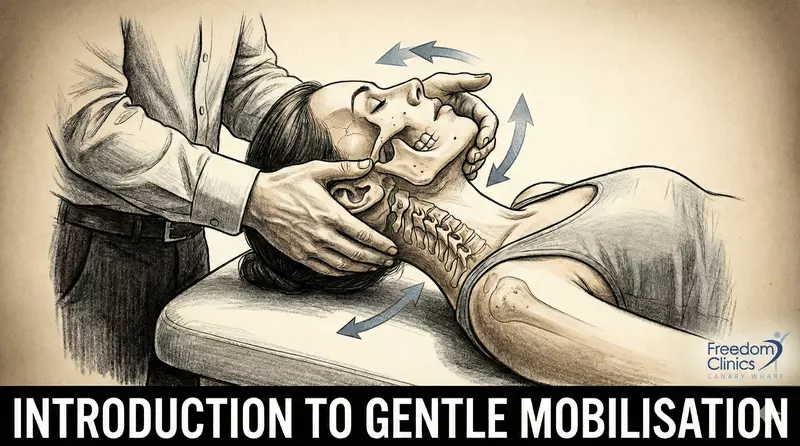
Chiropractic mobilisation is a specialist manual therapy technique designed to restore joint mobility, reduce mechanical stiffness, and enhance range of motion (ROM) using passive, low-velocity oscillations. It’s a core part of gentle chiropractic care, especially suited to patients who require a non-invasive, non-thrust treatment option for joint restriction and postural dysfunction.
This technique differs fundamentally from spinal manipulation — particularly HVLA (High-Velocity, Low-Amplitude) adjustments — which apply forceful thrusts beyond joint end range. Mobilisation, by contrast, operates within the joint’s natural physiological boundaries to improve motion without cavitation, making it ideal for individuals who may be sensitive to higher-force interventions.
At Freedom Clinics in Canary Wharf, mobilisation is delivered as part of a broader chiropractic care plan that addresses movement, posture, and neuromuscular balance through a combination of techniques.
A Gentle Alternative to Spinal Manipulation (HVLA)
While both mobilisation and HVLA aim to restore optimal joint function, the mechanisms differ significantly. Mobilisation therapy uses controlled, rhythmical joint movements that gradually reintroduce motion into stiff or hypomobile areas — without the joint gapping or cracking sensation associated with spinal adjustments.
Mobilisation is recommended for:
- Older adults with osteopenia or osteoporosis
- Individuals with joint instability or recent surgery
- Patients experiencing movement sensitivity
- Anyone seeking low-force chiropractic care
By stimulating joint proprioceptors and improving soft tissue elasticity, mobilisation helps regulate neuromuscular tone and support postural correction.
When Chiropractors Use Mobilisation
Mobilisation is prescribed when:
- A joint exhibits restricted motion or capsular tightness
- High-velocity thrust techniques are contraindicated
- Patients show signs of postural overload or desk-bound fatigue
- Rehabilitation requires gradual reintroduction of movement
Chiropractors at Freedom Clinics commonly integrate mobilisation with:
- Soft tissue mobilisation techniques
- Functional rehabilitation exercises
- Posture and ergonomic re-education
These multimodal combinations enhance results by addressing both the mechanical restrictions and neurophysiological contributors to dysfunction.

Benefits of Mobilisation Therapy
Mobilisation therapy is a fundamental chiropractic technique that delivers a range of therapeutic benefits by targeting joint stiffness, capsular tightness, and neuromuscular imbalance. As a low-force, non-thrust manual therapy, it provides patients with a safe, effective alternative to spinal manipulation — especially for those who prefer gentle, movement-based chiropractic care.
At Freedom Clinics Canary Wharf, mobilisation is integrated into comprehensive treatment plans to restore function, reduce discomfort, and promote long-term spinal health through precise joint mobilisation techniques.
Physical and Functional Benefits
Mobilisation restores proper arthrokinematic joint motion by applying passive oscillatory movements that increase mobility without forceful thrusts.
Key physical benefits include:
- Enhanced range of motion (ROM) in restricted joints
- Reduction of joint stiffness and capsular tightness
- Increased synovial fluid movement, improving joint hydration
- Decompression of joint structures, aiding in postural alignment
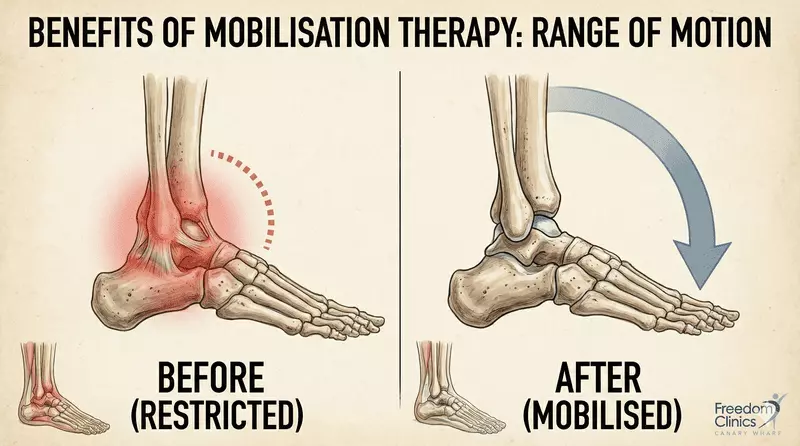
By improving mechanical efficiency, mobilisation decreases compensatory tension in adjacent soft tissues and promotes more natural, fluid movement.
Neurological and Muscular Impact
Mobilisation activates mechanoreceptors in the joint capsule, which enhances proprioceptive input to the central nervous system.
A controlled laboratory study from the Department of Physical Therapy at the University of Alberta demonstrated that joint mobilisation stimulates articular mechanoreceptors, leading to measurable changes in proprioceptive input and modulation of spinal reflex excitability within the central nervous system.
This leads to:
- Improved joint position sense
- Reduction of protective muscle guarding
- Modulation of nociceptive (pain) signals through neural feedback
- Support for neuromuscular reset, crucial in cases of chronic pain or poor movement patterns
These neurological effects help restore coordinated motion and reduce abnormal muscle tension.
Emotional and Patient-Centric Advantages
Mobilisation also contributes to a more positive treatment experience, especially for those hesitant about traditional spinal adjustments:
- Offers a calm, low-intensity therapeutic approach
- Builds confidence in safe movement
- Reduces fear of “cracking” or sudden force
- Encourages greater engagement with chiropractic care over time
These perceptual benefits are especially valuable for first-time patients or those recovering from trauma.
How Mobilisation Works: The Science Explained
Understanding how mobilisation therapy works reveals why this gentle chiropractic technique is effective for restoring joint health, improving mobility, and modulating neuromuscular function. As a passive manual intervention, joint mobilisation interacts with the body on three levels — biomechanical, neurological, and soft tissue — to deliver clinically validated outcomes.
At Freedom Clinics Canary Wharf, we apply chiropractic mobilisation techniques based on these principles to support patients with joint restriction, postural dysfunction, and chronic pain syndromes.
Biomechanical Effects: Restoring Natural Joint Motion
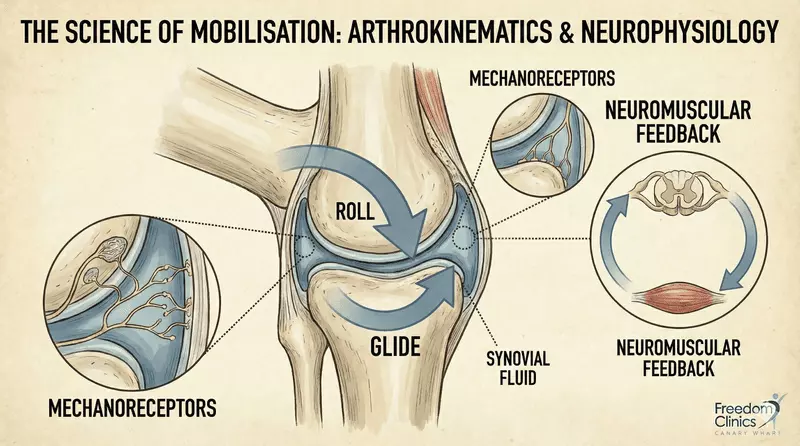
Joint mobilisation reintroduces arthrokinematic motion — the gliding, rolling, and spinning actions that occur within synovial joints. These micro-movements are essential for healthy joint mechanics and are often impaired by stiffness, injury, or prolonged immobility.
Mobilisation restores joint function by:
- Improving joint congruency and articular alignment
- Increasing capsular extensibility through controlled stretching
- Stimulating synovial fluid exchange to nourish cartilage and reduce friction
- Supporting even load distribution across the kinetic chain
These effects collectively reduce mechanical strain, optimise range of motion, and enhance overall joint efficiency.
Research from the School of Health and Rehabilitation Sciences at The University of Queensland showed that passive oscillatory joint mobilisation improves capsular tissue extensibility and promotes synovial fluid movement, supporting cartilage nutrition and reducing joint stiffness in hypomobile joints.
Neurological Effects: Resetting Movement and Reducing Pain
Mobilisation activates mechanoreceptors embedded in the joint capsule and surrounding ligaments. These receptors play a critical role in modulating signals sent to the central nervous system (CNS), influencing how the brain interprets joint position and movement.
Key neurological benefits include:
- Suppression of nociceptive signalling (pain perception)
- Enhancement of proprioceptive input for joint position sense
- Deactivation of muscle guarding reflexes
- Restoration of neuromuscular coordination following injury or disuse
This makes mobilisation particularly valuable for patients with chronic pain, motor control deficits, or movement apprehension.
Soft Tissue Interactions: Enhancing Flexibility and Recovery
Although the technique targets joints, mobilisation therapy also influences periarticular soft tissues, including fascia, ligaments, and muscles.
These tissue-level benefits include:
- Release of myofascial adhesions and connective tissue restrictions
- Enhanced tissue extensibility, improving range without strain
- Decreased neuromyofascial sensitivity, improving tolerance to movement
- Synergistic effects when combined with soft tissue therapy and rehabilitation
By preparing the musculoskeletal system for functional movement, mobilisation serves as both a treatment and a preparatory tool for more active care strategies.
Conditions Treated with Mobilisation Therapy
Mobilisation therapy is used extensively in chiropractic care to address conditions characterised by joint restriction, postural dysfunction, and limited range of motion (ROM). As a low-force, non-thrust treatment, it is particularly effective for individuals who need gentle joint intervention without the intensity of traditional spinal manipulation.
At Freedom Clinics Canary Wharf, our chiropractors employ joint mobilisation techniques to treat both spinal and peripheral conditions, enhancing recovery, comfort, and movement efficiency.
Spinal Conditions
Chiropractic mobilisation is commonly prescribed for spinal complaints involving segmental stiffness or mechanical dysfunction.
Conditions treated include:
- Cervical joint restriction contributing to neck pain, headaches, or reduced rotation
- Thoracic hypomobility from prolonged sitting or upper back rounding
- Lumbar joint dysfunction associated with chronic lower back pain
- Facet joint irritation causing sharp pain during extension or rotation
Mobilisation improves spinal motion, decompresses irritated tissues, and restores functional mobility.
Postural and Repetitive Strain Conditions
Patients with posture-related strain benefit from mobilisation therapy as it reconditions joints affected by poor ergonomics and repetitive movement.
Common uses:
- Forward head posture and tech neck from screen use
- Upper back and scapular restriction in desk workers
- Shoulder stiffness linked to workstation alignment issues
- Postural fatigue from static load bearing or prolonged standing
Mobilisation reduces joint loading, improves alignment, and enhances movement adaptability.
This makes mobilisation particularly effective for patients managing shoulder pain related to postural strain and repetitive desk-based activities.
Peripheral Joint Conditions
Joint mobilisation is highly effective for treating stiffness and motion loss in the extremities.
Applied to:
- Frozen shoulder during recovery from adhesive capsulitis
- Knee joint restriction due to osteoarthritis or surgery
- Ankle stiffness post-sprain or immobilisation
- Hip joint tightness affecting walking and functional rotation
These applications restore joint glide, reduce soft tissue tension, and support active rehabilitation.

These applications are especially relevant for patients experiencing neck pain and joint stiffness that limit everyday movement.
Rehabilitation and Post-Injury Recovery
Mobilisation techniques are essential in rehabilitation protocols following trauma, surgery, or immobilisation.
Therapeutic roles include:
- Post-surgical joint mobilisation to prevent stiffness
- Reintegration of motion after ligamentous or soft tissue injuries
- Treatment of stiffness after casting for fractures
- Reconditioning of hypomobile joints following illness or inactivity
Mobilisation prepares the musculoskeletal system for further functional training and promotes confident, pain-free movement.
This approach is commonly used within disc injury rehabilitation where controlled, low-force movement is clinically indicated.
Mobilisation vs. Manipulation: What’s the Difference?
Mobilisation therapy and spinal manipulation are both core techniques in chiropractic care, but they differ in their application, intensity, and therapeutic goals. While both aim to restore joint motion and relieve discomfort, the mechanisms and patient suitability vary significantly.
At Freedom Clinics Canary Wharf, our chiropractors use both techniques strategically, tailoring each to your specific condition, comfort level, and mobility goals.
Mobilisation Therapy: A Gentle, Passive Approach
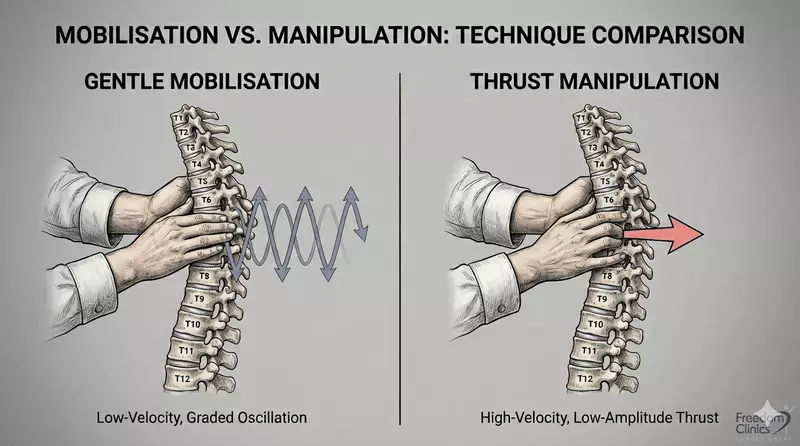
Mobilisation therapy uses slow, rhythmic joint movements applied within the joint’s physiological range. It’s a low-force, non-thrust manual technique designed to relieve stiffness, improve joint mechanics, and stimulate neurological feedback without producing a “crack.”
Mobilisation is preferred when:
- The patient has osteoporosis, joint hypermobility, or post-surgical sensitivity
- Gentle care is needed for pain-sensitive or anxious individuals
- The focus is on rehabilitation, neuromuscular reset, or postural correction
- Progressive, graded movement is more appropriate than rapid adjustment
It enhances arthrokinematics, promotes synovial fluid movement, and improves proprioception without causing cavitation.
Clinical guidance published by Brigham and Women’s Hospital Department of Rehabilitation Services indicates that low-velocity joint mobilisation is recommended over high-velocity thrust techniques for pain-sensitive, post-surgical, and medically complex patients due to reduced mechanical stress and improved tolerance.
Spinal Manipulation: High-Velocity Realignment
Spinal manipulation — technically referred to as HVLA (High Velocity, Low Amplitude) — involves a quick, controlled thrust that moves the joint slightly beyond its passive range. This often results in an audible release, or cavitation, which can relieve tension and restore joint spacing.
Manipulation is typically used when:
- There’s joint fixation, such as facet joint syndrome or spinal locking
- Immediate neurophysiological reset or joint gapping is needed
- The patient is screened and able to tolerate force-based techniques
- The goal is fast restoration of movement in a restricted segment
Manipulation delivers targeted realignment, often used in acute or complex cases with pronounced mobility loss.
Comparison at a Glance: Mobilisation vs. Manipulation
| Feature | Mobilisation Therapy | Spinal Manipulation (HVLA) |
|---|---|---|
| Technique Type | Low-force, passive oscillation | High-force, rapid thrust |
| Speed | Slow and controlled | Fast and abrupt |
| Range of Movement | Within physiological range | Slightly beyond passive range |
| Produces Cavitation (“Crack”) | No | Yes |
| Best for | Rehab, mild stiffness, post-surgical care | Locked joints, nerve impingement, chronic dysfunction |
| Patient Suitability | Osteoporotic, elderly, sensitive to force | Younger or resilient patients with stable spinal mechanics |
| Related Search Queries | gentle chiropractic treatment, passive joint mobilisation | chiropractic cracking, spinal adjustment HVLA |
Mobilisation is one of several chiropractic techniques used at Freedom Clinics to match care intensity to patient needs.
Is Mobilisation Therapy Right for You?
If you’re considering chiropractic care but unsure whether a forceful adjustment is appropriate for your condition, you may be asking: “Is mobilisation therapy right for me?” As a gentle, low-force treatment, mobilisation therapy is ideal for many patients who need targeted joint care without the intensity of spinal manipulation.
At Freedom Clinics Canary Wharf, our experienced chiropractors evaluate your musculoskeletal health, goals, and medical history to determine whether joint mobilisation is the most effective approach for your needs.
This assessment ensures chiropractic care at Freedom Clinics is aligned with your condition, goals, and tolerance for care.
Ideal Candidates for Mobilisation Therapy
Mobilisation therapy is commonly recommended for individuals who:
- Experience joint stiffness, restricted range of motion, or capsular tightness
- Are new to chiropractic treatment and prefer non-thrust techniques
- Are in rehabilitation from surgery, immobilisation, or injury recovery
- Are undergoing treatment for postural dysfunction, such as forward head posture or thoracic rounding
- Live with age-related conditions, including osteoarthritis and spinal degeneration
- Require gentle manual therapy due to osteoporosis, frailty, or pain sensitivity
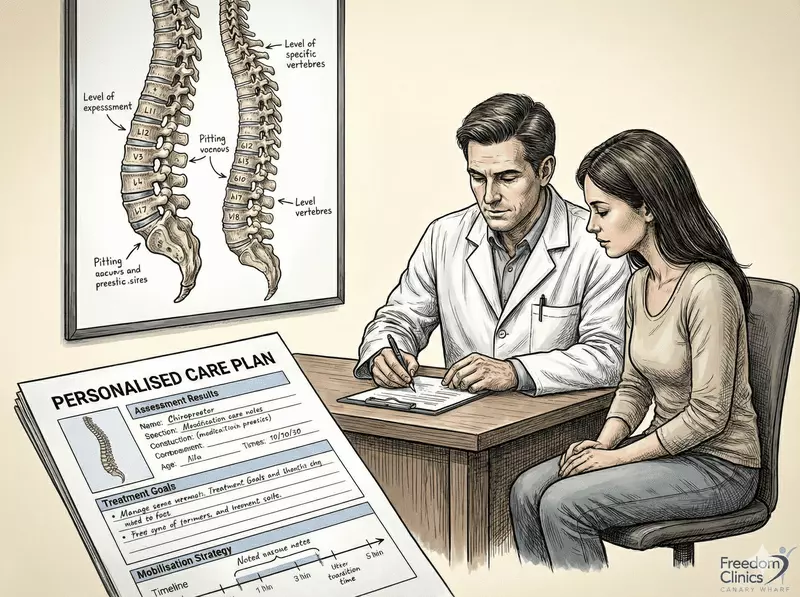
For these patients, chiropractic mobilisation gently restores joint mechanics, enhances proprioceptive feedback, and facilitates movement re-education — all without high-velocity thrusts.
When Mobilisation May Not Be Appropriate
Although mobilisation therapy is highly adaptable, it may not be suitable in the following cases:
- Presence of acute joint inflammation, active infection, or fracture
- Diagnosed hypermobile joint disorders, such as Ehlers-Danlos Syndrome
- Ligamentous laxity leading to joint instability
- Neurological compromise that impairs motor control or spinal stability
- Situations where spinal manipulation (HVLA) may deliver better outcomes due to joint fixation or compression
In such cases, your chiropractor will recommend alternative or adjunct therapies tailored to your risk profile and clinical goals.
Personalised Care: Mobilisation as Part of an Integrated Plan
At Freedom Clinics, we never apply a one-size-fits-all model. Your treatment plan — whether it includes joint mobilisation, rehabilitation exercises, or postural correction — is:
- Based on a detailed clinical assessment of joint mechanics and neuromuscular function
- Aligned with your treatment tolerance, goals, and comorbidities
- Reassessed regularly using outcome-based metrics to guide ongoing care
- Designed to reduce pain, restore mobility, and support long-term resilience
Mobilisation therapy may be used on its own or in combination with other evidence-based chiropractic treatments to optimise results.
FAQs About Mobilisation Therapy
What is mobilisation therapy in chiropractic?
Mobilisation therapy is a gentle, non-thrust manual technique used in chiropractic care to restore joint function. It involves slow, oscillatory movements applied within a joint’s natural range of motion to reduce stiffness, enhance flexibility, and improve neuromuscular coordination — all without producing the audible “crack” common in manipulation.
How is mobilisation therapy different from spinal manipulation?
While both are used to improve joint motion, mobilisation therapy uses graded, controlled movements, while manipulation (HVLA) delivers a fast, high-velocity thrust beyond the joint’s passive range. Mobilisation is often chosen for its low-force, pain-free application, making it ideal for rehabilitative care and sensitive patient populations.
Is mobilisation therapy safe for elderly patients or those with osteoporosis?
Yes. Mobilisation therapy is ideal for older adults, individuals with osteoporosis, or anyone requiring low-force chiropractic care. Because it avoids abrupt movement, mobilisation helps restore mobility in fragile joints while minimising the risk of discomfort or injury.
Can mobilisation therapy be used alongside other chiropractic treatments?
Definitely. At Freedom Clinics, chiropractic mobilisation is often integrated into a multimodal care plan that includes:
- Soft tissue therapy
- Rehabilitation exercises
- Postural correction
- Ergonomic and movement education
This combination maximises treatment effectiveness across joint function, muscular balance, and movement patterns.
How many sessions of mobilisation therapy will I need?
The required number of mobilisation sessions varies depending on your condition and goals. Some patients experience relief in just 1–2 sessions, while others benefit from a structured care plan over several weeks. Your chiropractor will track progress and adjust your treatment frequency accordingly.
Is mobilisation therapy supported by evidence?
Yes. Mobilisation therapy is evidence-based and widely used in modern chiropractic care. Studies support its effectiveness in managing:
- Neck pain
- Osteoarthritis
- Postural strain
- Post-injury stiffness
It is recognised for its ability to improve joint mechanics, enhance proprioception, and reduce pain — especially when combined with exercise therapy.
Does mobilisation therapy hurt?
No. Mobilisation therapy is typically painless. It’s specifically designed to work within your comfort zone, without using forceful or jarring movements. Some patients may feel minor soreness as their joints adapt, but pain is rare and temporary.

Our Chiropractors


References
- Pickar, J. G., & Bolton, P. S. (2012). Spinal manipulative therapy and somatosensory activation. Journal of Electromyography and Kinesiology, 22(5), 785–794. https://doi.org/10.1016/j.jelekin.2012.01.015
- Özçelep, Ö. F., Tunali, N., Turhan, A., Polat, E., Demır, C., Gümüşay, D., & Tuncay, F. (2025). The effect of mobilization with movement on pain, joint distance, effusion area, and inflammation in rheumatoid arthritis: a double-blind randomized controlled clinical trial. Journal of orthopaedic surgery and research, 20(1), 929. https://doi.org/10.1186/s13018-025-06121-3
- Brigham and Women’s Hospital. (2020). Standard of care: joint mobilization. https://www.brighamandwomens.org/assets/BWH/patients-and-families/rehabilitation-services/pdfs/shoulder-adhesive-capsulitis.pdf

