
HVLA Chiropractic Technique: Benefits, Safety, and What to Expect at Freedom Clinics
At Freedom Clinics, Canary Wharf, we deliver expert-led chiropractic care featuring the clinically proven High-Velocity Low-Amplitude (HVLA) chiropractic adjustment — a powerful form of spinal manipulation designed to restore joint mobility, reduce pain, and improve functional movement. Whether you’re dealing with back pain, neck stiffness, or restricted spinal mobility, HVLA may offer fast, measurable relief through precise, targeted manual therapy.
HVLA, also known as a high-speed spinal thrust technique, involves a rapid yet controlled force applied to a specific joint within the spine. This chiropractic technique aims to correct joint hypomobility by releasing mechanical restrictions and stimulating the surrounding musculoskeletal and nervous systems. Patients often report immediate improvements in range of motion, posture, and overall physical comfort following HVLA treatment.
Book your appointmentMedically reviewed by Tanesa Mohan (MChiro LRCC). Last update: 04 February 2026.
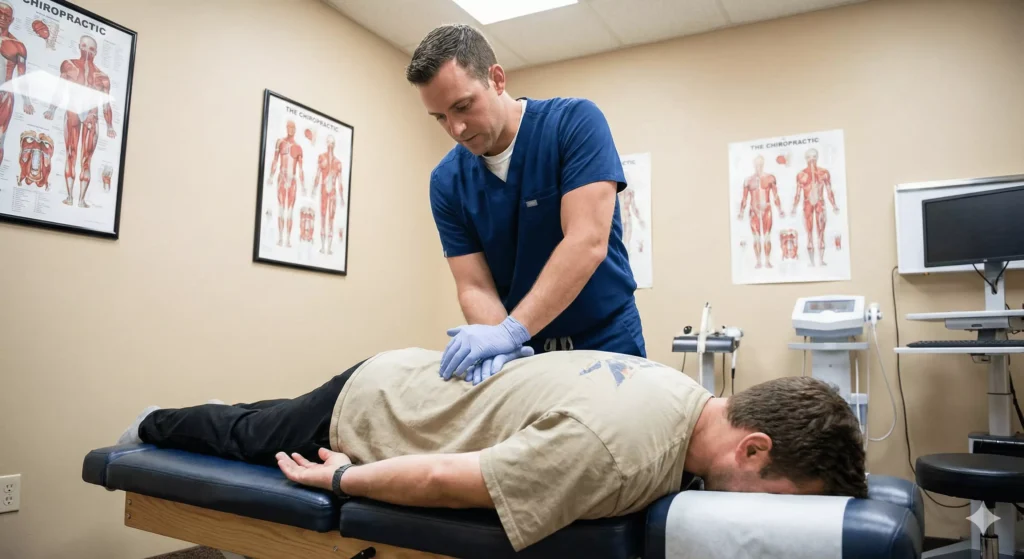
HVLA Overview
Our chiropractors at Freedom Clinics are fully trained in spinal adjustment techniques and use HVLA as part of an integrated care strategy that combines:
- Comprehensive musculoskeletal assessment and spinal screening
- Tailored chiropractic manipulation based on your condition
- Evidence-based manual therapies and rehabilitative aftercare
- Ongoing patient education to support spinal health and mobility
As a London clinic located in Canada Place Shopping Mall, Canary Wharf, we serve a diverse range of patients — from office workers with posture-related pain to athletes needing performance-based recovery.
On This Page, You’ll Learn:
- What HVLA means in the context of chiropractic treatment
- How HVLA chiropractic adjustments differ from other spinal techniques
- Which conditions are commonly treated with HVLA (e.g., lumbar stiffness, cervical dysfunction)
- What to expect during and after your HVLA session
- Who should avoid HVLA based on clinical safety guidelines
- How to book your HVLA chiropractic appointment in Canary Wharf
Explore the benefits, safety profile, and clinical insights of one of chiropractic’s most precise and effective techniques — trusted by healthcare providers worldwide and delivered locally at Freedom Clinics.
What Is HVLA in Chiropractic?
High-Velocity Low-Amplitude (HVLA) is a specialised form of chiropractic spinal manipulation that involves a quick, controlled thrust applied to a specific joint within the spine. Commonly referred to as a chiropractic adjustment, HVLA is designed to correct joint hypomobility, improve segmental motion, and stimulate the neuromuscular system for pain relief and enhanced function.
Unlike passive mobilisation or stretching techniques, HVLA delivers a rapid, low-range movement that targets mechanical restrictions in the spinal column. It is one of the most frequently used and researched chiropractic procedures for treating mechanical back pain, cervical stiffness, and postural dysfunction.
What Happens During an HVLA Adjustment?
During an HVLA chiropractic adjustment, the chiropractor:
- Identifies a dysfunctional or restricted joint through physical assessment
- Positions the patient for optimal mechanical leverage
- Delivers a high-speed, low-amplitude thrust to the joint
This often results in joint cavitation — the audible “pop” associated with the release of synovial gas within the joint capsule. While this sound is familiar and often reassuring, the therapeutic benefit of HVLA lies in restoring joint motion and reducing local tension, not in the sound itself.
According to imaging research from the University of Alberta published in PLOS ONE, real-time MRI shows that the audible pop during manipulation corresponds to the rapid formation of a gas cavity within the synovial fluid, confirming that the sound arises from cavitation rather than bone movement.
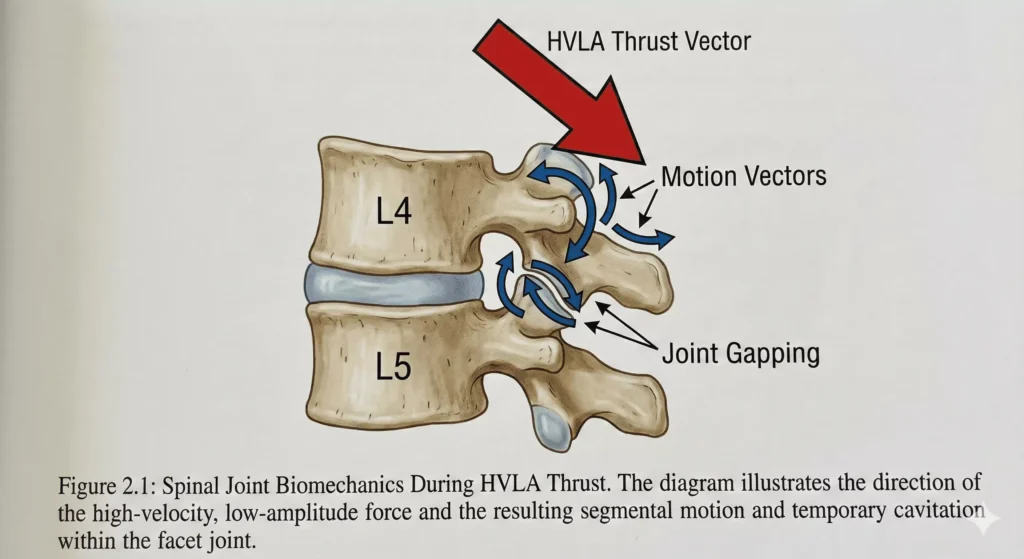
How HVLA Works: Mechanical and Neurological Insights
HVLA works through a combination of biomechanical correction and neurological modulation.
Biomechanical Effects:
- Breaks adhesions and stiffness in the spinal facet joints
- Improves joint glide and realigns vertebral segments
- Restores symmetrical spinal mechanics and load distribution
Neurological Effects:
- Stimulates mechanoreceptors and proprioceptors in the joint capsule
- Reduces nociceptive input (pain signals) via spinal pathways
- Relaxes hypertonic muscles by modulating spinal reflex loops
These effects support immediate pain reduction, enhanced functional mobility, and longer-term improvements when HVLA is integrated with exercise rehabilitation and postural retraining.
Guidance from NICE (UK National Institute for Health and Care Excellence) advises that manual therapy (including spinal manipulation) should be provided only as part of a treatment package that includes exercise, reflecting evidence that combined approaches yield better longer-term outcomes than either intervention alone.
Who Performs HVLA Adjustments?
At Freedom Clinics Canary Wharf, HVLA spinal manipulations are performed by registered chiropractors with extensive training in spinal assessment and manual therapy.
Every HVLA treatment at Freedom Clinics includes:
- Full clinical screening for safety
- Patient education and consent
- Personalised technique selection based on spinal health and medical history
We ensure HVLA is only delivered when it is clinically appropriate, safe, and aligned with the patient’s goals.
How Chiropractors Perform HVLA Adjustments
At Freedom Clinics, Canary Wharf, HVLA chiropractic adjustments are delivered through a structured and clinically validated process. Each phase is designed to ensure the effectiveness, safety, and precision of the high-velocity low-amplitude spinal manipulation.
Only qualified, registered chiropractors perform HVLA treatments in our clinic — and only after detailed screening confirms it is the most appropriate technique for your condition.
Step 1: Clinical Screening and Patient Assessment
Before delivering any spinal manipulation, our chiropractors begin with a comprehensive clinical screening to determine HVLA suitability. This includes:
- Detailed case history review, focusing on spinal trauma, osteoporosis, neurological symptoms, or vascular risks
- Orthopaedic and neurological tests to evaluate nerve integrity and joint function
- Palpatory spinal assessment to detect joint fixation, segmental dysfunction, or hypomobility
These evaluations help the chiropractor identify:
- Whether HVLA is clinically indicated
- Which specific spinal joint or vertebral segment is restricted
- Any contraindications to spinal thrust techniques (e.g. fractures, inflammatory conditions)
This phase ensures patient safety and aligns with best-practice chiropractic guidelines.
Step 2: Positioning and Joint Isolation
Once cleared for HVLA, the chiropractor prepares the patient for the adjustment by:
- Positioning them in side-lying, supine, or seated postures based on the spinal region to be treated
- Isolating the affected spinal joint with precise segmental contact and controlled tissue tension
- Applying biomechanical leverage to optimise thrust direction and reduce compensatory movement
This positioning allows the practitioner to maintain joint specificity, ensuring the adjustment affects only the intended segment and minimises stress on surrounding tissues.
Step 3: Delivering the HVLA Thrust
With the joint isolated, the chiropractor delivers the HVLA thrust — a high-velocity, low-amplitude force applied in a specific vector. Key attributes of this technique include:
- Speed: Rapid movement to overcome joint resistance
- Control: Low amplitude to avoid hyperextension or tissue strain
- Directionality: Adjustments aligned with the joint’s natural plane of motion
This often results in an audible joint cavitation — a safe, physiological sound caused by the release of gas within the synovial joint capsule. The presence of a pop is incidental and not required for therapeutic success.
Step 4: Post-Adjustment Reassessment and Aftercare
Immediately after the HVLA adjustment, the chiropractor reassesses:
- Joint motion and range
- Muscle tone and reflexes
- Patient-reported outcomes, including pain reduction or increased comfort
In many cases, HVLA is followed by:
- Soft tissue therapy (e.g. trigger point release, massage)
- Rehabilitative exercise prescription
- Postural retraining strategies
This integrative model supports long-term mobility, reinforces the effects of the adjustment, and prevents recurrence.

Conditions Commonly Treated with HVLA Chiropractic Adjustments
At Freedom Clinics, Canary Wharf, our chiropractors apply High-Velocity Low-Amplitude (HVLA) spinal manipulation to treat a variety of neuro-musculoskeletal conditions affecting the spine and pelvis. HVLA is a precise chiropractic adjustment technique used to correct joint hypomobility, reduce pain, and restore function in targeted spinal segments.
This technique is particularly effective for mechanical dysfunctions, where pain is caused by joint restrictions, muscular guarding, or abnormal segmental motion — all of which HVLA directly addresses.
HVLA for Mechanical Low Back Pain
Mechanical low back pain is one of the most common conditions treated with HVLA. This includes:
- Lumbar facet joint dysfunction
- Segmental hypomobility
- Postural overload from prolonged sitting or poor ergonomics
HVLA lumbar adjustments aim to:
- Restore motion to restricted vertebral joints
- Rebalance spinal loading
- Reduce referred pain and muscular tightness
Chiropractors at Freedom Clinics perform lumbar HVLA with precise joint isolation, often integrating soft-tissue therapy and exercise to support long-term outcomes.
HVLA for Neck Pain and Cervical Joint Dysfunction
Cervical HVLA adjustments are used to treat:
- Restricted cervical spine movement
- Localised or radiating neck pain
- Headaches originating from upper cervical dysfunction
Before delivering cervical spinal manipulation, our chiropractors conduct vertebrobasilar insufficiency screening to ensure patient safety.
HVLA restores mobility in the upper cervical spine, reduces muscle hypertonicity, and helps alleviate cervicogenic headache symptoms.
HVLA for Thoracic Spine Stiffness
Thoracic joint restrictions often present in individuals with:
- Sedentary desk jobs
- Rotational sports imbalance
- Postural fatigue
Mid-back HVLA adjustments:
- Improve thoracic extension
- Reduce myofascial tightness between the shoulder blades
- Enhance respiratory mechanics and posture
Thoracic HVLA is often paired with ergonomic advice, active mobility drills, and scapular stability retraining.
HVLA for Sacroiliac Joint Dysfunction (SI Joint)
The sacroiliac joint (SI joint) can become restricted due to trauma, prolonged sitting, or pregnancy-related instability. Symptoms often include:
- Low back or buttock pain
- Difficulty standing from a seated position
- Pelvic asymmetry during movement
HVLA sacroiliac manipulation restores joint movement, equalises pelvic loading, and relieves referred discomfort.
HVLA for Cervicogenic Headaches
Cervicogenic headaches originate from dysfunction in the upper cervical spine. These headaches typically involve:
- One-sided head or neck pain
- Limited neck range of motion
- Tension in suboccipital muscles
Chiropractors use HVLA upper cervical adjustments to:
- Improve joint mobility
- Release segmental compression
- Decrease headache frequency and intensity
Adjunct treatments may include trigger point therapy and postural re-education.
HVLA for Facet Joint Syndrome
Facet joint syndrome involves irritation or degeneration of the small stabilising joints in the spine. Symptoms may include:
- Sharp, localised pain with spinal extension or rotation
- Muscle guarding and restricted range
- Aggravation during prolonged static postures
HVLA for facet joint dysfunction:
- Restores articular gliding
- Reduces capsular stiffness
- Promotes improved movement patterns
Chiropractic care for facet syndrome at Freedom Clinics includes HVLA, mobilisation, and therapeutic strengthening.
Contraindications and Safety Considerations for HVLA Chiropractic Adjustments
At Freedom Clinics, Canary Wharf, the safe delivery of all High-Velocity Low-Amplitude (HVLA) chiropractic adjustments is ensured through strict adherence to evidence-based screening protocols. While HVLA is an effective and commonly used spinal manipulation technique, it is not appropriate for every patient. Our chiropractors carefully assess for contraindications and adapt treatment plans to prioritise safety at every stage.
If you’re unsure whether HVLA is appropriate for you, learn how our team approaches screening and consent in our overview of Chiropractic Care in Canary Wharf.
Absolute Contraindications: When HVLA Should Not Be Used
Absolute contraindications are conditions that completely exclude the use of HVLA due to the high risk of adverse outcomes. Chiropractors at Freedom Clinics do not perform HVLA in the presence of:
- Osteoporosis or severe bone demineralisation
- Acute spinal fractures (including vertebral, pelvic, or rib fractures)
- Spinal malignancy or metastatic bone cancer
- Spinal cord compression syndromes
- Cauda equina syndrome
- Vertebrobasilar insufficiency (VBI) — a vascular condition increasing stroke risk
- Active spinal infections such as osteomyelitis or discitis
In these cases, patients are either referred for specialist care or offered alternative manual therapy techniques that pose no risk to structural or neurological integrity.
Relative Contraindications: When HVLA May Be Modified or Deferred
In situations where risk is present but manageable, HVLA may still be considered with technique modification, multidisciplinary clearance, or substituted with lower-force options. These relative contraindications include:
- Disc herniation with radicular symptoms
- Hypermobility syndromes (e.g., Ehlers-Danlos Syndrome)
- Recent spinal surgery (within 6–12 months)
- Acute joint inflammation or synovitis
- Use of anticoagulant medication
- Pregnancy, particularly in the third trimester
When features suggest a disc herniation or nerve irritation, please review our clinical guidance on Disc Injury before proceeding.
Freedom Clinics chiropractors assess the anatomical region, biomechanical stress, and patient history to decide whether HVLA is appropriate, requires adaptation, or should be avoided entirely.
Safety Protocols at Freedom Clinics Canary Wharf
Our chiropractors follow a multi-step safety protocol for all HVLA chiropractic adjustments:
- Pre-Treatment Clinical Screening
- Medical history evaluation
- Orthopaedic and neurological assessment
- Vascular screening for conditions like VBI
- Informed Consent
- Clear explanation of risks, benefits, and alternatives
- Written and verbal consent documentation
- Technique Selection and Modification
- Force vector and amplitude adapted for age, mobility, and risk profile
- Use of alternative manual therapies if HVLA is contraindicated
- Post-Treatment Monitoring
- Observation of neurological signs
- Assessment of pain response and range of motion
All treatments are performed by licensed chiropractors who are extensively trained in the safe application of spinal manipulation techniques.
If HVLA isn’t indicated after screening, your chiropractor may recommend one of our other chiropractic techniques that better fit your risk profile.
Is HVLA Safe?
Yes — for appropriately screened individuals, HVLA is a safe and effective chiropractic treatment supported by decades of clinical research. When performed by a qualified professional like those at Freedom Clinics, HVLA poses minimal risk and is associated with positive patient outcomes in treating conditions such as mechanical back pain, neck stiffness, and sacroiliac dysfunction.
Common post-treatment effects may include:
- Mild soreness
- Temporary fatigue
- Rare, transient dizziness or headache
Severe adverse events, such as vascular incidents or neurological injury, are extremely rare and usually linked to pre-existing medical conditions that are identifiable during screening and excluded from treatment.
What to Expect During Your First HVLA Chiropractic Visit at Freedom Clinics Canary Wharf
Your first experience with High-Velocity Low-Amplitude (HVLA) spinal manipulation at Freedom Clinics Canary Wharf is designed to prioritise safety, education, and clinical precision. Our process follows a structured, step-by-step protocol to ensure that each patient receives personalised, evidence-based care delivered by a qualified chiropractor.
Whether you’re seeking relief from mechanical back pain, neck stiffness, or joint dysfunction, understanding each phase of the HVLA treatment journey helps you feel informed and confident.
If your main concern is lumbar stiffness or mechanical pain, see how our Back Pain Chiropractic Treatment integrates HVLA with rehab.
Step 1: Consultation and Medical History Review
During the initial consultation, your chiropractor will conduct a comprehensive medical history intake. This includes:
- Past spinal injuries or surgeries
- Current symptoms and functional limitations
- Lifestyle factors such as desk work or physical strain
- Medication use (e.g., anticoagulants, corticosteroids)
The aim is to identify potential contraindications and ensure HVLA is a clinically appropriate procedure based on your health status and goals.
Step 2: Physical Examination and Risk Screening
Next, the chiropractor performs a detailed physical examination, including:
- Orthopaedic testing to assess joint integrity and mechanical dysfunction
- Neurological screening for nerve root compression or reflex changes
- Palpation of spinal joints to identify segmental hypomobility
- Range of motion assessment and postural analysis
For cervical spinal manipulation, we conduct a vertebrobasilar insufficiency (VBI) screening to rule out any vascular risk factors before delivering an HVLA thrust.
Step 3: Explanation of HVLA and Informed Consent
Before proceeding with any spinal adjustment, your chiropractor will explain:
- What HVLA is and how it works biomechanically
- Which regions of the spine will be treated
- Expected benefits and short-term post-treatment sensations
- Rare risks and how they are mitigated through screening
Patients are then asked to provide informed consent, affirming their understanding and agreement to proceed with HVLA care.
Step 4: Delivery of the HVLA Chiropractic Adjustment
Once screening is complete and consent is given, the chiropractor prepares for the HVLA adjustment by:
- Positioning your body to isolate the specific spinal joint requiring treatment
- Ensuring biomechanical leverage and joint alignment
- Applying a controlled, high-speed thrust with precise amplitude
You may hear a joint cavitation — a harmless release of gas from the synovial capsule — which often accompanies successful joint mobilisation.
Step 5: Reassessment and Individualised Aftercare Plan
Immediately following the adjustment, the chiropractor:
- Reassesses spinal motion and muscle tone
- Discusses your response to the procedure
- Provides aftercare recommendations tailored to your needs
Aftercare may include hydration guidance, light movement, or prescribed rehabilitative exercises to enhance joint stability and prevent recurrence. If needed, additional sessions will be scheduled to support long-term progress.

Frequently Asked Questions About HVLA Chiropractic Adjustments
At Freedom Clinics, Canary Wharf, we understand that trying High-Velocity Low-Amplitude (HVLA) chiropractic adjustments for the first time can raise important questions. Below, we address the most common queries new and returning patients ask about HVLA, spinal safety, treatment outcomes, and session logistics.
Each answer has been crafted to maximise clarity while reinforcing the clinical value and safety of HVLA as a trusted chiropractic procedure.
What Exactly Is HVLA in Chiropractic?
HVLA stands for High-Velocity Low-Amplitude, a chiropractic spinal manipulation technique used to restore movement in restricted or fixated joints. It involves delivering a rapid, controlled thrust to a specific vertebral segment to:
- Improve spinal alignment
- Reduce mechanical back and neck pain
- Enhance joint biomechanics and mobility
Performed by a licensed chiropractor, HVLA is one of the most researched and widely used forms of manual therapy.
Is HVLA Safe for Everyone?
While HVLA is safe for most patients, it is not appropriate for individuals with:
- Osteoporosis or spinal fractures
- Vertebrobasilar insufficiency (VBI)
- Spinal cord compression or malignancy
- Severe neurological deficits
At Freedom Clinics, every patient undergoes a clinical screening and risk assessment prior to HVLA. If any contraindications are found, alternative treatment methods will be recommended.
Does an HVLA Adjustment Hurt?
No — most patients do not experience pain during HVLA. Some may feel:
- A brief pressure
- A popping sound (known as joint cavitation)
- Temporary muscle soreness after treatment
These sensations are normal and typically resolve within 24–48 hours
What Is Joint Cavitation?
Joint cavitation is the audible popping sound often heard during HVLA. It results from the release of gas bubbles from synovial fluid within the joint capsule. It is:
- Harmless
- Not an indicator of bone movement or damage
- Common in healthy spinal adjustments

How Many HVLA Sessions Will I Need?
The number of HVLA chiropractic sessions depends on:
- The severity and chronicity of your condition
- Your age and physical health
- Treatment goals and response to care
Your chiropractor will provide a personalised plan, which may include 3–10 sessions along with rehabilitative exercises.
Do I Need a Referral to See a Chiropractor for HVLA?
No. At Freedom Clinics, Canary Wharf, you can book directly with our chiropractors for HVLA treatment. No GP or specialist referral is needed — we are primary healthcare providers trained to assess and treat musculoskeletal issues independently.
Can HVLA Help with Sciatica or Headaches?
Yes. HVLA has shown clinical effectiveness in treating:
- Sciatic nerve pain due to lumbar joint dysfunction
- Cervicogenic headaches linked to upper cervical misalignment
- Facet joint syndrome
- Sacroiliac joint dysfunction
Following spinal screening, your chiropractor will determine if HVLA is the most appropriate option.
For leg pain traced to lumbar joint dysfunction, learn how we assess and manage Sciatica within a structured care plan.
What Should I Bring to My First Appointment?
For your first HVLA chiropractic visit, bring:
- Medical records and spinal imaging (if available)
- A list of current medications
- Comfortable clothing that allows movement
- Insurance details (if using private cover)
What Happens if HVLA Isn’t Right for Me?
If clinical screening identifies risk factors or conditions that make HVLA unsuitable, your chiropractor may:
- Modify the thrust technique to lower intensity
- Use mobilisation or soft tissue therapies instead
- Refer you to a specialist if necessary
At Freedom Clinics, patient safety always comes first.
Book Your HVLA Chiropractic Appointment at Freedom Clinics Canary Wharf
At Freedom Clinics, Canary Wharf, scheduling your HVLA chiropractic appointment is fast, convenient, and flexible. Whether you’re booking your first consultation or continuing an existing treatment plan, our system is built to support your needs — from initial inquiry through to post-treatment care.
Our chiropractors offer expert spinal manipulation tailored to each patient, and our team ensures a seamless booking process with extended hours, multiple contact methods, and central London accessibility.
How to Book an HVLA Chiropractic Appointment
You can schedule your HVLA session through any of the following:
- Call Us Directly: Speak to our Canary Wharf team at 0203 197 9100 for personalised assistance.
- Email Inquiries: For appointment questions, contact canarywharf@freedomclinics.com.
We accommodate same-day appointments where available, especially for urgent needs such as acute back pain or restricted joint mobility.
Clinic Opening Hours
Our Canary Wharf chiropractic clinic offers flexible hours to suit busy professionals and families:
| Day | Opening Hours |
|---|---|
| Monday–Friday | 7:00 AM – 8:00 PM |
| Saturday | 10:00 AM – 4:00 PM |
| Sunday | 10:00 AM – 4:00 PM |
Evening and weekend appointments are in high demand — we recommend booking in advance for optimal availability.
Clinic Address and Directions
Freedom Clinics, Canary Wharf
Canada Place Shopping Mall
34 North Colonnade
London E14 5HX
Located in the heart of Canary Wharf, our clinic is easily accessible via:
- Jubilee Line and DLR
- Major bus routes
- Paid parking options within the mall complex
We welcome both new patients and returning clients from across London and surrounding areas.
Related Chiropractic Technique Guides
- Joint Mobilisation (low-force alternative) — suitable when thrust is contraindicated.
- Flexion-Distraction Technique for lumbar discs — option for disc-biased presentations.
- Spinal Traction & Decompression therapy — adjunct where nerve root irritation is suspected.

Our Chiropractors


References
- Kawchuk, G. N., Fryer, J., Jaremko, J. L., Zeng, H., & Rowe, L. (2015). Real-time visualisation of joint cavitation. PLOS ONE, 10(4), e0119470. https://doi.org/10.1371/journal.pone.0119470
- National Institute for Health and Care Excellence. (2020, updated from 2016). Low back pain and sciatica in over 16s: Assessment and management (NG59). https://www.nice.org.uk/guidance/ng59

