
Tailor’s Bunion Treatment
A Tailor’s Bunion—also referred to as a bunionette—is a painful foot condition that develops along the outer edge of the foot, specifically at the fifth metatarsophalangeal joint, where the little toe connects to the rest of the foot. Unlike a traditional bunion, which affects the big toe, a Tailor’s Bunion appears at the base of the fifth toe, often leading to swelling, irritation, and difficulty finding comfortable footwear.
At Freedom Clinics, our experienced podiatrists specialise in diagnosing and treating Tailor’s Bunion using advanced biomechanical assessments, custom orthotic devices, and personalised care strategies. We work with patients experiencing chronic discomfort, restricted mobility, or progressive bunionette symptoms, providing both non-surgical solutions and access to surgical consultations when necessary.
Whether your pain is new or longstanding, we help you manage Tailor’s Bunion effectively—reducing inflammation, correcting foot function, and restoring confidence with every step.
Medically reviewed by: Dr Priya Anand DPM. Last update: 18th May 2026
Book your appointment
What is a Tailor’s Bunion (Bunionette)?
A Tailor’s Bunion, also known medically as a bunionette, is a structural foot deformity that occurs on the outer side of the foot, affecting the fifth metatarsophalangeal joint—where the little toe meets the fifth metatarsal bone. The condition causes a bony bump to form, often leading to localised pain, swelling, and increased sensitivity when wearing tight or narrow shoes.
According to a 2020 review article from the American Orthopaedic Journal Group, a bunionette refers to a painful prominence on the lateral aspect of the fifth metatarsal head, affecting the fifth metatarsophalangeal joint.
The name “Tailor’s Bunion” comes from the historical posture of tailors, who traditionally sat cross-legged while working. This position applied repetitive pressure to the outer edges of the feet, contributing to joint stress and the development of the deformity over time.
While often confused with a traditional bunion—which impacts the big toe joint—a Tailor’s Bunion appears on the opposite side of the foot. The two conditions are similar in structure but differ in location, treatment, and progression. Recognising this difference is crucial for proper clinical management.
This condition may also be misinterpreted as other forefoot issues, including:
- Morton’s Neuroma (nerve inflammation between toes)
- Metatarsalgia (pain in the ball of the foot)
- Fifth Toe Arthritis
- Hammertoe Deformity
Accurate diagnosis is essential. At Freedom Clinics, our experienced podiatrists use detailed gait analysis, footwear assessment, and biomechanical evaluation to distinguish Tailor’s Bunion from other lateral foot pathologies—ensuring the most effective and personalised treatment pathway for each patient.
Common Signs and Symptoms of Tailor’s Bunion
The symptoms of Tailor’s Bunion—also referred to as a bunionette—typically develop gradually, as pressure on the fifth metatarsophalangeal joint increases. This condition causes a progressive outward shift of the fifth metatarsal bone, leading to discomfort and inflammation near the base of the little toe.
Recognisable Symptoms of Tailor’s Bunion Include:
- Persistent pain or aching along the outer edge of the foot, especially near the fifth toe
- A visible bony bump at the base of the little toe
- Swelling, redness, and localised inflammation
- Burning, throbbing, or sharp discomfort when wearing tight shoes
- Callus formation or hard skin developing over the bunionette
- Increased sensitivity and discomfort during walking, standing, or physical activity
These symptoms often worsen when the foot is compressed in narrow, rigid, or high-heeled shoes, which place direct pressure on the affected joint. Over time, many individuals begin to alter their gait mechanics to avoid pressure on the lateral side of the foot. This compensatory walking pattern can create further strain, leading to secondary problems such as:
- Metatarsalgia (pain in the ball of the foot)
- Hammertoe development
- Ankle instability or overuse of surrounding joints
If you’re experiencing one or more of these symptoms, particularly a painful bump near your fifth toe, early diagnosis is key. At Freedom Clinics, our experienced podiatrists use biomechanical analysis and clinical evaluation to determine the severity of your Tailor’s Bunion symptoms and recommend the most effective, non-invasive treatment options.

What Causes Tailor’s Bunion?
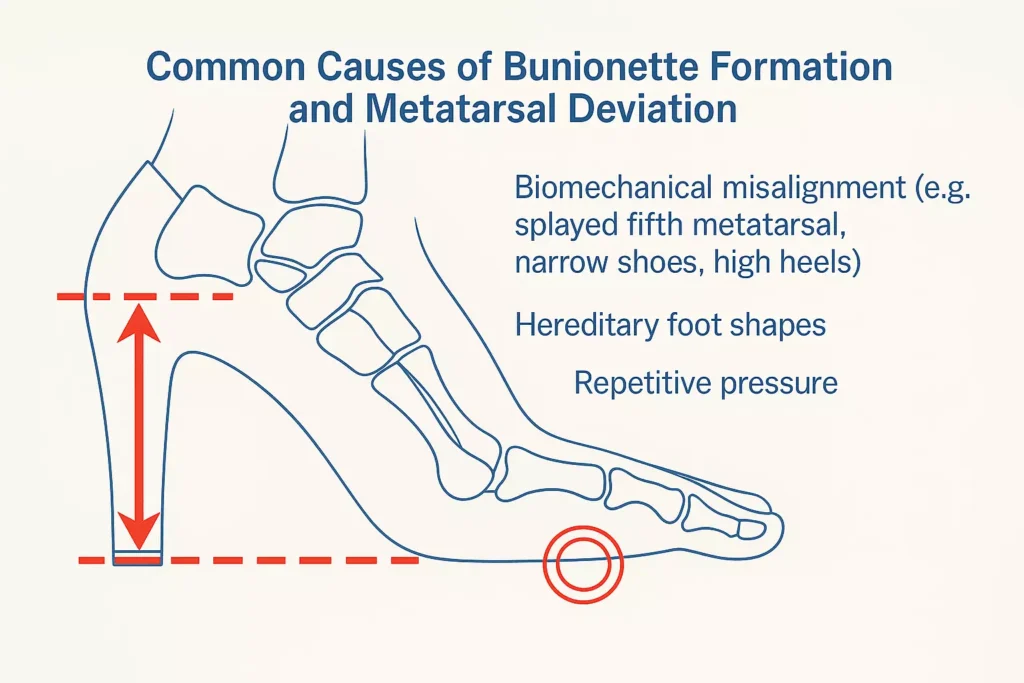
A Tailor’s Bunion—also called a bunionette—is primarily caused by a combination of foot structure abnormalities, biomechanical stress, and external compression, particularly at the fifth metatarsophalangeal joint.
This condition arises when the fifth metatarsal bone drifts outward, placing chronic pressure on the little toe joint, leading to inflammation, pain, and the formation of a visible bony prominence.
Understanding the common causes of Tailor’s Bunion is essential for both prevention and effective treatment.
1. Biomechanical and Structural Factors
- Overpronation (excessive inward rolling of the foot during gait)
- Flat feet or high arches, which alter natural foot mechanics
- Lateral splaying or outward deviation of the fifth metatarsal
- Uneven weight distribution across the forefoot
These anatomical issues increase stress on the outer edge of the foot, aggravating the fifth toe joint and creating the ideal environment for a bunionette to form.
2. Footwear Compression and Improper Fit
- Narrow shoes that crowd the toes and force the little toe inward
- High-heeled shoes that shift pressure forward onto the forefoot
- Rigid materials that increase friction around the bunionette site
Tight, ill-fitting shoes are one of the most common external aggravators of Tailor’s Bunion. Prolonged compression deforms the fifth metatarsophalangeal joint, accelerating the condition’s progression.
3. Genetic and Hereditary Factors
- Inherited foot shapes such as a broad forefoot or flexible joints
- Family history of bunion, hammertoe, or metatarsalgia
- Increased likelihood of bilateral occurrence (both feet)
People genetically predisposed to foot deformities may develop Tailor’s Bunion earlier or experience more severe symptoms, even with minimal external triggers.
4. Repetitive Movement and Occupational Pressure
- Sports with lateral foot loading: tennis, football, ballet
- Occupations requiring prolonged standing, kneeling, or squatting
- Historic postures (e.g., tailors sitting cross-legged) that strain the outer foot
These activities apply consistent pressure to the fifth metatarsal head, often triggering or intensifying a bunionette deformity.
When to Seek Help
If you’re experiencing pain near the base of your little toe, observe a bony lump on the outer foot, or have a family history of bunion-related conditions, it’s important to seek professional evaluation. At Freedom Clinics, our specialist podiatrists use gait analysis, biomechanical assessment, and pressure mapping to pinpoint the exact cause of your Tailor’s Bunion and deliver effective, targeted treatment.
How We Diagnose Tailor’s Bunion at Freedom Clinics
At Freedom Clinics, we provide a thorough and expert-led diagnostic process for identifying Tailor’s Bunion, also known as a bunionette. Our goal is to confirm the condition’s presence, determine its severity, and understand the underlying biomechanical causes—all of which influence the most effective treatment plan.
1. Clinical Examination by a Podiatrist
Every diagnosis begins with a detailed physical examination conducted by a qualified podiatrist. We assess the fifth metatarsophalangeal joint, looking for:
- A visible bony bump near the base of the little toe
- Signs of swelling, tenderness, or skin irritation
- Functional movement and joint flexibility
- Associated deformities like calluses, hammertoe, or tailor’s corn
We also rule out other causes of lateral foot pain, including:
- Morton’s Neuroma
- Metatarsalgia
- Arthritis of the fifth toe joint
2. Digital Gait and Pressure Analysis
Using our in-clinic gait analysis systems, we assess how you walk and distribute pressure across your feet:
- Identify overpronation or foot instability
- Measure pressure zones along the lateral forefoot
- Map biomechanical patterns contributing to the bunionette formation
This data helps us understand how structural forces affect your fifth metatarsal and inform long-term treatment options.
3. Diagnostic Imaging (When Required)
For a more detailed internal assessment, we may recommend:
- X-rays – to measure angular deviation and joint misalignment
- Ultrasound – for evaluating soft tissue inflammation
- MRI – for complex pain cases involving tendons or nerves
Imaging is especially useful when symptoms are severe or don’t respond to conservative care.
4. Individualised Assessment and Treatment Planning
Once a diagnosis is confirmed, we create a personalised treatment pathway based on:
- Structural alignment of the fifth metatarsal
- Level of joint inflammation and mechanical stress
- Lifestyle needs, footwear habits, and activity levels
This ensures a treatment approach that is both targeted and sustainable.
At Freedom Clinics, we combine clinical expertise, biomechanical diagnostics, and compassionate care to accurately diagnose Tailor’s Bunion. Whether you’ve just noticed a bump near your little toe or you’re dealing with long-term discomfort, our Canary Wharf-based podiatry team is here to help you take the next step toward relief.
Tailor’s Bunion Treatment Options at Freedom Clinics
Effective treatment for Tailor’s Bunion—also known as a bunionette—requires more than just pain relief. At Freedom Clinics in Canary Wharf, our approach targets both the symptoms and the underlying biomechanical causes, ensuring long-term correction and prevention. We prioritise non-surgical solutions, offering tailored treatment plans based on each patient’s foot structure, gait pattern, and lifestyle.
1. Footwear Modification and Joint Offloading
Footwear is a cornerstone in managing Tailor’s Bunion symptoms. Our podiatrists recommend:
- Wide-fitting shoes with adequate toe room to avoid compressing the fifth metatarsophalangeal joint
- Avoidance of high heels and narrow or pointed shoes
- Supportive, orthopaedic footwear to reduce lateral foot pressure
These changes help alleviate pain and prevent further joint irritation.
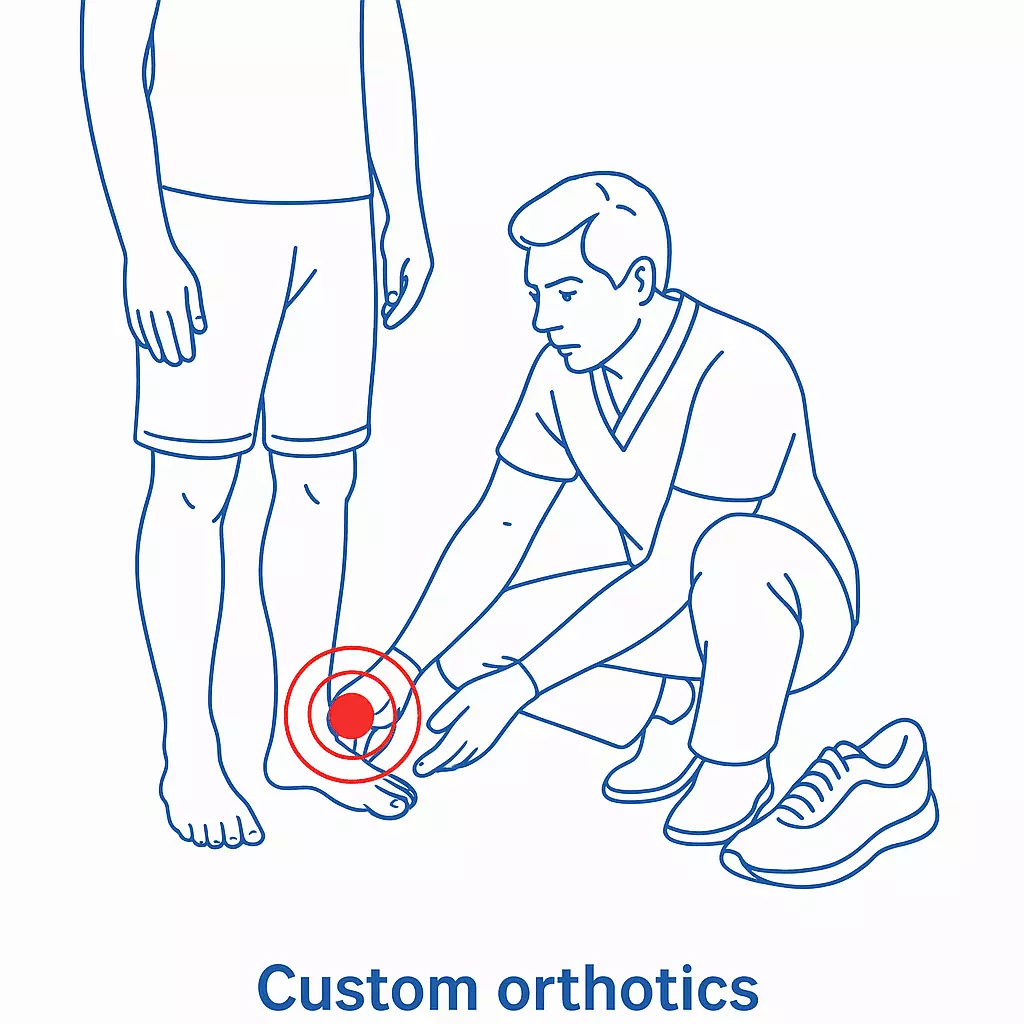
2. Custom Orthotics and Insoles
We use precision gait analysis to design custom orthotic insoles that:
- Offload pressure from the fifth metatarsal region
- Improve foot alignment and distribute weight evenly
- Stabilise movement and correct overpronation or splay-foot mechanics
Orthotics are one of the most effective tools for addressing the mechanical origins of a bunionette.
3. Protective Padding, Strapping, and Spacers
To reduce friction and realign the toe:
- Bunionette pads cushion the bony area from direct shoe contact
- Toe spacers help realign the little toe and reduce overlapping
- Taping techniques offer structural support and reduce mechanical irritation
These conservative interventions are especially effective for mild to moderate deformities.
4. Physiotherapy and Corrective Foot Exercises
We may recommend physiotherapy for:
- Foot and ankle strengthening exercises
- Enhancing joint mobility in the fifth toe joint
- Addressing compensatory movement patterns caused by pain or deformity
This holistic support improves function and prevents recurrence of the condition.
5. Anti-Inflammatory Therapies and Pain Relief
For immediate symptom relief, we offer:
- Ice therapy for inflammation control
- NSAIDs (non-steroidal anti-inflammatory drugs) for pain and swelling
- Shockwave therapy to stimulate healing in chronic cases
These interventions are used in conjunction with biomechanical correction to provide both short- and long-term relief.
6. Surgical Referral (Advanced or Non-Responsive Cases)
Surgical options are considered only when conservative care fails. We refer patients for:
- Distal metatarsal osteotomy to realign the fifth metatarsal
- Removal of the bony prominence
- Combined procedures for deformities like hammertoe or tailor’s corn
Our podiatrists coordinate closely with trusted orthopaedic specialists to ensure seamless care.
If you’re suffering from Tailor’s Bunion pain, early intervention can prevent progression and avoid surgery. At Freedom Clinics, our expert podiatrists offer diagnostic precision, personalised treatment, and lasting relief.

How to Prevent Tailor’s Bunion and Maintain Foot Health
A Tailor’s Bunion, also known as a bunionette, doesn’t develop overnight—but without proper care, it can progress into a painful and limiting condition. At Freedom Clinics in London, we focus not only on treating bunionettes, but on helping patients prevent them entirely through proper biomechanics, footwear education, and routine podiatric oversight.
1. Choose Footwear That Supports the Fifth Toe Joint
Poorly fitting shoes are one of the most common causes of Tailor’s Bunion progression. To prevent this condition:
- Wear wide-fitting shoes that allow natural toe alignment
- Avoid pointed-toe shoes, high heels, and rigid materials
- Opt for soft, cushioned footwear with forefoot support
This protects the fifth metatarsophalangeal joint and reduces friction over the lateral forefoot.
2. Use Custom Orthotics for Long-Term Support
At Freedom Clinics, we prescribe custom orthotic insoles to prevent recurrence in patients previously diagnosed with a bunionette, and to protect those at risk. Orthotics:
- Distribute pressure away from the fifth metatarsal
- Correct underlying issues like overpronation
- Improve gait stability and joint alignment
Wearing orthotics proactively reduces stress that contributes to deformity.
3. Maintain Healthy Gait and Biomechanical Alignment
Regular gait analysis helps detect small changes in walking pattern that may lead to Tailor’s Bunion over time. We recommend:
- Periodic gait re-evaluation, especially if pain arises
- Monitoring for lateral pressure on the fifth toe joint
- Early orthotic adjustment to prevent joint strain
Biomechanical consistency is key to joint longevity.
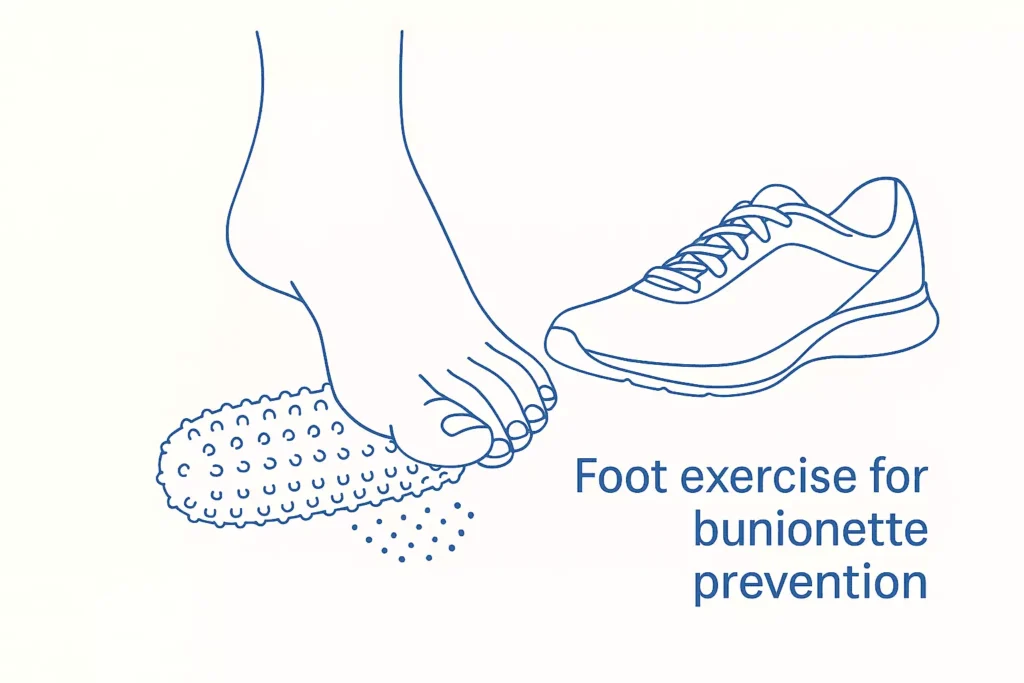
4. Strengthen Your Feet With Daily Exercises
Targeted strengthening exercises improve structural support:
- Toe spreads and curls engage stabilising muscles
- Ankle rotations enhance joint mobility
- Calf and plantar fascia stretches relieve tension and redistribute pressure
These simple routines promote joint integrity and help prevent deformity formation.
5. Catch Early Symptoms Before They Worsen
To stop a Tailor’s Bunion before it progresses:
- Check for a bump near the little toe
- Look out for callus formation or discomfort when walking
- Seek prompt evaluation if irritation or swelling occurs
At Freedom Clinics, early diagnosis leads to faster, less invasive intervention.
6. Reduce Lifestyle-Based Risks
Preventive care isn’t just physical—it’s behavioural:
- Avoid prolonged cross-legged sitting or high-impact sports without support
- Limit time in restrictive footwear during standing-heavy tasks
- Prioritise ergonomic foot care in both work and leisure activities
This ensures your fifth metatarsophalangeal joint remains stress-free and mobile.
At Freedom Clinics, we believe in empowering our patients to take control of their foot health. Through preventive podiatry, orthotic support, and biomechanical care, we help you maintain comfort, mobility, and protection against future bunionette formation.
Frequently Asked Questions About Tailor’s Bunion (Bunionette)
Patients visiting Freedom Clinics in Canary Wharf often have questions about Tailor’s Bunion, also referred to as a bunionette. Below are the most frequently asked questions, answered by our expert podiatrists to help you better understand this condition, its causes, treatments, and preventive care.
1. What Is a Tailor’s Bunion?
A Tailor’s Bunion is a bony prominence that forms on the outside of the foot, specifically at the fifth metatarsophalangeal joint—where the little toe connects to the foot. It occurs when the fifth metatarsal bone shifts outward, causing pressure, irritation, and inflammation.
2. What Causes a Tailor’s Bunion?
The most common causes of bunionette development include:
- Wearing narrow or tight-fitting footwear
- Genetic predisposition (hereditary foot structure)
- Overpronation or abnormal foot biomechanics
- Repetitive stress to the lateral forefoot
These factors create friction and pressure at the fifth toe joint, leading to deformity over time.
3. How Is a Tailor’s Bunion Different from a Standard Bunion?
While both are types of foot deformities, they affect different joints:
- A bunion appears at the base of the big toe (first metatarsophalangeal joint)
- A Tailor’s Bunion forms at the base of the fifth (little) toe
They may coexist, and both require similar forms of biomechanical correction and footwear modification.
4. What Are the Symptoms of a Tailor’s Bunion?
Typical symptoms include:
- Pain and aching at the outer foot
- Swelling, redness, or a noticeable lump near the little toe
- Worsening discomfort in tight or closed-toe shoes
- Formation of calluses or thickened skin at the pressure point
Early awareness and intervention significantly reduce the risk of progression.
Still have questions? Schedule an appointment with a Freedom Clinics podiatrist in Canary Wharf today for expert guidance on the diagnosis, treatment, and prevention of Tailor’s Bunion.
5. How Is Tailor’s Bunion Diagnosed by a Podiatrist?
At Freedom Clinics, diagnosis includes:
- Physical examination of the fifth metatarsophalangeal joint
- Gait analysis to assess abnormal pressure distribution
- X-rays to evaluate structural misalignment and deformity severity
An accurate diagnosis guides the most effective treatment plan.
6. Can You Treat Tailor’s Bunion Without Surgery?
Yes—most cases can be managed without surgery using:
- Custom orthotics to correct foot mechanics
- Wearing supportive, wide-fitting footwear
- Application of padding, spacers, and taping techniques
- Anti-inflammatory treatments to manage pain and swelling
7. When Is Surgery Required for Tailor’s Bunion?
Surgical referral may be needed when:
- Pain persists despite conservative treatment
- The bunionette interferes with mobility or shoe wear
- Complications like hammertoes, tailor’s corn, or severe joint misalignment arise
Procedures such as distal metatarsal osteotomy realign the bone and restore joint function.
8. How Can You Prevent a Tailor’s Bunion from Forming?
Preventative strategies include:
- Wearing wide-toe box shoes with proper cushioning
- Using orthotic insoles to maintain alignment
- Performing daily foot strengthening exercises
- Avoiding habits or footwear that place excessive pressure on the fifth toe joint
Our Podiatrists & Chiropodists


References
- Cooper, M. T., et al. (2020). The bunionette deformity—evaluation and management. Annals of Orthopaedics and Journal, 10.21037/aoj.2019.10.03. Retrieved from https://aoj.amegroups.org/article/view/5529/html

