
Skin & Nail Conditions Treated by Our Expert Podiatrists in Canary Wharf
Foot skin and nail conditions are among the most common reasons patients visit our Canary Wharf podiatry clinic. These conditions—ranging from fungal toenails and verrucas to corns, calluses, and cracked heels—may seem minor at first but often lead to discomfort, infection, or long-term complications if left untreated.
At Freedom Clinics, our HCPC-registered podiatrists provide clinical evaluation and expert treatment for all skin and nail issues affecting the feet. We utilise advanced podiatric technologies, including Clearanail™ for onychomycosis (fungal nail infections) and Swift™ microwave therapy for persistent plantar warts (verrucas).
Medically reviewed by: Dr Priya Anand DPM. Last update: 18th May 2026
Book your appointment
What Are Skin and Nail Conditions?
Skin and nail conditions refer to infectious, mechanical, or dermatological disorders that affect the outer structures of the foot—specifically the nail plate, nail bed, and epidermal skin layer. The most frequently treated conditions include:
- Fungal Toenails (Onychomycosis)
- Verrucas (Plantar Warts)
- Corns and Calluses
- Athlete’s Foot (Tinea Pedis)
- Cracked & Dry Heels
Research published by MDPI in 2023 estimates that dermatophyte infections account for approximately 10% of the global population and dermatophytes are the most common cause of onychomycosis.
Why You Should See a Podiatrist for Foot Skin & Nail Issues
General treatments from a pharmacy may mask symptoms but fail to address underlying causes. A registered podiatrist can:
- Accurately diagnose conditions using dermatoscopy and pressure scans
- Apply professional-grade therapies (e.g., Swift™, Clearanail™)
- Remove painful corns or thick skin with sterile techniques
- Prescribe antifungal medication or topical agents
Our clinic sees high demand for these services from people searching for:
- “podiatrist for fungal toenails in Canary Wharf”
- “what’s the difference between a verruca and a corn?”
- “safe verruca removal treatment”
- “how to heal cracked heels with podiatry”
Early Treatment = Better Outcomes
Ignoring minor foot problems can lead to:
- Secondary infections (especially with fungal nail or athlete’s foot)
- Pain when walking or standing
- Spread of viral skin lesions like verrucas
- Skin fissures and bleeding from cracked heels
- Ulceration and severe complications in diabetic patients
Freedom Clinics – A Leader in Podiatric Skin & Nail Treatment
Located in the heart of Canary Wharf, our podiatry team combines years of clinical experience with modern therapeutic devices. Whether you’re dealing with discoloration, pain, or recurrent skin issues, we tailor a solution that restores both foot health and confidence.
Why Skin & Nail Conditions Deserve Immediate Care
Many patients delay addressing what seem like minor foot issues—such as a thickened nail, a rough patch of skin, or a small lesion—until they develop into serious podiatric concerns. At Freedom Clinics, Canary Wharf, we regularly treat individuals with worsening skin and nail conditions that could have been easily managed in their early stages.
Ignoring symptoms like discolouration, cracking, or irritation can lead to infection, discomfort while walking, or even systemic complications—especially for those with diabetes or circulatory problems.
How Do Skin & Nail Conditions Escalate?
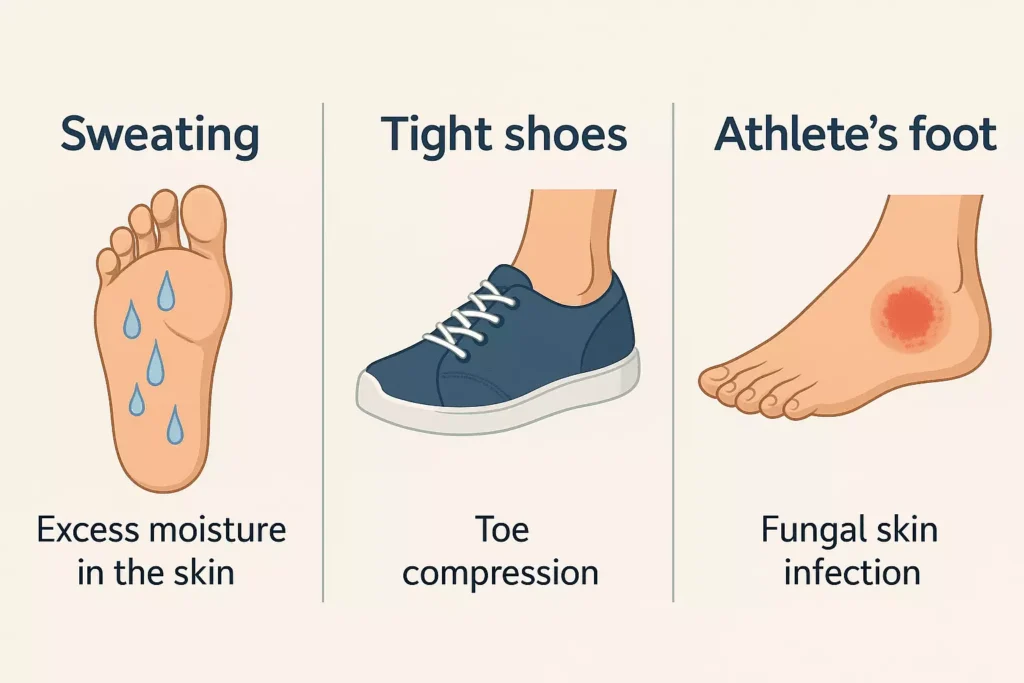
Each untreated condition can trigger further complications:
- Fungal Toenails (Onychomycosis) may thicken, spread to adjacent nails, and resist over-the-counter antifungals—eventually requiring clinical intervention with Clearanail™ or prescription therapies.
- Verrucas (Plantar Warts), caused by the human papillomavirus (HPV), often multiply under high-pressure zones on the sole and can become painful and contagious if left untreated.
- Corns and Calluses, when ignored, can develop into painful ulcers, especially in diabetic patients or those with biomechanical stress.
- Athlete’s Foot (Tinea Pedis) may lead to skin breakdown and serve as a gateway for fungal nail infections.
- Research by the National Center for Biotechnology Information noted that untreated tinea pedis commonly progresses to cellulitis, pyoderma, and in immunocompromised patients, can extend to infect the toenails (onychomycosis).
- Cracked Heels can progress to deep fissures, bleeding, and infections, particularly in those with dry skin, obesity, or compromised vascular supply.
Common Causes Behind Skin & Nail Problems
Understanding what causes these conditions helps inform better treatment decisions.
| Condition | Root Cause | High-Risk Environments |
|---|---|---|
| Fungal Toenails | Dermatophyte fungi | Moist footwear, gyms, nail trauma |
| Verrucas | HPV (Human Papillomavirus) | Pools, communal showers, barefoot areas |
| Corns & Calluses | Excess pressure/friction | Ill-fitting shoes, foot deformities, gait issues |
| Athlete’s Foot | Contagious fungal skin infection | Shared socks, warm damp environments |
| Cracked Heels | Dry skin, mechanical stress, vascular issues | Sandals, aging, standing long hours, diabetes |
Why Early Treatment from a Podiatrist Matters
Seeing a qualified podiatrist ensures a comprehensive diagnosis and access to specialised treatments such as:
- Swift™ Microwave Therapy for deep verrucas
- Clearanail™ micro-drilling for effective antifungal nail delivery
- Pressure offloading for corns and calluses
- Clinical-grade debridement of fissures
- Diabetic foot risk screening and care plans
Professional evaluation prevents misdiagnosis (e.g., confusing a corn with a verruca) and ensures infections don’t return or spread.
Special Consideration – The Diabetic Foot
In individuals with diabetes, even a simple corn or cracked heel can escalate rapidly due to neuropathy, poor circulation, and slower wound healing. Without podiatric care, these issues may evolve into foot ulcers or require surgical intervention.
Real-World Indicators You Need Help
- Nail becoming thick, discoloured, or lifting
- Warts or lesions spreading across the sole
- Persistent itching, peeling between toes
- Hard skin forming under pressure points
- Pain or bleeding from cracked heel edges
Conditions We Treat at Freedom Clinics, Canary Wharf
Our HCPC-registered podiatrists specialise in the diagnosis and treatment of complex skin and nail conditions affecting the feet. Each condition we manage is approached with precision, evidence-based protocols, and tailored care plans. These are the core foot pathologies we treat:
Fungal Toenails (Onychomycosis)
Fungal toenails, also known as onychomycosis, result from an overgrowth of dermatophyte fungi that penetrate the nail plate and bed. Without intervention, nails become thick, discoloured, brittle, and prone to secondary infections.
Causes:
- Damp environments, tight footwear, nail trauma
- Spread from untreated athlete’s foot
Symptoms:
- Yellow or white discolouration
- Thickened or crumbling nail
- Odour and nail plate separation
Treatment:
- Clearanail™ micro-drilling for direct antifungal absorption
- Clinical debridement + topical or systemic antifungals
- Hygiene protocols to prevent recurrence
Verrucas (Plantar Warts)
Verrucas are viral skin lesions caused by HPV (Human Papillomavirus), entering through micro-tears in the plantar surface. They thrive in moist environments and can be painful when located on weight-bearing zones.
Causes:
- Shared spaces (pools, gyms), barefoot walking, low immunity
Symptoms:
- Small lesion with black dots (capillary thrombosis)
- Painful on pressure or squeezing
- Mosaic clusters on the heel or ball of the foot
Treatment:
- Swift™ Microwave Therapy – immune-stimulating treatment
- Cryotherapy, chemical cautery
- Protective padding to reduce spread
Corns and Calluses
Corns and calluses form due to mechanical stress and footwear pressure, often over bony prominences or areas of friction. Unlike viral verrucas, these are non-contagious and purely structural.
Causes:
- Misaligned gait, high-heeled shoes, repetitive friction
- Bony deformities like bunions or hammertoes
Symptoms:
- Corns: Small, dense central core, painful
- Calluses: Broad, diffuse thickening, usually painless
Treatment:
- Sharp debridement using sterile scalpel techniques
- Offloading with custom orthotics
- Gait correction and footwear modification
Athlete’s Foot (Tinea Pedis)
Athlete’s foot, or tinea pedis, is a superficial fungal infection that affects the skin, often between the toes. It’s highly contagious and frequently spreads to nails if not treated early.
Causes:
- Shared towels, gym floors, damp socks
- Excessive sweating or poor foot hygiene
Symptoms:
- Itchy, peeling, or cracking skin between toes
- Redness, scaling, or blistering
- Strong foot odour
Treatment:
- Prescription-strength antifungals (topical/oral)
- Foot hygiene education and footwear disinfection
- Barrier protection advice
Cracked & Dry Heels (Heel Fissures)
Cracked heels, medically referred to as heel fissures, result from excessive dryness, pressure, or reduced elasticity in the skin. In severe cases, they may bleed or develop infection, especially in those with diabetes.
Causes:
- Barefoot walking, sandals, dry weather, obesity
- Neuropathy and poor circulation in diabetic patients
Symptoms:
- Thick, yellow or white skin around the heel
- Visible splits or fissures, possible bleeding
- Pain when walking or standing
Treatment:
- Podiatric debridement and smoothing
- Clinical-grade urea-based heel balms
- Moisture-retaining heel protectors and gait correction

Verruca, Corn, Callus or Fungal Nail? How to Tell the Difference
At Freedom Clinics, Canary Wharf, many patients come to us asking the same question:
“What is this on my foot—and what should I do about it?”
It’s easy to mistake a verruca for a corn, or confuse a fungal nail with thick skin buildup. These foot conditions can appear similar, but they differ in cause, risk level, and the type of treatment they require. Misidentifying them can lead to delayed recovery or unnecessary discomfort.
This section helps you distinguish between the four most commonly confused skin and nail conditions, all treated by our expert podiatrists.
Comparison Table: Key Differences Between Common Foot Conditions
| Feature / Condition | Verruca (Plantar Wart) | Corn | Callus | Fungal Toenail (Onychomycosis) |
|---|---|---|---|---|
| Cause | HPV virus (viral skin infection) | Repetitive pressure or friction | Repetitive friction/mechanical stress | Fungal infection (Dermatophytes) |
| Contagious? | Yes – Spread via surfaces | No | No | Mildly – via infected clippings/surfaces |
| Pain Profile | Painful when squeezed side-to-side | Painful when pressed directly | Usually painless unless thickened | Often uncomfortable in shoes |
| Appearance | Cauliflower texture, black dots | Small, round, raised core lesion | Flat, yellowish thick skin | Yellow, brittle, thickened nail |
| Location | Sole, toes, heel (weight-bearing zones) | Toes, ball of foot, pressure points | Heel, ball of foot, outer edges | Nail plate and surrounding nail bed |
| Treatment Options | Swift™ microwave, cryotherapy | Sharp debridement, offloading | Scalpel reduction, foot pressure therapy | Clearanail™, topical/systemic antifungals |
Understanding the Differences
Verruca vs. Corn
- A verruca is caused by the human papillomavirus (HPV) and tends to appear as a wart with black pinpoints (thrombosed capillaries).
- A corn is the result of mechanical pressure and has a hard central core—painful when pushed from above.
Callus vs. Fungal Nail
- A callus forms from friction or foot deformities and is located on the surface skin.
- A fungal nail changes the nail structure itself, appearing thick, crumbly, and often separating from the nail bed.
Risk of Mistreatment
- Using wart treatments on a corn can damage healthy skin.
- Ignoring a fungal nail can lead to full nail loss or spread to other toes
- Treating a verruca like a callus delays healing and allows viral spread.
According to the Cleveland Clinic, untreated onychomycosis frequently spreads beyond the initially infected toenail, affecting adjacent nails, skin between toes, and sometimes fingernails. Ignoring a fungal nail can lead to full nail loss or spread to other toes.
Professional Diagnosis Is Key
Without professional assessment, it’s easy to misdiagnose these conditions. At Freedom Clinics, our podiatrists use:
- Dermatoscopic imaging to assess skin lesions
- Microscopic analysis for suspected fungal infections
- Pressure mapping to identify biomechanical causes of corns and calluses

Advanced Technology We Use to Diagnose and Treat Skin & Nail Conditions
At Freedom Clinics, Canary Wharf, we go beyond traditional podiatry with a suite of advanced technologies tailored to the precise treatment of common foot skin and nail conditions. From stubborn verrucas caused by HPV to thickened fungal toenails, our use of devices like Swift™ and Clearanail™ offers faster, safer, and more effective care with long-term outcomes.
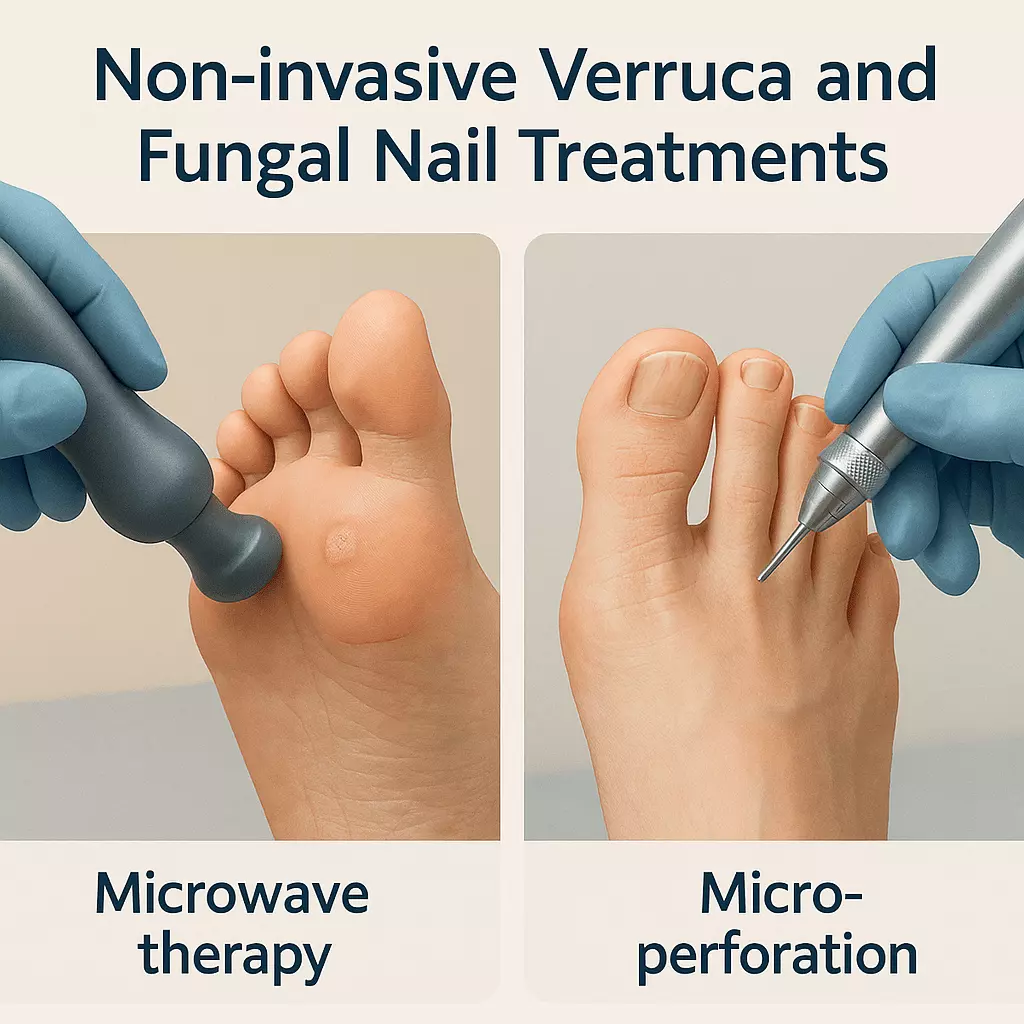
Swift™ Microwave Therapy for Viral Verrucas
Swift™ is a breakthrough device used to treat verrucas (plantar warts) caused by the human papillomavirus (HPV). Unlike acid or freezing treatments, Swift™ delivers microwave energy to the affected tissue, stimulating your immune system to target the virus internally—without damaging healthy skin.
Why Swift™ is Superior:
- No wound, dressing, or downtime required
- Treatment time < 5 minutes per lesion
- Ideal for resistant, recurring, or mosaic verrucas
- Suitable for all ages, including children
Clearanail™ for Fungal Toenails (Onychomycosis)
Clearanail™ is a micro-drilling system designed to treat onychomycosis, a fungal infection of the nail caused by dermatophytes. The system creates microscopic channels in the nail plate, allowing topical antifungal agents to reach the site of infection deep beneath the surface.
Why Choose Clearanail™:
- Pain-free, non-invasive, no downtime
- Increases topical antifungal penetration by >400%
- Accelerates results vs. standard creams alone
- Complements professional debridement techniques
Clinical Diagnostics for Accurate Treatment Planning
Effective treatment begins with an accurate diagnosis. We employ a suite of diagnostic tools designed to clarify conditions that often appear similar:
Key Diagnostic Technologies:
- Dermoscopy – Magnified imaging to distinguish verrucas from corns or calluses
- Microscopy & Fungal Culture – Confirms the presence of onychomycosis
- Foot Pressure Mapping – Identifies pressure points causing corns/calluses
- Hydration Level Testing – Assesses risk factors for cracked heels
By confirming whether you’re dealing with a viral lesion, fungal infection, or mechanical skin thickening, we tailor treatment to your exact condition.
Why Choose Freedom Clinics for Skin & Nail Podiatry in Canary Wharf, London
When you’re dealing with a recurring verruca, stubborn fungal toenail, or painful corn or callus, you want effective treatment delivered by skilled professionals. At Freedom Clinics, conveniently based in Canary Wharf, London, we provide comprehensive podiatric care with a strong focus on skin and nail conditions.
HCPC-Registered Podiatrists You Can Trust
Our team of fully HCPC-registered podiatrists are experts in diagnosing and treating conditions such as onychomycosis, plantar warts (verrucas), and mechanical skin thickening. With every patient, we bring:
- Clinical experience in treating complex dermatological foot disorders
- Specialist use of Swift™ (for verrucas) and Clearanail™ (for fungal nails)
- Diagnostic precision using dermoscopy, microscopy, and pressure mapping
Central Location: Canary Wharf, East London
Located inside the Canada Place Shopping Mall, our podiatry clinic is easily accessible to patients across East London and Greater London. We offer:
- Flexible appointments 7 days a week (early mornings to late evenings)
- Just minutes from Canary Wharf Station (DLR & Jubilee Line)
- Ideal for local residents and busy professionals in the city
Precision Technology Meets Personalised Treatment
We don’t just treat symptoms—we use leading-edge tools to resolve the root causes of foot conditions:
- Swift™ Microwave Therapy: the gold standard in treating verrucas by reactivating the body’s immune response
- Clearanail™ Micro-Drilling: non-invasive treatment for thickened fungal nails, improving antifungal penetration
- Custom diagnostics to distinguish between viral, fungal, or mechanical causes of skin and nail issues
Trusted by Patients Across London
We consistently receive 5-star reviews for:
- Results-driven treatments for long-standing verrucas and fungal infections
- Gentle, informed podiatric care with transparent pricing
- Clean, modern facilities with specialist diagnostic tools
Frequently Asked Questions About Skin & Nail Podiatry
This section answers the most common patient queries related to foot skin and nail conditions.
What skin and nail conditions do podiatrists treat?
At Freedom Clinics, our HCPC-registered podiatrists treat:
- Fungal toenails (onychomycosis)
- Verrucas (plantar warts caused by HPV)
- Corns and calluses
- Cracked heels and heel fissures
- Athlete’s foot (tinea pedis)
These conditions are often misidentified by patients. Seeing a podiatrist ensures correct diagnosis and appropriate treatment.
What is the best treatment for verrucas?
The gold-standard treatment for verrucas is Swift™ microwave therapy. It uses low-dose microwave energy to target the root viral cause—HPV—without breaking the skin or causing post-treatment downtime.
How are fungal toenails treated?
For fungal toenails, our preferred approach includes:
- Clearanail™ micro-drilling to allow antifungal penetration
- Regular podiatric debridement
- Topical or systemic antifungal medication, as needed
How do I know if it’s a verruca or a corn?
- Verrucas: Viral, often have black dots, and hurt when squeezed laterally.
- Corns: Caused by pressure, with a hard central core; hurt with direct pressure.
Our podiatrists use dermoscopy and pressure testing to differentiate.
Can podiatrists remove foot skin conditions?
Yes. Our podiatrists provide:
- Cryotherapy and Swift™ for verrucas
- Clearanail™ drilling for fungal nails
- Scalpel debridement for corns and calluses
- Nail surgery (e.g., partial nail avulsion) when required
Where is Freedom Clinics located?
We are based in the Canada Place Shopping Mall, Canary Wharf, London E14. Our podiatry clinic is open:
- 7 days a week
- Early morning to evening
- Accessible via Canary Wharf DLR and Jubilee Line
We serve both city professionals and local residents across East London.
Do you treat diabetic foot problems?
Absolutely. We provide diabetic foot services including:
- Nail trimming and debridement
- Corn and callus prevention
- Fungal infection control
- Ulcer risk screening (neuropathy and circulation tests)

Book Expert Skin & Nail Podiatry in Canary Wharf Today
Experiencing a persistent verruca, discoloured toenail, or cracked heel? At Freedom Clinics in Canary Wharf, London, our HCPC-registered podiatrists deliver expert care using advanced technologies like Swift™ for verruca removal and Clearanail™ for fungal toenail treatment. Whether you’re suffering from corns, calluses, or nail infections, our tailored treatments help restore foot health effectively and comfortably.
Why Freedom Clinics is Trusted for Skin & Nail Podiatry
- Experienced, HCPC-registered podiatrists
- Leading-edge treatments: Swift™ & Clearanail™
- Located in the heart of Canary Wharf, London
- Flexible hours: open 7 days a week, early & late
- 5-star rated service with a strong reputation across East London
Visit Us at Freedom Clinics Canary Wharf
Freedom Clinics
Canada Place Shopping Mall
34 North Colonnade, Canary Wharf
London E14 5HX
Tel: 0203 197 9100
Email: canarywharf@freedomclinics.com
Clinic Opening Hours
| Day | Hour |
|---|---|
| Monday–Friday | 7:00 AM – 8:00 PM |
| Saturday | 10:00 AM – 4:00 PM |
| Sunday | 10:00 AM – 4:00 PM |
Ready to Start Your Treatment Journey?
Don’t wait for symptoms to worsen. Whether you need a verruca removed, a fungal nail treated, or simply want relief from skin thickening or cracked heels, our Canary Wharf podiatry team is here to help.
Our Podiatrists & Chiropodists


References
- Bresciani, L. R., & Kim, S.-H. (2023). Onychomycosis: Old and New. Journal of Fungi, 9(5), 559. https://doi.org/10.3390/jof9050559
- Weston, S. J., & Gupta, T. (2023). Tinea pedis (athlete’s foot): protective factors, progression and complications. StatPearls. https://www.ncbi.nlm.nih.gov/books/NBK470421/
- Cleveland Clinic. (2023). Toenail Fungus (Onychomycosis/Tinea Unguium). https://my.clevelandclinic.org/health/diseases/11303-toenail-fungus

