
Heel Pain Causes – Expert Diagnosis & Treatment at Freedom Clinics Canary Wharf
Heel pain—also known as posterior foot pain or calcaneal pain—is one of the most common podiatry conditions treated worldwide. At Freedom Clinics Canary Wharf, our podiatrists specialise in diagnosing and treating all causes of heel pain, from the most common condition—plantar fasciitis—to Achilles tendinitis, heel spurs, and less common structural or nerve-related problems.
Our approach is built on precise diagnosis: identifying the root cause of heel pain so we can provide targeted treatment. By combining clinical expertise with advanced diagnostic tools, we create custom treatment plans that relieve pain, improve mobility, and prevent recurrence.
Medically reviewed by: Dr Priya Anand DPM. Last update: 18th May 2026
Book your appointment
Understanding Heel Pain
What Is Heel Pain?
Heel pain refers to discomfort located either at the bottom of the heel (inferior heel pain) or at the back of the heel (posterior heel pain). These two types have different common causes:
- Inferior heel pain is most often caused by plantar fasciitis or heel spurs.
- Posterior heel pain is commonly linked to Achilles tendinitis or retrocalcaneal bursitis.
At Freedom Clinics Canary Wharf, we use comprehensive diagnostic techniques to pinpoint the cause:
- Clinical examination to locate pain and identify swelling or tenderness
- Gait analysis to assess foot mechanics
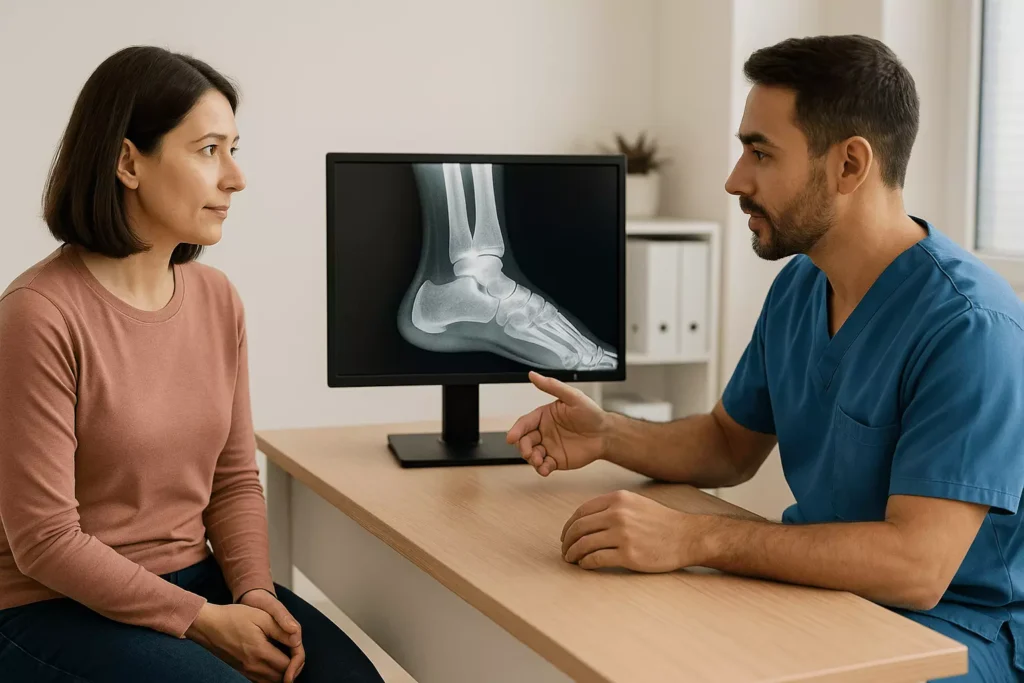
- Imaging (X-ray, ultrasound, MRI) when necessary for deeper insight
Frequently Asked Questions
What are the most common causes of heel pain?
The top three causes we see at Freedom Clinics are plantar fasciitis, Achilles tendinitis, and heel spurs—all of which respond well to early diagnosis and treatment.
Where does heel pain usually occur?
Most patients experience pain at the bottom of the heel (plantar fascia insertion) or the back of the heel (Achilles tendon insertion).
Common Causes of Heel Pain
At Freedom Clinics Canary Wharf, most cases of heel pain are caused by three primary conditions: Plantar Fasciitis, Achilles Tendinitis, and Heel Spurs. By identifying the correct cause, our podiatrists can recommend targeted treatments that relieve pain, restore movement, and prevent recurrence.
Plantar Fasciitis – The Leading Cause of Inferior Heel Pain
According to the American Academy of Family Physicians, plantar fasciitis is the most common cause of heel pain in adults. It occurs when the plantar fascia ligament—a thick band of tissue along the sole of the foot—becomes inflamed. This typically results in sharp pain at the bottom of the heel, particularly with the first steps in the morning.
- Symptoms:
- Stabbing pain on first steps after rest
- Discomfort after standing or walking for long periods
- Localised tenderness along the plantar fascia
- Risk Factors:
- Flat feet or high arches
- Long-distance running or high-impact sports
- Prolonged standing in unsupportive footwear
Freedom Clinics Treatment
At Freedom Clinics Canary Wharf, we use:
- Custom orthotics to correct foot mechanics
- Shockwave therapy to promote healing
- Targeted stretching programmes to restore mobility
Achilles Tendinitis – Common Cause of Posterior Heel Pain
Achilles Tendinitis is inflammation of the Achilles tendon where it attaches to the heel bone, and is a frequent source of posterior heel pain.
- Symptoms:
- Pain and stiffness at the back of the heel, worse after activity
- Tenderness along the tendon
- Swelling near the heel attachment
- Risk Factors:
- Sudden increase in training volume
- Tight calf muscles reducing flexibility
- Poor footwear support
- Freedom Clinics Treatment:
- Eccentric strengthening exercises for tendon recovery
- Physiotherapy and stretching routines
- Footwear modifications for heel offloading
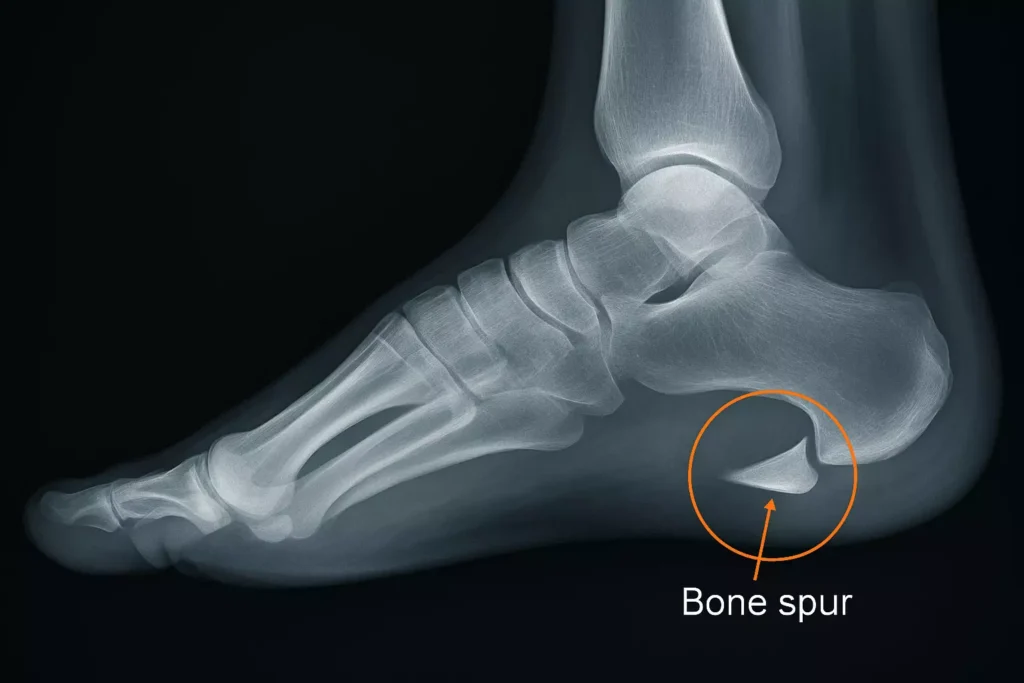
Heel Spurs – Often Linked with Plantar Fasciitis
Heel Spurs are bony calcium deposits that develop on the heel bone (calcaneus). They often appear alongside Plantar Fasciitis, intensifying inferior heel pain.
- Symptoms:
- Sharp pain when standing or walking
- Pain under the heel, often on pressure
- Risk Factors:
- Chronic plantar fasciitis
- Long-term overuse or weight-bearing
- Freedom Clinics Treatment:
- Orthotic insoles to reduce heel pressure
- Shockwave therapy to decrease inflammation
- Stretching and load management to address root cause
Less Common Causes of Heel Pain
Although Plantar Fasciitis is the leading cause of heel pain at Freedom Clinics Canary Wharf, there are several other conditions that can also trigger discomfort. These less common causes must be diagnosed accurately so that the right treatment can be provided.
Bursitis (Retrocalcaneal and Subcalcaneal)
Bursitis occurs when the fluid-filled sacs (bursae) at the heel become inflamed.
- Connection to Heel Pain:
- Retrocalcaneal bursitis causes posterior heel pain near the Achilles tendon.
- Subcalcaneal bursitis causes inferior heel pain beneath the heel.
- Symptoms: Swelling, tenderness, pain aggravated by shoes
- Treatment at Freedom Clinics: Padding, footwear adjustments, anti-inflammatory care
Haglund’s Deformity (Pump Bump)
Haglund’s Deformity is a bony enlargement at the back of the heel that irritates surrounding tissues.
- Connection to Heel Pain: Causes posterior heel discomfort when wearing shoes with rigid backs
- Treatment at Freedom Clinics: Shoe modification, heel lifts, protective padding
Sever’s Disease (Paediatric Heel Pain)
Sever’s Disease is the most common cause of heel pain in active children aged 8–14.
- Connection to Heel Pain: Irritation of the growth plate at the back of the heel due to repetitive stress
- Treatment at Freedom Clinics: Activity modification, heel supports, gentle stretching
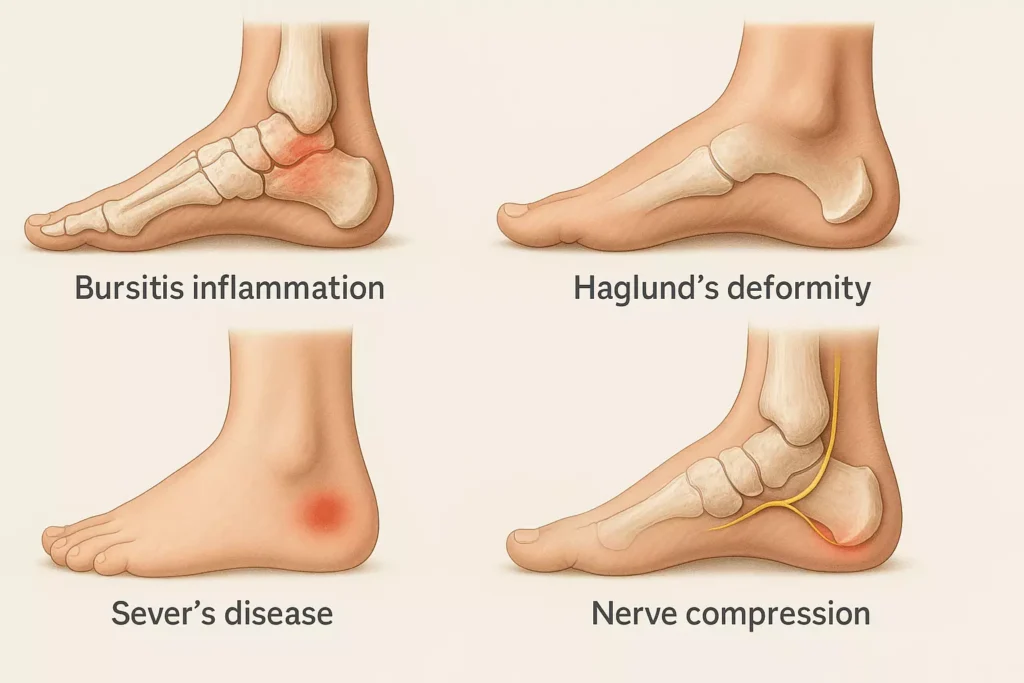
Tarsal Tunnel Syndrome
Tarsal Tunnel Syndrome is a nerve compression condition affecting the tibial nerve.
- Connection to Heel Pain: Burning, tingling, or sharp heel discomfort radiating from the ankle
- Treatment at Freedom Clinics: Orthotics, physiotherapy, nerve decompression strategies
Stress Fractures (Calcaneus)
Stress fractures are small cracks in the heel bone caused by repetitive impact.
- Connection to Heel Pain: Pain worsens with weight-bearing activities
- Treatment at Freedom Clinics: Rest, immobilisation, gradual return to activity
Fat Pad Atrophy
Over time, the heel’s natural fat pad can thin, reducing shock absorption.
- Connection to Heel Pain: Discomfort when standing or walking on hard surfaces
- Treatment at Freedom Clinics: Cushioned orthotics, supportive footwear
Peripheral Neuropathy & Arthritis (Gout, Rheumatoid Arthritis)
Systemic and inflammatory conditions can contribute to secondary heel pain.
- Treatment at Freedom Clinics: Collaborative care with specialists, offloading support through orthotics
Bone Bruise / Contusion
A direct impact can cause a bone bruise leading to localised heel tenderness.
- Treatment at Freedom Clinics: Offloading pressure, ice therapy, temporary activity modification
Plantar Wart (Verruca)
A viral skin lesion on the heel can cause discomfort when walking.
- Connection to Heel Pain: Pain occurs when pressure is applied directly to the wart
- Treatment at Freedom Clinics: Verruca removal, topical treatments, footwear adjustments
Risk Factors & Contributing Elements
Certain risk factors can significantly increase the risk of developing heel pain. At Freedom Clinics Canary Wharf, our podiatrists carefully assess these contributing elements, as they often determine whether a patient’s symptoms are due to Plantar Fasciitis, Achilles Tendinitis, Heel Spurs, or another condition.
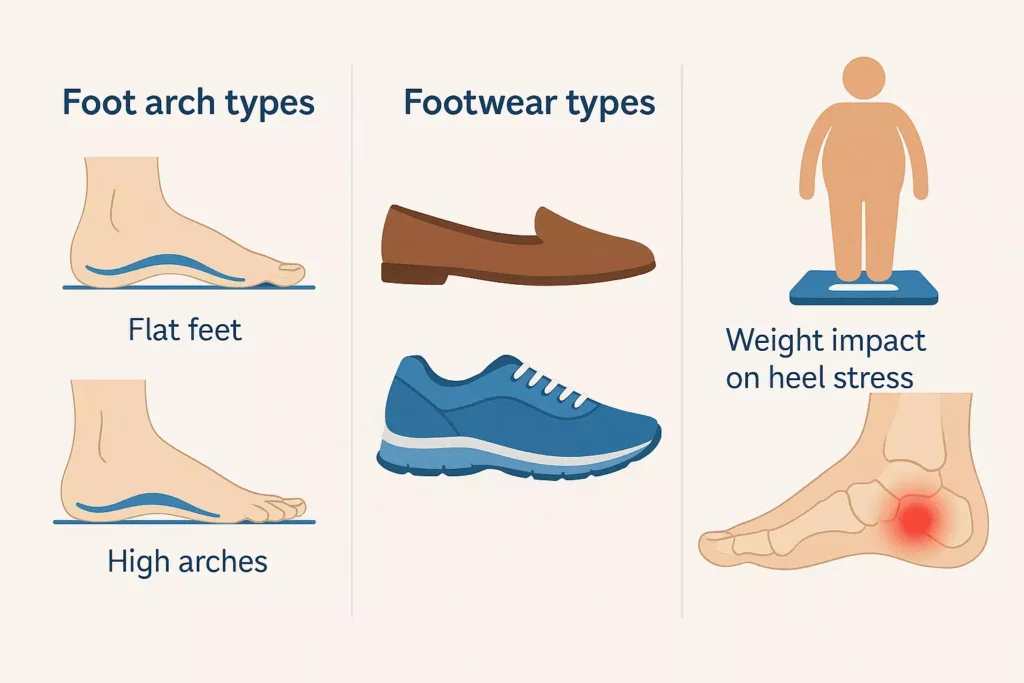
Foot Structure (Flat Feet & High Arches)
Foot structure plays a key role in heel health.
- Connection to Heel Pain:
- Flat feet can cause overpronation, increasing stress on the plantar fascia, leading to Plantar Fasciitis.
- High arches place extra load on the heel bone (calcaneus), contributing to Heel Spurs.
- FAQ Integration: Can flat feet cause heel pain? Yes—both flat feet and high arches are biomechanical risk factors.
- Treatment at Freedom Clinics: Custom orthotics to improve foot alignment, reduce heel strain, and prevent recurrent pain.
According to Se‑Yeon Park and colleagues at Kaya University, individuals with flat feet exhibit foot dysfunction and greater plantar fascia thickness, indicating increased risk for plantar fasciitis.
Footwear Choices
Footwear directly affects heel pressure and alignment.
- Connection to Heel Pain:
- Poorly cushioned or worn-out shoes can worsen Plantar Fasciitis.
- High heels often aggravate Haglund’s Deformity and posterior Achilles-related heel pain.
- FAQ Integration: What kind of shoes cause plantar fasciitis? Shoes with poor arch support, inadequate cushioning, or excessive heel height.
- Treatment at Freedom Clinics: Footwear assessment, shoe modification, orthotics for improved support.
Occupational & Activity-Related Strain
Jobs and activities that overload the heel are a major contributor to heel discomfort.
- Connection to Heel Pain:
- Prolonged standing (nurses, retail staff) increases risk of Heel Spurs and Plantar Fasciitis.
- High-impact sports (running, jumping) can lead to Achilles Tendinitis or Stress Fractures.
- FAQ Integration: Who is most at risk for heel pain? People with occupations or hobbies that place repetitive strain on the heel.
- Treatment at Freedom Clinics: Activity modification, load management, shock-absorbing insoles.
Weight & Body Mass
Extra weight increases heel loading.
- Connection to Heel Pain: Added pressure accelerates the development of Plantar Fasciitis and Heel Spurs.
- Treatment at Freedom Clinics: Cushioned orthotics, supportive footwear, and lifestyle guidance to reduce heel stress.
Sudden Changes in Physical Activity
Abrupt increases in training or activity can trigger heel discomfort.
- Connection to Heel Pain: Overload can inflame the Achilles tendon or plantar fascia, leading to Achilles Tendinitis or Plantar Fasciitis.
- Treatment at Freedom Clinics: Gradual activity progression, physiotherapy, tendon protection programmes.
Differential Diagnosis of Heel Pain
Effective treatment of heel pain begins with accurate diagnosis. At Freedom Clinics Canary Wharf, our podiatrists carefully evaluate each patient’s symptoms, pain location, and risk factors to distinguish between common and less common causes. This process enables targeted treatment plans that deliver the best outcomes.
FAQ Integration
Q: How do podiatrists diagnose heel pain?
A: Diagnosis involves a combination of thorough clinical examination, detailed patient history, gait analysis, and advanced imaging techniques like X-ray, ultrasound, and MRI to identify the specific cause of heel pain.
Below is a comprehensive table summarising the differential diagnosis for heel pain, detailing typical pain locations, key symptoms, common risk factors, and treatments offered at Freedom Clinics.
Heel Pain Differential Diagnosis Table
| Condition | Pain Location | Key Symptoms | Common Risk Factors | Treatment at Freedom Clinics |
|---|---|---|---|---|
| Plantar Fasciitis | Bottom of heel (inferior) | Sharp pain with first steps in morning; tenderness along plantar fascia | Flat feet, high arches, prolonged standing | Custom orthotics, shockwave therapy, stretching |
| Achilles Tendinitis | Back of heel (posterior) | Pain and stiffness after activity; swelling along tendon | Sudden increase in training, poor footwear | Eccentric exercises, physiotherapy, heel lifts |
| Heel Spurs | Bottom of heel | Stabbing pain on weight-bearing; often with plantar fasciitis | Chronic plantar fasciitis, overuse | Orthotic insoles, shockwave therapy, load management |
| Bursitis | Back or underside of heel | Swelling, tenderness aggravated by shoe pressure | Rigid shoe backs, repetitive pressure | Padding, shoe modification, anti-inflammatory care |
| Haglund’s Deformity | Back of heel | Irritation from shoes; visible bony bump | High heels, poorly fitted shoes | Heel padding, footwear adjustments |
| Tarsal Tunnel Syndrome | Inner ankle/heel | Burning, tingling, radiating heel discomfort | Flat feet, nerve compression | Orthotics, physiotherapy, nerve decompression |
| Sever’s Disease | Back of heel (children) | Pain during sports; tenderness at growth plate | Active children (8–14 years) | Activity modification, heel supports |
| Stress Fractures | Bottom of heel | Pain worsening with impact | High-impact sports, overtraining | Rest, immobilisation, gradual return to activity |
Diagnosis at Freedom Clinics Canary Wharf
Accurate diagnosis is crucial for effective treatment of heel pain, whether caused by plantar fasciitis, Achilles tendinitis, or heel spurs. At Freedom Clinics Canary Wharf, our experienced podiatrists employ advanced diagnostic techniques to pinpoint the exact source of your heel discomfort, allowing us to create a personalised treatment plan tailored to your needs.
Clinical Examination
Our comprehensive clinical examination focuses on assessing the exact location and nature of your heel pain. We evaluate foot posture, range of motion, and tender areas to distinguish between conditions such as inferior heel pain from plantar fasciitis and posterior heel pain from Achilles tendinitis.
Gait Analysis
Using state-of-the-art gait analysis technology, we examine how your foot contacts and moves during walking or running. This helps identify abnormal foot mechanics like overpronation or supination, which often contribute to plantar fascia strain or Achilles tendon overload, common causes of heel pain.
Imaging Techniques (X-ray, Ultrasound, MRI)
When further insight is needed, we use imaging methods such as X-rays, ultrasound, or MRI scans to examine bone structures and soft tissues. These tools help detect heel spurs, stress fractures, or inflammation of tendons and ligaments, ensuring an accurate and thorough diagnosis.
FAQ Integration
Q: How is plantar fasciitis diagnosed?
A: Diagnosis involves physical examination, gait analysis, and sometimes ultrasound imaging to assess inflammation or tears in the plantar fascia.
Q: What tests are used to diagnose heel pain causes?
A: Common diagnostic tools include clinical exams, gait analysis, X-rays, ultrasounds, and MRIs to identify the precise cause of heel pain.
Q: When should I see a podiatrist for heel pain?
A: You should seek podiatric assessment if heel pain persists beyond two weeks, worsens, or impacts daily activities.

Prevention & At-Home Management
Preventing heel pain is achievable by addressing key risk factors and adopting healthy foot habits. At Freedom Clinics Canary Wharf, we provide personalised advice to help reduce your risk of developing plantar fasciitis, Achilles tendinitis, and heel spurs.
Supportive Footwear & Custom Orthotics
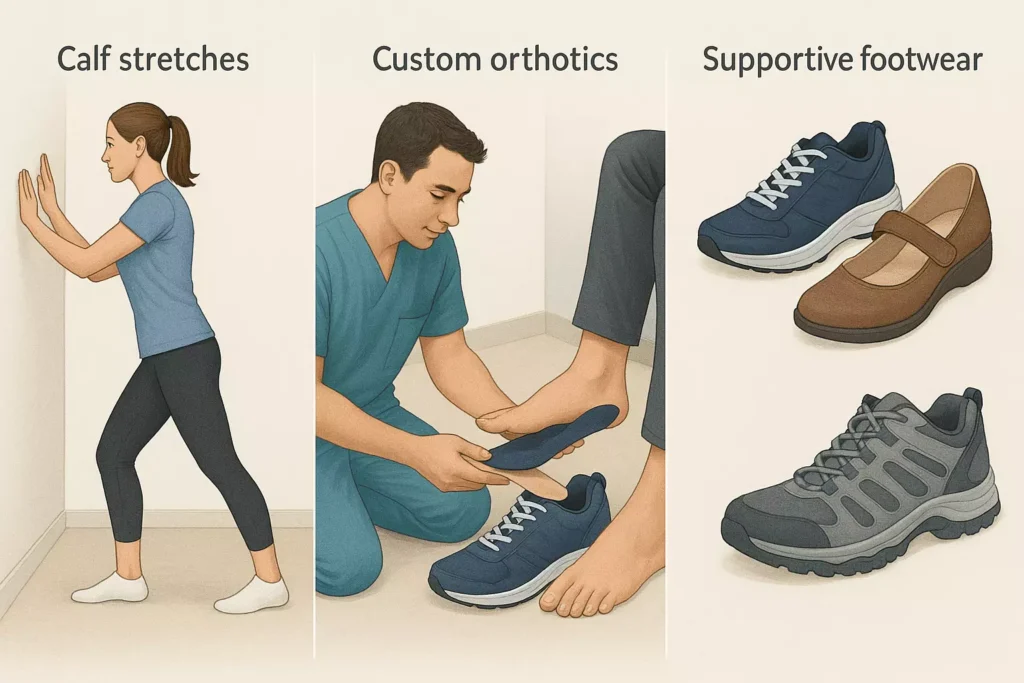
Choosing supportive shoes with adequate cushioning and arch support helps reduce strain on the plantar fascia and heel bone, which are common sources of heel pain.
At Freedom Clinics, we offer bespoke custom orthotics designed to improve foot alignment and alleviate pressure points, effectively preventing inferior heel pain linked to plantar fasciitis and heel spurs.
Stretching and Strengthening Exercises
Regular stretching of the calf muscles and plantar fascia maintains flexibility and prevents tightness, two major contributors to plantar fasciitis and Achilles tendinitis. Strengthening exercises enhance foot stability and reduce the risk of injury.
Weight Management
Maintaining a healthy weight decreases mechanical load on the heels, reducing the likelihood of developing plantar fasciitis and heel spurs.
Activity Modification
Gradually increasing physical activity intensity and incorporating adequate rest helps prevent overload injuries such as Achilles tendinitis and stress fractures.
Home Remedies
Simple home treatments like ice application, over-the-counter pain relief, and avoiding prolonged standing can ease mild heel discomfort and help prevent progression.
FAQ Integration
Q: How can I prevent plantar fasciitis?
A: Wearing supportive footwear, using custom orthotics, and performing regular stretching exercises are effective ways to prevent plantar fasciitis.
Q: Do custom orthotics help prevent heel pain?
A: Yes, custom orthotics correct foot mechanics and reduce stress on the plantar fascia and heel bone, helping prevent heel pain.
FAQs About Heel Pain
Understanding heel pain can be complex. Below are answers to some of the most frequently asked questions about causes, symptoms, and treatments for conditions such as plantar fasciitis, Achilles tendinitis, and heel spurs.
What is the most common cause of heel pain?
The most common cause of heel pain is plantar fasciitis, an inflammation of the plantar fascia ligament located at the bottom of the foot. Other frequent causes include Achilles tendinitis, which affects the back of the heel, and heel spurs, which are bony growths on the heel bone often associated with plantar fasciitis.
Why is my heel sore first thing in the morning?
Morning heel pain is typically caused by plantar fasciitis. During sleep, the plantar fascia tightens and contracts, causing sharp pain during the first steps after getting out of bed.
How long does plantar fasciitis last?
With appropriate treatment from podiatrists at Freedom Clinics Canary Wharf, plantar fasciitis often improves within several weeks to months. Early diagnosis and consistent management greatly enhance recovery time.
When should I see a podiatrist for heel pain?
If your heel pain persists for more than two weeks, worsens, or affects your ability to walk or carry out daily activities, it is important to consult a podiatrist for a thorough assessment.
Is heel pain a sign of something serious?
Most causes of heel pain, such as plantar fasciitis or Achilles tendinitis, are manageable with conservative treatment. However, persistent or severe heel pain may indicate stress fractures or nerve compression, warranting professional evaluation.
What are the best treatments for heel pain?
Treatments vary depending on the specific diagnosis but often include custom orthotics, shockwave therapy, stretching exercises, and, in some cases, physiotherapy or corticosteroid injections. Early treatment at Freedom Clinics Canary Wharf helps optimise outcomes.
Can heel pain be prevented?
Yes, prevention strategies include wearing supportive footwear, maintaining a healthy weight, performing regular stretching and strengthening exercises, and gradually increasing physical activity to avoid overuse injuries.
When to Book Treatment at Freedom Clinics Canary Wharf
If you are experiencing persistent heel pain, seeking early professional assessment is crucial to prevent worsening symptoms and ensure effective treatment. Conditions such as plantar fasciitis, Achilles tendinitis, and heel spurs respond best to timely intervention. At Freedom Clinics Canary Wharf, our experienced podiatrists offer personalised care tailored to your specific heel pain diagnosis.
Signs It’s Time to Book a Consultation
Consider booking a podiatry appointment if you experience:
- Heel pain lasting more than two weeks despite home remedies
- Increasing intensity of pain or swelling
- Difficulty walking or performing daily activities
- Persistent morning heel pain that does not improve with movement
- Numbness, tingling, or burning sensations indicating possible nerve involvement
How Freedom Clinics Canary Wharf Can Help
Our clinic provides:
- Comprehensive diagnostic assessments including clinical examination, gait analysis, and imaging
- Tailored treatment plans addressing your heel pain cause
- Advanced therapies such as shockwave therapy, custom orthotics, and physiotherapy
- Expert advice on prevention and long-term management
Booking Your Appointment
Booking your consultation is straightforward. Contact Freedom Clinics Canary Wharf at 0203 197 9100 or use our online booking system. Early treatment is key to quicker recovery and improved mobility.
Our Podiatrists & Chiropodists


References
- Trojian, T. (2019). Plantar fasciitis (plantar fasciopathy). American Family Physician. https://www.aafp.org/pubs/afp/issues/2019/0615/p744.html
- Park, S.-Y., & Bang, H.-S. (2018). Potential for foot dysfunction and plantar fasciitis according to the shape of the foot arch in young adults. Journal of Physical Therapy Science, 30(8), 1024–1029. https://www.ncbi.nlm.nih.gov/pmc/articles/PMC6028224/

