
Understanding Lisfranc Injuries: Midfoot Fractures, Dislocations & Ligament Sprains
A Lisfranc injury affects the Lisfranc joint complex — a group of bones and ligaments located at the tarsometatarsal (TMT) joint in the midfoot. These joints are vital for stabilising the arch of the foot and distributing weight during movement. When injured, they can cause serious disruption to mobility, and without timely diagnosis, may result in chronic pain, foot deformity, or early-onset midfoot arthritis.
Medically reviewed by: Dr Priya Anand DPM. Last update: 18th May 2026
Book your appointment
What Causes a Lisfranc Injury?
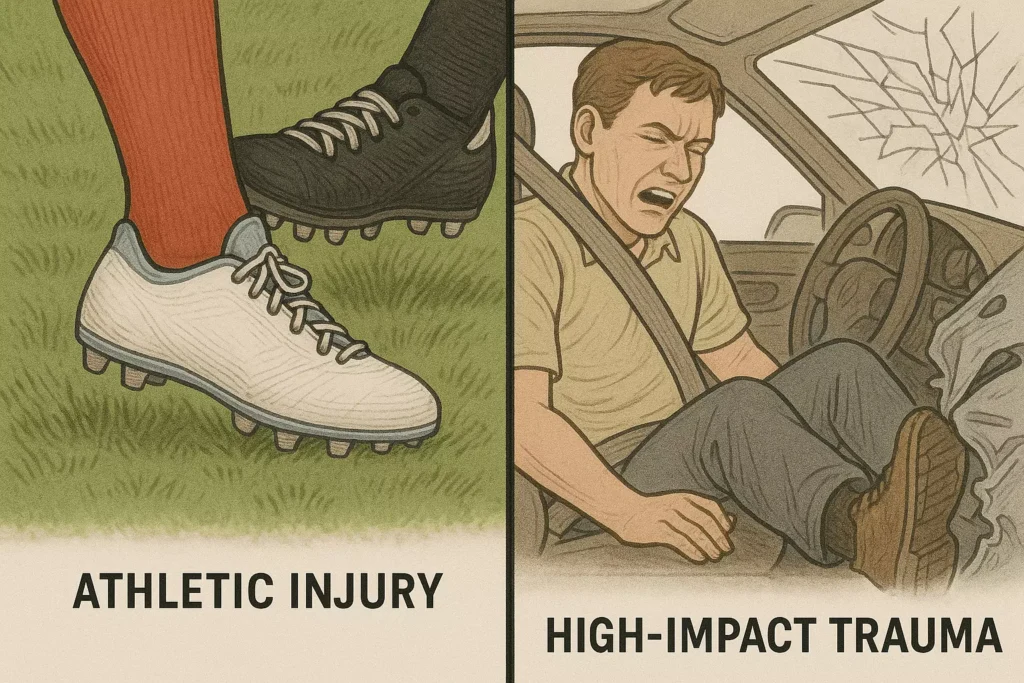
Lisfranc injuries occur when excessive force or twisting disrupts the normal alignment of the TMT joints. Common causes include:
- Twisting injuries during sports (especially when the forefoot is planted and the body turns)
- Direct trauma from falls or road traffic accidents
- Heavy objects falling onto the foot
- Sudden change in direction while running or jumping
- Foot instability, high arches, or improper footwear
These injuries are especially common among athletes and individuals engaged in high-impact activities — but can also affect people with biomechanical issues or diabetic neuropathy.
Types of Lisfranc Injuries
Understanding the specific type of Lisfranc injury is key to selecting the right treatment:
1. Lisfranc Sprain
- Involves stretching or partial tearing of the Lisfranc ligament
- Typically caused by low-energy twisting injuries
- May not show on initial X-rays, requiring MRI for confirmation
2. Lisfranc Fracture
- A break in one or more bones at the tarsometatarsal joint
- Common in high-impact trauma (e.g., falls from height)
- Can be stable or unstable, determining the need for surgery
3. Lisfranc Fracture-Dislocation
- A severe injury where the bones are both fractured and displaced
- Often results in complete midfoot instability
- Requires prompt surgical intervention to prevent long-term damage
Why Early Diagnosis is Crucial
Without appropriate treatment, even a mild Lisfranc sprain can evolve into a disabling condition. Consequences of delayed or missed diagnosis include:
- Progressive arch collapse
- Development of post-traumatic arthritis
- Chronic instability and altered gait
- Need for complex reconstructive surgery in the future
At Freedom Clinics, we emphasise early imaging, biomechanical assessment, and precise classification of the injury to develop a tailored treatment plan.
Symptoms of a Lisfranc Joint Injury in the Midfoot
A Lisfranc injury disrupts the structural integrity of the tarsometatarsal (TMT) joint complex — located in the middle of the foot. Because this area anchors the arch and midfoot stability, injury symptoms may range from subtle to severe, depending on the nature of the trauma and whether ligaments, bones, or both are affected.
Common Signs of a Lisfranc Injury
Early identification of a Lisfranc sprain, fracture, or dislocation relies on recognising key symptoms:
Physical Indicators
- Midfoot pain — often centralised over the top of the foot
- Swelling across the arch — can extend toward the toes or ankle
- Bruising on both the top and sole of the foot (plantar ecchymosis is a hallmark symptom)
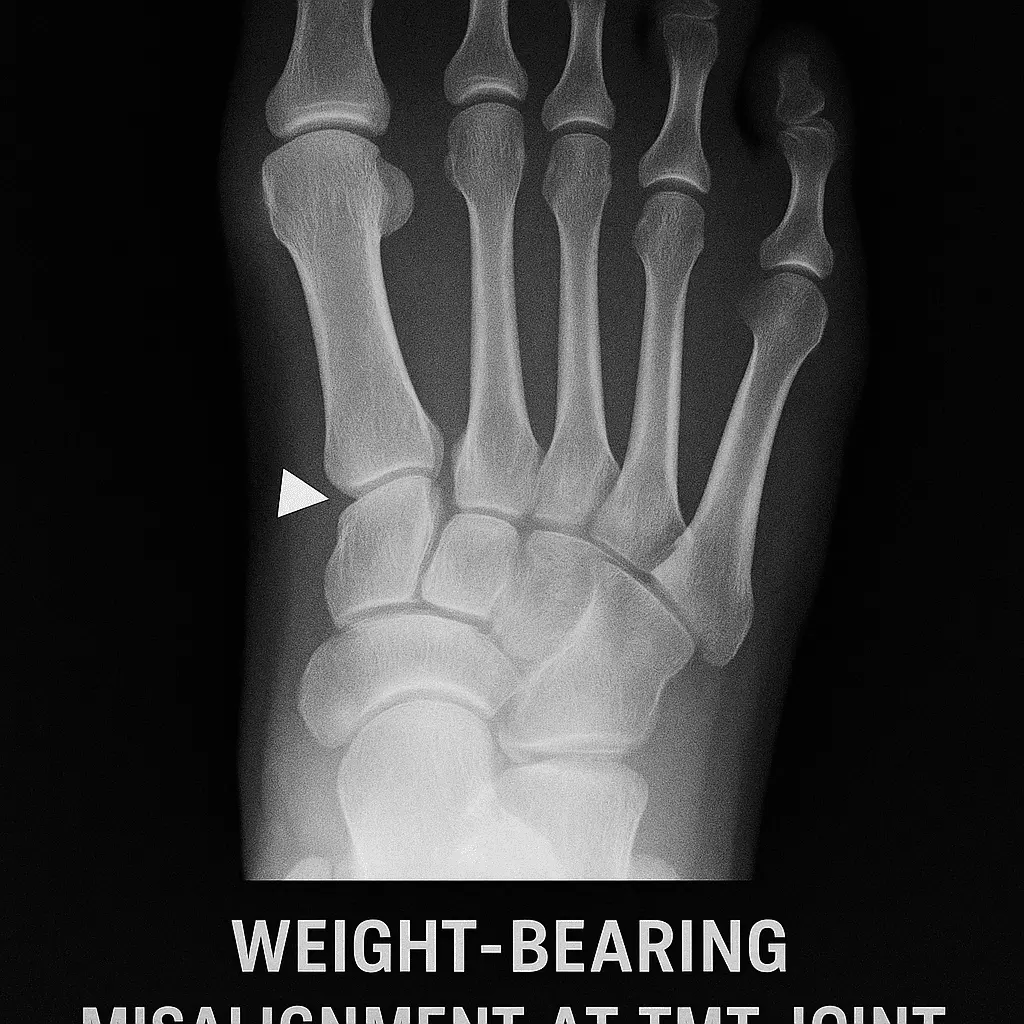
- Inability to bear weight — discomfort when walking or standing, even with minor injuries
- Foot deformity — visible displacement in advanced or untreated cases

According to a study conducted at the Penn State Bone & Joint Institute, the presence of a mid-foot plantar ecchymotic area (plantar ecchymosis sign) is a highly suggestive clinical finding for a Lisfranc (tarsometatarsal) injury even when radiographs appear normal.
Functional Impairments
- Pain during toe-off or push-off phase of walking
- Instability or collapse during pivoting movements
- Audible “pop” at the time of injury
- Reduced range of midfoot motion
Clinical Insight: Recognising Lisfranc vs. Simple Sprain
Unlike routine foot sprains, a Lisfranc injury impacts joint alignment and ligament tension, often with:
- Delayed pain that worsens over 24–72 hours
- Normal X-ray results initially, especially if not weight-bearing
- Deep discomfort with forefoot compression tests
- Localised tenderness beneath the second metatarsal base — a classic diagnostic sign
Frequently Missed Symptom Patterns
Healthcare professionals and patients should remain alert to these subtle but significant combinations:
- Persistent arch pain after a “mild” twist or fall
- Bruising under the foot without a visible fracture
- Limping or gait change with no ankle or toe swelling
- Symptoms that worsen with standing or sports activity after “rest” periods
When to Seek Expert Evaluation
You should see a podiatrist or orthopaedic foot specialist if you experience:
- Difficulty walking after an acute injury
- Bruising on the plantar surface of your foot
- Worsening swelling or pain beyond 48 hours
- Painful pressure at the midfoot or base of the second toe
Early diagnosis of Lisfranc injuries is crucial to prevent long-term issues like arthritis, foot collapse, or the need for surgical correction.
How We Treat Lisfranc Injuries at Freedom Clinics
At Freedom Clinics, we specialise in the non-surgical management and rehabilitation of Lisfranc injuries — including midfoot ligament sprains, stable tarsometatarsal (TMT) joint injuries, and post-surgical recovery support. While surgical treatment is necessary for some severe injuries, we focus on conservative therapies and foot biomechanics restoration for patients with stable or recovering midfoot conditions.
Non-Surgical Treatment for Stable Lisfranc Injuries
For patients with non-displaced Lisfranc fractures or partial ligament injuries, we provide a structured non-operative care plan aimed at promoting healing and preventing further joint damage.
Our conservative treatment approach includes:
- Medical immobilisation using a controlled ankle motion (CAM) boot or short leg cast
- Crutch-assisted mobility to prevent early weight-bearing stress
- Elevation and cryotherapy to manage inflammation and midfoot swelling
- Progressive transition to custom-made orthotics for arch support and load redistribution
- A tailored physiotherapy programme focusing on:
- Strengthening the intrinsic foot muscles
- Rebuilding midfoot stability
- Restoring proper gait mechanics
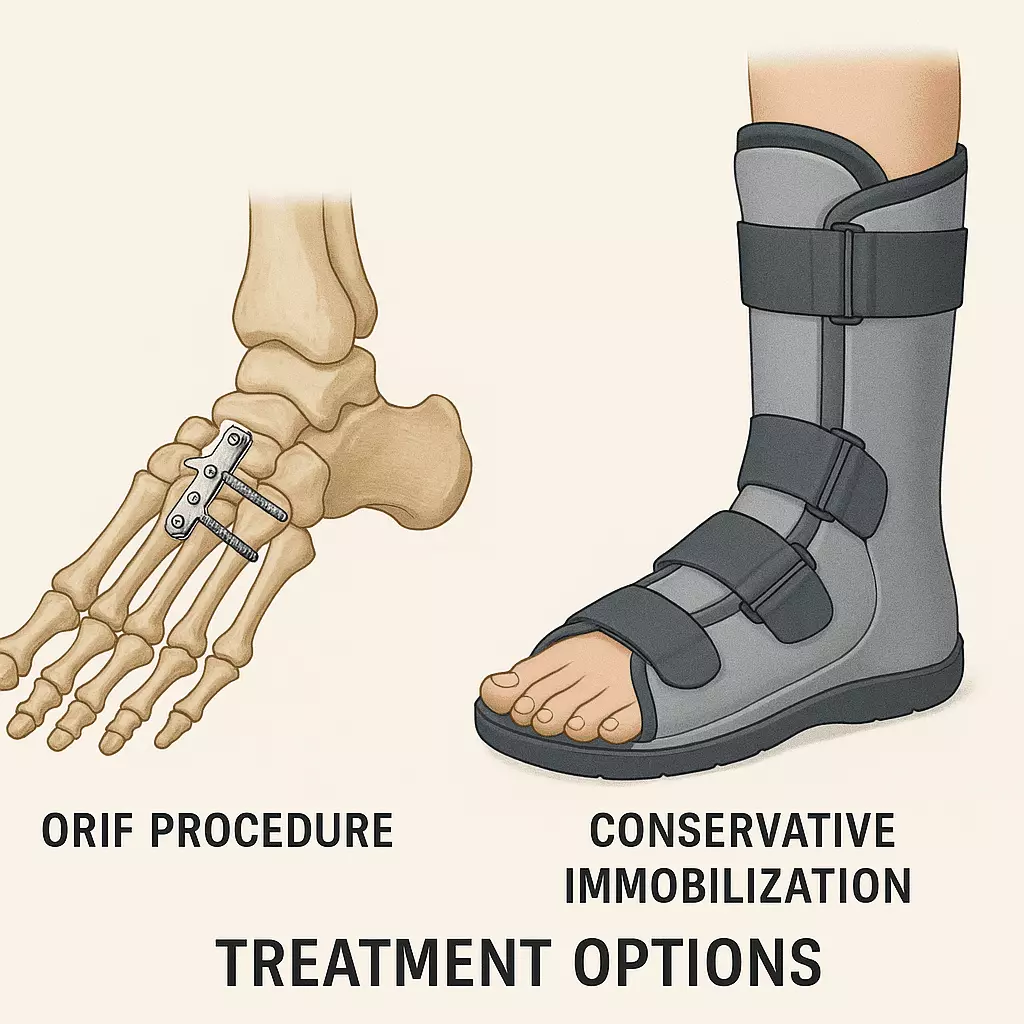
These therapies are most effective for Lisfranc sprains, stable fractures, and recovery from minor midfoot trauma where joint congruence is preserved.
For assessment steps, footwear changes, and pressure offloading, see our custom foot orthotics.
Rehabilitation After Surgical Treatment (Performed Elsewhere)
If you’ve had Lisfranc fracture surgery (e.g. internal fixation or joint fusion) by an orthopaedic specialist, our team can assist with your post-operative recovery by:
- Delivering a graduated physiotherapy plan to rebuild mobility
- Designing custom orthotics post-immobilisation to relieve pressure on healing joints
- Guiding safe return to sport or work through progressive loading protocols
- Addressing compensatory issues such as gait asymmetry or arch instability
Freedom Clinics serves as your rehabilitation partner, ensuring long-term stability and preventing chronic complications after midfoot surgery.
Diagnostic workflow and instruments are covered in Gait & biomechanics assessment.
Referral Criteria for Surgical Evaluation
We do not perform surgical procedures, but we closely monitor for signs that require escalation to orthopaedic care:
- Joint displacement or misalignment on imaging
- Complete ligament rupture causing instability
- Persistent pain, swelling, or functional limitations despite conservative treatment
- Deformity of the midfoot affecting gait or balance
In such cases, we’ll coordinate with a qualified orthopaedic foot and ankle surgeon to ensure continuity of care.
Learn more about staging, symptoms, and management in our foot & ankle conditions.
When to See a Podiatrist or Orthopaedic Specialist
If you’re dealing with midfoot pain, bruising, or difficulty walking following a twist, fall, or sports injury, it could be a Lisfranc injury — involving the tarsometatarsal joint complex. These injuries are often missed or misdiagnosed, so knowing when to seek specialist care is vital.
Symptoms That Require Specialist Evaluation
Seek prompt assessment by a podiatrist or orthopaedic foot and ankle specialist if you experience:
- Swelling and bruising on both the top and bottom of your foot
- Pain localised to the midfoot that worsens with standing or activity
- Inability to bear weight or walk without pain
- Audible “pop” or snapping sensation at the time of injury
- A visible collapse of your foot arch or changes in foot shape
These signs often indicate a Lisfranc ligament sprain, joint subluxation, or undetected fracture, requiring urgent clinical and radiological assessment.
How Freedom Clinics Can Help
Our experienced podiatrists offer:
- Advanced clinical examination to isolate Lisfranc-related dysfunction
- Midfoot-specific testing (e.g. piano key test, midfoot compression test)
- Coordination of diagnostic imaging — including weight-bearing X-rays or MRI
- Non-surgical treatment pathways for stable Lisfranc injuries
- Custom orthotic fitting to stabilise the arch and offload the injured joint
- Gait rehabilitation and functional strengthening programmes
Our focus is early detection, biomechanical correction, and long-term injury prevention.
When We Recommend Orthopaedic Referral
While Freedom Clinics does not provide surgical care, we identify and refer for surgery when:
- Imaging reveals Lisfranc joint instability or diastasis
- There’s a complete rupture of the Lisfranc ligament
- Conservative care fails to improve pain, function, or gait within 4–6 weeks
- Patient presents with recurrent dislocations or foot deformity
We work alongside orthopaedic surgeons to ensure timely intervention when operative correction is indicated.
Find a Lisfranc Injury Specialist Near You
Freedom Clinics provides rapid access to care in Canary Wharf with:
- Immediate appointments for midfoot and tarsometatarsal injuries
- Multidisciplinary care teams (podiatry, MSK therapy, rehab)
- Seamless referral to orthopaedics if surgical care is required
- Support for post-operative rehab, custom orthotics, and return to activity
For scope of services, clinic locations, and booking, visit our Podiatry & Chiropody care hub.
Related Guides
- Tarsal tunnel syndrome — tibial nerve entrapment and medial foot pain
- Hallux rigidus — big-toe arthritis and limited dorsiflexion
- Sesamoiditis — forefoot overload under the first MTP
- Rheumatoid arthritis in feet — inflammatory midfoot and forefoot changes
- Peripheral neuropathy — altered sensation and plantar risk
- Osteoarthritis of the foot & ankle — degenerative midfoot arthritis
- Foot drop — gait instability and compensations
- Fungal nail infection — onychomycosis care pathways
- Charcot foot — neuroarthropathy and collapse risk
- Gout in the foot — acute inflammatory flares
- Achilles tendonitis — posterior chain overload
- Morton’s neuroma — interdigital nerve pain and forefoot burning

Our Podiatrists & Chiropodists


References
- Ross, G., Cronin, R., Hauzenblas, J., & Juliano, P. (1996). Plantar ecchymosis sign: a clinical aid to diagnosis of occult Lisfranc tarsometatarsal injuries. Journal of Orthopaedic Trauma, 10(2), 119–122. https://doi.org/10.1097/00005131-199602000-00008

