
Understanding Morton’s Neuroma
What Is Morton’s Neuroma?
Morton’s Neuroma is a painful nerve compression condition that affects the common plantar digital nerve, usually between the third and fourth metatarsal heads. This condition, also referred to as interdigital neuritis, involves thickening of the nerve sheath due to chronic irritation or mechanical compression.
Despite its name, Morton’s Neuroma is not a true tumour. Instead, it is better understood as a form of perineural fibrosis, or fibrous tissue buildup around the nerve. The result is often a sharp, burning pain in the forefoot, accompanied by tingling or numbness in the toes—particularly during weight-bearing activities.
Patients often confuse Morton’s Neuroma with conditions like metatarsalgia or capsulitis, as all involve pain in the ball of the foot. However, only Morton’s Neuroma causes symptoms associated with nerve entrapment, such as the feeling of standing on a pebble or electric-like shocks radiating through the toes.
Freedom Clinics’ podiatrists in London specialise in the accurate diagnosis and treatment of Morton’s Neuroma, using advanced techniques including gait analysis, ultrasound diagnostics, and custom orthotics.
Medically Reviewed by Dr Priya Anand (DPM) | Last updated: 12 January 2026
Book your appointment
Where Does Morton’s Neuroma Occur?
This condition most commonly develops in the forefoot, where the interdigital (common plantar digital) nerve passes between the third and fourth metatarsals.
Research summarised in StatPearls (2023) confirms that Morton’s Neuroma typically affects the interdigital nerve, most often between the third and fourth metatarsals, where anatomical compression is common.
The tight space between these metatarsal bones makes the nerve vulnerable to compression—especially from tight footwear or repetitive stress.
When subjected to prolonged irritation, the nerve undergoes a fibrotic transformation, leading to the neuroma or nerve thickening that defines the condition. This anatomical hotspot is a frequent source of misdiagnosed pain in runners, dancers, and anyone wearing narrow shoes.
Many patients wonder, “What nerve is affected in Morton’s Neuroma?” The answer: the common plantar digital nerve, which branches from the medial and lateral plantar nerves and plays a key role in forefoot sensation.
Is Morton’s Neuroma a True Neuroma?
Not technically. While it’s called a neuroma, this condition does not involve a neoplastic (tumorous) growth. Instead, Morton’s Neuroma is a mechanical nerve entrapment syndrome, more closely related to conditions like carpal tunnel syndrome or tarsal tunnel syndrome than to actual nerve tumours.
Understanding this distinction is important, especially when discussing treatment options. Nerve decompression or removal (neurectomy) may be indicated in persistent cases—but only after conservative options fail.
Who’s at Risk of Developing It?
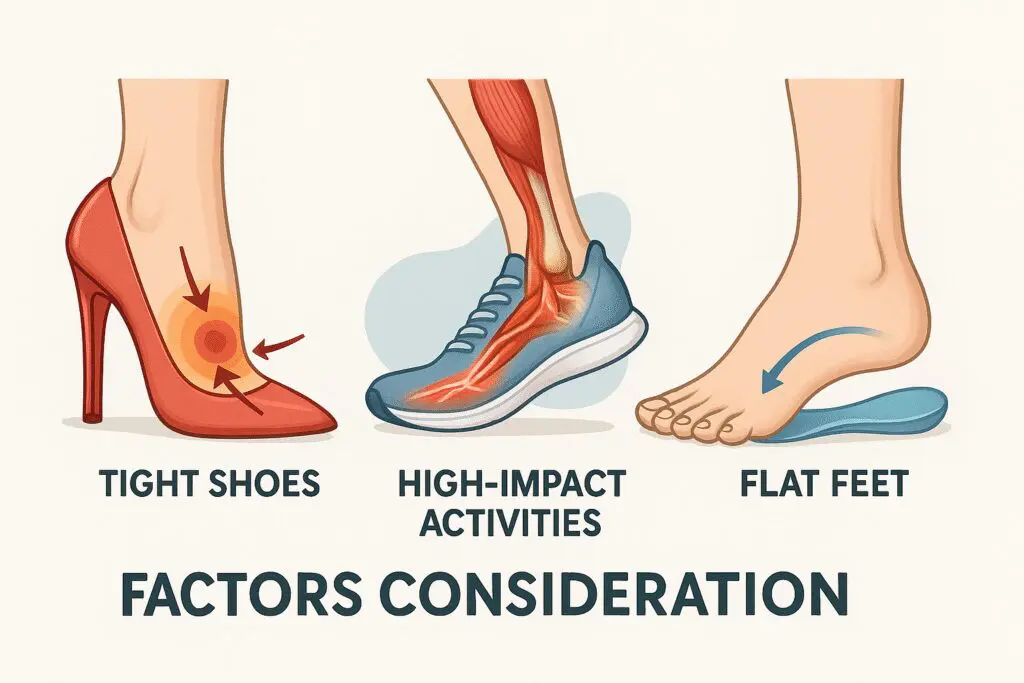
Several lifestyle, anatomical, and biomechanical factors contribute to the development of Morton’s Neuroma:
- Women who frequently wear tight or high-heeled shoes
- Athletes involved in high-impact sports like running, tennis, or football
- Individuals with foot deformities, including flat feet, bunions, or hammertoes
- People with abnormal gait patterns or overpronation
- Occupations that involve prolonged standing or walking
At Freedom Clinics, patients undergo 3D gait analysis to uncover any biomechanical irregularities. This allows our podiatrists to design custom orthotics that offload pressure from the affected nerve zone and reduce recurrence risk.

What Causes Morton’s Neuroma?
Morton’s Neuroma develops when the interdigital nerve—particularly the common plantar digital nerve between the third and fourth metatarsals—undergoes repetitive stress, leading to chronic irritation and fibrotic thickening of the nerve sheath. This thickening compresses the nerve, triggering the sharp, tingling, or burning pain associated with the condition.
Understanding what leads to this nerve entrapment syndrome helps patients reduce risk factors and prevent symptom progression.
Tight or Ill-Fitting Footwear
Why it matters: Shoes with a narrow toe box or high heels compress the forefoot, increasing pressure on the interdigital nerve. This is especially common among women who frequently wear fashion footwear that restricts natural foot splay.
Clinical Insight: Long-term compression from high-heeled or pointed shoes is one of the most commonly documented contributors to Morton’s Neuroma.
High-Impact or Repetitive Stress Activities
Running, jumping, or sports that involve continuous forefoot loading can overstimulate the plantar nerve, especially without proper shock absorption. This causes microtrauma to the nerve, ultimately leading to neuroma formation.
Query addressed: “Can running cause Morton’s Neuroma?” – Yes, especially without custom support or recovery periods.
Foot Deformities and Structural Abnormalities
Conditions like flat feet (pes planus), high arches (pes cavus), bunions, or hammertoes can alter pressure distribution in the foot. These structural changes lead to biomechanical imbalances that increase the risk of neuroma development.
- Flat feet: collapse the medial arch, overloading the metatarsals
- High arches: concentrate pressure on fewer points, intensifying nerve compression
Abnormal Gait and Poor Biomechanics
Improper foot posture or walking patterns—often exacerbated by unsupportive footwear—place uneven strain on the forefoot. Overpronation, in particular, is a known contributing factor, as it destabilises the foot’s natural alignment.
Freedom Clinics uses gait analysis to identify these issues and prescribes custom orthotics to reduce load on the affected nerve.
Previous Foot Injuries
A history of metatarsal fractures, sprains, or joint trauma may predispose the nerve to entrapment by altering the soft tissue environment around it.
“Can Morton’s Neuroma develop after an injury?” – Yes, especially if scar tissue develops near the nerve path or gait compensation patterns emerge.
What Sets Morton’s Neuroma Apart?
Unlike general inflammatory foot conditions like metatarsalgia, Morton’s Neuroma stems specifically from nerve irritation. The presence of symptoms such as electric shock sensations, toe numbness, and relief upon removing shoes are unique indicators of this diagnosis.
By addressing the root causes—including footwear, biomechanics, and gait—Freedom Clinics helps prevent recurrence and avoid the need for surgery.
Diagnosing Morton’s Neuroma
Diagnosing Morton’s Neuroma requires a nuanced approach that combines clinical evaluation, biomechanical assessment, and advanced imaging. This ensures an accurate distinction between neuroma and other causes of forefoot pain, such as metatarsalgia, capsulitis, or intermetatarsal bursitis. The goal is to confirm nerve entrapment in the third intermetatarsal space and guide the most appropriate treatment.
Clinical Assessment by a Podiatrist
At Freedom Clinics, diagnosis begins with a manual examination targeting the space between the third and fourth metatarsal heads—the most common site for neuroma development.
Diagnostic Techniques Include:
- Mulder’s Click Test: Lateral compression of the forefoot while palpating the intermetatarsal space. A palpable or audible “click,” accompanied by sharp pain or tingling, indicates nerve thickening.
- Forefoot Palpation: Direct pressure on the suspected site to reproduce the patient’s symptoms.
- Tinel’s Sign: Tapping over the plantar digital nerve may trigger paresthesia, helping localise nerve irritation.
Query addressed: “How does a podiatrist diagnose Morton’s Neuroma?”
Answer: Through targeted manual tests that assess nerve sensitivity and anatomical location.
Gait and Biomechanical Diagnostics
Underlying gait abnormalities—such as overpronation, unequal load distribution, or arch collapse—can increase mechanical stress on the plantar digital nerve.
At Freedom Clinics, we conduct:
- 3D Gait Analysis using pressure mapping and motion capture
- Postural Assessments to detect kinetic chain misalignments
- Weight Distribution Tests across metatarsal heads
These diagnostics not only support the diagnosis but also inform the prescription of custom orthotics, a key non-surgical treatment option.
Query addressed: “Can abnormal walking cause Morton’s Neuroma?”
Yes. Overpronation and poor biomechanics are major risk factors.
Diagnostic Imaging Methods
While clinical examination often suffices, imaging offers definitive confirmation—especially in cases with overlapping symptoms or failed prior treatments.
Ultrasound Scan
- Detects nerve swelling, perineural fibrosis, and intermetatarsal fluid
- Offers real-time assessment with high sensitivity
MRI (Magnetic Resonance Imaging)
- Differentiates neuroma from bursitis, synovitis, or stress fractures
- Preferred when multiple pathologies are suspected
Query addressed: “Can Morton’s Neuroma be seen on ultrasound or MRI?”
Yes. Ultrasound is often used first; MRI is reserved for complex cases.
When to Rule Out Other Conditions
Not all forefoot pain is neuroma-related. Red flags include:
- Pain that’s not localised between the toes
- Generalised numbness (possible peripheral neuropathy)
- Inflammation near joints (possible capsulitis or bursitis)
- History of trauma or surgery (potential stress fractures)
In these situations, your podiatrist may refer for nerve conduction studies or further specialist evaluation.

Treatment Options for Morton’s Neuroma
Managing Morton’s Neuroma—a nerve entrapment condition affecting the interdigital nerve—requires a tiered approach that evolves with symptom severity and patient response. Treatments range from custom orthotics and footwear modification to radiofrequency ablation, alcohol sclerosing therapy, and ultimately surgical neurectomy for chronic, refractory cases.
At Freedom Clinics, we customise care plans using gait diagnostics, symptom tracking, and evidence-based protocols to restore mobility and eliminate nerve pain.
Non-Surgical Treatment for Morton’s Neuroma
Custom Orthotics
Custom orthoses are designed following 3D gait analysis to correct biomechanical overload at the third and fourth metatarsal heads. By redistributing plantar pressure, they relieve compression on the common plantar digital nerve, often resolving symptoms without invasive measures.
A 2019 randomised controlled trial from the Universidade Federal de São Paulo demonstrated that custom orthotics correcting forefoot pressure significantly improved foot pain and function in patients with Morton’s Neuroma.
Query addressed: “Do orthotics help Morton’s Neuroma?”
Yes—when custom-made, orthotics are first-line and highly effective for nerve decompression.
Footwear Modification
Shoes with:
- Wide toe boxes
- Low heels
- Firm arch support
…are essential for offloading pressure from the neuroma site. High heels and narrow dress shoes should be avoided, as they exacerbate nerve compression.
Activity Adaptation
Patients are advised to reduce forefoot-straining activities like:
- Long-distance running
- Aerobic dance
- Prolonged standing
Low-impact alternatives (swimming, cycling) are encouraged during recovery.
Advanced Procedures for Refractory Neuroma Cases
If conservative options fail to provide relief, minimally invasive treatments offer targeted resolution of neuroma pain.

Corticosteroid Injections
Steroids injected into the intermetatarsal space reduce inflammation surrounding the thickened nerve. They are particularly useful for acute flare-ups or as a bridge therapy.
Query addressed: “Are corticosteroid injections permanent?”
No. Relief may last weeks to months, depending on biomechanics and activity level.
Alcohol Sclerosing Injections
This involves multiple sessions where dehydrated alcohol is injected into the neuroma under ultrasound guidance, chemically shrinking the nerve over time.
Query addressed: “Is alcohol sclerosing permanent?”
It can be effective, though recurrence risk exists without addressing gait or footwear causes.
Radiofrequency Ablation (RFA)
Using thermal energy, RFA denatures sensory nerve endings, blocking pain transmission. It is performed under ultrasound and local anesthetic.
Cryoablation
This technique freezes the neuroma using a cryoprobe, offering a non-surgical pathway to permanent pain relief in many cases. It is most effective for patients unfit or unwilling to undergo surgery.

When Surgery Becomes Necessary – Neurectomy Explained
Indications
- Confirmed ultrasound-visible neuroma
- Failed response to 3–6 months of non-surgical care
- Recurring pain disrupting daily life or sleep
What is a Neurectomy?
A surgical neurectomy removes the neuroma mass entirely. The nerve is excised through a dorsal or plantar incision. Post-op includes rest, immobilisation, and graduated return to walking.
Query addressed: “How long is recovery from Morton’s Neuroma surgery?”
Recovery takes 6–8 weeks for full return to activity, with the first 2–3 weeks focused on healing and swelling reduction.
Long-Term Management and Neuroma Recurrence Prevention
- Periodic review and refitting of orthotics
- Biomechanical follow-up through gait analysis
- Education on correct footwear and injury prevention
- Monitoring for new symptoms in the opposite foot or adjacent spaces
Treatment Comparison Overview
| Treatment | Use Case | Pros | Limitations |
|---|---|---|---|
| Custom Orthotics | Mild–moderate cases | Corrects gait, non-invasive | Long-term commitment, periodic review |
| Corticosteroid Injection | Acute pain relief | Fast-acting, outpatient | Temporary, limited repeat use |
| Alcohol Sclerosing Therapy | Moderate pain, surgery-averse | Chemical neuroma shrinkage | Requires multiple sessions |
| RFA / Cryoablation | Chronic cases avoiding surgery | Minimally invasive, precise targeting | Some recurrence possible |
| Surgical Neurectomy | End-stage, refractory neuroma | Permanent solution | Surgical risk, recovery period |
Morton’s Neuroma vs Similar Foot Conditions
Due to overlapping symptoms, Morton’s Neuroma is often misdiagnosed or confused with other forefoot conditions such as metatarsalgia, tarsal tunnel syndrome, and capsulitis. Each of these conditions involves different anatomical structures—nerves, ligaments, or joints—and requires a distinct diagnostic and treatment pathway.
Accurate differentiation is essential to ensure that patients receive the most appropriate intervention.
Morton’s Neuroma vs Metatarsalgia – Nerve vs Tissue Pain
Metatarsalgia is a broad term describing inflammation of the metatarsal heads, typically caused by excessive load or repetitive stress. Unlike Morton’s Neuroma, it does not involve nerve entrapment.
| Feature | Morton’s Neuroma | Metatarsalgia |
|---|---|---|
| Affected Structure | Interdigital nerve (nerve entrapment) | Metatarsal heads (soft tissue inflammation) |
| Sensation | Tingling, numbness, “pebble-in-shoe” feel | Aching, burning, dull soreness |
| Pain Location | Between 3rd and 4th toes | Across the entire ball of the foot |
| Triggered By | Tight shoes, walking, direct compression | High-impact activity, poor cushioning |
| Diagnostic Test | Mulder’s Click Test | Pressure mapping, gait analysis |
Query addressed: “How do I know if it’s Morton’s Neuroma or Metatarsalgia?”
Answer: If you’re experiencing localised tingling and numbness between toes, it’s likely a neuroma. Diffuse forefoot pain points toward metatarsalgia.
Morton’s Neuroma vs Tarsal Tunnel Syndrome – Foot vs Ankle Nerve Compression
Both are nerve compression syndromes, but affect different nerves in distinct anatomical regions.
| Feature | Morton’s Neuroma | Tarsal Tunnel Syndrome |
|---|---|---|
| Nerve Involved | Common plantar digital nerve | Posterior tibial nerve |
| Location of Pain | Ball of foot, between toes | Inner ankle, heel, sometimes radiates to calf |
| Symptoms | Localised tingling, numbness in toes | Burning, radiating pain in sole and ankle |
| Test Used | Mulder’s Click Test | Tinel’s Sign at tarsal tunnel |
Query addressed: “Is it Morton’s Neuroma or Tarsal Tunnel Syndrome?”
Answer: If your symptoms are isolated to the toes and ball of foot, it’s more likely a neuroma. If pain radiates from the ankle, consider tarsal tunnel syndrome.
Morton’s Neuroma vs Capsulitis – Nerve vs Ligament Inflammation
Capsulitis involves inflammation of the metatarsophalangeal (MTP) joint capsule, commonly affecting the second toe. It is not neurological, and its pain is mechanical and positional.
| Feature | Morton’s Neuroma | Capsulitis |
|---|---|---|
| Affected Tissue | Nerve sheath (interdigital nerve) | Ligament capsule around toe joint |
| Common Location | Between 3rd and 4th toes | Base of the 2nd toe |
| Key Symptom | Numbness, tingling, shooting foot pain | Instability, toe drifting, localised swelling |
| Diagnosis | Ultrasound, Mulder’s Test | Manual dorsiflexion test, clinical palpation |
Query addressed: “Could my second toe pain be Capsulitis or Neuroma?”
Answer: Capsulitis often affects the second toe directly and causes joint swelling; Neuroma pain radiates between toes and worsens with compression.
Key Differentiators for Clinical Diagnosis
At Freedom Clinics, we diagnose Morton’s Neuroma through a combination of:
- Patient symptom history
- Clinical foot examination
- Gait analysis to identify pressure overload
- Ultrasound to visualise nerve thickening or swelling
We differentiate Morton’s Neuroma from other conditions by identifying whether the nerve, ligament, or joint is the primary pain source.
Preventing Morton’s Neuroma and Managing Recurrence
Morton’s Neuroma is preventable and, once treated, recurrence can be avoided through proactive care. Because the condition stems from mechanical compression of the interdigital nerve, effective prevention and long-term management depend on eliminating the root biomechanical and environmental triggers.
At Freedom Clinics, we help patients implement prevention strategies that focus on pressure redistribution, gait correction, and footwear optimisation to reduce the risk of initial onset and recurrence after treatment.
Core Prevention Strategies for Morton’s Neuroma
The foundation of prevention begins with eliminating the compressive forces that contribute to nerve entrapment in the third intermetatarsal space.
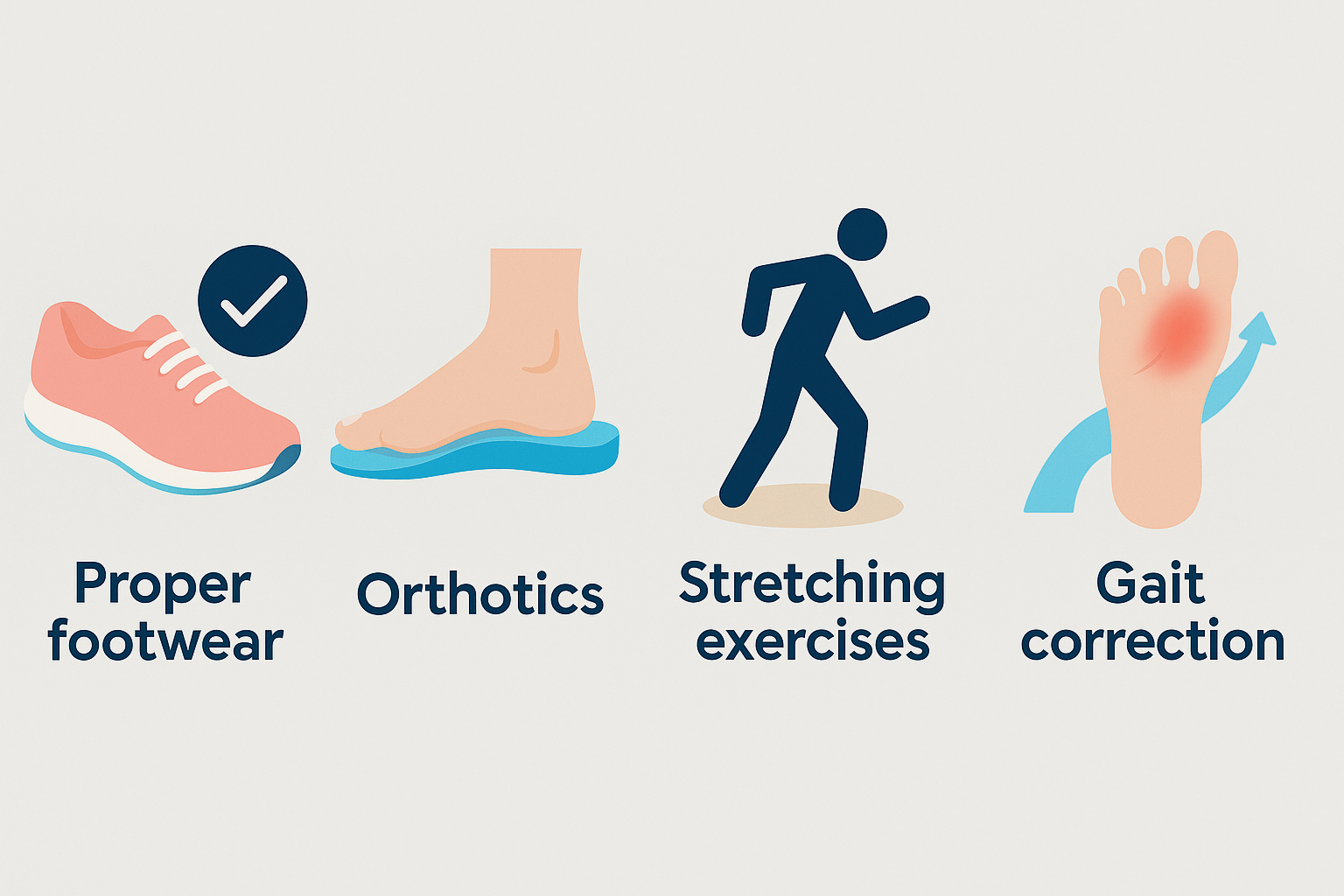
Wear Supportive, Spacious Footwear
Footwear is a critical factor. To prevent nerve compression:
- Choose shoes with wide toe boxes to eliminate lateral pressure
- Select low-to-mid heels (under 2 inches) to reduce forefoot load
- Ensure firm arch support to maintain foot posture
- Use shock-absorbing soles to protect metatarsal heads
Use Custom Orthotics for Gait Correction
Custom orthoses, designed from 3D gait analysis, redistribute pressure away from the forefoot—particularly from the common plantar digital nerve. They correct overpronation, misalignment, and structural asymmetries that predispose patients to nerve compression.
- Replace orthotics every 12–18 months
- Review fit and function annually
- Update after weight or activity level changes
Managing Morton’s Neuroma After Treatment
Even after successful treatment—conservative, ablative, or surgical—maintaining the biomechanical gains is essential to avoid recurrence.
Post-Neurectomy Care
Following a surgical neurectomy, patients should:
- Avoid compressive shoes for 6+ weeks
- Continue orthotic use for gait stability
- Gradually reintroduce activities
- Monitor for contralateral (opposite foot) symptoms
Lifestyle and Mobility Modifications for Long-Term Relief
Activity Adaptation
Modify high-risk activities such as:
- Long-distance running
- Tennis or basketball (repetitive stop-start impact)
Replace with low-impact alternatives:
- Swimming
- Cycling
- Elliptical machines
Daily Foot Health Habits
Support nerve decompression with:
- Toe splay exercises to maintain forefoot flexibility
- Marble pick-up drills for intrinsic foot strength
- Calf and plantar fascia stretches to improve gait propulsion
High-Risk Behaviors That Trigger Neuroma Recurrence
| Behavioural Risk | Recommended Prevention |
|---|---|
| Wearing narrow or high-heeled shoes | Switch to wide, cushioned, low-heel footwear |
| Skipping orthotic reviews | Annual check-ups and replacement every 12–18 months |
| Continuing high-impact activity | Rotate with low-impact exercises, adjust footwear support |
| Ignoring gait abnormalities | Ongoing biomechanical screening and orthotic optimisation |
Frequently Asked Questions About Morton’s Neuroma
This FAQ section addresses the most common patient concerns related to Morton’s Neuroma, covering symptoms, treatment options, recurrence, and prevention.
Can Morton’s Neuroma go away on its own?
In some mild cases, Morton’s Neuroma symptoms may temporarily subside with rest, wider shoes, or reduced activity. However, spontaneous resolution is rare. Without targeted intervention—such as orthotics, gait correction, or nerve-focused treatment—the condition often worsens.
What is the best treatment for Morton’s Neuroma?
There is no one-size-fits-all solution. For most, the first-line treatment includes:
- Custom orthotics
- Footwear modification
- Activity adaptation
For more persistent symptoms, ultrasound-guided steroid injections, alcohol sclerosing therapy, or radiofrequency ablation are effective. Surgical neurectomy is considered a last resort.

How long does recovery take after Morton’s Neuroma surgery?
Recovery from surgical neurectomy typically spans 6 to 8 weeks. Most patients:
- Resume light walking after 2 weeks
- Return to full activity by 8 weeks (with orthotic support)
- Experience long-term symptom relief when gait abnormalities are corrected
What causes Morton’s Neuroma to flare up?
Common flare-up triggers include:
- Wearing narrow or high-heeled shoes
- High-impact activities (e.g., running, tennis)
- Skipping orthotic use
- Prolonged standing without support
Are orthotics necessary after treatment?
Yes. Whether the patient underwent conservative treatment, injections, or surgery, custom orthotics help:
- Prevent neuroma recurrence
- Correct residual gait imbalances
- Support long-term recovery and symptom-free walking
Can I still exercise with Morton’s Neuroma?
Yes—but modify your routine:
- Choose low-impact activities (swimming, cycling)
- Avoid barefoot walking and poor footwear
- Use shock-absorbing insoles during exercise
Is Morton’s Neuroma a permanent condition?
It doesn’t have to be. With proper diagnosis, treatment, and lifestyle adjustments, most patients achieve full resolution of symptoms—especially when they address the underlying biomechanical cause.
Book Your Morton’s Neuroma Consultation in London
If you’re experiencing burning pain in the ball of your foot, numbness between your toes, or that classic “pebble in the shoe” feeling, you may be suffering from Morton’s Neuroma—a nerve compression condition that affects the interdigital nerve. At Freedom Clinics, our podiatrist service in Canary Wharf, London, specialises in diagnosing and treating this condition using advanced, non-invasive techniques.
We offer individualised care plans designed to relieve neuroma pain at its source, restore mobility, and prevent recurrence. Whether you’re in the early stages of symptoms or seeking help after failed treatments, our team is here to help.

Expert Morton’s Neuroma Care at Freedom Clinics, Canary Wharf
Why patients across London choose us for Morton’s Neuroma treatment:
- Experienced podiatrists specialising in nerve-related foot pain
- In-house ultrasound imaging and 3D gait analysis
- Non-surgical and surgical options, including orthotic therapy, injections, and neurectomy
- Proven outcomes for long-term symptom resolution and recurrence prevention
Book Your Appointment – Convenient, Central London Location
Freedom Clinics – Canary Wharf
Canada Place Shopping Mall
34 North Colonnade
Canary Wharf, London E14 5HX
Call: 0203 197 9100
Email: canarywharf@freedomclinics.com
Opening Hours:
Mon–Fri: 7:00 am – 8:00 pm
Sat–Sun: 10:00 am – 4:00 pm
Our Podiatrists & Chiropodists


References
- Munir, U., Tafti, D., & Morgan, S. (2023). Morton Neuroma. StatPearls. https://www.ncbi.nlm.nih.gov/books/NBK470249/
- de Oliveira, H. A. V., et al. (2019). Effectiveness of customized insoles in patients with Morton’s neuroma: A randomized, controlled, double‑blind clinical trial. Clinical Rehabilitation, 33(12), 1898–1907. https://pubmed.ncbi.nlm.nih.gov/31505943/

