
Flat Feet (Pes Planus / Fallen Arches) – Expert Podiatry Care in Canary Wharf
Flat feet — also known as pes planus, fallen arches, or arch collapse — occur when the foot arch lowers or disappears, causing the entire sole to contact the ground during standing or walking. While flexible flat feet are common in children and often part of normal development, in adults or symptomatic cases they can lead to overpronation, heel pain, ankle strain, and even knee or lower back discomfort.
At Freedom Clinics in Canary Wharf, our specialist podiatrists use advanced gait analysis technology and prescribe custom orthotics to correct the biomechanical issues caused by flat feet. By restoring arch support, improving foot alignment, and optimising gait mechanics, we help prevent complications such as plantar fasciitis, posterior tibial tendon dysfunction (PTTD), and postural problems that affect the knees and spine.
Medically reviewed by: Dr Priya Anand DPM. Last update: 18th May 2026
Book your appointment
Understanding Flat Feet
Flexible vs Rigid Flat Feet: Understanding the Arch Collapse
- Flexible flat feet – The arch appears when non-weight-bearing but flattens when standing.
- Rigid flat feet – The arch remains collapsed even when off the ground, often linked to structural changes in bones, ligaments, or tendons.
Both types can cause overpronation, altering gait and increasing stress on the ankle joint, knees, and lumbar spine.
Adult-Acquired Flatfoot (AAFD) and Posterior Tibial Tendon Dysfunction
Adult-acquired flatfoot is a progressive form of flat feet, most commonly caused by posterior tibial tendon dysfunction (PTTD), arthritis, or trauma. Early symptoms include medial ankle pain, swelling along the tendon, difficulty standing on tiptoe, and progressive arch collapse. Our Canary Wharf podiatrists diagnose AAFD using gait analysis and manage it with custom orthotics, supportive bracing, and exercise therapy to slow progression and reduce pain.
Flat Feet in Children: When to Seek Podiatric Care
Children typically develop an arch between ages 6 and 10. Flat feet in children are often harmless, but a paediatric podiatry review is advised if there is foot pain, frequent tripping, or noticeable gait changes. At Freedom Clinics, we provide reassurance when no intervention is needed, footwear advice for better support, and custom orthotics only when symptoms persist or function is impaired.
Causes of Flat Feet (Pes Planus)
Flat feet — also called pes planus or fallen arches — can develop from birth or be acquired later in life. Identifying the cause allows our Canary Wharf podiatrists to deliver the most effective treatment, from custom orthotics to targeted rehabilitation.
Genetic and Structural Factors
Some patients are born with ligament laxity or bone alignment variations that naturally reduce the foot arch, leading to flat feet from childhood. Inherited foot structure often combines with other risk factors to cause symptoms.
According to StatPearls contributors at NCBI, congenital pes planus often stems from ligamentous laxity or structural anomalies of the foot, where inherent connective tissue flexibility and bone alignment variations compromise the medial longitudinal arch from early childhood.
Overpronation and Arch Collapse
Overpronation — excessive inward rolling of the foot during walking — is one of the most common biomechanical causes of arch collapse. This altered gait pattern can cause strain in the ankle joint, posterior tibial tendon, and plantar fascia. Our podiatrists address this with advanced gait analysis and prescription custom orthotics.

Medical Conditions and Weight-Related Causes
- Arthritis – joint degeneration or inflammation can weaken arch support structures.
- Diabetes – nerve and tendon changes may impair foot stability.
- Obesity – excess body weight increases mechanical load, accelerating arch flattening.
Injury-Related Causes
Fractures, posterior tibial tendon tears, and ligament injuries can lead to adult-acquired flatfoot (AAFD), a progressive form of flat feet that benefits from early podiatric intervention.
Symptoms & Related Conditions of Flat Feet
Not all people with flat feet experience discomfort, but many develop pain, mobility issues, or secondary conditions.
Core Symptoms
- Heel pain and tenderness along the arch
- Ankle swelling and instability
- Fatigue or aching in the feet after prolonged standing or walking
- Difficulty wearing certain footwear due to arch collapse

Plantar Fasciitis and Other Complications
Flat feet can contribute to:
- Plantar fasciitis – inflammation of the band of tissue supporting the arch
- Posterior tibial tendon dysfunction (PTTD) – often a precursor to adult-acquired flatfoot
- Bunions and hammertoes – from altered foot mechanics
- Shin splints, knee pain, and lower back pain – due to biomechanical misalignment from overpronation
When to See a Podiatrist
You should book a consultation at Freedom Clinics Canary Wharf if you notice:
- Persistent foot or ankle pain
- Progressive arch collapse or changes in gait
- Pain radiating to the knees, hips, or back
- Difficulty in sports performance or daily walking activities
Flat Feet Diagnosis: Step-by-Step at Freedom Clinics Canary Wharf
At Freedom Clinics in Canary Wharf, we use a structured, evidence-based process to diagnose flat feet (pes planus, fallen arches). Whether you present with flexible flat feet, rigid flat feet, or adult-acquired flatfoot (AAFD), our podiatrists will pinpoint the underlying causes, measure the severity of arch collapse, and detect related conditions such as overpronation, plantar fasciitis, or posterior tibial tendon dysfunction (PTTD).
Step 1 – Comprehensive Clinical Examination
Your consultation begins with a full podiatric assessment, including:
- Observation of foot posture while standing and walking
- Measurement of arch height and flexibility
- Joint range of motion testing at the ankle, midfoot, and subtalar joint
- Palpation of the posterior tibial tendon for tenderness or swelling
- Identification of visible overpronation patterns
Step 2 – Gait Analysis for Flat Feet and Overpronation
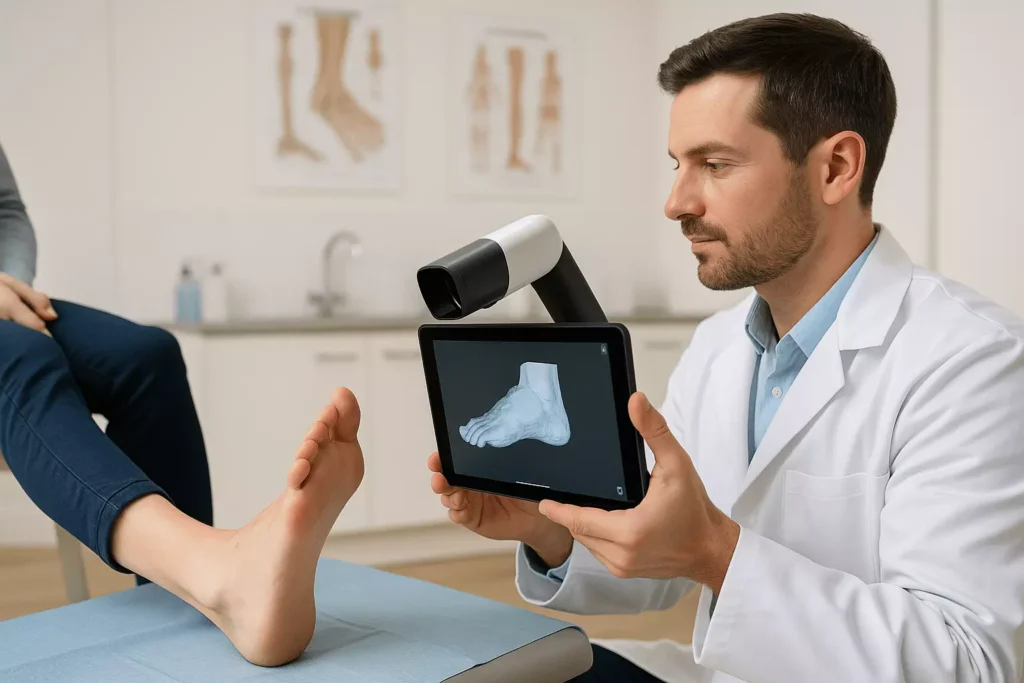
We employ pressure plate gait analysis and high-speed video capture to analyse your walking and running mechanics. This helps identify:
- Excessive overpronation contributing to flat feet
- Uneven weight distribution across the foot arch
- Pressure hotspots causing heel pain or plantar fasciitis
The findings are used to design custom orthotics that improve foot alignment and reduce strain.
Step 3 – Imaging for Arch Collapse and PTTD
If structural damage is suspected, we may recommend:
- X-rays – to identify arthritis, fractures, or severe deformities
- MRI scans – to assess the posterior tibial tendon and detect early-stage PTTD
- Ultrasound imaging – to examine ligaments, tendons, and soft tissue inflammation
Step 4 – Whole-Body Biomechanical Review
Because flat feet can impact the kinetic chain from the feet up, our podiatrists also assess:
- Knee alignment and tracking
- Hip rotation during movement
- Spinal posture for signs of compensatory strain
This ensures secondary issues like knee pain, hip discomfort, or lower back pain are addressed alongside your foot condition.
Why Early Diagnosis Is Essential
Early diagnosis of flat feet allows us to recommend custom orthotics, strengthening exercises, and footwear advice before problems escalate into chronic pain or irreversible joint changes.
Treatment Options for Flat Feet (Pes Planus)
At Freedom Clinics Canary Wharf, we create tailored treatment plans for flat feet (pes planus, fallen arches) that address pain, correct overpronation, and prevent complications such as plantar fasciitis and posterior tibial tendon dysfunction (PTTD). Each plan is based on a full diagnostic assessment to match your arch type, activity level, and long-term mobility needs.
Custom Orthotics for Flat Feet and Overpronation
Custom orthotics are prescription insoles created using gait analysis to:
- Support the foot arch and limit overpronation
- Reduce heel pain and forefoot pressure
- Improve posture and alignment, reducing strain on the knees, hips, and lower back
Our Canary Wharf podiatrists often use orthotics as the first step to slow arch collapse and restore walking comfort.

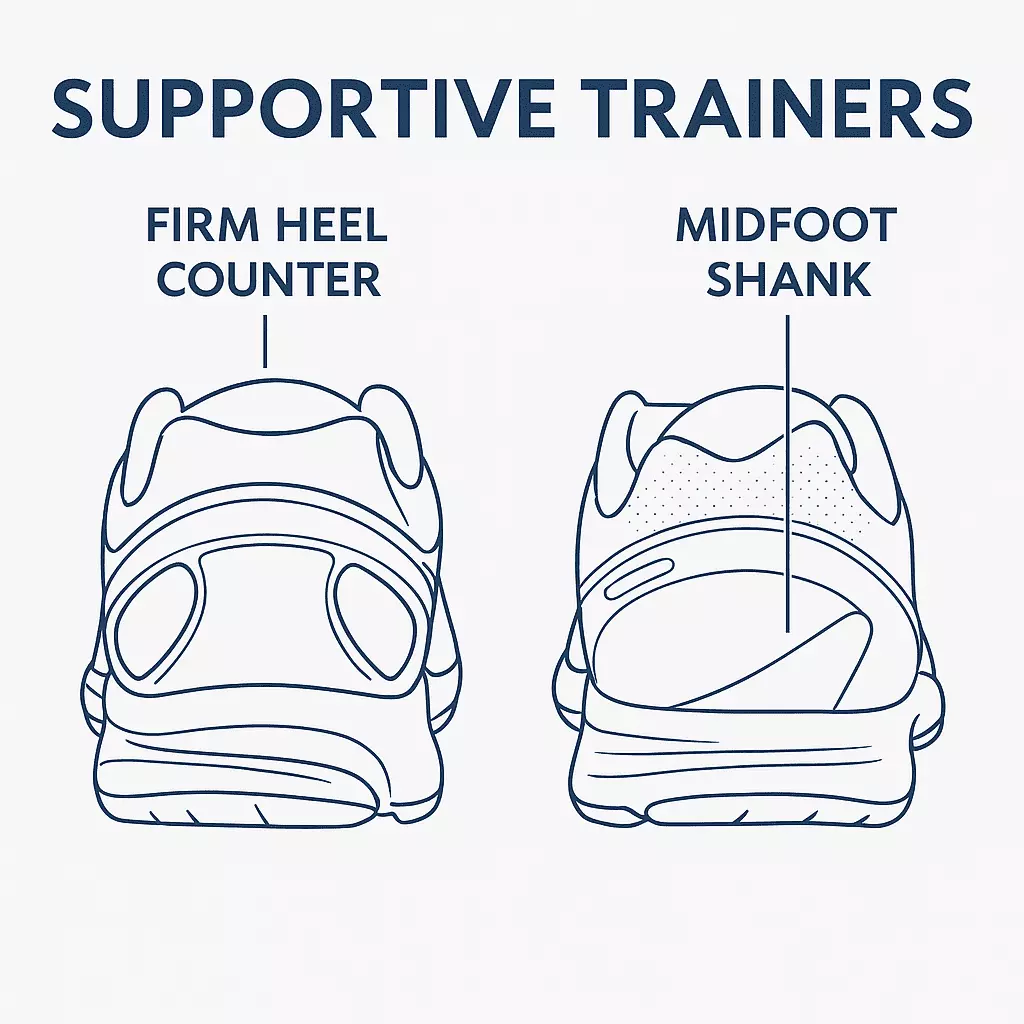
Footwear Solutions for Arch Collapse
Choosing the right footwear can make a significant difference for people with flat feet:
- Trainers with arch reinforcement and motion control features
- Stability shoes for patients with overpronation
- Avoiding flat, unsupportive shoes such as flip-flops or worn-out trainers
We partner with specialist footwear providers in London E14 to ensure a perfect fit and optimal support.
Exercises to Support the Posterior Tibial Tendon
Strengthening the posterior tibial tendon and intrinsic foot muscles helps stabilise flat feet:
- Calf stretches – improving Achilles tendon flexibility
- Towel curls – building arch support muscles
- Heel raises – targeting the posterior tibial tendon
We often combine exercise therapy with custom orthotics for maximum benefit.
Bracing and Support for Severe Flat Feet
For progressive adult-acquired flatfoot (AAFD) or severe PTTD, we may prescribe:
- Ankle-foot orthoses (AFOs) to maintain alignment
- Night splints to relieve tension on the plantar fascia
These devices help reduce pain and improve daily function in patients with arch collapse.
Shockwave Therapy for Pain Relief
If flat feet cause persistent plantar fasciitis or tendon pain, shockwave therapy can be used to stimulate healing, reduce inflammation, and avoid surgical intervention.
Surgical Options for Rigid Flat Feet
Surgery is reserved for cases where conservative measures fail, such as rigid flat feet or severe posterior tibial tendon dysfunction:
- Tendon repair or transfer to restore function
- Osteotomy to realign bones
- Arthrodesis (joint fusion) for advanced arthritis
Our patients benefit from referral to specialist foot and ankle surgeons for these complex procedures.
Ongoing Care and Prevention
Managing flat feet is a long-term process. We provide regular reviews to adjust orthotics, update exercise programs, and recommend footwear modifications as your condition changes.
Prevention & Self-Care for Flat Feet (Pes Planus)
While some causes of flat feet (pes planus, fallen arches) are genetic, many cases can be managed or slowed with proactive self-care and lifestyle adjustments. At Freedom Clinics Canary Wharf, we provide prevention plans to reduce arch collapse, control overpronation, and lower the risk of secondary issues such as plantar fasciitis and posterior tibial tendon dysfunction (PTTD).
Footwear Advice to Prevent Flat Feet Progression
The right footwear supports the foot arch, promotes healthy gait mechanics, and reduces stress on the ankles, knees, and lower back.
We recommend:
- Motion-control trainers for individuals with overpronation
- Stability shoes with built-in arch reinforcement
- Avoiding flat, unsupportive shoes such as flip-flops or worn-out trainers
Our podiatrists work with trusted suppliers in London E14 to ensure proper fit and long-term comfort.
Custom Orthotics for Arch Collapse Prevention
Custom orthotics, created from gait analysis data, can:
- Prevent further arch collapse in flat feet
- Improve walking mechanics and relieve heel pain
- Reduce strain on the posterior tibial tendon
We provide same-day orthotic fittings at our Canada Place Shopping Mall clinic in Canary Wharf.
Exercises to Protect the Posterior Tibial Tendon
Strengthening key muscles helps stabilise the foot arch and limit overpronation:
- Towel curls – strengthen intrinsic arch muscles
- Heel raises – target the posterior tibial tendon
- Calf stretches – improve Achilles tendon flexibility
These exercises can be combined with orthotics for better long-term results.
Healthy Weight to Reduce Flat Feet Risk
Carrying excess weight increases mechanical stress on the foot arch, accelerating arch collapse and aggravating overpronation. Maintaining a healthy BMI can reduce the progression of flat feet.
Early Intervention for Pain or Postural Changes
See a podiatrist if you experience:
- Ongoing heel or arch pain
- Visible changes in foot posture
- Pain that travels to the knees, hips, or lower back
Prompt treatment can prevent chronic adult-acquired flatfoot (AAFD) and protect mobility.

Living with Flat Feet (Pes Planus) – FAQs & Patient Advice
At Freedom Clinics Canary Wharf, we help patients with flat feet (pes planus, fallen arches) live active, pain-free lives through custom orthotics, gait analysis, footwear advice, and personalised care plans. With the right management, arch collapse and related issues such as overpronation, plantar fasciitis, and posterior tibial tendon dysfunction (PTTD) can be controlled effectively.
According to the American Academy of Orthopaedic Surgeons (AAOS), conservative treatments including custom orthotics, gait assessment, and footwear modification effectively manage flatfoot deformities—by supporting arch collapse and reducing progression of complications such as overpronation, plantar fasciitis, and posterior tibial tendon dysfunction.
Can You Live a Normal Life with Flat Feet and Overpronation?
Yes. Many people with flat feet maintain full activity levels with the right support. Custom orthotics and motion-control footwear reduce overpronation, improve gait, and prevent complications like plantar fasciitis. Strengthening the posterior tibial tendon and foot muscles is key to long-term stability.
Do Flat Feet Get Worse with Age?
Arch collapse may progress over time, particularly in adults with untreated overpronation, ligament laxity, or tendon weakness. Preventative measures such as orthotic therapy, targeted strengthening, and supportive footwear—available at our Canada Place Shopping Mall clinic—help slow or stop deterioration.
How to Run Safely with Flat Feet?
Running with flat feet is possible if you:
- Wear motion-control running shoes
- Use custom orthotics to optimise gait mechanics
- Perform calf stretches and heel raises to protect the posterior tibial tendon
Our Canary Wharf podiatrists use gait analysis to create tailored running support plans.
Will Flat Feet Cause Plantar Fasciitis or Knee Pain?
Yes. Without treatment, flat feet can lead to plantar fasciitis, shin splints, knee pain, hip strain, and lower back pain. Early intervention with orthotics, exercise therapy, and postural correction significantly reduces this risk.
When to See a Podiatrist for Flat Feet Symptoms?
Seek assessment if you have:
- Ongoing heel or arch pain
- Noticeable foot posture changes
- Pain radiating to the knees, hips, or lower back
A prompt diagnosis at our London E14 clinic allows us to begin orthotic therapy, exercise programs, and footwear modifications before symptoms worsen.
Get Expert Help for Flat Feet (Pes Planus) in Canary Wharf
Living with flat feet (pes planus, fallen arches) doesn’t mean you have to endure pain, reduced mobility, or the long-term risks of arch collapse, overpronation, plantar fasciitis, or posterior tibial tendon dysfunction (PTTD). At Freedom Clinics Canary Wharf, our podiatry team delivers evidence-based treatment plans to restore comfort, improve gait, and protect your foot health for the future.
Our comprehensive flat feet treatments include:
- Custom orthotics engineered through detailed gait analysis for optimal arch support
- Footwear advice to reduce strain, improve alignment, and prevent further arch collapse
- Exercise programs to strengthen the posterior tibial tendon and stabilise the foot arch
- Shockwave therapy, bracing, and surgical referrals for severe or rigid flat feet cases
We combine targeted symptom relief with proactive prevention strategies, ensuring long-term improvements in function, stability, and posture.
Why Choose Freedom Clinics for Flat Feet Treatment?
- Specialist podiatrists experienced in managing complex flat feet conditions
- Convenient location inside Canada Place Shopping Mall, London E14
- Extended weekday and weekend hours for flexible scheduling
- Tailored, evidence-based care designed to meet your specific foot health needs
Book Your Flat Feet Consultation Today
Call 0203 197 9100 or email canarywharf@freedomclinics.com to schedule your appointment.
You can also book online to visit Freedom Clinics Canary Wharf and take the first step toward stronger, pain-free feet.
Our Podiatrists & Chiropodists


References
- BStatPearls. (2023). Pes Planus. In StatPearls [Internet]. https://www.ncbi.nlm.nih.gov/books/NBK430802/
- American Academy of Orthopaedic Surgeons. (2025). Posterior Tibial Tendon Dysfunction. OrthoInfo. https://orthoinfo.aaos.org/en/diseases–conditions/posterior-tibial-tendon-dysfunction/

