
High Arches (Pes Cavus): Causes, Symptoms, Diagnosis & Treatment
High arches, clinically referred to as Pes Cavus, are a complex biomechanical foot condition in which the medial longitudinal arch is abnormally elevated. This structural deformity alters the way your foot absorbs impact and distributes weight, often resulting in foot pain, gait instability, and associated conditions such as metatarsalgia, clawed toes, or recurrent ankle sprains. Whether inherited or linked to a neuromuscular disorder, high arches can progressively affect mobility and balance if left unmanaged.
At Freedom Clinics, located in Canary Wharf, London, our team of HCPC-registered podiatrists offers expert assessment and treatment for high arches using state-of-the-art tools including 3D biomechanical gait analysis, plantar pressure mapping, and custom orthotic insoles. These interventions are designed to reduce pressure hotspots, optimise alignment, and restore functional comfort—whether you’re seeking early evaluation, symptom relief, or long-term support for arch-related conditions.
Medically reviewed by: Dr Priya Anand DPM. Last update: 18th May 2026
Book your appointment
Understanding High Arches
What Are High Arches (Pes Cavus)?
High arches, medically termed Pes Cavus, are a type of structural foot deformity in which the medial longitudinal arch is significantly elevated above normal. This condition affects how your foot makes contact with the ground and how it handles load and impact. As the arch rises, it reduces the foot’s natural ability to absorb shock, shifting pressure toward the heel and forefoot, which can contribute to pain, instability, and altered walking mechanics such as supinated gait.
Also referred to as cavus foot, this condition can vary in severity—from mild and flexible to severe and rigid. Clinical evaluation focuses not only on the height of the arch but on how it affects your biomechanics, balance, and risk for secondary conditions like clawed toes or ankle sprains.
Types of High Arches
Clinically, Pes Cavus is typically classified into two categories, which helps determine treatment pathways:
- Flexible High Arches
These arches change shape under load, flattening slightly when standing or walking. They’re often associated with fewer symptoms and respond well to conservative interventions such as custom foot orthotics, which provide arch support and improve pressure distribution. - Rigid High Arches
These maintain their elevated position during all activities, even weight-bearing. Rigid cavus deformity is often linked to neurological conditions like Charcot-Marie-Tooth disease and tends to cause more significant symptoms including instability, lateral foot pain, and the development of toe contractures (e.g., claw toes). These cases may require advanced orthotic design or surgical input.
Understanding which type of cavus you have is crucial in determining the right course of action. At Freedom Clinics, we assess this using detailed gait analysis, foot pressure scanning, and clinical examination.
Who Is at Risk for High Arches?
While some cases of high arches are idiopathic (without a known cause), several risk factors are well-recognised in both podiatric medicine and neuromuscular orthopaedics:
- Genetic predisposition (family members with high arches or pes cavus foot shape)
- Neuromuscular disorders such as Charcot-Marie-Tooth disease, spina bifida, or cerebral palsy
- History of foot or ankle trauma that alters structural biomechanics
- Developmental abnormalities observed in children (e.g., poor balance, toe-walking, tripping)
- Poorly managed biomechanical overload, particularly in athletes or high-impact sports participants
Left unaddressed, high arches can lead to long-term functional limitations, including joint degeneration and foot instability. Early detection by a specialist podiatrist is essential for preventing progression and improving mobility.

Signs & Symptoms of High Arches
Common Symptoms Associated with High Arches
High arches, also known as pes cavus, often lead to a distinctive pattern of discomfort and functional issues. This condition alters normal pressure distribution across the foot, resulting in overloading of the heel and forefoot while reducing shock absorption and stability. The result is a combination of musculoskeletal strain, postural compensation, and movement limitations.
Typical symptoms include:
- Arch pain, especially during or after walking, running, or standing
- Heel pain from excess load on the rearfoot
- Ball-of-foot pain (metatarsalgia) caused by pressure on the metatarsal heads
- Toe deformities such as claw toes, resulting from muscle imbalances
- Chronic or recurrent ankle sprains, often linked to a supinated gait pattern
- Calluses, corns, or hardened skin at pressure hotspots
- Gait instability, with a tendency to roll the foot outward
- Foot fatigue and discomfort during prolonged activity
These symptoms may present in isolation or as part of a broader cavus foot syndrome, and they often worsen without targeted clinical management.
Early Warning Signs of Cavus Foot Dysfunction
Many individuals may be unaware of their high arches until symptoms become persistent or disabling. Early detection is key to preventing complications such as postural misalignment or joint degeneration.
Look out for these early signs:
- Uneven shoe wear, especially on the outer (lateral) edge
- Tripping, stumbling, or difficulty maintaining balance on uneven ground
- Increased arch height on one or both feet
- Progressive toe changes, including hammertoes or clawing
- Tight Achilles tendon, leading to reduced ankle flexibility
- In-shoe discomfort, even with supportive footwear
These subtle indicators often precede more serious biomechanical dysfunction, making early intervention crucial.
When to See a Podiatrist or Specialist
Not all high arches require treatment—but when symptoms persist or limit your daily function, it’s time to seek specialist care.
You should book a clinical assessment if:
- You experience ongoing arch, heel, or ball-of-foot pain
- You’ve had multiple ankle injuries or unexplained instability
- Insoles, orthotics, or footwear modifications haven’t improved your condition
- You observe a progressive arch deformity or abnormal foot shape
- There’s a known family history of neurological disorders or inherited foot structure
At Freedom Clinics, we provide detailed assessments using 3D gait analysis, plantar pressure mapping, and functional foot testing to accurately identify symptom sources and customise effective treatment pathways.
Causes of High Arches
Genetic and Structural Causes (Idiopathic Cavus Foot)
“Idiopathic high arches (also known as congenital pes cavus) develop in the absence of a clear underlying condition.”
According to a review by the Department of Orthopaedics at University Hospitals and published in StatPearls, the “idiopathic” form of pes cavus refers to cases in which no neurological, traumatic, or other overt cause is identified. In these cases, individuals inherit a naturally elevated foot arch, often passed down through family lines. While this type may be present from childhood, it can become symptomatic later in life due to muscle tightness, footwear issues, or repetitive impact.
Genetic cavus foot may initially seem benign, but it often leads to arch pain, calluses, or instability as stress accumulates on the forefoot and heel.
Neurological Causes of Pes Cavus
In many cases, high arches are the result of underlying neuromuscular dysfunction, where imbalances in muscle control gradually elevate the arch. These neurological conditions affect how muscles contract, leading to progressive deformities such as claw toes, drop foot, or gait instability.
Common causes include:
- Charcot-Marie-Tooth disease (CMT): Leads to muscle atrophy, arch elevation, and instability
- Spina bifida: Impairs motor control in the lower limbs
- Cerebral palsy: Can increase muscle tone and elevate arch position
- Muscular dystrophy: Affects long-term foot posture and gait mechanics
- Post-polio syndrome: May cause unilateral cavus deformity
These forms of neurological pes cavus typically worsen over time and require early intervention to prevent structural collapse or joint degeneration.
Acquired and Trauma-Induced Cavus Deformity
Not all high arches are inherited. Some people develop cavus foot posture due to injuries or functional changes in their gait. These include:
- Ankle or foot trauma (e.g. fractures, ligament tears)
- Compensatory gait adaptations following injury
- Nerve damage from spinal cord compression or sciatic issues
- Incorrect postural habits that lead to arch elevation over time
In these cases, high arches evolve in response to instability, pain avoidance, or neural dysfunction—making biomechanical evaluation critical for accurate diagnosis.
Risk Factors & Contributing Influences
Several lifestyle and physical factors can increase the risk of developing or exacerbating high arches:
- Family history of foot deformities or neurological disease
- Supinated gait patterns not corrected with footwear
- Poor arch support from minimalist or flat shoes
- Repetitive stress sports, including ballet, basketball, and gymnastics
- Tight calf muscles or shortened Achilles tendons
At Freedom Clinics, we assess these risk factors using gait scanning and foot pressure diagnostics to provide tailored prevention and treatment solutions.

Diagnosis, Tests & When to See a Specialist
How Are High Arches Diagnosed?
Diagnosing high arches, medically known as pes cavus, involves a multifactorial evaluation that extends beyond visual observation. Proper diagnosis distinguishes between structural, neuromuscular, and post-traumatic causes, enabling targeted treatment and long-term management.
At Freedom Clinics Canary Wharf, we assess:
- Arch structure and flexibility through physical palpation
- Supinated gait mechanics via walking observation and step cycle analysis
- Foot symmetry and alignment, noting variations in weight-bearing patterns
- Patient history, including any family predisposition to Charcot-Marie-Tooth disease, previous injuries, or postural issues
This holistic approach ensures we identify not only the presence of high arches but their underlying source—whether congenital, acquired, or progressive.
Diagnostic Tools Used at Freedom Clinics
To ensure clinical accuracy and actionable diagnosis, we integrate state-of-the-art technology:
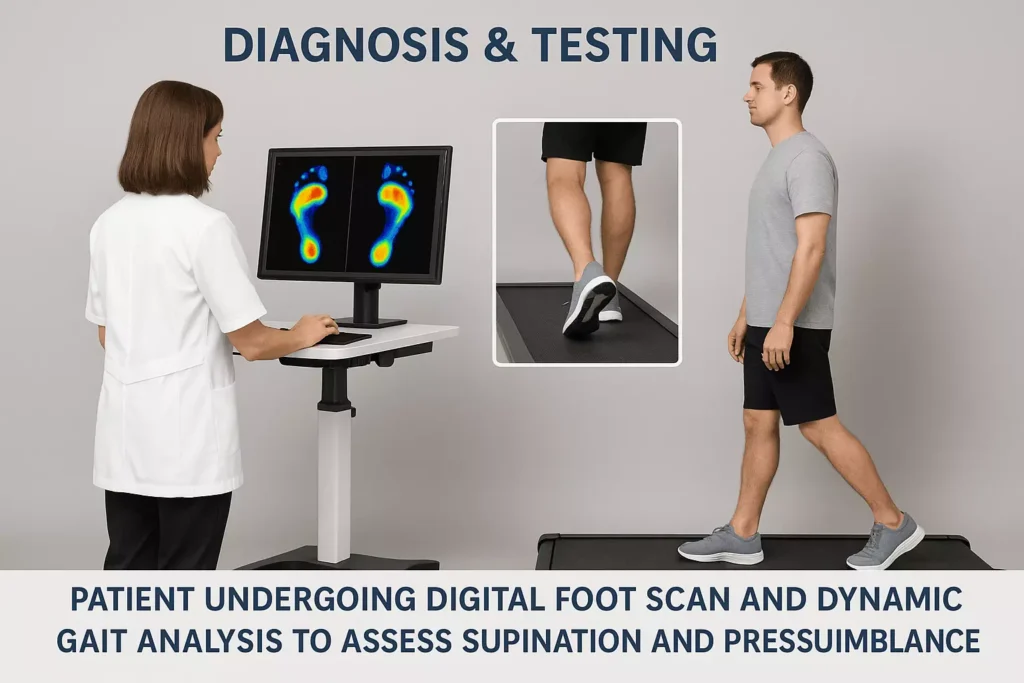
By layering these tools, we build a comprehensive foot profile, aligning treatment with the patient’s biomechanics and clinical needs.
- 3D Gait Analysis
- Identifies motion irregularities such as supinated walking, lateral foot strike, or asymmetrical propulsion
- Plantar Pressure Mapping
- Reveals abnormal pressure zones beneath the forefoot and heel, typical of cavus deformities
- Digital Foot Scanning
- Generates precise 3D foot models for custom orthotic prescription
- Range of Motion (ROM) Testing
- Evaluates mobility across the rearfoot, midfoot, and forefoot
- Neurological Screening
- Assesses motor-sensory deficits linked to neuromuscular cavus, including early signs of CMT and spinal involvement
When to See a Podiatrist or Foot Specialist
It’s time to seek expert assessment if you notice:
- Persistent foot pain (in the arch, heel, or ball of the foot)
- Recurrent ankle sprains or balance difficulties
- Development of toe deformities like clawed or contracted toes
- A visible height discrepancy between arches
- Ineffectiveness of over-the-counter insoles, footwear, or exercise regimens
- A family history of foot deformities or neuromuscular conditions
At Freedom Clinics, our HCPC-registered podiatrists specialise in early identification and non-surgical management of cavus foot posture. We combine medical expertise with cutting-edge diagnostic methods to provide long-term relief and preventative care.
For assessment steps, footwear changes, and pressure offloading, see our gait biomechanics assessment.
Treatment Options for High Arches
Tailored Treatment Based on Cause and Severity
Effective treatment for high arches—clinically known as pes cavus—requires a targeted approach based on the severity of deformity and its underlying cause. At Freedom Clinics Canary Wharf, our treatment protocols are adapted to address neuromuscular disorders, postural imbalances, and structural arch elevation.
We focus on:
- Correcting supinated gait mechanics
- Relieving plantar pressure hotspots
- Managing toe deformities and muscle imbalance
- Preventing long-term complications like joint degeneration or ulceration
Our care strategy progresses from conservative methods to surgical referral only when clinically necessary.
Non-Surgical Treatments for High Arches
Custom Orthotic Insoles
Digitally modelled biomechanical orthotics help redistribute pressure away from the heel and forefoot, improve stability, and support elevated arches. These insoles are critical in:
- Reducing lateral foot strain from supination
- Preventing overloading of the metatarsal heads
- Alleviating pain in rigid cavus foot types
- Enhancing symmetry during dynamic movement
Footwear Adjustments
Our podiatrists recommend:
- Cushioned soles to absorb impact
- Deep heel counters for rearfoot control
- Wide toe boxes to prevent claw toe compression
- Outsole adaptations such as rocker soles for forefoot offloading
Freedom Clinics also provides guidance on medical-grade footwear for advanced cavus management.
For an overview of conditions we manage, return to our podiatry & chiropody services.
Physiotherapy & Neuromuscular Rehabilitation
A structured rehab plan may include:
- Stretching tight calves and Achilles tendons
- Strengthening intrinsic foot muscles
- Balance training for unstable gait
- Useful for patients with Charcot-Marie-Tooth disease or spinal cord injury history
Rehabilitation restores mobility and supports orthotic therapy outcomes.
Symptom Relief & Pain Management
For patients experiencing chronic pain, we offer:
- Extracorporeal Shockwave Therapy (ESWT)
- Cold Laser Therapy (LLLT) for inflammation
- Kinesiotaping and bracing to reinforce joint alignment
These therapies reduce inflammation and facilitate tissue healing, particularly in overworked plantar fascia or Achilles structures.
Surgical Intervention – When It’s Indicated
Surgery may be considered for:
- Fixed deformities resistant to conservative treatment
- Neurological deterioration impacting foot control
- Severe toe contractures, joint misalignment, or ulceration
- Instability and progressive functional decline
Procedures may include:
- Tendon transfers to balance muscle pull
- Midfoot or hindfoot osteotomies for structural correction
- Plantar fasciotomies to release arch tension
We collaborate with leading orthopaedic surgeons for seamless referral and post-operative care integration.
Long-Term Management and Relapse Prevention
To prevent symptom recurrence, Freedom Clinics provides:
- Periodic gait re-analysis and orthotic review
- Guidance on workplace ergonomics, sports impact, and posture
- Education on foot hygiene, footwear lifecycle, and warning signs of recurrence
This long-term care strategy ensures sustained symptom relief and proactive correction of biomechanical deviations.
When recurrent pressure is the driver, explore custom orthotics for high arches.
Prevention & Long-Term Management of High Arches
Why Prevention Is Crucial for Cavus Foot Health
Without appropriate management, high arches—or pes cavus—can cause progressive pain, gait instability, and joint dysfunction. Over time, structural stress can lead to toe deformities, ankle sprains, and chronic postural compensation.
At Freedom Clinics Canary Wharf, we prioritise prevention as a core pillar of care. Our long-term strategies combine biomechanical tracking, orthotic monitoring, and patient education to mitigate future risk and enhance daily function.
Gait Reassessment & Biomechanical Monitoring
To maintain optimal alignment, we recommend gait re-analysis every 6 to 12 months, incorporating:
- 3D gait screening to detect early deviations in supinated walking
- Plantar pressure scans to visualise shifts in weight distribution
- Evaluation of orthotic wear patterns to guide timely refinements
This proactive surveillance prevents regression and supports early correction of subtle gait faults.
Footwear Planning & Load Mitigation
Proper footwear plays a critical role in daily support for those with elevated arches:
- Choose shoes with structured midsoles, deep heel cups, and cushioned soles
- Alternate between supportive pairs to avoid overuse strain
- Avoid flat, rigid, or narrow shoes that intensify lateral loading
- Use sport-specific footwear with shock-dampening features during high-impact activities
Patients receive customised footwear advice during routine check-ups at Freedom Clinics.
At-Home Mobility & Strength Maintenance
Daily or weekly neuromuscular conditioning helps maintain arch alignment and joint integrity. We prescribe:
- Toe grip exercises to enhance intrinsic foot control
- Calf stretches to reduce posterior chain tightness
- Proprioceptive balance drills for ankle coordination
- Progressions based on the patient’s activity level and recovery status
These routines reinforce clinic-based care and empower patients to remain active and pain-free.
Orthotic Review & Lifecycle Optimisation
Even the best custom insoles need periodic review. We advise:
- 12–24 month orthotic evaluations, or sooner for high-impact users
- Digital foot re-scanning to detect alignment changes
- Pressure relief modifications for developing calluses or heel strain
- Insoles adjusted or replaced in response to weight change, injury, or wear
Freedom Clinics provides full orthotic lifecycle support, ensuring sustained therapeutic benefit.
Explore related conditions and comparative insights in our foot types hub.
Empowerment Through Education & Clinical Support
Sustained success in high arch management depends on informed, empowered patients. Our support includes:
- Training in daily foot hygiene and skin care
- Advice on foot posture awareness during standing and walking
- Guidance on when to seek re-evaluation for pain, instability, or deformity recurrence
- Access to trusted podiatric professionals for ongoing care
By combining knowledge with expert care, we help patients achieve long-term mobility, comfort, and confidence.
Learn more about staging, symptoms, and long-term care in our toe deformities management.

Our Podiatrists & Chiropodists


References
- Seaman, T. J., & Ball, T. A. (2023). Pes cavus. StatPearls. https://www.ncbi.nlm.nih.gov/books/NBK556016/

