
What Is Mallet Toe?
Mallet Toe is a podiatry condition and a type of toe deformity where the tip of the second toe bends downward at the distal interphalangeal joint due to tightening or shortening of the flexor tendon. This abnormal toe position can cause toe pain, corns, and calluses as the bent joint rubs against footwear.
Key Fact: Mallet Toe specifically affects the last joint of the toe, unlike Hammertoe, which involves the middle toe joint, or Claw Toe, which bends at multiple joints.
In its flexible stage, Mallet Toe can still be manually straightened, but as the condition progresses to a rigid stage, the joint becomes fixed and more difficult to treat without surgical intervention. Early recognition and treatment are important to prevent further joint damage, pain, and mobility loss.
At Freedom Clinics in Canary Wharf, London, our highly trained podiatrists diagnose and manage Mallet Toe using a tailored approach. We provide custom orthotics, footwear modifications, and toe exercises for non-surgical cases, while offering advanced toe surgery for severe or fixed deformities. Our goal is to restore natural toe alignment, relieve discomfort, and keep you active.
Medically reviewed by: Dr Priya Anand DPM. Last update: 18th May 2026
Book your appointment
Symptoms of Mallet Toe
Mallet Toe symptoms can range from mild toe discomfort to significant foot pain that interferes with walking and wearing shoes. In the early stages, symptoms may only appear during physical activity or when wearing certain footwear, but as the toe deformity progresses, they often become constant and more disruptive.
Common signs and symptoms of Mallet Toe include:
- Persistent toe pain at the tip of the affected second toe when walking or standing
- Corns and calluses developing from repeated friction with footwear
- Redness, swelling, or skin irritation around the bent toe joint
- Increasing toe stiffness, making it harder to straighten the joint manually
- Pressure pain in the ball of the foot caused by altered gait and weight distribution
When to seek treatment: If you experience Mallet Toe with worsening pain, visible skin changes, or walking difficulties, book a podiatry assessment at Freedom Clinics in Canary Wharf, London. Early intervention can prevent further joint damage and reduce the risk of related conditions such as hammertoe or additional calluses.
If left untreated, Mallet Toe can alter foot mechanics, increase strain on neighbouring toes, and contribute to balance problems. A timely diagnosis by an experienced podiatrist helps preserve mobility and foot health.

Causes & Risk Factors of Mallet Toe
Mallet Toe develops when the flexor tendon in the second toe becomes tight or shortened, pulling the toe downward at the distal interphalangeal joint. This imbalance in the toe’s structure leads to a fixed toe deformity that can cause ongoing discomfort and mobility issues.
Several factors can increase your risk of developing Mallet Toe:
Footwear-Related Causes
Wearing shoes with a narrow toe box or high heels forces the toes into a bent position, placing constant pressure on the toe joint. Over time, this pressure encourages the development of Mallet Toe. Prolonged use of ill-fitting footwear is one of the most common contributing factors.
Injury or Trauma
A stubbed toe, toe fracture, or other direct injury to the second toe can damage the joint or surrounding tendons. Even a seemingly minor injury, if left untreated, may trigger changes in toe alignment that result in Mallet Toe.
Medical Conditions
Underlying conditions such as arthritis, diabetes, and neuromuscular disorders can weaken the muscles and tendons of the foot. These conditions also slow healing, which increases the risk of developing Mallet Toe.
Biomechanical Imbalances
Abnormal foot biomechanics—such as overpronation, muscle weakness, or tendon imbalance—can place uneven tension on the flexor tendon. This uneven load can cause progressive toe deformities, including Mallet Toe.
Prevention Tip: If you have any of these risk factors, arrange a preventative foot health assessment at Freedom Clinics in Canary Wharf, London. Our experienced podiatrists can recommend custom orthotics, footwear adjustments, and strengthening exercises to help reduce the likelihood of Mallet Toe.

How Mallet Toe Is Diagnosed at Freedom Clinics
At Freedom Clinics in Canary Wharf, London, our experienced podiatrists use a comprehensive diagnostic process to confirm Mallet Toe and assess its severity. An accurate diagnosis is essential for creating a personalised treatment plan—whether that involves custom orthotics, footwear changes, targeted exercises, or surgical correction.
Clinical Examination
Your podiatrist will examine the second toe for the downward bend at the distal interphalangeal joint, the hallmark feature of Mallet Toe. They will assess whether the deformity is flexible or rigid and check for related symptoms, such as corns, calluses, and skin irritation caused by shoe friction.
Gait Analysis
Because Mallet Toe often changes how you walk, we perform a gait analysis to detect alterations in weight distribution and identify pressure points, particularly in the ball of the foot. This analysis also helps determine whether the deformity is affecting neighbouring toes or contributing to other foot issues.
Footwear Assessment
We assess your footwear for potential contributing factors such as a narrow toe box, excessive heel height, or lack of arch support. Addressing footwear-related causes is key to preventing Mallet Toe from worsening or recurring after treatment.
Imaging & Diagnostic Tests
If needed, your podiatrist may order an X-ray to evaluate the toe joint structure and confirm the diagnosis of Mallet Toe. Imaging also helps us plan any necessary surgical intervention and identify underlying joint degeneration.
Next Step: If you suspect you have Mallet Toe, book an appointment with our Canary Wharf podiatry team at Freedom Clinics. Early diagnosis increases the range of treatment options and improves long-term foot health outcomes.

Non-Surgical Treatment Options for Mallet Toe
At Freedom Clinics in Canary Wharf, London, our expert podiatrists prioritise effective non-surgical treatments for Mallet Toe, especially in the early or flexible stages. These approaches aim to relieve toe pain, improve alignment, and prevent further toe deformity—reducing the likelihood of surgical intervention.
Custom Orthotics for Mallet Toe
Mallet Toe can often be improved with custom orthotic insoles, designed to redistribute pressure across the foot and relieve stress on the second toe. By correcting biomechanical imbalances, orthotics help protect the distal interphalangeal joint and slow progression of the deformity.
Footwear Modifications for Mallet Toe
Switching to shoes with a wide toe box and sufficient depth reduces friction on the bent toe joint. Patients with Mallet Toe should avoid high heels and narrow shoes, as they increase pressure on the toes and contribute to corns and calluses.
Toe Splints & Protective Pads
Specialist toe splints, gel pads, or cushioning devices can help straighten the affected toe, relieve pressure, and protect skin from irritation. These aids are especially effective for mild or moderate Mallet Toe where the joint remains flexible.
Exercises for Mallet Toe
A 2020 study published in the Journal of Orthopaedic Surgery and Research found that toe exercises significantly improved pain in metatarsalgia, outperforming standard insoles. Our London podiatrists create personalised exercise programmes to maintain foot health.
Pain & Symptom Management
To reduce discomfort from Mallet Toe, treatments like NSAIDs and ice therapy can help alleviate inflammation, swelling, and pain. These are often used alongside orthotics, footwear changes, and exercises for comprehensive symptom relief.
Next Step: If you have Mallet Toe, book a consultation at Freedom Clinics Canary Wharf to explore non-surgical treatment options. Early intervention can help you avoid surgery and maintain long-term mobility.

Surgical Treatment Options for Mallet Toe
When non-surgical treatments are no longer effective—particularly for rigid or advanced Mallet Toe—surgery may be necessary to restore toe alignment and relieve chronic toe pain. At Freedom Clinics in Canary Wharf, London, our expert podiatrists and foot surgeons offer a range of surgical procedures tailored to the severity and flexibility of your toe deformity.
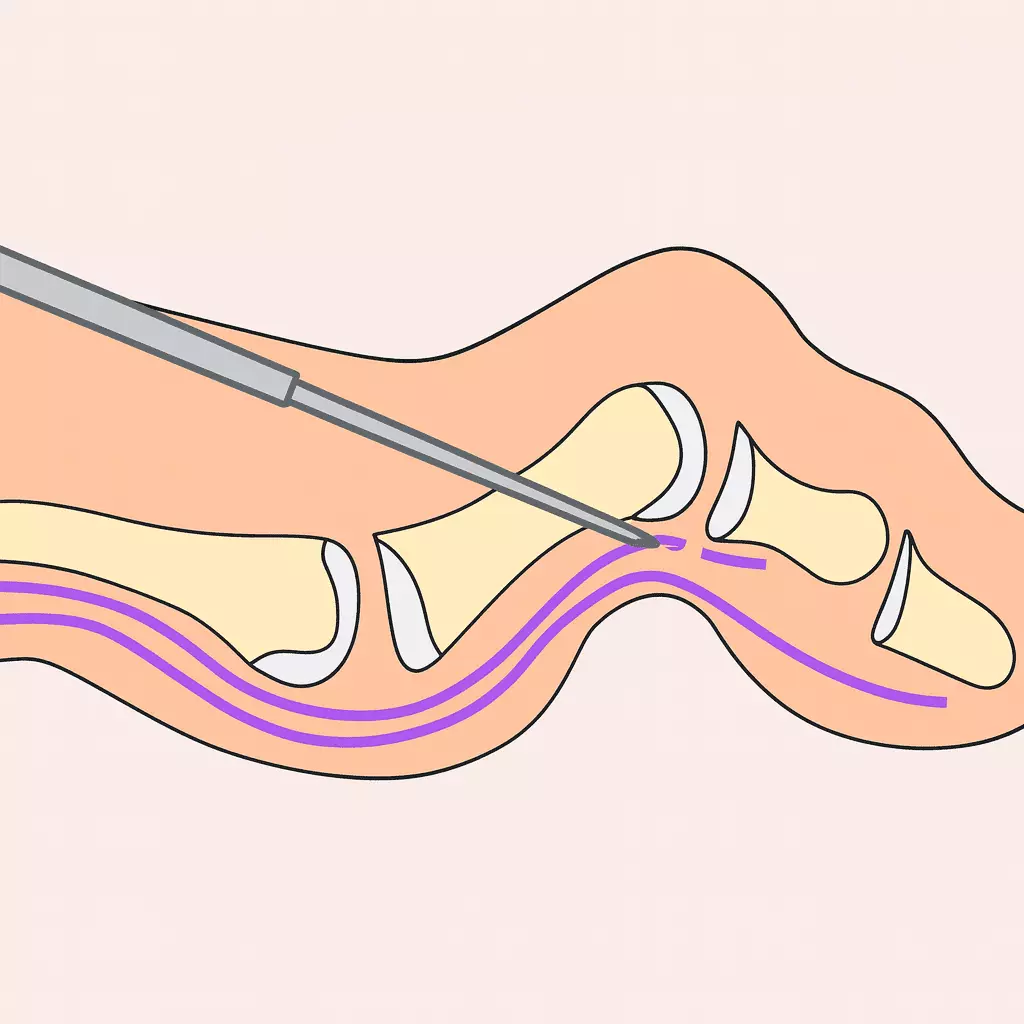
Flexor Tenotomy for Mallet Toe
For flexible Mallet Toe, a flexor tenotomy releases or lengthens the flexor tendon in the second toe, allowing the toe to straighten. This minimally invasive procedure reduces pressure at the distal interphalangeal joint, improving comfort and mobility. It is typically performed under local anaesthetic and has a short recovery period.
Joint Resection Arthroplasty for Mallet Toe
In rigid Mallet Toe cases, a joint resection arthroplasty removes part of the distal interphalangeal joint so the toe can be realigned. This surgery alleviates pain, restores movement, and reduces the risk of friction-related issues such as corns and calluses.
Arthrodesis (Joint Fusion) for Mallet Toe
Arthrodesis involves fusing the toe joint into a straightened position, eliminating motion in the joint and thereby removing pain caused by movement. This option is usually recommended for severe Mallet Toe cases when other surgical procedures are unlikely to succeed.
Soft Tissue Procedures for Mallet Toe
In some Mallet Toe surgeries, adjustments are made to surrounding ligaments and tendons to rebalance the toe’s alignment. These soft tissue techniques may be performed alone for mild deformities or combined with bone surgery for complex corrections.
Next Step: If you have advanced Mallet Toe or ongoing symptoms despite conservative care, book a surgical consultation at Freedom Clinics Canary Wharf. Our London foot specialists will recommend the most appropriate surgical approach for your condition and recovery goals.
Recovery & Aftercare for Mallet Toe Surgery
Recovering from Mallet Toe surgery requires a personalised aftercare plan to ensure complete healing, restored mobility, and lasting results. At Freedom Clinics in Canary Wharf, London, our experienced podiatrists provide structured recovery guidance to help you heal safely and return to pain-free movement after correcting your toe deformity.
Immediate Post-Surgery Care for Mallet Toe
Following Mallet Toe surgery, your foot will be bandaged and placed in a post-operative shoe to protect the second toe. To reduce swelling, we recommend elevating your foot above heart level, applying ice therapy, and avoiding weight-bearing until cleared by your surgeon.
According to a review published in Journal of Foot and Ankle Research, elevation of the foot above heart level, combined with cold and compression therapies, effectively reduces postoperative swelling and accelerates functional recovery after orthopedic foot or ankle surgery.
Pain Management & Swelling Control
After Mallet Toe surgery, discomfort is managed through NSAIDs or other pain-relief medication prescribed by your podiatrist. Swelling is minimised with a combination of rest, compression, elevation, and gentle mobilisation when appropriate.
Wound Care & Monitoring
Proper wound care is essential to prevent infection and promote optimal healing following Mallet Toe surgery. Our London podiatry team provides step-by-step instructions for dressing changes, cleaning the incision site, and identifying early signs of complications.
Rehabilitation Exercises for Mallet Toe
Once the initial healing phase is complete, targeted toe exercises are introduced to restore flexibility, strengthen surrounding muscles, and maintain joint alignment. These exercises help prevent stiffness in the toe joint and support the long-term success of your Mallet Toe surgery.
Returning to Normal Activities
Most patients can transition back to regular footwear within 4–6 weeks after Mallet Toe surgery, depending on the procedure performed. Our podiatrists provide personalised timelines for resuming daily activities, work, and sports to ensure a safe recovery.
Next Step: To ensure a smooth recovery after Mallet Toe surgery, schedule your post-operative follow-up at Freedom Clinics Canary Wharf. Our London foot specialists will track your healing progress and help you regain full mobility as quickly as possible.

When to See a Podiatrist for Mallet Toe
Spotting the early signs of Mallet Toe can prevent the condition from worsening and reduce the likelihood of surgery. At Freedom Clinics in Canary Wharf, London, our specialist podiatrists diagnose and treat toe deformities at every stage—helping you maintain comfort, mobility, and long-term foot health.
Persistent Toe Pain from Mallet Toe
If you have ongoing toe pain, tenderness, or soreness—especially in the second toe—it could be an early warning sign of Mallet Toe. Seeking help at this stage increases the chances of successful non-surgical treatment, including custom orthotics and footwear modifications.
Visible Mallet Toe Deformity
A downward bend at the distal interphalangeal joint of the second toe is a clear indication of Mallet Toe. If this change in toe position becomes noticeable, book a consultation with a podiatrist before the deformity becomes fixed and harder to treat.
Corns, Calluses, or Skin Irritation from Mallet Toe
When Mallet Toe causes the toe to rub against footwear, it often leads to corns, calluses, redness, or swelling over the toe joint. These skin changes signal abnormal pressure on the toe and should be addressed early to avoid infection or ulcers.
Difficulty Walking or Wearing Shoes Due to Mallet Toe
If Mallet Toe makes it hard to wear shoes comfortably or walk without discomfort, it’s time to seek professional evaluation. Left untreated, this condition can alter your gait and cause secondary foot and posture issues.
Next Step: If you notice any signs of Mallet Toe, contact Freedom Clinics Canary Wharf. Our London podiatry team offers early diagnosis, personalised treatment plans, and ongoing support to help you stay active and pain-free.

Book Your Mallet Toe Consultation at Freedom Clinics
If you are experiencing symptoms of Mallet Toe—including persistent toe pain, a visible downward bend in the second toe, or friction-related issues like corns and calluses—early intervention can prevent the condition from worsening. At Freedom Clinics in Canary Wharf, London, our experienced podiatrists deliver accurate diagnosis, effective Mallet Toe treatment, and personalised care plans to help you regain comfort, mobility, and long-term foot health.
Why Choose Freedom Clinics for Mallet Toe Treatment in London?
- Specialist Expertise – Our London podiatrists have extensive experience treating Mallet Toe, from early detection to advanced surgical correction.
- Comprehensive Care – We offer a complete range of treatments, including custom orthotics, footwear guidance, non-surgical therapies, and precise surgical interventions.
- Convenient Location – Situated in Canada Place Shopping Mall, Freedom Clinics Canary Wharf is easily accessible by public transport and car.
- Patient-Focused Approach – We guide you from your first consultation through treatment and aftercare to ensure optimal recovery and lasting results.
How to Book Your Mallet Toe Appointment
Booking your Mallet Toe consultation is quick and straightforward:
- Call us on 0203 197 9100
- Email canarywharf@freedomclinics.com
- Use our online booking form to schedule instantly
Take Action Now: Don’t let Mallet Toe affect your mobility or quality of life. Book your consultation today at Freedom Clinics Canary Wharf and take the first step toward pain-free, healthy feet.
Frequently Asked Questions About Mallet Toe
What is Mallet Toe?
Mallet Toe is a toe deformity affecting the distal interphalangeal joint of the second toe, where the tip bends downward due to tendon or muscle imbalance. It can lead to toe pain, skin irritation, and difficulty wearing shoes comfortably.
What causes Mallet Toe?
Mallet Toe is often caused by wearing shoes that are too tight, previous toe injuries, arthritis, or imbalances in foot muscles. It may also occur alongside other deformities such as hammer toe or claw toe.
How is Mallet Toe treated?
Treatment for Mallet Toe depends on its severity. Flexible cases can often be managed with custom orthotics, targeted toe exercises, and changes in footwear. Rigid cases may require surgical correction by an experienced podiatrist.
How long does it take to recover from Mallet Toe surgery?
Recovery from Mallet Toe surgery typically takes 4–6 weeks, though this varies depending on the surgical technique and your body’s healing rate. Adhering to your London podiatrist’s aftercare plan is essential for the best outcome.
Can Mallet Toe be prevented?
Yes. Preventing Mallet Toe involves wearing well-fitted shoes, avoiding prolonged toe pressure, and performing exercises to keep the foot and toes strong and flexible.
Need more help? Contact Freedom Clinics Canary Wharf in London to book your Mallet Toe consultation and get tailored advice on prevention, treatment, and long-term foot health.
Our Podiatrists & Chiropodists


References
- Journal of Orthopaedic Surgery and Research. (2020). Effect of toe exercises on metatarsalgia: A clinical study. https://josr-online.biomedcentral.com/articles/10.1186/s13018-020-02113-7
- Block, J. E. (2010). Cold and compression in the management of musculoskeletal injuries and orthopedic operative procedures: A narrative review. Open Access Journal of Sports Medicine, 1, 105–113. https://www.ncbi.nlm.nih.gov/pmc/articles/PMC3781860/

