
What Is Chiropractic Safety?
Chiropractic safety is the process by which trained chiropractors identify, minimise, and manage risk before delivering spinal adjustments or manual therapies. It includes everything from screening for red flags and contraindications to ensuring informed consent, referring for diagnostic imaging, and offering alternatives to chiropractic treatment when necessary.
Medically Reviewed by the Freedom Clinics Chiropractic Team
Shahin Babayi, GCC Registration | Expertise: Spinal Mechanics & Acute Care
Tanesa Mohan, GCC Registration | Expertise: Diagnostic Differentiation & MSK Chain
This page has been collaboratively reviewed to ensure it reflects our safety-first approach to chiropractic assessment and treatment. We have verified the red flag and contraindication guidance, informed consent process, imaging and referral criteria, and risk-adapted care protocols against current evidence-based safety standards.
Page updated: 24th June 2026
Book your appointment
At Freedom Clinics Canary Wharf, our chiropractors follow a safety-first model of care. We combine clinical skill with ethical transparency to ensure every patient receives treatment that is both appropriate and evidence-informed. Our chiropractic safety system is based on five core components:
Why Chiropractic Safety Matters
Chiropractic treatment is generally considered safe, particularly when delivered by a GCC-registered chiropractor. However, like all forms of healthcare, it carries some degree of risk. These may include:
- Mild side effects (e.g., post-treatment soreness, stiffness, fatigue)
- Serious adverse events (e.g., nerve damage, stroke) — these are extremely rare and typically linked to undetected red flags or ignored contraindications
That’s why we start every patient journey with clinical screening, a structured safety assessment that helps determine whether chiropractic care is suitable — or whether you would benefit more from imaging, referral, or alternative treatment options.
Components of Chiropractic Safety at Freedom Clinics
Red Flag Identification
Our chiropractors assess for red flags — clinical warning signs that may indicate spinal pathology, neurological issues, or vascular risk. These may include:
- Sudden numbness or weakness
- Loss of bladder or bowel control
- Dizziness or fainting
- Symptoms of vertebral artery dissection
Identifying red flags early allows us to avoid unsafe care and initiate timely referral when needed.
Contraindication Assessment
We screen for both absolute contraindications (e.g. fractures, tumours, spinal instability) and relative contraindications (e.g. anticoagulant use, osteoporosis, pregnancy). This ensures that spinal adjustments are only delivered when risk is minimal and the benefit is clear.
Informed Consent & Ethical Communication
Before any treatment begins, your chiropractor will:
- Explain what the treatment involves
- Describe all known risks and expected benefits
- Outline all available alternatives
- Answer your questions — clearly and without pressure
Consent is not a one-off form — it’s an ongoing conversation. You’re free to delay or decline treatment at any time.
Imaging & Interprofessional Referral
If your clinical presentation suggests more than musculoskeletal involvement, we may refer you for:
- X-rays or MRI scans
- Ultrasound to evaluate soft tissue
- Consultation with your GP or medical specialist
This collaborative approach protects patient safety and ensures you receive the right care, in the right setting, at the right time.
Chiropractic Safety: Designed for Trust
- Every chiropractor at Freedom Clinics is registered with the General Chiropractic Council (GCC)
- We follow strict UK chiropractic safety guidelines
- We tailor care to each patient’s health status, age, history, and risk profile
- If chiropractic isn’t suitable, we offer evidence-informed alternatives
Red Flags: Recognising Warning Signs Before Chiropractic Treatment
In chiropractic care, red flags are clinical warning signs that suggest a patient may be at risk of serious underlying conditions — such as neurological damage, vascular compromise, or spinal pathology — that require medical investigation. At Freedom Clinics Canary Wharf, our GCC-registered chiropractors are trained to identify these red flags before any manual therapy is considered.
Red flag screening is a core part of our chiropractic safety protocol, helping us determine when to pause treatment, when to refer for imaging, and when to coordinate with your GP or a specialist.
What Are Red Flags in Chiropractic?
A red flag is a symptom, sign, or patient history detail that may point to:
- Non-musculoskeletal causes of pain (e.g. tumour, infection)
- High-risk vascular or neurological conditions (e.g. vertebral artery dissection)
- Situations requiring urgent medical imaging or specialist input
These indicators don’t always mean something is wrong — but they help chiropractors make informed, safety-first decisions.
According to a systematic review published in BMJ by researchers at the George Institute for Global Health (University of Sydney), red-flag symptoms like prior history of malignancy, unexplained weight loss, night pain or systemic signs may represent serious spinal pathology (e.g., infection, tumour, metastasis), so they require urgent diagnostic referral and imaging rather than being treated as benign mechanical pain.
Neurological Red Flags
Your chiropractor will check for neurological red flags to rule out conditions affecting the spinal cord or nerve roots.
⚠️ Urgent Safety Check: Cauda Equina Syndrome
"Cauda Equina is a critical red flag. If you feel pins and needles in both legs or numbness around your private parts, that indicates immediate nerve compression requiring A&E care."
Shahin Babayi, Registered Chiropractor
For this one, the main red flag is the big one that a lot of us see, called Cauda Equina.
This is where you know someone comes in, and they say they’ve got pins and needles down both their legs, or they’ve got saddle anaesthesia, which basically is numbness around their private parts.
And that usually indicates that there is a nerve compression that needs to be addressed immediately. So if any person comes in and tells me that, it’s, you know, we don’t need to discuss further; it’s, it’s a letter straight to A&E.
Common signs include:
- Persistent numbness, tingling, or burning sensations in the limbs
- Muscle weakness, clumsiness, or signs of nerve compression
- Sudden changes in reflexes, balance, or coordination
- Loss of bladder or bowel control, a possible sign of cauda equina syndrome
Clinical guidelines for low back pain, including those summarised in the 2020 International Framework for Red Flags for Potential Serious Spinal Pathologies, list bladder or bowel dysfunction and saddle anaesthesia as classic red-flag features warranting urgent referral for possible spinal cord or nerve-root compression.
If present, these symptoms require immediate medical assessment and are not treated with spinal manipulation.
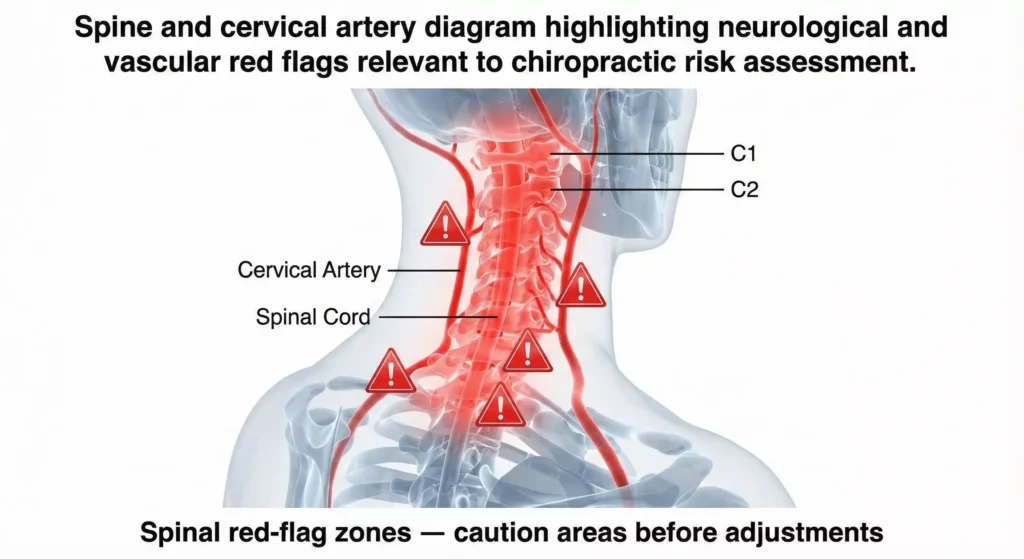
Vascular Red Flags
Vascular red flags help chiropractors detect rare but serious risks, like vertebral artery dissection (VAD) or vertebrobasilar insufficiency (VBI) — which may mimic neck pain but signal a risk of stroke.
We screen for:
- Severe, sudden-onset headache or new neck pain
- Blurred or double vision, visual field changes
- Dizziness, fainting, or drop attacks
- Trouble swallowing, slurred speech, or facial asymmetry
If vascular symptoms are suspected, we immediately halt treatment and refer for urgent medical investigation.
Structural Red Flags
These signs suggest potential spinal instability, fracture, or structural disease — all of which are contraindications to chiropractic manipulation.
Red flags in this category include:
- Recent spinal trauma or car accident
- New-onset back pain in patients over 50
- Known or suspected osteoporosis
- History of spinal tumour, infection, or cancer
- Prior spinal surgery, rods, implants, or instability
In such cases, your chiropractor may refer for X-rays, MRI, or orthopaedic consultation.
What Happens When a Chiropractor Identifies a Red Flag?
At Freedom Clinics, our chiropractors follow a strict protocol when a red flag is detected:
- Treatment is paused immediately — your safety comes first.
- A clinical note is recorded and discussed with you.
- You may be referred for further tests (e.g. MRI, vascular scan) or to your GP.
- If chiropractic is ruled out, we help you access alternative care options.
We believe that not treating is sometimes the most ethical and safest form of care.
Contraindications to Chiropractic Treatment
A contraindication is a condition or clinical circumstance that makes chiropractic treatment unsafe or inappropriate. At Freedom Clinics Canary Wharf, our GCC‑registered chiropractors identify contraindications during every new patient assessment to protect your safety and ensure that spinal manipulation is only performed when the potential benefits outweigh the risks.
Contraindication screening is a core component of chiropractic safety and helps determine whether treatment should proceed, be modified, or be replaced with alternative care pathways.
What Are Contraindications in Chiropractic?
Contraindications are classified into two categories:
- Absolute contraindications — where no spinal manipulation should be performed
- Relative contraindications — where care may be possible with modifications, caution, or shared decision-making
Understanding these categories helps chiropractors decide when to treat, how to adapt techniques, and when referral is the safest option.
Absolute Contraindications
Absolute contraindications represent conditions where chiropractic adjustments could cause harm. These include:
- Spinal cancer, metastatic lesions, or suspected malignancy
- Osteomyelitis or active spinal infections
- Unstable vertebral fractures or acute trauma
- Severe osteoporosis with fracture risk
- Cauda equina syndrome or spinal cord compression
- Aneurysm, vertebral artery dissection, or other vascular pathologies
- Advanced bone disorders (e.g. late-stage Paget’s disease)
When these conditions are present, the chiropractor immediately halts treatment and refers for urgent imaging, GP evaluation, or specialist medical care.
Relative Contraindications
Relative contraindications do not always rule out chiropractic care but do require modified techniques or closer monitoring. Examples include:
- Pregnancy (especially in later stages or with pelvic instability)
- Blood‑thinning medication (e.g., warfarin, apixaban)
- Mild or moderate osteoporosis
- Prior spinal surgery, fusion, or implants
- Scoliosis or structural spinal deformities
- Connective tissue disorders (e.g., Ehlers–Danlos syndrome)
In these cases, chiropractors may avoid high‑velocity low‑amplitude (HVLA) thrusts, opting instead for gentle mobilisation, instrument-assisted techniques, or soft tissue therapy.
How Chiropractors Identify Contraindications
At Freedom Clinics, our contraindication screening process involves:
- Detailed medical history review
- Assessment of previous injuries, surgeries, and medications
- Neurological and orthopaedic examination
- Cross‑checking for red flags and risk factors
- Ordering X-rays or MRI imaging if needed
- Communicating with your GP, radiologist, or specialist when appropriate
This structured protocol ensures safe, personalised treatment recommendations for every patient.
What If Chiropractic Treatment Is Contraindicated?
If your chiropractor determines that spinal manipulation is unsafe:
- They will explain the contraindication clearly.
- They will pause treatment (no adjustment will be performed).
- You may be referred for imaging or medical evaluation.
- We will discuss alternative treatment options appropriate for your condition.
At Freedom Clinics, we prioritise safety over routine — if chiropractic isn’t the safest path, we guide you to one that is.
Safe Alternatives When Chiropractic Isn’t Suitable
If chiropractic care cannot be provided, we may recommend:
- Physiotherapy
- Exercise rehabilitation programmes
- Soft-tissue therapy
- Posture or ergonomic coaching
- GP or specialist referral (e.g., orthopaedics, neurology)
Our integrated approach ensures you receive evidence-based care even when chiropractic is not appropriate.

Comprehensive Chiropractic Screening Protocols
At Freedom Clinics Canary Wharf, your safety comes first. Every new patient undergoes a structured, multi-step chiropractic screening protocol before any treatment begins. This evidence-based process is how we assess clinical risk, identify red flags, and ensure that chiropractic care is appropriate and safe.
By combining medical history, physical assessment, neurological testing, and — when necessary — diagnostic imaging, our chiropractors deliver care that is personalised, informed, and grounded in clinical best practices.
What Is a Chiropractic Screening?
A chiropractic screening is a systematic assessment performed by a licensed chiropractor to evaluate:
- Existing medical conditions
- Musculoskeletal complaints and functional impairments
- Signs of neurological or vascular compromise
- The presence of absolute or relative contraindications
- Whether imaging or medical referral is needed
This process determines whether manual therapy is safe — or if it should be delayed, modified, or replaced with an alternative approach.
Our Five-Step Screening Protocol
Each screening follows a precise sequence to ensure consistency, safety, and diagnostic clarity:
Step 1: Medical History & Risk Factor Review
We gather comprehensive data on:
- Past injuries, surgeries, chronic illnesses
- Use of medications (e.g. anticoagulants, steroids)
- Family history of neurological, vascular, or spinal disease
- Prior experiences with chiropractic or physical therapy
This helps your chiropractor detect risk factors for serious conditions such as osteoporosis, vertebral artery dissection, or spinal tumour.
Step 2: Symptom Mapping & Functional Screening
We explore your:
- Pain location, nature, and aggravating/relieving factors
- Impact on mobility, work, or daily life
- Previous diagnoses, imaging, or care outcomes
- Goals for recovery and expectations for treatment
This stage builds a clear functional baseline to monitor outcomes over time.
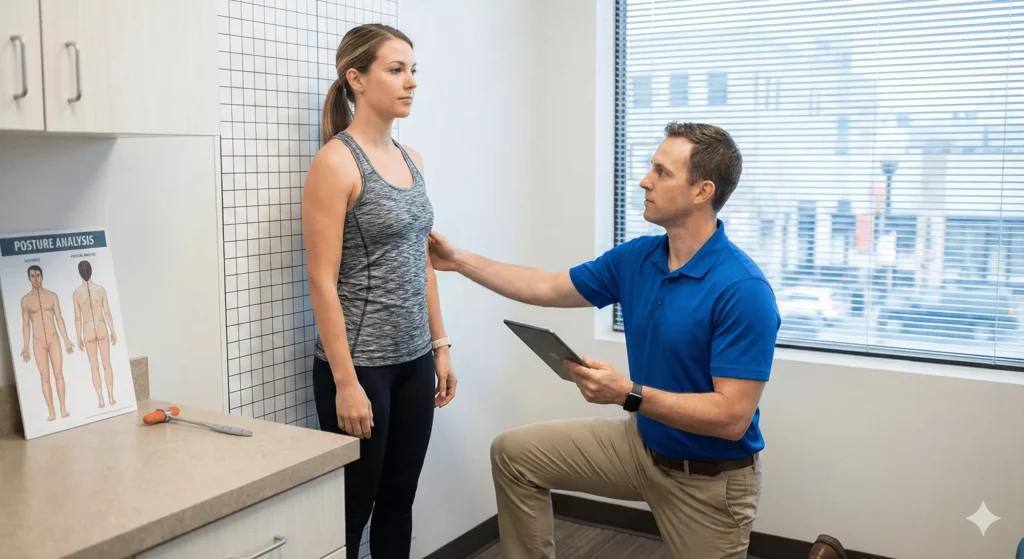
Step 3: Physical, Neurological & Orthopaedic Examination
Your chiropractor conducts:
- Neurological tests (e.g. reflexes, dermatomes, myotomes)
- Orthopaedic tests to isolate biomechanical dysfunction
- Postural and gait analysis
- Joint palpation for tenderness, swelling, or restriction
These findings inform whether manual therapy is likely to help — or pose a risk.
Step 4: Red Flag Detection & Risk Stratification
We actively screen for:
- Neurological red flags: cauda equina symptoms, muscle weakness
- Vascular red flags: dizziness, blurred vision, severe headaches
- Structural red flags: recent trauma, cancer history, severe osteoporosis
If any red flags are present, the chiropractor will pause treatment and recommend imaging or specialist referral.
Step 5: Diagnostic Imaging (When Indicated)
Freedom Clinics only refers for imaging when clinically necessary. We follow best practice guidelines and only request:
- X-rays or MRI for suspected fractures, tumours, disc herniations
- Ultrasound for soft tissue injuries
- Imaging that will change the care plan or confirm the diagnosis
Imaging is not routine — it’s reserved for cases where anatomical clarity improves clinical safety.
After the Screening: What to Expect
Once your screening is complete, your chiropractor will:
- Explain all findings in understandable terms
- Offer a clear treatment recommendation, modification, or referral
- Seek informed consent if treatment proceeds
- Coordinate with your GP or specialist if needed
This ensures that your treatment is fully aligned with your condition, risk profile, and preferences.
Evidence & Risk Perspectives — What the Research Says
At Freedom Clinics, patient safety is our highest priority. We believe every treatment decision should be informed by both scientific evidence and clinical judgment. This section reviews the current research on chiropractic safety, including adverse events, side effects, and the real-world application of spinal manipulation within evidence-based care.
What the Research Tells Us About Spinal Manipulation Safety
Spinal manipulation therapy (SMT) — the primary intervention used by chiropractors — has been widely studied in relation to its safety profile:
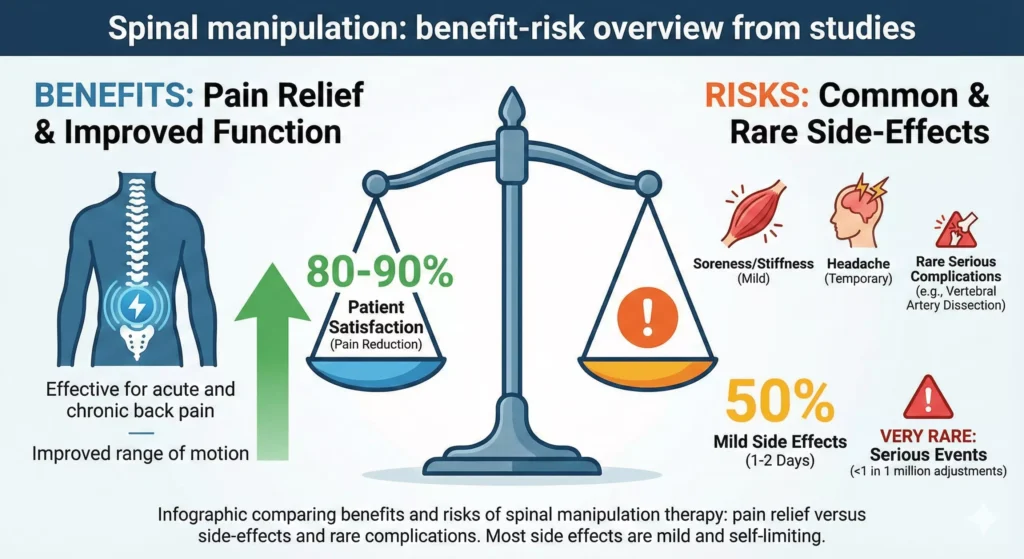
Mild to Moderate Side Effects
- Research consistently shows that benign side effects are relatively common. These include temporary soreness, stiffness, fatigue, and occasional headache following treatment.
- Studies suggest that 30% to 60% of patients experience these transient effects, which typically resolve within 24 to 48 hours and do not require medical attention.
- These reactions are considered non-serious and self-limiting, and are disclosed during the informed consent process.
Serious Adverse Events
- Though rare, more serious complications have been reported. These include:
- Vertebral artery dissection (VAD)
- Disc herniation
- Spinal cord injury
- Cauda equina syndrome
- Fractures or vascular incidents leading to stroke
- The estimated rate of serious adverse events (SAEs) varies widely but is consistently low — from 1 in 100,000 to 1 in several million manipulations, depending on the study design and patient population.
- Most SAEs are associated with pre-existing risk factors or red flags that were missed or not adequately screened.
Interpreting the Evidence: Risk vs Benefit
“No treatment is risk-free. The key is knowing when the potential benefit outweighs the risk — and when it doesn’t.” — Freedom Clinics Clinical Director
When applied appropriately, spinal manipulation is both effective and safe for many common conditions such as:
- Lower back pain
- Neck stiffness
- Joint dysfunction
- Postural imbalances
However, key takeaways from the literature include:
- Minor side effects are common but manageable.
- Serious complications are rare but possible — underscoring the importance of comprehensive screening, red flag detection, and clinician experience.
- Evidence supports spinal manipulation as part of multi-modal, conservative care — not as a standalone or first-line therapy for all patients.
- Informed consent is vital: patients must understand both benefits and risks before receiving treatment.
Limitations in the Research
While existing research provides useful insights, there are limitations that affect how confidently risks can be quantified:
- Under-reporting: Mild adverse events are often not reported, and serious ones may be missed or misattributed.
- Inconsistent definitions: Studies vary in what they classify as “serious” or “mild” adverse events.
- Small sample sizes: Most studies lack the power to detect extremely rare complications.
- Confounding variables: Some adverse events may be due to pre-existing conditions rather than the manipulation itself.
This means that, although the risk is low, the true frequency of complications is difficult to measure with absolute certainty — a fact we always consider during treatment planning.
How Freedom Clinics Applies the Research
At Freedom Clinics Canary Wharf, we interpret and apply the evidence conservatively:
- Screening before care: Every patient undergoes red flag screening, neurological and orthopaedic testing, and contraindication assessment before manipulation is considered.
- Informed consent is standard: We disclose all known risks and benefits and ensure patients have the opportunity to ask questions or decline treatment.
- Risk-adaptive care: If risk factors are present, we modify or replace spinal manipulation with gentle mobilisation, soft tissue therapy, or referral to a GP or specialist.
- Monitoring and follow-up: We track patient outcomes and encourage immediate reporting of any adverse effects.
Our safety-first model aligns with current best practices and ensures that manipulation is only provided when clinically appropriate and fully understood by the patient.
If your symptoms suggest disc involvement, we’ll review disc herniation safety considerations before proposing any hands-on care.
The Habit of ‘Self-Cracking’
The thing with self-clicking is that a lot of people do it: number one, because it becomes a habit and it’s really hard to break out of, and number two, people do it because they have the urge to do something.
So their brain or the body is telling them, “Hey, can you just get this clicked?” And what tends to happen is, most of the time, for instance, let’s say, you know, the body is telling you to click this joint; we want that joint to move.
What tends to happen is you either click the one above it or the one below it, so the actual problem then needs to be adjusted or clicked because you get the urge to, never really gets corrected or never really gets addressed.
So then that creates a cycle where that continues adjustment feeling continuously, you know, your body is telling you, keep clicking this, keep clicking this, but what then tends to happen is if you keep clicking the one below the problem, over time that creates instability.
So the muscles then become really tight because that bone is now moving too much.
And when that bone moves too much it creates instability and then instability creates a lot of muscle guarding and then that creates that cycle where ‘wow!’ it feels really tight and just need to get it clicked and then obviously what we as chiropractors try to do as good as we can is we try to find exactly what that joint is that’s not moving and only try and get that moving so we then stop you from being in that cycle of having to self adjust because your body’s telling you there’s something that just needs to be moved.
"Self-cracking your neck might provide temporary relief, but it often becomes a dangerous habit. You are usually clicking the joints above or below the actual problem, leading to hypermobility and instability. A controlled clinical adjustment targets only the joint that isn't moving, breaking that cycle of instability."
Shahin Babayi, Registered Chiropractor
Transparency, Consent, and Patient Communication
At Freedom Clinics Canary Wharf, we place patient trust at the core of every interaction. Our approach to chiropractic care begins with transparent communication, ethical practice, and thorough informed consent — ensuring patients understand every aspect of their care before treatment begins.
Understanding Informed Consent in Chiropractic: Freedom Clinics’ Approach
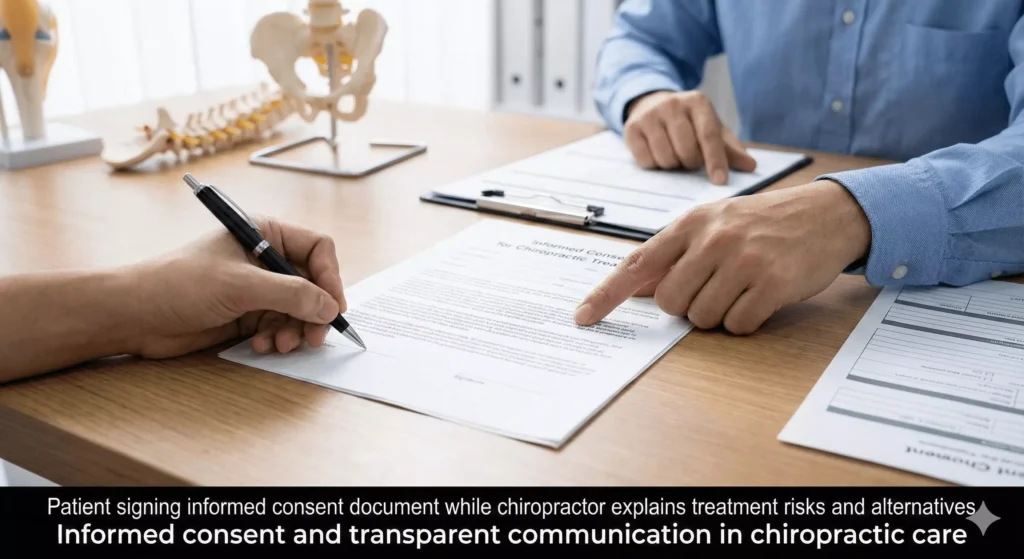
Informed consent is a fundamental part of safe and ethical chiropractic care. At Freedom Clinics, it means:
- Providing a detailed explanation of your diagnosis, clinical findings, and contributing factors
- Describing the proposed treatment, including spinal manipulation, mobilisation, or alternative options
- Outlining potential risks, including both benign side effects (like soreness or fatigue) and rare but serious complications
- Offering non-chiropractic options, such as physiotherapy, GP referral, or imaging
- Ensuring consent is voluntary, informed, and documented before any treatment is administered
Our chiropractors revisit consent regularly to ensure it evolves alongside your care — particularly if symptoms change or risk levels increase.
How Chiropractors at Freedom Clinics Communicate Risk, Consent, and Care Decisions
Clear, respectful communication is essential for building trust. Our chiropractors:
- Explain findings from clinical screenings, orthopaedic testing, and neurological assessments
- Describe why a specific technique (e.g., spinal manipulation or mobilisation) is recommended, deferred, or modified
- Detail what to expect during and after treatment, including how to monitor for side effects
- Clarify when care is paused due to red flags, risk indicators, or uncertain symptoms
- Encourage patients to ask questions, express concerns, or request changes at any time
We ensure that informed consent is an ongoing dialogue, not a one-time event — empowering you to make fully informed decisions every step of the way.
Upholding Patient Autonomy and Ethical Consent at Freedom Clinics
Every patient has the right to:
- Decline or pause a treatment
- Request a different therapeutic approach
- Seek a second opinion or medical referral
- Be informed about the reasoning behind clinical decisions
- Understand how screening results influence treatment eligibility
Freedom Clinics respects your autonomy and control at all times. If you are ever unsure, we’ll take the time to explain your options in clear, accessible language — without pressure or assumption.
Adapting Chiropractic Care Based on Patient Communication and Risk Disclosure
Often, patient feedback leads to essential adjustments in care. For example:
- Reporting lightheadedness or vision changes may prompt vascular screening
- Mentioning a previous spinal surgery may rule out certain adjustments
- Describing symptom progression after a session can trigger reassessment or referral
- Expressing uncertainty may lead to more education before proceeding
This is why we consider ongoing patient communication a clinical tool — as valuable as any hands-on test. It supports real-time risk management, improves outcomes, and reinforces ethical care delivery.
For full details on pathways, techniques and consent policies, explore chiropractic care at Freedom Clinics.
Risk‑Adapted Chiropractic Care for Special Populations at Freedom Clinics
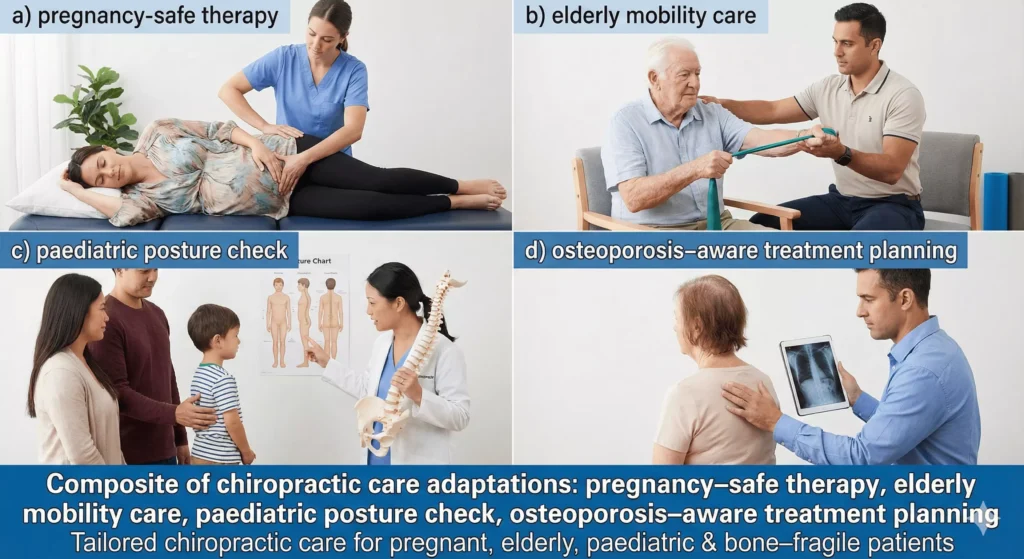
At Freedom Clinics Canary Wharf, we don’t take a one-size-fits-all approach. Our chiropractic care is individually adapted to meet the needs of special populations — including pregnant women, older adults, people with osteoporosis, and children. Through evidence-informed screening and risk‑adaptive protocols, we ensure every patient receives care that is clinically justified, ethically sound, and contextually safe.
Chiropractic for Children and Adolescents
Paediatric patients require a unique care approach:
- We perform age-appropriate musculoskeletal screening, looking for developmental concerns, postural issues, and neuro-motor imbalances.
- We avoid high-force techniques. Instead, we use gentle mobilisation, stretching, and functional rehab appropriate to the child’s stage of development.
- Parental or guardian informed consent is required. We communicate clearly and ensure that parents understand risks, benefits, and alternatives before treatment.
- Referral to paediatricians is recommended when red flags — such as scoliosis, limb asymmetries, or neurological findings — are detected.
When postural change or training load aggravates the upper quarter, we assess shoulder pain from posture or sport.
Chiropractic During Pregnancy
Chiropractic can help alleviate pregnancy-related musculoskeletal pain, but modifications are essential:
- We tailor care based on trimester, abdominal size, and symptoms.
- Use of pregnancy-safe techniques avoids uterine stimulation or supine positioning beyond second trimester.
- We assess for red flags including bleeding, pre-eclampsia, placenta previa, or pre-term labour symptoms — and refer immediately if present.
- Collaborations with midwives and obstetricians are standard for high‑risk pregnancies.
- Consent discussions include possible discomfort, limitations of therapy, and relative contraindications.
If radiating leg pain is present, we discuss options for sciatica in pregnancy before any manual therapy.
Osteoporosis and Elderly Care Adaptation
Patients with osteopenia or osteoporosis, or those over 65, require high caution due to increased fracture risk:
- We assess bone density status using history, medication review, and fracture risk scores.
- High-velocity spinal manipulation is not used in known osteoporotic areas.
- We prefer instrument-assisted adjusting, low-force mobilisation, and postural rehab for balance, fall-prevention, and mobility.
- We refer for DEXA scans and GP consultations when clinical suspicion warrants imaging or shared care.
- Treatment decisions are always made through shared decision-making and updated consent as conditions change.
Where symptoms include neck-related head pain, we complete a cervicogenic headache assessment prior to treatment.
Risk Stratification: Clinical Decision-Making at Freedom Clinics
Every patient undergoes a risk screening protocol. This includes:
- Initial intake — Identify if patient belongs to a high-risk group (pregnant, child, elderly, bone disease).
- Condition-specific testing — Perform assessments relevant to age, stage, or condition (e.g. orthopaedic testing for osteoporosis, vascular screening for pregnancy).
- Technique matching — Only apply spinal manipulation when benefits outweigh risks; otherwise modify or avoid.
- Informed consent review — Clearly document tailored consent discussions based on subgroup-specific risks.
- Interdisciplinary referral — Engage midwives, GPs, paediatricians, or geriatricians when co-management is required.
By integrating clinical evidence, ethical care, and personalised technique selection, our chiropractors help ensure that vulnerable populations receive safe, appropriate, and respectful treatment.
Where cervical symptoms are present, we prioritise neck pain care adapted for age and bone health.
Continuous Improvement & Clinical Governance
At Freedom Clinics Canary Wharf, our commitment to patient safety goes beyond the treatment table. Through robust clinical governance, structured incident reporting, and continual alignment with evidence-based protocols, we ensure that risk is not only managed — it is actively reduced through learning, auditing, and ethical reflection.
What Is Clinical Governance — and Why It Matters in Chiropractic
Clinical governance is the framework through which healthcare providers ensure that services are accountable, high-quality, and patient-safe. For chiropractic care at Freedom Clinics, this means:
- Maintaining rigorous practitioner CPD (Continuing Professional Development) aligned with the General Chiropractic Council (GCC) standards
- Applying clinical audits to evaluate safety protocol compliance, screening integrity, and informed consent procedures
- Embedding risk management into every level of care — from red flag detection to high-risk patient adaptations
- Reviewing outcomes and aligning them with current Royal College of Chiropractors guidance and evidence reviews
- Holding structured meetings and case reviews to address risk, audit results, and patient feedback
This governance structure empowers us to deliver safe, transparent, and compliant chiropractic care — continuously.
Safety Audits and Quality Control Protocols
Freedom Clinics conducts regular audits to validate our care pathways and flag opportunities for improvement:
- Consent and record audits ensure that treatment planning, patient signatures, and risk discussions meet legal and ethical standards
- Outcome audits track response trends for common treatments (e.g., spinal manipulation, mobilisation) to identify performance variability
- PREM and PROM data (Patient-Reported Experience & Outcome Measures) are collected, analysed, and reviewed as part of our quality assurance process
- Technique audits verify that force, frequency, and modality selection align with population-specific risk tiers (e.g., pregnancy, osteoporosis)
Our audit cycle functions not only as a performance monitor, but as a risk prediction and prevention tool, integral to our safety mission.
Incident Reporting and Near-Miss Systems
While most treatments proceed smoothly, Freedom Clinics is prepared for unexpected events:
- We follow a structured incident-reporting pathway for any adverse event, deviation from protocol, or unexpected patient outcome
- Our clinicians and admin staff are trained to recognise and report incidents — even “near misses” where harm was avoided
- Events are logged into our internal system and where appropriate, fed anonymously into the CPiRLS (Chiropractic Patient Incident Reporting and Learning System)
- We conduct Significant Event Audits (SEAs) on serious or recurring issues, with root cause analysis and actionable next steps
- Findings are used to trigger training updates, protocol revisions, or system-wide improvements
This non-punitive, learning-centred process encourages a culture where safety comes before ego, and improvement comes from transparency.
Integrating Evidence-Based Practice into Risk Management
Chiropractic research, like all healthcare disciplines, evolves rapidly. Freedom Clinics ensures that our safety systems evolve too:
- We systematically review clinical studies, guidelines, and systematic reviews from trusted sources (e.g., GCC, NICE, RCC)
- We modify screening or treatment protocols in response to new findings on technique safety, side-effect prevalence, or risk stratification models
- Practitioners receive quarterly CPD refreshers focusing on current best practices for special populations (e.g., pregnancy, elderly, paediatrics)
- Implementation of evidence-based updates is followed by a post-change audit to validate safety outcomes and effectiveness
This proactive integration of science and feedback means patients receive modern, safer, and more targeted chiropractic care.
Culture of Safety: Our Human-Centred Approach
Freedom Clinics believes that long-term safety depends on values, not just systems:
- We cultivate a culture of safety, where all team members are empowered to raise concerns or stop treatment when risks outweigh benefits
- Patients are encouraged to voice feedback, report adverse symptoms, and ask for clarification
- Ethical care — including transparent consent, honest side-effect discussions, and collaborative decision-making — is our default
- We hold our practitioners to account using benchmarks from external regulators such as the Care Quality Commission (CQC) and GCC
Safety isn’t an afterthought — it’s embedded in every decision we make, from receptionist training to chiropractic adjustment techniques.

Our Chiropractors


References
- Downie, A., Williams, C. M., Henschke, N., Hancock, M. J., Ostelo, R. W., de Vet, H. C., Macaskill, P., Irwig, L., van Tulder, M. W., & Koes, B. W. (2013). Red flags to screen for malignancy and fracture in patients with low back pain: systematic review. BMJ, 347, f7095. https://doi.org/10.1136/bmj.f7095
- Finucane, L. M., Greenhalgh, S., Selfe, J., & et al. (2020). International Framework for Red Flags for Potential Serious Spinal Pathologies. [PDF]. https://ecoledelasantedudos.fr/wp-content/uploads/2020/05/International-Framework-for-Red-Flags-for-Potential-Serious-Spinal-Pathologies.pdf

