
Foot Posture Explained – How It Affects Your Gait, Pain, and Health
Foot posture—also known as foot alignment—is the way your foot structures (bones, arches, and joints) position themselves when standing, walking, or running. It forms the foundation of your gait mechanics and directly influences how your body absorbs shock, maintains balance, and propels forward. An imbalance in foot posture can contribute to chronic strain across the ankles, knees, hips, and lower back, often without patients realising the origin of their pain.
Many people wonder, “How do I know if I have poor foot posture?” or “Is bad foot alignment the reason for my heel pain or fatigue?” Warning signs may include arch collapse, excessive pronation, supination, or uneven shoe wear patterns. These are subtle indicators of deeper biomechanical issues—problems that, over time, can affect overall movement efficiency and increase the risk of overuse injuries.
Medically reviewed by: Dr Priya Anand DPM. Last update: 18th May 2026
Book your appointment
At Freedom Clinics in Canary Wharf, London, we specialise in diagnosing and correcting foot posture imbalances. Our expert podiatrists use advanced technology such as digital gait analysis, pressure plate scanning, and the Foot Posture Index (FPI-6) to map out how your feet function in motion. Whether you’re dealing with flatfoot (pes planus), high arches (pes cavus), or unexplained discomfort in your lower limbs, we provide evidence-based treatment plans including custom orthotics, rehabilitative exercises, and footwear recommendations to realign your posture and restore pain-free movement.
Diagnostic tools + local expertise = early correction and long-term results.
What Is Foot Posture and Why It Matters?
Understanding Foot Alignment and Structural Balance
Foot posture, also called foot alignment, describes the position and orientation of your feet during standing and walking. It reflects how your arches, heel bones, and forefoot support your body’s weight and regulate movement.
A neutral foot posture promotes efficient gait mechanics, balanced weight distribution, and injury prevention. However, when this posture deviates—due to flat feet, high arches, or instability—it can lead to compensatory mechanics, chronic fatigue, and increased pressure on your joints.
Clinicians assess foot posture through criteria like:
- Medial arch height
- Rearfoot alignment (heel angle)
- Forefoot-to-rearfoot orientation
At Freedom Clinics, we use tools like the Foot Posture Index (FPI-6) and pressure plate scans to evaluate your structure and identify risks associated with postural deviation.
Types of Foot Posture: Flatfoot, Neutral, and High Arch
- Flatfoot (Pes Planus): Characterised by a collapsed arch that leads to the entire sole making contact with the ground. Often linked with overpronation, flatfoot increases stress on the knees, ankles, and lower back, and is commonly associated with plantar fasciitis, shin splints, and postural instability.
- Neutral Posture: Indicates proper alignment, balanced force transfer, and healthy load management during walking or running.
- High Arch (Pes Cavus): An elevated arch creates a rigid foot structure with less surface contact. This leads to supination, decreased shock absorption, and a higher likelihood of ankle sprains, metatarsalgia, and calf tension.
Pronation vs. Supination – The Mechanics of Gait
As your foot strikes the ground, it rolls either inward or outward to adapt and absorb force:
- Pronation is the natural inward roll of the foot after heel strike. While essential, excessive pronation (often caused by flat feet) can lead to arch collapse, Achilles tendinopathy, and hip imbalance.
- Supination is the outward roll of the foot, frequently found in individuals with high arches. This limits shock absorption, increasing the risk of lateral ankle sprains, stress fractures, and forefoot pain.
A biomechanical study from MDPI demonstrated that excessive foot pronation increases strain on the plantar fascia and related muscle‑tendon structures, contributing to Achilles tendinopathy and compensatory imbalances in the hip.
Balanced foot movement ensures efficient gait rhythm, injury prevention, and better postural control from the ground up.

How Poor Foot Posture Impacts Your Body
Symptoms You Might Feel – From Feet to Spine
Your foot posture has a direct effect on how your body moves, absorbs impact, and maintains balance. Misalignment—whether due to collapsed arches (flatfoot) or overly rigid high arches (supination)—can cause a ripple effect throughout your biomechanical chain.
Patients with poor foot posture often experience:
- Arch and heel pain—particularly near the medial side (overpronation-linked)
- Ball-of-foot discomfort or outer heel strain (common in supinators)
- Fatigue and tightness in the calves or shins from inefficient weight transfer
- Persistent lower back pain, particularly after standing or walking for long periods
These are signs your feet are not functioning as effective shock absorbers, which leads to postural compensation at the knees, hips, and spine.
What Your Shoes Can Tell You About Your Posture
Your footwear can offer visible clues about your underlying gait patterns and foot posture abnormalities. Evaluating shoe wear patterns is a common clinical method used by podiatrists to identify dysfunction in walking mechanics.
Key indicators include:
- Uneven sole wear—inside edge indicates overpronation; outside edge suggests supination
- Midsole collapse—flattened or compressed inner arches signal structural instability
- Asymmetrical creasing—twisted or compressed shoe tops reflect abnormal foot rollover
At Freedom Clinics, we combine shoe evaluation with digital diagnostics to pinpoint posture-related problems before they escalate into chronic pain.
Chain Reaction: From Misaligned Feet to Chronic Pain
The feet form the foundation of your body’s kinetic chain. Any misalignment in foot posture alters how force is transferred upward through your joints and muscles, often causing overuse in the wrong places.
Common biomechanical consequences include:
- Flatfoot/Overpronation → Knee valgus (inward movement) → Hip rotation → Lumbar compression
- High Arch/Supination → Reduced shock absorption → Ankle instability, pelvic misalignment, lower back stress
- Muscle compensation patterns: tight calves, inhibited glutes, overactive hip flexors
A systematic review in the Journal of Athletic Training noted that overpronated foot posture often correlates with excessive calf tightness, weakened gluteus activation, and compensatory overactivity of hip flexors.
Left uncorrected, these issues reinforce faulty movement habits and increase the likelihood of injury and chronic discomfort.
Diagnosing Foot Posture at Freedom Clinics
Podiatrist-Led Clinical Assessment of Foot Posture
At Freedom Clinics, your journey toward healthier movement starts with a podiatrist-led assessment of your foot posture. This foundational evaluation involves:
- Checking arch height and structural integrity
- Observing rearfoot alignment (e.g., heel valgus or varus)
- Testing joint mobility across the forefoot, midfoot, and ankle
By integrating observational findings with clinical-grade diagnostics, we can identify whether you’re overpronating, supinating, or showing signs of postural collapse that may affect your gait and entire kinetic chain.
Gait Analysis – Precision Mapping of Movement
We utilise digital gait analysis to capture how your feet behave dynamically. As you walk on a sensor-enabled treadmill, we measure:
- Stride length and cadence
- Load distribution from heel strike to toe-off
- Asymmetries in foot pressure transfer
These insights help us detect inefficient gait mechanics directly caused by poor foot posture, including overpronation, delayed push-off, or reduced midfoot support.
Our advanced gait lab in Canary Wharf offers precise insights into how your foot posture influences everyday movement.
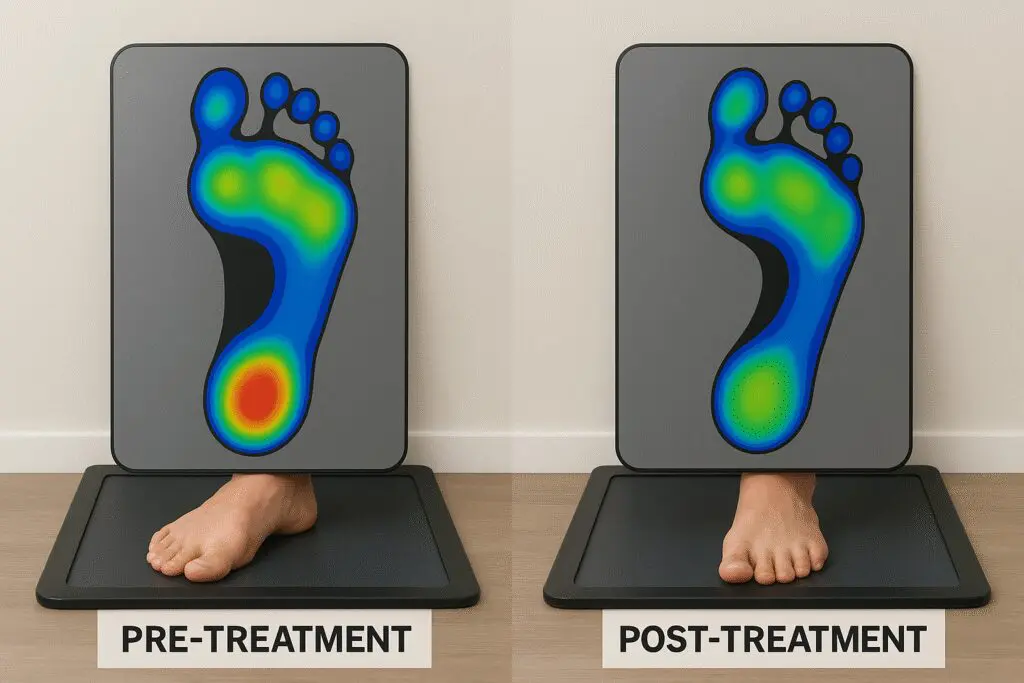
Pressure Mapping & Foot Posture Index (FPI-6) Scoring
To supplement gait data, we use pressure mapping platforms that visually track force distribution across your feet—both while standing and during motion. This identifies:
- Hyperpressure zones (often under the forefoot or heel)
- Weight imbalance between limbs
- Evidence of collapsed arches or rigid supinated structures
We then apply the Foot Posture Index (FPI-6), a validated scoring model that classifies foot alignment into:
- Pronated (excessive inward roll)
- Neutral (optimal posture)
- Supinated (outward roll with poor shock absorption)
FPI evaluates six static and dynamic criteria including:
- Talar head palpation
- Curvature below the lateral malleolus
- Calcaneal angle and arch height collapse
These scores help us tailor your treatment—whether it’s custom orthotics, physical therapy, or shoe recommendations.
Why Early Diagnosis Prevents Chronic Postural Breakdown
Without early detection, minor postural deviations can lead to systemic issues like:
- Patellofemoral pain syndrome
- Hip rotation compensation
- Lumbar disc compression
A 2018 review from the International Journal of Exercise Science highlighted that untreated foot posture abnormalities can lead to patellofemoral pain, compensatory hip rotation, and increased lumbar spinal stress.
Our diagnostics don’t just identify your current foot posture—they help predict and prevent future biomechanical dysfunction.
By identifying imbalances now, we can proactively prescribe:
- Orthotic interventions for gait correction
- Strengthening protocols for arch and ankle control
- Footwear optimisation to support daily movement
Treatment Options for Postural Correction
Custom Orthotics – Precision Solutions for Realignment and Stability
Custom orthotics are medically prescribed insoles designed to correct foot posture abnormalities. At Freedom Clinics, our podiatrists craft orthotics that support:
- Medial arch realignment in cases of flatfoot or collapsed arches
- Shock absorption and redistribution of force in high-arched feet (supination)
- Correction of overpronation and lateral instability
These devices are tailored based on your gait analysis results and are effective in addressing conditions like:
- Plantar fasciitis
- Shin splints
- Anterior knee pain caused by foot-driven alignment issues

Physical Therapy – Rebuilding Strength and Control
Correcting foot posture often requires more than passive support. Physical therapy plays a critical role in reinforcing structural change and building neuromuscular control. Our team focuses on:
- Strengthening weak foot stabilisers such as the posterior tibialis and intrinsic toe flexors
- Improving ankle and midfoot mobility
- Repatterning movement through balance and gait drills
Recommended interventions may include:
- Towel scrunches, short foot exercises, and single-leg stance work
- Plantar fascia and calf stretches to reduce tension on misaligned structures

Supportive Footwear – Reinforcing Proper Foot Alignment Daily
Your daily footwear plays a pivotal role in sustaining healthy foot posture. Based on your gait profile, we recommend:
- Stability shoes for overpronators with flat feet
- Neutral-cushioned shoes for those with high arches or supination
- Footwear with removable insoles to integrate custom orthotics
In addition, we assess your shoe wear patterns and recommend replacements if structural collapse or uneven heel wear is compromising your support system.
Advanced Referrals for Complex Structural Deformities
In severe or progressive cases where conservative treatment is insufficient, further intervention may be required. This includes:
- Referral to a podiatric surgeon for rigid deformities (e.g., tarsal coalition, osseous blocks)
- Ordering MRI or CT scans to assess tendon rupture or bony alignment
- Coordinating rehabilitation programs post-surgical correction
We prioritise non-invasive solutions first, but our integrated care approach ensures a seamless transition if advanced diagnostics or procedures become necessary.
Preventative Measures and Exercises to Protect Foot Posture
Strengthening Exercises to Prevent Arch Collapse and Misalignment
To maintain optimal foot posture and prevent the recurrence of structural issues like flatfoot or supination, strengthening the intrinsic muscles of the feet is essential. These muscles help maintain arch integrity, stabilise movement, and support the alignment of the entire kinetic chain.
Recommended exercises include:
- Towel Scrunches: Activates toe flexors and arch stabilisers—ideal for preventing or managing flatfoot.
- Short Foot Exercises: Builds core foot strength to resist postural sagging during load-bearing.
- Calf Raises with Toe Splay: Engages the posterior chain while improving forefoot stability.
- Single-Leg Balance Drills: Enhances ankle proprioception and mitigates supination-related gait deviations.
When done regularly, these exercises help preserve postural integrity and reduce the risk of strain across the knees, hips, and lower back.
Daily Footwear Habits That Preserve Foot Alignment
Footwear selection plays a critical role in maintaining long-term postural alignment. At Freedom Clinics, we assess your gait profile to recommend supportive shoe features, including:
- Arch support appropriate to your foot type
- Firm heel counters to stabilise the rearfoot
- Shock-absorbing midsoles for those with high arches or supination
We also recommend:
- Rotating shoes daily to avoid repetitive stress on footwear structures
- Replacing worn shoes regularly to prevent midsole collapse and uneven ground contact
Paediatric Foot Posture – When Early Attention Is Needed
While many children display flexible flatfoot during early development, persistent arch collapse, pain, or altered walking patterns can indicate the need for clinical support.
Signs that a podiatric evaluation is needed:
- Arch remains absent after age 7
- Complaints of foot fatigue or limping
- Inward-leaning ankles or shoes worn unevenly on the inner heel
Our podiatrists use tools like the Foot Posture Index adapted for paediatric use to assess function and, where needed, may recommend:
- Custom orthotics
- Strengthening programs
- Supportive footwear strategies for growing feet

FAQs on Foot Posture, Gait, and Orthotics
How does poor foot posture affect my overall health?
Abnormal foot posture—whether due to overpronation, supination, or arch collapse—can cause widespread effects beyond the feet. Misalignment in your base structure often leads to:
- Knee misalignment and joint tracking issues
- Pelvic tilt and altered spinal posture
- Lower back strain from muscular compensation
These biomechanical imbalances can increase your risk of chronic pain, overuse injuries, and movement inefficiencies. Addressing foot posture is critical for restoring full-body balance.
What are the signs that I have poor foot posture?
Indicators of foot posture imbalance include:
- Fatigue or pain in the arch, heel, or forefoot
- Inward ankle roll (common with overpronation)
- Outward foot tilt (often seen in supination)
- Uneven shoe wear, especially on the heel or lateral edge
If these signs are present, consult a podiatrist for an evaluation. Tools like the Foot Posture Index (FPI-6) and gait analysis provide clarity on posture type and severity.
Are custom orthotics effective for fixing foot posture?
Yes. Custom orthotics are precision-designed to correct your specific foot posture deviation. They work by:
- Supporting the medial arch and reducing overpronation
- Offloading pressure in cases of high arches
- Enhancing balance and postural control throughout the gait cycle
They are clinically proven to improve pain symptoms, movement quality, and joint alignment, especially when combined with physical therapy and supportive footwear.
Is gait analysis necessary or is a foot exam enough?
While a clinical exam identifies structural issues, gait analysis provides insight into dynamic movement patterns—revealing how your foot posture behaves during walking or running. It helps detect:
- Subtle asymmetries in foot strike
- Timing delays in push-off
- Compensatory loading in other joints
When combined, both assessments offer a comprehensive understanding of your biomechanical function.
Can supination and overpronation be corrected?
Yes—foot posture deviations like overpronation and supination can be improved through:
- Custom orthotics to guide alignment
- Strengthening exercises targeting stabiliser muscles
- Choosing corrective footwear with appropriate motion control or cushioning
A multimodal approach ensures long-term postural correction and injury prevention.
Visit Freedom Clinics for a Professional Foot Posture Assessment
If you’re concerned about foot posture issues, experiencing discomfort while walking, or seeking professional advice on arch alignment, our podiatry services team at Freedom Clinics Canary Wharf is here to help.
We provide comprehensive assessments to identify and correct biomechanical imbalances such as flatfoot, overpronation, supination, and related postural dysfunctions.
Using advanced diagnostics and podiatrist-led evaluations, we help restore healthy movement and long-term musculoskeletal balance.
What to Expect During Your Foot Posture Consultation
When you book a foot posture assessment at Freedom Clinics, your appointment includes:
- A detailed biomechanical history intake and symptom review
- Clinical evaluation of foot alignment, arch height, joint mobility
- Digital gait analysis to identify abnormal loading patterns and stride asymmetries
- Foot Posture Index (FPI-6) scoring for structural classification
- A fully personalised treatment plan including:
- Custom orthotics (if indicated)
- Footwear advice aligned with your gait profile
- Corrective exercise programming
This service is ideal for those with postural-related pain, active individuals aiming to prevent injury, and anyone seeking clarity on their foot mechanics and posture.
Contact and Clinic Information – Freedom Clinics, London
Freedom Clinics – Podiatry and Orthotics Centre
Canada Place Shopping Mall
34 North Colonnade
Canary Wharf, London E14 5HX
Call Us: 0203 197 9100
Email: canarywharf@freedomclinics.com
Opening Hours:
Mon–Fri: 7:00am – 8:00pm
Sat–Sun: 10:00am – 4:00pm
Ready to realign your stride? Book your professional foot posture consultation today and take the first step toward pain-free, performance-ready movement.
Our Podiatrists & Chiropodists


References
- Shih, Y.-F., Lee, S.-H., Luo, H.-J., Wang, W. T.-J. (2019). Can short‑term effectiveness of anti‑pronation taping predict the long‑term outcomes of customized foot orthoses? BMC Musculoskeletal Disorders. https://bmcmusculoskeletdisord.biomedcentral.com/articles/10.1186/s12891-019-2648-3
- Fong, C. M., Blackburn, J. T., Norcross, M. F., McGrath, M., & Padua, D. A. (2011). Ankle-dorsiflexion range of motion and landing biomechanics. Journal of Athletic Training, 46(1), 5–10. https://www.ncbi.nlm.nih.gov/pmc/articles/PMC3017488/
- Barwick, A., Bird, P., & Payne, C. (2012). The relationship between foot motion and lumbopelvic–hip function: A review. ResearchGate. https://www.ncbi.nlm.nih.gov/pmc/articles/PMC10893580/

