
Understanding the Aging Foot
Aging foot structure refers to the progressive anatomical and biomechanical changes that occur in the feet as part of the natural aging process.
These structural transformations impact critical components of the foot anatomy—including the bones, ligaments, tendons, and fat pads—and can significantly affect comfort, stability, and mobility in older adults.
Medically reviewed by: Dr Priya Anand DPM. Last update: 18th May 2026
Book your appointment
What age-related changes take place?
By the age of 50, many individuals begin to notice subtle shifts in how their feet function and feel. Common age-related changes in foot structure include:
- Fat pad atrophy – the thinning of the protective cushioning under the heel and forefoot, leading to increased pressure and pain.
- Arch collapse – a loss of height in the foot’s medial arch due to ligament weakening, often resulting in overpronation and balance issues.
- Joint stiffness and reduced flexibility – frequently linked to osteoarthritis, particularly in the big toe and midfoot joints.
Research by the Faculty of Sport Sciences at Waseda University and the Institute of Life Innovation Studies at Toyo University in 2024 demonstrated that age‑related changes in heel fat pad structure lead to altered thickness and mechanical response, potentially diminishing shock absorption and contributing to heel pressure and pain in older adults.
These biomechanical deteriorations disrupt the foot’s ability to absorb shock, maintain alignment, and support efficient gait mechanics. As a result, aging individuals are at greater risk of gait instability, postural compensation, and fall-related injuries. The presence of systemic conditions like diabetes, peripheral neuropathy, and osteoporosis further elevates these risks by impairing circulation, sensation, and tissue regeneration.
But what structural changes actually occur in the feet with age? From diminished plantar cushioning to altered foot posture, the cumulative effect of these age-driven developments can reshape both how feet function and how they bear weight.
At Freedom Clinics, our podiatry team specialises in identifying early signs of senescent foot anatomy and providing tailored care solutions. These include custom orthotics to support compromised arches, targeted foot care regimens, and proactive monitoring to help maintain long-term mobility and foot health.

Structural Changes in Aging Feet
As part of a broader process known as aging foot structure, older adults often experience distinct anatomical and biomechanical transformations. These changes affect the way the feet absorb shock, maintain alignment, and support the body during movement. If left unmanaged, these structural adjustments can lead to pain, instability, and mobility loss—especially in patients with coexisting conditions like diabetes, osteoarthritis, or obesity.
Fat Pad Atrophy – The Loss of Foot Cushioning
One of the earliest and most impactful changes in aging feet is fat pad atrophy. Over time, the soft, fatty tissue under the heel and ball of the foot deteriorates, leading to:
- Increased pressure on bones during walking
- Pain when barefoot or wearing unsupportive shoes
- A higher risk of calluses, ulcers, and skin breakdown
Fat pad atrophy is a critical indicator of senescent foot anatomy and should be addressed with custom orthotics or padded insoles. These devices redistribute pressure, enhance shock absorption, and provide comfort—particularly for patients with peripheral neuropathy or reduced sensation.
Arch Collapse – Flatfoot Formation with Age
The medial longitudinal arch plays a vital role in shock absorption and foot propulsion. As ligaments weaken and the posterior tibial tendon loses strength, the arch may progressively lower—a condition known as adult-acquired flatfoot or arch collapse.
Symptoms include:
- Visibly flatter feet
- Overpronation (inward foot rolling)
- Pain in the midfoot, ankle, and lower limb
This condition not only alters the visual structure of the foot but also disrupts gait efficiency and increases the risk of secondary problems in the knees, hips, and spine. Freedom Clinics offers structured podiatric assessments and orthotic prescriptions to manage these changes effectively.
Joint Stiffness and Osteoarthritis
Age-related joint degeneration is another hallmark of aging foot structure. Osteoarthritis often targets the big toe joint (1st MTP), midfoot joints, and subtalar joint, resulting in:
- Reduced joint flexibility
- Pain during walking or weight-bearing
- Visible swelling or bone spur development
This stiffness can severely impair mobility and balance. Management may include joint-specific orthotics, physical therapy, and, in advanced cases, medical referrals for anti-inflammatory injections or surgical consultation.
Widening and Lengthening of the Feet
Foot morphology also changes with age. Most people experience widening and mild lengthening of their feet due to:
- Ligament laxity
- Progressive arch flattening
- Redistribution of soft tissue and fat pads
This results in common complaints like poor shoe fit, toe crowding, and pressure sores. Seniors often benefit from switching to wider, orthopedic footwear with soft uppers, supportive midsoles, and removable inserts.
Medical Conditions Associated with Aging Feet
As aging foot structure progresses, it often leads to a cluster of medical conditions that compromise comfort, functionality, and mobility in older adults. These conditions—stemming from degenerative, vascular, and neurological changes—require proactive management to prevent escalation. Many of them co-exist and are worsened by underlying biomechanical issues like fat pad atrophy, arch collapse, and foot widening.
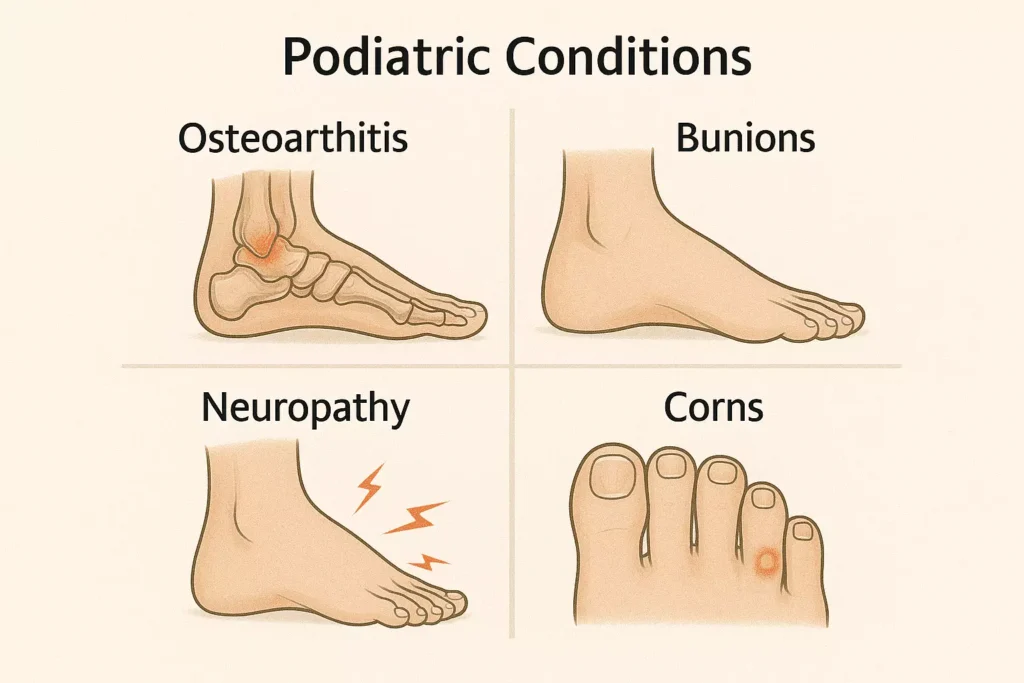
Osteoarthritis – Degeneration of Aging Foot Joints
Osteoarthritis is a leading cause of foot pain in seniors and is tightly linked to long-term wear, tear, and instability in foot mechanics. It commonly affects:
- The first metatarsophalangeal (1st MTP) joint in the big toe
- The midfoot joints, particularly in the tarsometatarsal area
- The subtalar joint, which aids in side-to-side motion
These joints experience gradual cartilage erosion, leading to:
- Stiffness and reduced range of motion
- Joint swelling and visible bone spurs
- Pain during walking, especially on inclines or uneven surfaces
At Freedom Clinics, podiatric specialists assess osteoarthritis using gait analysis and provide treatments like orthotic devices, activity modification, and, when necessary, medical referral for injections or imaging.
Toe Deformities – Bunions, Hammertoes, and Overlapping Toes
Age-related weakening of soft tissues can shift toe alignment, resulting in progressive deformities such as:
- Bunions (hallux valgus) – an outward angling of the big toe
- Hammertoes – a permanent bend in the toe’s middle joint
- Crossed or overlapping toes – caused by space constriction or joint instability
These deformities often co-occur with arch collapse and foot widening, making footwear fit problematic and increasing the risk of corns, calluses, and gait compensation injuries.
Freedom Clinics offers conservative treatments including:
- Toe spacers and orthoses
- Custom footwear recommendations
- In advanced cases, surgical referrals are made to prevent further deformity progression.
Peripheral Neuropathy – Nerve Dysfunction in Elderly Feet
Peripheral neuropathy is common in the aging population, especially among those with diabetes or vascular disease. It disrupts nerve signals in the feet, resulting in:
- Numbness, tingling, or burning sensations
- Reduced ability to feel pain, heat, or pressure
- Poor proprioception and increased fall risk
This loss of protective sensation increases vulnerability to foot ulcers, particularly in the forefoot and heel—areas already compromised by fat pad loss.
Freedom Clinics provides early screening, diabetic foot checks, and recommendations for:
- Protective footwear and offloading orthotics
- Pressure relief therapies
- Coordination with diabetic care providers
Circulatory Disorders – Compromised Healing and Skin Breakdown
Aging also reduces blood flow to the feet due to arterial narrowing, venous insufficiency, or chronic conditions like hypertension and diabetes. These circulatory deficits manifest as:
- Cold, discoloured toes
- Delayed wound healing or persistent ulcers
- Skin thinning, bruising, and susceptibility to infection
Impaired circulation intensifies the effects of fat pad atrophy and deformities, often requiring integrated vascular and podiatric management.
At Freedom Clinics, clinicians monitor vascular function and implement:
- Non-invasive vascular screenings
- Wound prevention and skin protection protocols
- Patient education on early warning signs
Functional Impacts on Gait and Balance
Changes in aging foot structure don’t just affect the anatomy of the foot—they fundamentally alter the way older adults walk, stand, and maintain balance. As core structures like the arches, fat pads, and joints deteriorate, the foot’s ability to support efficient motion and postural control weakens, often resulting in gait instability, postural misalignment, and increased fall risk.
Gait Instability – How Foot Structure Alters Walking Mechanics
Gait instability is a hallmark of aging feet. Caused by factors like fat pad atrophy, arch collapse, and reduced joint mobility, it results in visible changes in walking style, including:
- Shuffling gait with shortened stride length
- Widened stance to compensate for imbalance
- Delayed toe-off, often due to joint stiffness or deformities
These adaptations, while initially helpful, often become inefficient and unsafe over time. Older adults may find it harder to lift their feet properly, navigate uneven surfaces, or ascend stairs.
At Freedom Clinics, we perform comprehensive gait analysis to detect these deviations early and intervene using custom orthotics, which restore biomechanical alignment and improve foot propulsion.
Postural Compensation – Chain Reactions from the Feet Up
When the foot no longer provides a stable foundation, the body adapts through postural compensation. This biomechanical adjustment shifts stress to higher joints, resulting in:
- Knee valgus or bowing
- Pelvic tilt or hip strain
- Lower back tension or pain
These symptoms often arise subtly but can escalate into chronic musculoskeletal disorders if untreated. Flat feet, uneven gait, and toe deformities are common culprits that force these shifts.
Freedom Clinics addresses these postural disturbances by:
- Customising orthotic devices
- Recommending footwear modifications
- Collaborating with physiotherapists for gait retraining
Increased Fall Risk – From Instability to Injury
With diminished proprioception, muscle control, and shock absorption, older adults face a heightened risk of falls. This is often due to:
- Fat pad loss, decreasing ground feedback and cushioning
- Toe deformities, affecting balance and propulsion
- Peripheral neuropathy, masking injury signals
Falls linked to foot dysfunction are especially dangerous in individuals with osteoporosis or reduced mobility.
Freedom Clinics implements multifaceted fall prevention plans involving:
- Gait stabilisation techniques
- Balance-oriented orthotic interventions
- Guidance on safe footwear and home environment
Confidence Loss and Activity Avoidance
Mobility issues often lead to fear of falling, prompting behavior changes that worsen long-term outcomes. Common signs of this behavioral decline include:
- Avoiding stairs or uneven surfaces
- Reluctance to walk without assistance
- Social withdrawal due to pain or instability
Such avoidance leads to physical deconditioning, further weakening muscles needed for stable walking. Freedom Clinics emphasises early intervention to restore mobility and build confidence through supportive devices, patient education, and tailored treatment.

Preventive Care and Home Management
Preventing complications related to aging foot structure begins with consistent self-care and early detection. Structural decline in the feet can be delayed or mitigated through daily hygiene routines, protective footwear choices, and strengthening activities. When paired with timely podiatric evaluation, these habits can significantly reduce the risk of pain, deformity, or loss of mobility.
Daily Foot Inspections – Spotting Issues Before They Escalate
A cornerstone of foot health for older adults is the daily foot inspection. This simple habit can help identify:
- Redness, blisters, or swelling
- Cuts or slow-healing wounds
- Nail abnormalities or infections
- Pressure points and calluses
These visual checks are essential for individuals with diabetes, peripheral neuropathy, or circulatory issues, who may not feel injuries developing.
At Freedom Clinics, patients are educated on how to perform effective inspections and recognise early warning signs that require clinical care.
Supportive, Orthotic-Ready Footwear – Structural Defense from the Ground Up
Proper footwear is critical in preventing further foot structure deterioration, particularly as arches weaken and feet widen. Ideal shoes for older adults should include:
- A wide toe box to accommodate bunions or deformities
- A firm midsole and heel counter for structural support
- A non-slip outsole to prevent falls
- Removable insoles for custom orthotics
Ill-fitting or unsupportive footwear can worsen fat pad atrophy, accelerate toe deformities, and increase fall risk.
Freedom Clinics offers personalised footwear consultations and recommends orthopaedic or diabetic-safe shoes tailored to anatomical needs.
Strength and Balance Exercises – Reinforcing the Foundation
Foot and ankle exercises are essential for maintaining muscle integrity, joint mobility, and balance confidence. Recommended home routines include:
- Towel curls and marble pickups to strengthen toe grip
- Calf raises to build ankle stability
- Heel-to-toe walking to improve gait fluidity
- Single-leg balance drills to train proprioception
These exercises help offset the biomechanical effects of arch collapse and postural compensation seen in aging feet.
Freedom Clinics provides customised exercise protocols and referrals to physiotherapy when necessary.
When to See a Podiatrist – Staying One Step Ahead
Despite best efforts at home, certain conditions require professional intervention. Prompt evaluation is advised when there are:
- Persistent pain or deformities
- Skin changes, ulcers, or bruising
- New balance concerns or fall incidents
Early podiatric care at Freedom Clinics includes comprehensive biomechanical assessments, custom orthotic prescription, and long-term monitoring for high-risk patients.

Clinical Treatment Options
As the effects of aging foot structure progress, conservative management may no longer suffice. Clinical intervention becomes essential for correcting biomechanical dysfunction, managing pain, and maintaining independence. At Freedom Clinics, our multidisciplinary approach integrates customised devices, physical therapy, and medical management to address both structural deterioration and secondary complications.
Custom Orthotics – Foundational Support for Aging Feet
Custom orthotic insoles are one of the most effective clinical tools for seniors experiencing:
- Fat pad atrophy, resulting in heel and forefoot discomfort
- Arch collapse, leading to overpronation and joint stress
- Gait instability, increasing fall risk
Our orthotics are precision-fitted to each patient’s anatomical structure and gait profile. They:
- Rebalance plantar pressure across the foot
- Reinforce collapsed arches
- Restore biomechanical alignment
- Provide cushioning where natural shock absorption has been lost
Conditions such as adult-acquired flatfoot, hallux rigidus, and plantar fasciitis all respond well to custom orthotic treatment plans at Freedom Clinics.
Gait Rehabilitation and Physiotherapy
When structural degeneration disrupts walking mechanics, gait retraining becomes critical. In partnership with physiotherapists, we deliver:
- Proprioceptive reconditioning for fall prevention
- Targeted posterior tibial muscle activation
- Joint mobilisation for arthritic stiffness
- Neuromuscular drills to restore functional stride length
These therapies are essential for patients recovering from falls, compensating for foot deformities, or adjusting to orthotic use.
Treating Co-Existing Foot Conditions
Older adults with structural foot changes often develop related conditions, including:
- Osteoarthritis, causing stiffness and inflammation in joints
- Plantar fasciitis, due to altered load-bearing
- Toe deformities (bunions, hammertoes) linked to unstable arches
- Neuropathy-induced pressure ulcers
At Freedom Clinics, our podiatrists apply:
- Anti-inflammatory therapies (topical, oral, or injectable)
- Offloading techniques via orthotic redesign
- Wound care plans for ulcer-prone areas
- Coordination with surgical specialists where necessary
High-Risk Foot Monitoring – Diabetic & Neuropathy Care
Patients with diabetes, peripheral artery disease, or prior foot injuries require specialised monitoring. Freedom Clinics offers:
- Comprehensive vascular and nerve function screening
- Early intervention for callus buildup and skin breakdown
- Custom footwear guidance to prevent ulcers
- Ongoing education on risk signs and daily inspection routines
Routine podiatric evaluation significantly reduces the likelihood of amputation and enhances foot preservation.

Frequently Asked Questions: Aging Foot Structure & Senior Foot Health
This FAQ section addresses common concerns related to anatomical changes, pain management, footwear, and when to seek professional care. Each response reinforces core clinical concepts and highlights how Freedom Clinics podiatry services support elderly foot health through proactive and therapeutic strategies.
Understanding Structural Changes in Aging Feet
Why do my feet hurt more as I age?
Aging can cause fat pad atrophy, joint stiffness, and loss of arch height, all of which increase mechanical strain on the feet. When cushioning diminishes and alignment shifts, pressure builds on sensitive areas, especially under the heel and forefoot.
At Freedom Clinics, we assess whether your pain results from structural changes and recommend appropriate orthotic or medical interventions.
Why are my shoes suddenly too tight?
As aging foot structure progresses, ligament laxity and arch collapse can cause feet to widen and lengthen. This often necessitates a change in shoe size and style—favoring orthopedic or wide-fit footwear.
Ask Freedom Clinics about orthotic-ready footwear evaluations and fit customisation.
Treatment & Support Options
Can custom orthotics really make a difference?
Yes. Custom orthotics support arches, relieve pressure from thinning fat pads, and realign gait mechanics. They are essential for managing flatfoot, plantar fasciitis, and fall-related gait instability.
Freedom Clinics offers foot-scanned, pressure-mapped orthotics designed for senior biomechanics.
What are the best exercises to support aging feet?
For strength and balance:
- Towel grabs activate foot arches
- Heel-to-toe walking improves gait stability
- Single-leg stance holds reinforce ankle control
These exercises mitigate the effects of foot deconditioning and promote safer movement.
We provide tailored mobility plans and physio referrals at Freedom Clinics.
When to Seek Clinical Care
How does foot structure impact fall risk?
Changes like fat pad loss, toe deformities, and nerve dysfunction undermine stability. Combined with poor footwear or unrecognised injuries, they significantly increase fall risk in older adults.
Freedom Clinics addresses these risks through gait retraining, orthotics, and fall prevention programs.
When should I see a podiatrist?
Schedule a consultation if you notice:
- Chronic foot pain
- Skin changes or open wounds
- Difficulty with balance or walking
- Foot shape changes or swelling
Early assessment at Freedom Clinics helps prevent long-term complications and supports functional independence.
Our Podiatrists & Chiropodists


References
- Maemichi, T., Matsumoto, M., Tsutsui, T., Ichikawa, S., Okunuki, T., Tanaka, H., & Kumai, T. (2024). Changes in functional characteristics of heel fat pad with age: An ultrasonographic study of micro‑ and macrochamber layers. Clinical Biomechanics, 106294. https://pubmed.ncbi.nlm.nih.gov/38996494/

