
When Is Foot Surgery Needed?
Foot surgery is a specialised medical procedure performed by a podiatric surgeon to treat conditions that cause persistent pain, limit mobility, or create structural deformities in the foot. Freedom Clinics in Canary Wharf does not perform surgery. We offer expert diagnosis and non-surgical treatments such as orthotics, physiotherapy, and medication, and can refer you to qualified external surgical specialists when surgery is required.
Many patients ask, “How do I know if I need foot surgery?” The answer depends on the severity of your symptoms, whether your condition is worsening, and if non‑surgical care has failed. For example, ongoing big toe pain (symptom) caused by a bunion (condition) may require a bunionectomy (treatment) to restore joint alignment and relieve discomfort—a procedure performed by an external surgical provider.
If left untreated, progressive foot conditions—such as hallux valgus or collapsing arches—can worsen over time, potentially leading to more complex surgical needs and a longer recovery period. In many cases, early intervention through conservative care may relieve pain, prevent further deformity, and support long-term foot health.
Medically reviewed by: Dr Priya Anand DPM. Last update: 18th May 2026
Book your appointment
Defining Foot Surgery and Its Purpose
Foot surgery encompasses a variety of procedures designed to correct deformities, restore function, and relieve chronic pain. This may include:
- Bunionectomy for bunions
- Hammertoe correction for misaligned toes
- Plantar fascia release for persistent heel pain
- Neuroma removal for nerve compression in the forefoot
These procedures aim to address the root cause of symptoms, restore proper foot mechanics, and allow you to return to your normal activities with less pain and better mobility. Freedom Clinics does not perform these procedures but provides comprehensive education and guidance through diagnosis, non-surgical care, and, when necessary, referral to external surgical specialists.
Understanding Foot Surgery
Foot surgery is a specialised area of podiatric medicine focused on correcting structural issues, relieving chronic pain, and restoring optimal function to the foot and ankle. Freedom Clinics does not perform surgery, but we help patients explore all treatment options—from non-invasive measures to surgical intervention—and coordinate referrals when required.
The Role of a Podiatric Surgeon
A podiatric surgeon is a medical specialist trained to diagnose, manage, and perform surgery for foot and ankle conditions. Unlike general surgeons, they focus exclusively on the lower limbs, giving them deep expertise in foot biomechanics and complex deformities. At Freedom Clinics, we work closely with you to determine whether conservative treatments—such as orthotics, physiotherapy, or steroid injections—are sufficient, or whether a referral to a podiatric surgical specialist is indicated.
Common Types of Foot Surgery
- Bunionectomy – Removes the bony prominence at the base of the big toe and realigns the joint to relieve pain and improve walking comfort (when performed by an external surgeon).
- Hammertoe correction – Straightens bent toes by releasing or adjusting tendons and joints, restoring natural alignment (via specialist referral).
- Plantar fascia release – Treats persistent heel pain caused by plantar fasciitis when other treatments have failed (done by surgical professionals).
- Neuroma removal – Excises a thickened nerve in the forefoot to eliminate burning pain and numbness between the toes (by external surgical providers).
- Arthrodesis (joint fusion) – Permanently joins bones in severely arthritic joints to improve stability and reduce discomfort (referred when indicated).
According to a clinical overview at Cleveland Clinic, bunionectomy removes the bony prominence at the base of the big toe, realigns the joint to relieve pain, and improves walking comfort.
When Foot Surgery Is Recommended
You may be a candidate for foot surgery if:
- Pain significantly limits daily activities
- Deformities are worsening
- Imaging confirms structural damage
- Conservative care has not worked
For example, a patient with severe hallux valgus who has tried splints, custom orthotics, and physiotherapy without relief may benefit from bunion surgery to realign the toe and restore proper mechanics—which would be performed by a surgical specialist upon referral.
Why Early Intervention Matters
Delaying necessary foot surgery can allow conditions to progress, requiring more invasive procedures and extending recovery time. Early treatment—even via referral to surgical care—often leads to:
- Faster healing
- Less pain
- Better long-term mobility
- Reduced risk of secondary problems in knees, hips, and spine
Conditions That May Require Foot Surgery
Certain foot conditions can progress to the point where surgery is the most effective solution for restoring mobility, reducing pain, and correcting deformities. Freedom Clinics does not perform surgical procedures, but our podiatric team coordinates referrals when conservative care is no longer enough.
Bunions (Hallux Valgus)
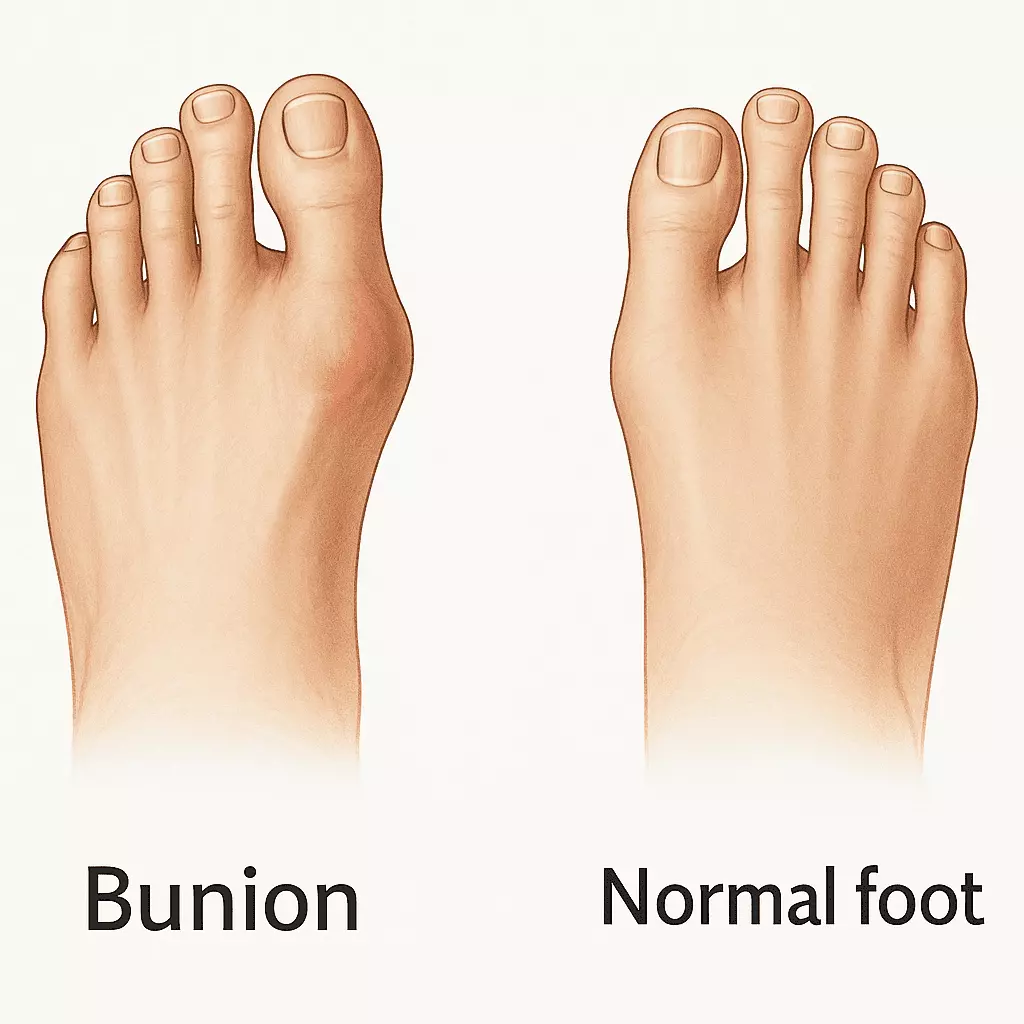
A bunion is a bony lump at the base of the big toe joint that develops when the joint becomes misaligned. This condition can cause pain, swelling, and difficulty wearing shoes.
- Surgical option (via referral): Bunionectomy realigns the toe joint, removes excess bone, and restores balance to the foot.
- When surgery is considered: Persistent discomfort despite orthotics, splints, or footwear changes.
- Benefit: Restored toe alignment, improved comfort in footwear, and reduced joint pain.
Hammertoes
Hammertoe deformities occur when one or more toes bend abnormally at the middle joint, causing corns, calluses, and discomfort while walking.
- Surgical option (via referral): Hammertoe correction releases or adjusts tendons and joints to straighten the toe.
- When considered: If the toe becomes rigid or non-surgical measures fail.
- Benefit: Improved toe alignment, reduced friction, and increased walking comfort.
Hallux Rigidus (Big Toe Arthritis)
Hallux rigidus is arthritis in the big toe joint, leading to stiffness, pain, and difficulty with push-off during walking.
- Surgical options (via referral): Cheilectomy (removing bone spurs) or arthrodesis (joint fusion), depending on severity.
- When considered: When pain and stiffness significantly impact daily life.
- Benefit: Reduced pain, improved joint mobility, and enhanced gait efficiency.
Morton’s Neuroma
A Morton’s neuroma is a thickened nerve between the toes that can cause burning pain, tingling, or numbness.
- Surgical option (via referral): Neuroma removal excises the affected nerve to relieve symptoms.
- When considered: When footwear changes, orthotics, and injections fail to provide relief.
- Benefit: Elimination of nerve-related pain and restored walking comfort.
Plantar Fasciitis (Chronic Heel Pain)
Chronic plantar fasciitis causes persistent heel pain due to inflammation of the plantar fascia ligament.
- Surgical option (via referral): Plantar fascia release reduces ligament tension and relieves pain.
- When considered: After 6–12 months of unsuccessful conservative treatment.
- Benefit: Long-term pain relief and improved mobility.
Flatfoot & High Arch Conditions
Severe flatfoot or high arch deformities can cause pain, instability, and strain on other joints.
- Surgical options (via referral): Reconstructive procedures to restore arch height and foot alignment.
- When considered: When pain or instability persists despite orthotics and physiotherapy.
- Benefit: Enhanced foot stability, reduced strain, and prevention of secondary joint problems.
Diabetic Foot Complications
Advanced diabetic foot conditions—such as ulcers, infections, or Charcot foot—can threaten limb function and overall health.
- Surgical options (via referral): Debridement, corrective reconstruction, or, in severe cases, amputation.
- When considered: When conservative wound care or infection control is insufficient.
- Benefit: Preservation of limb function and prevention of further complications.
How to Know if Foot Surgery Is Right for You
Deciding whether foot surgery is the best option involves understanding your symptoms, diagnosis, and how well non-surgical treatments have worked. At Freedom Clinics in Canary Wharf, our podiatric team follows a structured assessment process to determine whether surgery—via referral—can offer significant, lasting benefits compared to continued conservative care.
Assessing Your Symptoms
Certain symptoms may indicate that surgery could be the right choice:
- Persistent pain despite using custom orthotics or supportive footwear
- Worsening deformities such as bunions or hammertoes
- Chronic heel pain from plantar fasciitis that has not improved with therapy
- Nerve-related issues such as burning, tingling, or numbness in the forefoot
By evaluating how these symptoms affect your daily activities, we can determine whether referral for surgical intervention could restore mobility and comfort.
The Importance of Diagnosis
A precise diagnosis is critical in deciding if surgery is necessary. At Freedom Clinics, we use:
- Diagnostic imaging (X-rays, MRI, ultrasound) to examine bones, joints, and soft tissues
- Gait analysis to identify biomechanical imbalances
- Medical history review to uncover contributing factors and potential risks
This comprehensive approach ensures that we only recommend surgical referral when it is the most appropriate treatment.
Comparing these outcomes with the potential benefits of surgery allows patients to make an informed decision.
Exploring Non-Surgical Alternatives First
Before considering foot surgery, we always explore less invasive options, such as:
- Custom orthotics for structural support
- Physiotherapy and targeted exercise programmes
- Anti-inflammatory medications
- Corticosteroid injections for localised pain relief
- Footwear adjustments to reduce pressure and improve alignment
When Surgery May Be the Best Option
Surgical intervention via referral may be advised if:
- Pain significantly limits your work, sports, or everyday activities
- The condition is progressing despite treatment
- Conservative approaches have been exhausted without success
- Structural deformities are affecting gait and overall mobility
For example, a patient with advanced hallux rigidus who can no longer walk without pain may benefit—from a functional standpoint—from arthrodesis (joint fusion) or cheilectomy—performed by a surgical specialist.
Shared Decision‑Making at Freedom Clinics
At Freedom Clinics, we believe the choice to undergo foot surgery should be collaborative. Our podiatric team explains:
- Your diagnosis and prognosis
- All available treatment options
- Expected recovery times
- The risks and benefits of each approach
By providing clear, detailed information, we empower you to make the best choice for your long‑term foot health. Should surgery be necessary, we facilitate a trusted referral to an appropriate specialist.
The Foot Surgery Process at Freedom Clinics
While Freedom Clinics does not perform surgery, we support you every step of the way—from diagnosis and pre‑referral care to helping coordinate post‑surgical recovery and long‑term foot health strategies.
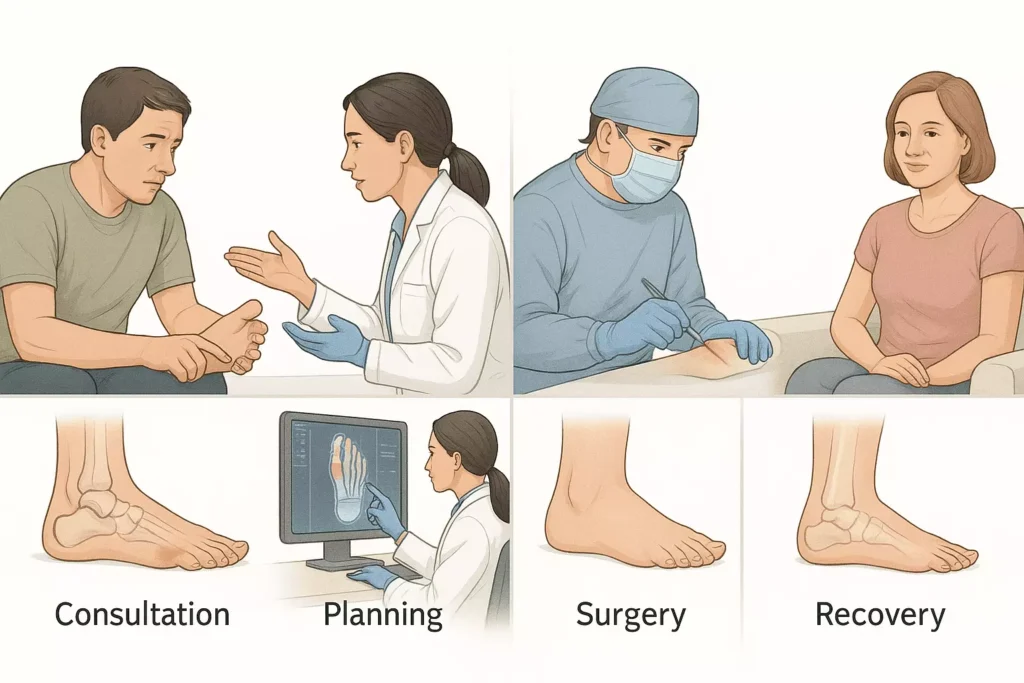
Diagnostic workflow and instruments are covered in our podiatric diagnostics & imaging.
- Initial Consultation and Assessment
- Medical history review to understand your health background and previous treatments
- Physical examination to assess alignment, range of motion, and pain points
- Diagnostic imaging (X-ray, MRI, ultrasound) for accurate diagnosis
- Discussion of your symptoms and lifestyle goals to shape a tailored treatment plan
- Benefit: Confirms whether conservative care suffices—or if referral for surgery may be needed.
- Exploring Treatment Options
- Non-surgical methods such as orthotics, physiotherapy, and targeted exercises
- Education on surgical procedures (bunionectomy, hammertoe correction, plantar fascia release, etc.) available through referral
- Review of expected recovery times, outcomes, and possible risks for each option
- Benefit: Gives you a balanced view of all treatment paths to make an informed decision.
- Surgical Planning and Preparation (If Referred)
- Assistance with selecting an appropriate external surgical provider
- Guidance on pre-operative instructions and medical clearance
- Coordination with your GP or specialist for referral documentation
- Benefit: Ensures a smooth transition to surgical care when referral is necessary.
- Post‑Referral Recovery and Rehabilitation
- Support in follow-up coordination after surgery
- Liaison with physiotherapy providers to restore mobility, strength, and balance
- Step-by-step guidance on returning to normal activities and footwear
- Benefit: Maximises long‑term results and lowers the risk of complications or recurrence.
- Long‑Term Foot Health
- Scheduled check-ups to monitor foot mechanics and overall function
- Preventive care strategies to protect against future issues
- Lifestyle and footwear recommendations tailored to your needs
- Benefit: Safeguards your surgical outcome and supports lifelong foot health.
For procedure types, referral pathways, and candidacy criteria, explore our foot surgery category hub.
Risks, Recovery, and Expected Outcomes of Foot Surgery
Undergoing foot surgery can provide life‑changing improvements in comfort and mobility. While Freedom Clinics does not perform surgery, our team helps you understand potential risks and supports your rehabilitation journey after referral:
- Understanding the Risks
- Infection at the incision site
- Delayed healing due to circulation or health factors
- Nerve damage causing numbness or tingling
- Blood clots or reduced blood flow
- Recurrence of the initial condition
- Persistent pain or stiffness in the treated area
- The Recovery Timeline
- First week: Rest, elevation, pain control, and wound care
- Weeks 2–6: Gradual return to weight-bearing with protective footwear
- Weeks 6–12: Transition back to normal shoes, supported by physiotherapy
- 3–6 months: Full return to normal activities for most patients, with ongoing exercises as needed

Supporting Your Own Recovery
Your actions after surgery—even though performed externally—can significantly influence outcomes. We recommend:
- Attending all scheduled follow-up appointments
- Completing prescribed physiotherapy and strengthening exercises
- Wearing orthotics or supportive footwear as advised
- Eating a nutrient-rich diet to promote tissue healing and bone health
- Avoiding high‑impact activities until cleared by your surgical provider
When plantar heel pain coexists, see conservative timelines and injection criteria in our plantar fasciitis treatment guide.
Expected Outcomes
When performed by skilled specialists—and followed by proper rehabilitation—foot surgery can provide:
- Long‑term pain relief and restored mobility
- Correction of deformities such as bunions or hammertoes
- Improved gait, balance, and foot stability
- Prevention of further deterioration or secondary joint issues
At Freedom Clinics, our ultimate goal is to help you regain function, confidence, and comfort—whether through effective conservative care or, when needed, by facilitating access to surgical treatment.
For deformity-specific expectations and non-operative care, review our bunions (hallux valgus) guide.
Cost, Insurance, and Booking Your Assessment (Not Surgery)
At Freedom Clinics in Canary Wharf, we focus on making your diagnostic and conservative treatment journey clear, affordable, and supportive. While we do not offer surgery ourselves, we assist with:
- Transparent diagnostic and treatment costing
- Insurance documentation and support for surgical referrals (if needed)
- Flexible payment plans and clear invoicing through your care pathway

How to Book Your Consultation
Booking your foot assessment with Freedom Clinics is simple:
- Call our patient care team on 0203 197 9100
- Email us at canarywharf@freedomclinics.com with your preferred date and time
- Visit us in person at:
Freedom Clinics, Canada Place Shopping Mall, 34 North Colonnade, Canary Wharf, London E14 5HX
We aim to arrange consultations promptly so you can move forward with the best possible treatment—whether conservative or, if necessary, a referral for surgery—as soon as possible.
Frequently Asked Questions About Foot Surgery
How do I know if I need foot surgery?
You may require surgical referral if persistent pain, restricted movement, or structural problems (e.g. bunions, hammertoes) have not improved with non‑surgical options. At your consultation, we’ll use diagnostic imaging to determine if referral is appropriate.
What surgical procedures might be recommended?
These can include bunionectomy, hammertoe correction, plantar fascia release, and minimally invasive techniques—all provided by external specialists, not onsite.
What is the recovery time after surgery?
Recovery depends on the procedure and overall health. Generally:
- Week 1: Rest and wound care
- Weeks 2–6: Gradual mobility with protective footwear
- Weeks 6–12: Transition to regular shoes with physiotherapy support
- 3–6 months: Return to normal activities
We help coordinate rehabilitation after referral to ensure consistency.
Does foot surgery hurt?
You will receive anaesthesia during surgery. Some discomfort is normal during recovery, but tailored pain management plans and aftercare help ensure a smoother recovery.
Will my health insurance cover surgery?
Many private insurers cover foot surgery when medically necessary. We help provide the documentation needed to support your claim for referral treatments.
Can foot surgery fix my problem permanently?
Often, surgery offers long‑term correction. Success depends on the procedure, your overall health, and your commitment to preventive care and follow‑up.
Neuroma-related burning or numbness is covered in our Morton’s neuroma symptoms, tests, and treatment guide.
Take the Next Step Towards Better Foot Health
If ongoing foot pain, structural problems, or reduced mobility are impacting your life, now is the time to explore whether foot surgery might be necessary. Whether you’ll need surgical referral or not, Freedom Clinics in Canary Wharf offers expert diagnosis, advanced non-surgical options, and dedicated support—every step of the way.
Why book your assessment now?
- Accurate diagnosis with advanced imaging
- Full explanation of conservative and surgical options (referral if needed)
- Clear guidance on minimally invasive techniques
- Care coordination and aftercare support through your journey
For rigid or painful toe deformities, see surgical indications and conservative care in our hammertoe overview.
How to Arrange Your Assessment:
- Call: 0203 197 9100
- Email: canarywharf@freedomclinics.com
- Visit: Freedom Clinics, Canada Place Shopping Mall, 34 North Colonnade, Canary Wharf, London E14 5HX
Don’t delay—addressing foot issues early can lead to long-term relief, improved mobility, and a better quality of life. Let us guide you toward the best path—whether through conservative care or surgical referral when needed.
For a full overview of services, assessments, and conservative treatments, start at our Podiatry & Chiropody department page.


Our Podiatrists & Chiropodists


References
- Cleveland Clinic. (n.d.). Bunion surgery (bunionectomy): Types & recovery time. Retrieved from https://my.clevelandclinic.org/health/procedures/bunion-surgery-bunionectomy

