
Hammertoe Treatment in London
What Is Hammertoe?
Hammertoe is a musculoskeletal toe deformity that affects the second, third, or fourth toes, where the middle joint bends abnormally downward—creating a hammer-like shape. This condition typically results from a muscle and tendon imbalance that disrupts the natural alignment of the toe, pulling it into a flexed position. If left untreated, hammertoe can progress from a flexible condition to a rigid deformity, significantly affecting comfort and mobility.
At Freedom Clinics in Canary Wharf, London, our expert podiatrists diagnose and treat hammertoes using non-surgical solutions like custom orthotics, and when needed, minimally invasive surgical procedures.
Medically reviewed by: Dr Priya Anand DPM. Last update: 18th May 2026
Book your appointment
What Causes Hammertoe and How Does It Progress?
Many patients ask, “Can a hammertoe get worse over time?” The answer is yes—hammertoes usually begin as flexible, meaning the toe can still move. Without early intervention, the condition often becomes rigid, where the joint is fixed and painful, making walking difficult and sometimes necessitating surgery.
Common Causes of Hammertoe
- Wearing tight, narrow, or high-heeled shoes that force toes into a cramped position
- Muscle imbalance between the flexor and extensor tendons in the toe
- Previous foot trauma or fractures
- Structural issues like flat feet or high arches
- Chronic conditions such as arthritis or diabetes-related neuropathy
These contributing factors place abnormal stress on the toe joints, leading to gradual deformity.
Am I at Risk for Developing Hammertoe?
Footwear and Lifestyle Factors
- Consistent use of poorly fitted or high-heeled shoes
- Prolonged standing or walking on hard surfaces
- Participation in impact-heavy sports without proper footwear
Structural Foot Conditions
- Having flat feet, overpronation, or high arches
- Existing bunion deformities or misaligned toes
Chronic Health Conditions
- Diagnosed with diabetes, rheumatoid arthritis, or neuromuscular disorders
- History of poor foot circulation or nerve damage
What’s the Difference Between Hammertoe and Claw Toe?
A frequent question we hear at Freedom Clinics is, “Is hammertoe the same as claw toe?”
While both are types of toe deformities, they differ in joint involvement:
- Hammertoe affects the proximal interphalangeal joint only.
- Claw toe involves bending at both the middle and end toe joints, causing a curled, claw-like appearance.
A detailed assessment by a Freedom Clinics podiatrist can determine which condition is present and guide the appropriate treatment plan.
Types of Hammertoe
When patients ask, “What type of hammertoe do I have?” or “Do I need surgery for my toe deformity?” the answer depends on the flexibility and severity of the joint misalignment. At Freedom Clinics in Canary Wharf, our expert podiatrists assess the type of hammertoe you have—whether flexible, semi-rigid, or rigid—to determine the most effective treatment.
Understanding the different types of toe deformities allows for earlier intervention and reduces the need for surgical correction.
What Is a Flexible Hammertoe?
According to the American Academy of Orthopaedic Surgeons, a flexible hammertoe is an early-stage deformity in which the toe remains bent yet still passively correctable.
Symptoms and Characteristics
- Visible downward bend at the proximal interphalangeal joint
- Toe remains moveable during a physical exam
- Pain or discomfort while wearing shoes
- Often occurs in the second toe, particularly in those with flat feet or narrow footwear
Treatment Options at Freedom Clinics
- Custom orthotics to support foot structure
- Taping or splinting to realign the toe
- Footwear changes (wide toe box, low heel)
- Targeted toe-stretching exercises
What Is a Semi-Rigid Hammertoe?
Symptoms and Signs
- Limited range of motion at the joint
- Pressure under the ball of the foot
- Often co-occurs with other deformities like bunions or metatarsalgia
Treatment Strategies
- Reinforced orthotics with metatarsal support
- Toe pads and offloading inserts
- Cortisone injections (in selected cases)
- Referral for surgical consultation if pain persists
What Is a Rigid Hammertoe?
A rigid hammertoe is a severe, fixed deformity where the joint is immobile. It often causes chronic pain, corns, and complications, particularly in patients with diabetes or compromised circulation.
Symptoms of a Rigid Hammertoe
- Toe is locked in a bent position
- Constant rubbing against shoes causing calluses and ulcers
- Inability to wear standard footwear comfortably
- Significant walking difficulty or postural imbalance
Understanding Surgical Treatment Options for Hammertoe
In advanced cases of hammertoe—especially those involving rigid or arthritic joints—surgical intervention may be the most appropriate course of action. Common procedures include:
- Arthroplasty: Removal of part of the joint to restore flexibility
- Arthrodesis: Permanent joint fusion for long-term correction
- Tendon transfer: Rebalancing muscle forces for improved toe alignment
Although Freedom Clinics does not perform these surgical procedures, our team provides expert clinical assessment and conservative management to help prevent surgical escalation. Where surgery becomes necessary, we assist in coordinated referrals to trusted foot surgeons and can support pre- and post-operative rehabilitation to aid recovery.
When Should You See a Podiatrist?
If you’re experiencing any of the symptoms listed above, early diagnosis by a qualified podiatrist is essential. Delaying treatment can allow a flexible hammertoe to become rigid, increasing the likelihood of surgical intervention.
Our podiatry team in London provides:
- Detailed joint mobility assessments
- Custom orthotic fitting
- Gait and footwear analysis
- Surgical referrals when needed

Symptoms of Hammertoe
If you’re wondering, “How do I know if I have a hammertoe?” you’re not alone. At Freedom Clinics, our experienced podiatrists often diagnose hammertoe in patients who initially report only mild discomfort or subtle changes in toe alignment. Recognising the early symptoms of this toe deformity is critical to preventing long-term pain and more invasive treatment.
How Do You Know If You Have Hammertoe?
A hammertoe usually begins as a flexible deformity—meaning the affected toe joint can still move. However, even in this early stage, the condition may already be causing discomfort or visible changes.
Early Symptoms of a Flexible Hammertoe
- A downward bend in the middle joint of the toe, especially the second toe
- Toe pain when walking, especially in tight shoes
- Redness, friction blisters, or corns on top of the toe
- Mild joint stiffness or a “tight” feeling in the forefoot
- Increased sensitivity to pressure on the toe joint
Patients often ask:
“Is it normal for one of my toes to curl under?”
“Why is my second toe pointing down?”
These are early signs of a flexible hammertoe, and treatment is most successful at this stage.
Symptoms of a Semi-Rigid or Rigid Hammertoe
As the condition progresses, a semi-rigid hammertoe begins to lose flexibility and may cause consistent pain. In a rigid hammertoe, the toe becomes fixed in a bent position and no longer responds to movement.
Structural Changes in the Toe
- Inability to straighten the toe
- Visible deformity with joint contracture
- Swelling and inflammation at the toe joint
- Upward displacement of the toe affecting balance
Related Foot Pain and Skin Conditions
- Pain under the ball of the foot (related to metatarsalgia)
- Corns and calluses forming from shoe friction
- Skin breakdown or ulcer risk, particularly in diabetic patients
- Difficulty wearing enclosed footwear comfortably
When to See a Podiatrist
If you’re experiencing persistent toe pain, structural changes, or difficulty walking, it’s time to consult a podiatrist. The earlier a hammertoe is diagnosed, the more effective non-surgical treatments like orthotics, toe pads, and footwear modifications can be.
Diagnostic Evaluation at Freedom Clinics
- Manual testing of toe flexibility
- Examination of foot posture and walking patterns
- Evaluation of associated conditions (e.g. bunion, flat foot)
- Referral for X-rays or gait analysis if needed
Conditions Often Mistaken for Hammertoe
To ensure accurate diagnosis, it’s important to differentiate hammertoe from other conditions such as:
- Claw Toe – affects both the middle and end joints
- Bunion Deformity – causes the big toe to shift and crowd others
- Neuropathy – may mask pain symptoms in patients with diabetes
A comprehensive evaluation at Freedom Clinics ensures the correct diagnosis and tailored treatment plan.

Causes and Risk Factors of Hammertoe
Many patients ask, “What causes hammertoe?” or “Why is my second toe starting to bend downward?” At Freedom Clinics, we help patients identify the underlying biomechanical, structural, and systemic causes of this common toe deformity early—when conservative treatment is most effective.
What Are the Primary Causes of Hammertoe?
According to StatPearls, hammertoe development stems from a biomechanical dysfunction, specifically an imbalance between the intrinsic and extrinsic muscles, tendons, and ligaments stabilising the toe. This leads to abnormal joint bending, most often at the proximal interphalangeal joint, causing the toe to gradually curl downward.
Footwear-Induced Hammertoe Risk
Wearing poorly fitted shoes is a major contributor to this deformity. Risk is highest in:
- High heels, which push the foot forward and cramp the toes
- Pointed shoes or narrow toe boxes, which compress the toes
- Flat, unsupportive footwear, which fails to stabilise the arch or distribute weight properly
“Can shoes cause hammertoe?” → Absolutely. Poor footwear is one of the most common preventable causes of this condition.
Postural and Mechanical Triggers
- Flat feet or overpronation cause instability, shifting strain onto the lesser toes
- Foot injuries (e.g., stubbed toes or fractures) may damage tendons and joints
- Long second toes absorb excessive pressure and are more prone to curling
Which Conditions Increase the Risk of Hammertoe?
Some anatomical traits and systemic diseases increase the likelihood of developing hammertoe, especially in adults over 40.
Structural Foot Conditions That Contribute to Toe Deformity
- Bunions crowd the adjacent toes and change weight distribution
- High arches (cavus foot) overload the forefoot and lesser toe joints
- Collapsed arches weaken muscular balance and increase toe instability
“Is hammertoe caused by bunions?” → Bunions frequently lead to hammertoe due to altered toe positioning and pressure patterns.
Systemic Health Risks
- Diabetes, especially with peripheral neuropathy, reduces foot sensation and alters gait
- Rheumatoid arthritis leads to chronic joint inflammation and toe joint degradation
- Ageing contributes to reduced tendon elasticity and muscle strength
“How does diabetes increase the risk of hammertoe?”
People with diabetes often develop muscle atrophy and nerve dysfunction, both of which destabilise the toe structure and contribute to deformity.
Can Lifestyle Habits Cause Hammertoe?
Yes. Daily choices and repetitive activities can accelerate the onset of this toe deformity.
Modifiable Behavioural Factors
- Wearing unsupportive or fashion-forward footwear long-term
- Standing or walking for extended periods on hard surfaces
- Ignoring early signs of toe misalignment or foot discomfort
- Not managing chronic conditions like diabetes or arthritis
At Freedom Clinics, we help patients adjust habits and recommend orthotic interventions, shoe modifications, and lifestyle adaptations to reduce deformity progression.

Diagnosis and Assessment of Hammertoe
Patients often ask, “How is hammertoe diagnosed?” or “What tests will a podiatrist do for my toe deformity?” At Freedom Clinics, our experienced podiatrists use a combination of hands-on examination and advanced diagnostic tools to evaluate the type and severity of your hammertoe. Early diagnosis is essential, especially for flexible hammertoes, which are more responsive to non-surgical treatment.
How Do Podiatrists Diagnose Hammertoe?
A detailed clinical assessment forms the foundation of accurate hammertoe diagnosis. This includes a symptom review, foot structure evaluation, and classification of the toe deformity stage—flexible, semi-rigid, or rigid.
Physical Examination and Toe Flexibility Testing
During your visit to Freedom Clinics, our podiatrist will:
- Inspect the shape and alignment of your toes
- Check for pain, corns, or calluses caused by pressure points
- Perform manual joint mobility tests to determine deformity flexibility
- Evaluate your footwear fit and pressure zones
“What physical tests are done to diagnose hammertoe?” → Manual manipulation of the toe, gait assessment, and toe joint palpation.

Is Imaging Necessary for Hammertoe?
While many hammertoes can be diagnosed by examination alone, X-rays may be required to evaluate bone structure, joint degeneration, or pre-surgical planning.
When Are X-rays Recommended?
- When the toe is rigid and painful
- If conservative treatment has failed
- When symptoms suggest underlying arthritis, bunions, or joint erosion
What Imaging Reveals
- Joint misalignment and angular deformities
- Bone spurs, erosions, or subluxations
- Weight-bearing differences affecting gait mechanics
“Do I need an X-ray to confirm hammertoe?” — Yes, in moderate to severe cases or before surgery.
What Is Gait and Pressure Analysis?
At Freedom Clinics, we offer computerised gait analysis and plantar pressure mapping to evaluate biomechanical contributors to hammertoe.
Why Gait Analysis Matters
- Identifies abnormal loading on the lesser toes
- Assesses compensatory gait patterns due to toe pain
- Helps in designing custom orthotic interventions
- Supports surgical decision-making in complex deformities
“Can gait problems cause hammertoe?” — Yes, improper mechanics can increase forefoot strain and accelerate deformity progression.
How Is Hammertoe Different From Other Toe Deformities?
To ensure proper treatment, your podiatrist will differentiate hammertoe from similar conditions.
Hammertoe vs Claw Toe
- Hammertoe: Bend occurs at the middle joint only
- Claw toe: Involves both the middle and end joints, creating a claw-like posture
Mallet Toe and Other Mimics
- Mallet toe affects only the distal joint
- Capsulitis may mimic hammertoe but lacks structural bending
- Diabetic neuropathy can delay symptom reporting due to reduced pain sensitivity
When to Book an Assessment at Freedom Clinics
If you’re experiencing any of the following, it’s time to see a podiatrist:
- Persistent toe pain or difficulty straightening your toe
- Corns, calluses, or shoe discomfort
- Recent foot trauma or changes in walking pattern
- Diagnosed diabetes, bunion, or arthritis
Our London-based team offers:
- Comprehensive hammertoe assessments
- In-house X-ray and gait analysis
- Guidance on orthotics, footwear, and treatment planning
Treatment Options for Hammertoe
At Freedom Clinics, patients often ask, “Can a hammertoe be fixed without surgery?” or “What are the best treatment options for my toe deformity?” The answer depends on the severity and flexibility of the affected joint. Whether you’re managing a flexible, semi-rigid, or rigid hammertoe, our London-based podiatrists provide personalised treatment plans based on clinical assessment and long-term foot health goals.
Non-Surgical Treatment Options for Hammertoe
For many patients with early-stage hammertoe, conservative treatment can reduce symptoms, correct alignment, and prevent progression—without surgery.
Custom Orthotics and Footwear Adjustments
Custom-designed orthotic insoles created by our expert podiatrists support the arch, correct abnormal foot posture, and redistribute pressure away from affected toes. Combined with appropriate footwear—such as shoes with a wide toe box, soft uppers, and rigid soles—orthotics are effective for treating flexible hammertoes.
Toe Splints, Pads, and Exercises
Medical-grade toe splints and gel pads help realign the affected joint, reduce friction, and prevent corns and calluses.
Our podiatric team also recommends toe-stretching exercises and intrinsic foot muscle strengthening to address muscle-tendon imbalances, a common cause of this toe deformity.
When Is Surgery Required for Hammertoe?
Surgery is typically considered when a hammertoe becomes rigid, causes persistent pain, or no longer responds to non-surgical treatments such as orthotics, splinting, or stretching.
While Freedom Clinics does not perform surgical procedures, our podiatrists are experienced in identifying when a condition may require escalation. In such cases, we can assist with referrals to trusted foot and ankle specialists, ensuring a smooth transition in your care pathway.
Our role remains active throughout—providing pre-surgical assessments, conservative management, and post-operative rehabilitation when needed.
Arthroplasty for Moderate Deformities
This procedure involves removing a small section of bone at the joint, creating space for the toe to straighten. Arthroplasty is best for semi-rigid hammertoes causing localised pain and pressure.
Arthrodesis for Rigid Hammertoes
Also known as joint fusion, arthrodesis permanently straightens the toe by allowing the joint to heal in a fixed position. Ideal for severe deformities and patients with coexisting arthritis or long-standing joint instability.
Tendon Transfer for Muscle Rebalancing
Tendon transfer is used to reroute the force of the tendons contributing to the deformity, restoring muscular balance and improving joint mechanics. It may be used in isolation or combined with bone procedures.

Post-Treatment Recovery and Outcomes
Recovery timelines depend on the treatment type, severity of the deformity, and patient health status.
Recovery Timeline by Treatment Type
- Non-surgical treatments (orthotics, splints): Relief often within 1–3 weeks
- Arthroplasty: Recovery in 4–6 weeks with gradual return to activity
- Arthrodesis: 6–8 weeks with offloading footwear and follow-up imaging
- Tendon transfer: Varies based on concurrent procedures
Ongoing Foot Health and Monitoring
After care includes:
- Follow-up with your podiatrist at Freedom Clinics
- Re-evaluation of orthotic devices and gait
- Footwear modifications to prevent recurrence
- Periodic assessments for patients with diabetes, flat feet, or recurring deformities
Prevention and Long-Term Foot Health
At Freedom Clinics, we believe that the best approach to managing hammertoe is prevention. Patients often ask, “How can I stop a hammertoe from forming?” or “What habits keep my feet healthy?” With the right strategies—tailored by an experienced podiatrist—you can avoid the progression of this common toe deformity and maintain optimal foot function for life.
How to Prevent Hammertoe Before It Starts
Many cases of hammertoe are caused by lifestyle and mechanical issues that can be corrected early. Prevention focuses on proper footwear, foot alignment, and early detection of pressure-related changes.
Footwear Tips from London Podiatrists
- Wear wide toe box shoes that allow natural toe movement
- Avoid high heels, narrow toe shoes, or any footwear that forces toes into a bent position
- Choose shoes with cushioned soles and proper arch support
- Replace shoes regularly and avoid worn-down footwear that alters foot posture
The Role of Orthotics in Preventing Toe Deformities
Foot structure plays a major role in hammertoe risk. People with flat feet, high arches, or bunion deformities may benefit from biomechanical support.
Custom Orthotics at Freedom Clinics
Our podiatrists use gait analysis and pressure mapping to design custom orthotic insoles. These correct overpronation, offload the forefoot, and stabilise the toe alignment—particularly in patients with early signs of toe joint misalignment.

Lifestyle Habits That Promote Long-Term Foot Health
Your daily routine can either protect or stress your feet. Consistent, low-effort habits make a big difference over time.
Strengthening Exercises for Flexible Hammertoes
- Toe stretches, towel curls, and resistance band exercises
- Daily toe mobility drills to combat stiffness and imbalance
- Exercises for intrinsic foot muscles to support arch structure
Our podiatrists often recommend specific routines to patients showing early signs of a flexible hammertoe, especially if muscle fatigue or imbalance is present.
Smart Standing and Walking Habits
- Limit prolonged standing on hard surfaces
- Wear supportive shoes at work and during exercise
- Use metatarsal pads or orthotics when walking long distances
At-Risk Groups Who Should Take Preventative Measures
Some individuals are more likely to develop hammertoe due to genetic, structural, or systemic factors.
Patients with Diabetes, Flat Feet, or High Arches
- Diabetics with neuropathy often don’t feel early joint changes, leading to late-stage deformities
- Those with flat feet or high arches experience uneven forefoot pressure
- A long second toe increases the risk of mechanical overload
Routine podiatric check-ups at Freedom Clinics can detect early warning signs and provide preventative orthotic solutions before surgery is ever needed.
Why Choose Freedom Clinics for Preventative Podiatry?
- Expert London podiatrists trained in identifying hammertoe risk factors
- Biomechanical assessments including gait and pressure analysis
- Custom orthotics tailored for long-term deformity prevention
- Convenient location in Canary Wharf, serving the greater London area
- Ongoing foot care monitoring for high-risk patients with arthritis, bunion history, or diabetes
Why Choose Freedom Clinics for Hammertoe Treatment?
If you’re looking for expert care for hammertoe in London, Freedom Clinics provides a comprehensive, evidence-based approach to the diagnosis, management, and prevention of this common toe deformity. Located in Canary Wharf, our podiatry clinic specialises in non-surgical solutions that address pain, correct alignment, and prevent further progression—without the need for surgery.
Why Freedom Clinics is the Trusted Name in Hammertoe Care
Our HCPC-registered podiatrists are highly experienced in managing toe deformities including:
- Early-stage flexible hammertoe
- Progressive semi-rigid conditions
- Advanced cases where surgical consultation may be required (referred externally)
Each patient receives a tailored treatment plan based on advanced biomechanical assessments to ensure optimal outcomes aligned with their lifestyle and activity levels.
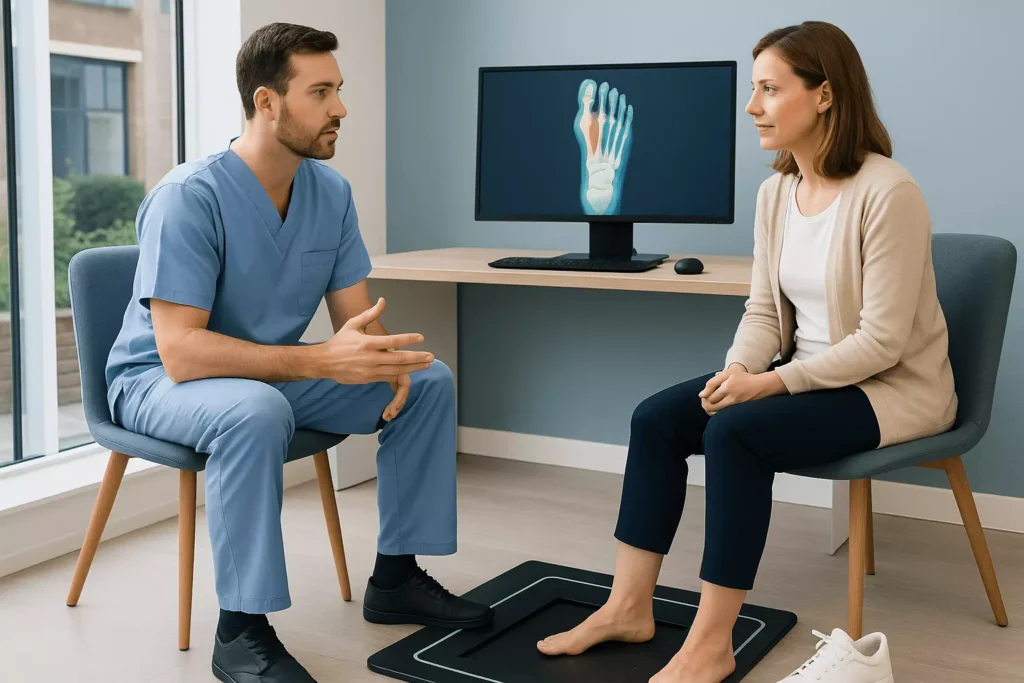
Non-Surgical Hammertoe Treatment Options
At Freedom Clinics, we offer a full spectrum of conservative therapies for hammertoe management under one roof.
Custom Orthotics and Conservative Therapies
- Gait analysis and pressure mapping to identify deformity patterns early
- Bespoke orthotic insoles to offload pressure and support toe realignment
- Toe splinting, taping, and stretching protocols to maintain joint flexibility
These treatments are effective for patients with flexible deformities, or those with biomechanical risk factors such as flat feet or elongated second toes.
External Referrals for Surgical Cases
In cases where hammertoes have become severely rigid or arthritic, our podiatry team will facilitate referrals to trusted foot and ankle surgeons. While Freedom Clinics does not perform surgery in-house, we remain closely involved in your care journey—from initial assessment to post-operative rehabilitation if needed.
Convenient, Patient-Centred Podiatry in Canary Wharf
With a central location and extended hours, Freedom Clinics offers accessible, high-quality care for London’s professionals and residents.
Location, Hours, Booking
- Canada Place Shopping Mall, 34 North Colonnade, London E14 5HX
- Open Monday to Friday, 7am–8pm | Weekend hours: 10am–4pm
- Call: 0203 197 9100 | Email: canarywharf@freedomclinics.com
- Online booking available 24/7
Our Podiatrists & Chiropodists


References
- American Academy of Orthopaedic Surgeons. (n.d.). Hammer Toe: Comprehensive Guide. OrthoInfo. Retrieved August 26, 2025, from https://orthoinfo.aaos.org/en/diseases–conditions/hammer-toe
- Goransson, M., & StatPearls. (2023). Hammertoe. In StatPearls. Retrieved August 26, 2025, from https://www.ncbi.nlm.nih.gov/books/NBK559268/

