
Plantar Fasciitis Treatment at Freedom Clinics – Expert Relief for Heel Pain
If you’re experiencing sharp heel pain, especially during your first steps in the morning, you may be dealing with plantar fasciitis—a painful condition that affects the plantar fascia, the connective tissue that supports your foot arch.
At Freedom Clinics, our specialist podiatrists deliver targeted care using advanced diagnostics like gait analysis and evidence-based treatments including shockwave therapy and custom orthotics. Our approach not only relieves heel pain but also corrects underlying biomechanical issues to prevent recurrence.
Medically reviewed by: Dr Priya Anand DPM. Last update: 18th May 2026
Book your appointment
Plantar fasciitis often results from repetitive strain, poor footwear, or biomechanical imbalances such as flat feet, overpronation, or tight calf muscles. It’s a common condition among runners, teachers, nurses, and anyone who spends prolonged periods on their feet.
Looking for plantar fasciitis treatment near you? Our Canary Wharf clinic in London offers accessible, specialist care—no referral needed.
Reclaim pain-free movement with personalised heel pain treatment from London’s trusted podiatry team at Freedom Clinics.
What Is Plantar Fasciitis and Why Does It Cause Heel Pain?
Plantar fasciitis is a degenerative inflammatory condition of the plantar fascia—the fibrous band of tissue that stretches from your heel bone (calcaneus) to your toes. Its role is to absorb impact and support the arch of your foot during movement.
When the plantar fascia becomes overloaded or overstretched, microtears develop, leading to irritation, inflammation, and stabbing heel pain. This is most noticeable during the first steps after sleep or rest, a hallmark symptom of plantar fasciitis.
Unlike a heel spur, which is a calcium deposit visible on imaging, the discomfort of plantar fasciitis stems from the inflamed fascia itself, not bone growth. Accurate diagnosis by a qualified podiatrist is essential to distinguish between causes of heel pain and to avoid ineffective treatments.
Understanding whether your pain is due to plantar fasciitis or a heel spur is the first step toward effective recovery. Our biomechanical experts can help you find lasting relief.
Who Is Most at Risk for Plantar Fasciitis?
While commonly associated with athletes, plantar fasciitis affects a wide demographic—from office workers to healthcare professionals. At Freedom Clinics, we see this painful condition arise from a combination of foot biomechanics, occupational stress, and lifestyle changes that place repetitive strain on the plantar fascia.
How Athletic Activity Increases Plantar Fascia Stress
Engaging in high-impact sports such as running, aerobics, or court-based athletics puts repeated stress on the plantar fascia. Without sufficient arch support, warm-up routines, or rest intervals, the connective tissue becomes inflamed, leading to classic fascia-related heel pain. This makes runners, dancers, and recreational athletes especially vulnerable to plantar fasciitis.
Why Standing for Long Hours Can Trigger Heel Pain
Prolonged standing is one of the leading occupational risk factors for fascia overload. Professionals such as teachers, nurses, retail staff, and factory workers often stand for 8–12 hours per day without sufficient foot recovery. Over time, this can cause microtears in the plantar fascia, resulting in chronic heel discomfort and reduced mobility.
How Foot Structure and Gait Abnormalities Increase Risk
Your natural foot type and walking mechanics significantly influence plantar fascia tension:
- Flat feet (fallen arches) reduce load distribution efficiency
- High arches concentrate force on the heel and forefoot
- Overpronation causes the ankle to roll inward, lengthening the fascia unnaturally
These biomechanical imbalances are measurable through our in-clinic gait analysis, allowing us to implement corrective interventions such as custom orthotics and postural re-training.
Does Weight Gain or Sudden Activity Cause Fasciitis?
Absolutely. A sudden increase in body weight places greater pressure on the plantar fascia, especially during walking or climbing stairs. Likewise, launching into new fitness programs like “Couch to 5K” without proper conditioning often leads to plantar fasciitis onset, particularly if compounded by poor footwear.
According to a systematic review published in Occupational Medicine, elevated body mass index (obesity) is moderately evidenced as a causal risk factor for plantar fasciitis due to increased mechanical loading on the plantar fascia.
Quick Tip from Our Podiatrists
People with tight calf muscles or restricted ankle mobility also experience elevated plantar fascia strain during gait—making daily stretching and strength exercises key to prevention.
How to Recognise the Symptoms of Plantar Fasciitis
Plantar fasciitis typically begins with subtle discomfort but can escalate into persistent, disabling pain if left untreated. At Freedom Clinics, we help patients identify the hallmark signs early—especially those that indicate inflammation of the plantar fascia and gait-related heel strain.
Morning Heel Pain: A Defining Symptom of Plantar Fasciitis
The most distinctive symptom is a sharp, stabbing pain in the heel upon taking your first steps in the morning. Overnight, the plantar fascia contracts, and when stretched again during standing, it reacts with intense discomfort—often felt at the medial aspect of the heel, near the calcaneus.
This classic “first-step” pain often improves with movement but tends to return daily, signalling an underlying fascia overload.
Foot Arch Tightness and Pain After Rest
People with early-stage plantar fasciitis often experience arch stiffness or a dull ache after sitting or resting for extended periods. This midfoot pain usually manifests:
- After long car journeys or desk work
- On standing after meals or TV breaks
- As general soreness along the underside of the foot

Heel Pain That Worsens Throughout the Day
As the condition progresses, pain often reappears:
- After long walks or runs
- When climbing stairs
- Following hours of standing at work
This load-induced heel pain may begin as minor fatigue but worsen with continued fascia irritation—indicating a shift from acute inflammation to chronic tissue stress.
Localised Heel Tenderness on Pressure
Patients with plantar fasciitis often report:
- Pinpoint tenderness at the front of the heel
- Pain when pressing near the plantar fascia’s insertion point
- Discomfort when walking barefoot on hard surfaces
These symptoms help distinguish plantar fasciitis from nerve compression, bursitis, or Achilles-related heel pain.
When to Seek Help from a Podiatrist
See a specialist if:
- Your symptoms persist beyond 10–14 days
- Pain returns after periods of rest or activity
- OTC solutions like rest, ice, or stretching provide minimal relief
- You’re beginning to limp or avoid placing full weight on your heel
How We Diagnose Plantar Fasciitis at Freedom Clinics
Accurate diagnosis is the foundation of effective plantar fasciitis treatment. At Freedom Clinics, our expert podiatrists use advanced diagnostic protocols to confirm the condition, identify contributing biomechanical factors, and rule out alternative causes of heel pain through a differential diagnosis approach.
Clinical Foot Assessment by a Specialist Podiatrist
We begin with a comprehensive foot and ankle examination that focuses on:
- Palpation of the plantar fascia insertion on the medial calcaneus
- Identifying tenderness, thickening, or tension
- Assessing ankle dorsiflexion and arch integrity
By evaluating the exact pain site and movement patterns, we differentiate plantar fasciitis from conditions like bursitis, tarsal tunnel syndrome, or heel pad atrophy.
Gait Analysis and Biomechanical Screening
Using real-time gait analysis, we assess how your body weight is distributed while walking. Key biomechanical abnormalities we identify include:
- Overpronation (excessive inward foot rolling)
- Flat feet or high arches affecting load distribution
- Leg-length discrepancies or pelvic tilt impacting stride
These factors are crucial contributors to plantar fascia overload and guide our tailored intervention plans, including custom orthotics and corrective exercises.
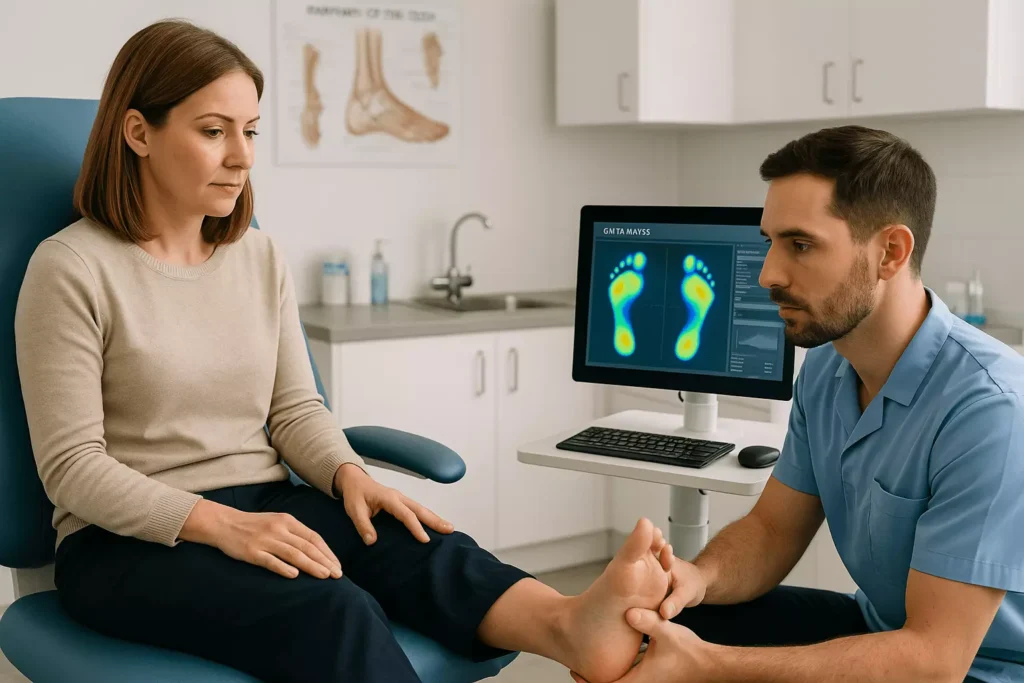
Plantar Pressure Mapping and Load Distribution Analysis
To further understand how pressure impacts the foot, we may use foot pressure mapping technology. This highlights:
- High-load zones across the heel and arch
- Imbalanced weight transfer during stance and propulsion
- Potential triggers for fascia inflammation
This granular view ensures precision in both diagnosis and treatment customisation.
Imaging Referrals for Advanced Assessment
For chronic or unclear cases, we refer patients for imaging studies, such as:
- Ultrasound scans to assess fascia thickening and soft tissue integrity
- X-rays to check for heel spurs, calcaneal stress fractures, or joint degeneration
- MRI to evaluate complex soft tissue or nerve-related heel pain
These tools confirm diagnosis when clinical signs are ambiguous or conservative treatments fail.
Differential Diagnosis: Excluding Other Causes of Heel Pain
Not every case of heel discomfort is caused by plantar fasciitis. Our podiatrists assess for other common culprits, including:
- Tarsal tunnel syndrome (posterior tibial nerve compression)
- Achilles tendinopathy
- Heel fat pad syndrome
- Stress fractures of the calcaneus
Accurate diagnosis ensures that treatment targets the true source of pain—avoiding delays and ineffective approaches.
Self-Care and Prevention Tips for Plantar Fasciitis
Managing and preventing plantar fasciitis starts with proactive habits that reduce stress on the plantar fascia and support optimal foot biomechanics. Whether you’re recovering from heel pain or seeking to avoid flare-ups, these strategies are clinically proven and podiatrist-approved.
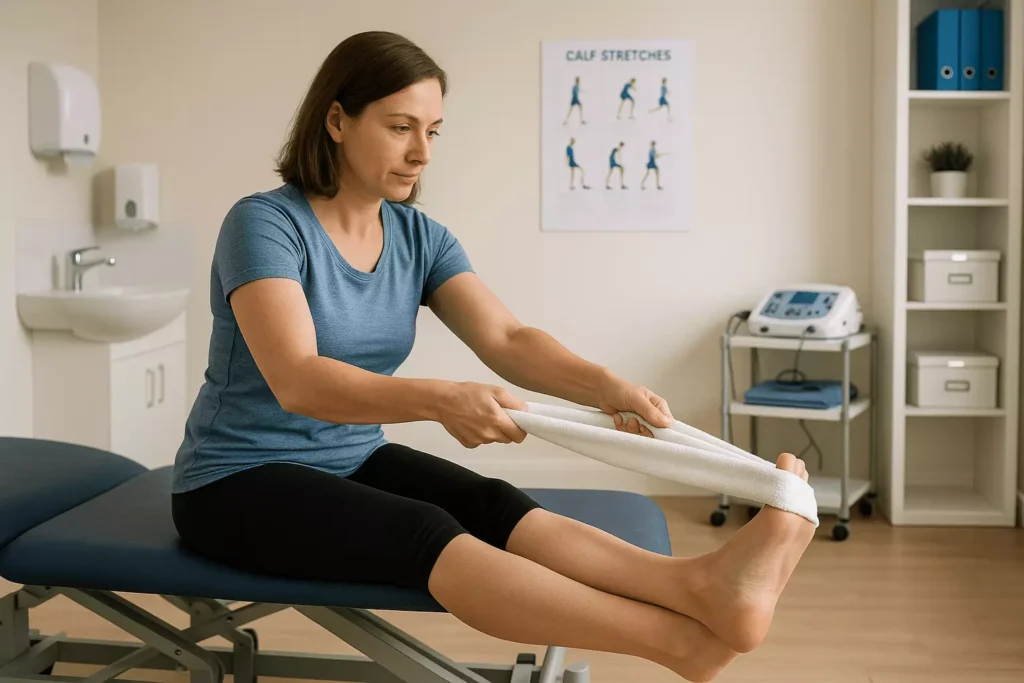
Daily Stretching for Plantar Fascia and Calf Muscles
Tight calf muscles and a rigid plantar fascia increase tension along the arch. Regular stretching improves tissue elasticity and reduces injury risk. Recommended exercises include:
- Plantar fascia stretch: Cross one leg over the other and pull your toes toward the shin
- Standing calf stretch: Target both the gastrocnemius and soleus muscles
- Frozen bottle roll: Combines myofascial release and cold therapy
These stretches are most effective when done in the morning and after prolonged sitting.
Selecting Supportive Footwear for Daily Use
Wearing supportive shoes is essential in both prevention and recovery. Look for footwear that offers:
- Arch support to reduce strain on the fascia
- Shock-absorbing midsoles to cushion impact forces
- Firm heel counters to stabilise rearfoot mechanics
Avoid flip-flops, high heels, and minimalist shoes that lack structural support.
Use of Orthotics to Address Biomechanical Imbalance
For patients with overpronation, flat feet, or uneven weight distribution, orthotic insoles can realign foot posture and offload the plantar fascia. At Freedom Clinics, we prescribe:
- Custom orthotics tailored via gait analysis
- Prefabricated inserts for general arch support
- Heel pads or cups to cushion calcaneal impact
Orthotic use is particularly effective in high-load professions and athletic populations.
Cold Therapy to Manage Fascia Inflammation
For acute symptom relief, cold therapy reduces inflammation and neural sensitivity:
- Apply an ice pack to the heel for 15–20 minutes post-activity
- Use ice massage via a frozen water bottle
- Combine with elevation if swelling is present
Cold application should follow activity or stretching to minimise microtrauma.
Weight Management and Activity Modification
Excess body weight amplifies the force on the heel with every step. Gradual weight loss helps alleviate pressure on the fascia. Similarly:
- Increase walking or running intensity gradually
- Alternate standing with seated breaks at work
- Use cushioned mats if standing for long periods
These habits help reduce fascia fatigue and prevent overload during repetitive tasks.
When to Escalate Self-Care to Professional Help
If you notice:
- Persistent heel or arch pain
- Limited benefit from home care
- Morning pain intensifying despite stretches
…it may indicate worsening plantar fasciitis. Early intervention from a podiatrist can halt progression and prevent chronic symptoms.
Professional Treatment Options for Plantar Fasciitis
If you’re dealing with persistent heel pain, our expert podiatrists at Freedom Clinics offer a full spectrum of evidence-based treatments to manage and resolve plantar fasciitis. We focus on addressing the root biomechanical causes and reducing plantar fascia inflammation using advanced therapeutic techniques.
Shockwave Therapy for Chronic Plantar Fascia Inflammation
Extracorporeal shockwave therapy (ESWT) is a highly effective non-surgical treatment for chronic plantar fasciitis. It works by delivering acoustic pulses into the fascia to:
- Stimulate tissue regeneration
- Break down adhesions and scar tissue
- Improve blood flow
- Decrease pain signalling from the fascia
Sessions are typically spaced weekly, with most patients experiencing a noticeable reduction in pain within 3–6 sessions.
Clinical research by The Active Group in a multicenter, randomised, placebo‑controlled trial demonstrated that extracorporeal shockwave therapy provided significantly greater success rates (94% at 12 months) compared to control for chronic plantar fasciitis.
Custom Orthotics for Gait Realignment and Fascia Offloading
Using foot pressure mapping and 3D gait analysis, we fabricate custom orthotic insoles tailored to your foot structure. These orthotics help:
- Redistribute pressure away from the heel and arch
- Correct overpronation and poor gait mechanics
- Reduce mechanical stress on the plantar fascia

They are suitable for everyday use, work environments, and athletic activities, and form a cornerstone of long-term prevention.
Manual Therapy and Functional Rehabilitation
To complement structural correction, we incorporate manual therapy and podiatrist-supervised rehabilitation:
- Soft tissue mobilisation to release fascia tension
- Targeted stretching of the gastrocnemius, soleus, and foot muscles
- Strengthening protocols for the posterior kinetic chain
These strategies enhance flexibility, improve stability, and prevent recurrence by correcting muscle imbalances and movement patterns.
Corticosteroid Injections for Severe Inflammation
When conservative care fails and pain persists, corticosteroid injections may be indicated:
- Delivered under ultrasound guidance to the fascia insertion
- Provide short-term anti-inflammatory relief
- Used sparingly to avoid risk of tissue weakening or rupture
Injections are always paired with offloading strategies, such as orthotics and modified activity.
Additional Supports: Taping, Night Splints, and Heel Lifts
To enhance treatment outcomes, we may recommend:
- Low-dye taping to reduce fascia strain during movement
- Dorsiflexion night splints to stretch the fascia overnight and minimise morning pain
- Heel lifts or cushions to decrease Achilles tension and offload heel impact
These modalities are especially effective during early or acute stages of plantar fasciitis recovery.
Why Choose Freedom Clinics for Plantar Fasciitis Treatment in London?
When it comes to resolving plantar fasciitis effectively, Freedom Clinics offers the ideal blend of specialist expertise, cutting-edge diagnostics, and tailored care—right in the heart of London’s Canary Wharf. Our reputation is built on precision, results, and patient trust.
Expert Podiatrists Specialising in Heel Pain
Our HCPC-registered podiatrists are leaders in treating plantar fascia injuries and related heel pain disorders. With a focus on biomechanical correction and fascia recovery, we treat:
- Acute plantar fasciitis
- Chronic fascia degeneration
- Gait-related stress injuries
Our clinicians understand how foot posture, ankle mobility, and lower limb alignment contribute to fascia overload and heel discomfort.
Technology-Led Diagnosis and Orthotic Precision
We use advanced diagnostics to guide every treatment decision:
- 3D gait analysis and plantar pressure mapping
- Motion capture to detect compensatory patterns
- Imaging referrals when structural or nerve-related issues are suspected
This data feeds into the fabrication of custom orthotic insoles, relieving fascia strain and correcting underlying mechanics.
Whole-Body Approach to Fascia Rehabilitation
We treat more than just your symptoms. Our integrated podiatry care plans include:
- Manual therapy and soft tissue mobilisation
- Progressive plantar fascia stretching and loading protocols
- Shockwave therapy for chronic or recalcitrant cases
These therapies ensure lasting relief and help prevent recurrence by addressing the root biomechanical causes.
Proven Track Record of Success
Join the thousands of satisfied patients across London who have trusted Freedom Clinics to resolve their plantar fasciitis. We are known for:
- Transparent, patient-first care
- 5-star reviews on Google and Doctify
- Clear outcomes from diagnosis to discharge
Take control of your heel pain today by booking a comprehensive plantar fasciitis assessment with our podiatry team.

Frequently Asked Questions
What is the fastest way to cure plantar fasciitis?
Do custom orthotics help with plantar fasciitis?
What is Shockwave Therapy for heel pain?
Can tight calf muscles cause plantar fasciitis?
Book a Podiatry Appointment Today in Canary Wharf, London
Struggling with plantar fasciitis, heel pain, or arch stiffness? Take the first step toward relief by booking a consultation with an experienced podiatrist at Freedom Clinics, your trusted London plantar fasciitis clinic based in Canary Wharf.
Address Heel Pain Before It Becomes Chronic
Early treatment of plantar fascia inflammation is critical to avoiding long-term complications. During your initial consultation, our podiatry team will:
- Perform a full biomechanical and gait assessment
- Diagnose the root cause of your foot or heel pain
- Recommend targeted solutions such as shockwave therapy, custom orthotics, or rehabilitation exercises
Addressing fascia tension early reduces recovery time and prevents re-injury.
Freedom Clinics – Central London Foot & Gait Specialist
Freedom Clinics
Canada Place Shopping Mall
34 North Colonnade, Canary Wharf, London E14 5HX
Easily accessible by Tube and DLR, our clinic is ideal for commuters, residents, and busy professionals.
Ready to Book Your Podiatry Consultation?
- Phone: 0203 197 9100
- Email: canarywharf@freedomclinics.com
- Online Booking: Secure your appointment now
We offer flexible hours Monday to Saturday, with same-week appointments often available.
What’s Included in Your First Appointment?
During your session with a Freedom Clinics podiatrist, you will receive:
- A detailed clinical evaluation of your plantar fascia and surrounding structures
- Motion-based gait analysis using digital tools
- A personalised care plan addressing biomechanical risk factors, fascia health, and return-to-activity strategies
Whether you’re dealing with morning heel pain, exercise-induced foot discomfort, or recurrent plantar fasciitis, our expert team is ready to help.
Begin Your Recovery with London’s Leading Heel Pain Clinic
Book today with Freedom Clinics, where precision podiatry meets compassionate care. Regain confidence in every step and move forward without plantar fasciitis pain.
Our Podiatrists & Chiropodists


References
- Gijon-Nogueron, G., et al. (2013). Plantar fasciitis and prolonged weight bearing: a systematic review. Occupational Medicine, 65(2), 97–102. https://academic.oup.com/occmed/article/65/2/97/1488760
- The Active Group. (2004). Extracorporeal shock wave therapy for the treatment of plantar fasciitis: a multicenter, randomized, placebo‑controlled clinical trial. Clinical Orthopaedics and Related Research. https://pubmed.ncbi.nlm.nih.gov/15134608/

