
Chiropractic Rehabilitation Exercises at Freedom Clinics
At Freedom Clinics, located in Canary Wharf, London, we use chiropractic rehabilitation exercises as a core clinical strategy to reinforce spinal adjustments, restore healthy movement, and support long-term recovery from musculoskeletal conditions.
Prescribed by qualified chiropractors, these evidence-based movement therapies are designed to retrain posture, strengthen stabilising muscles, and reduce chronic dysfunction. Whether you’re experiencing lower back pain, neck stiffness, shoulder imbalance, or simply seeking to improve mobility, rehabilitation exercises in chiropractic care provide a safe and targeted path to recovery.
Book your appointmentMedically reviewed by Tanesa Mohan (MChiro LRCC). Last update: 29 January 2026.
Table of Contents

Unlike generic gym workouts or passive stretches, our rehab protocols are based on your postural assessment, range of motion analysis, and overall treatment plan goals. They are tailored to address spinal function, reduce biomechanical compensation, and prevent the recurrence of pain symptoms.
Patients often ask:
- “Do chiropractors give you exercises?”
- “How do rehab exercises help after a spinal adjustment?”
- “Can chiropractic care improve flexibility and posture?”
This page answers those questions and more — explaining how chiropractic rehabilitation exercises fit into your care, how progress is measured, and how at-home protocols ensure lasting results beyond the clinic.
Understanding Chiropractic Rehabilitation Exercises
Definition and Clinical Function
Chiropractic rehabilitation exercises are structured, therapist-led movement routines that support recovery after manual spinal adjustments. They are designed to:
- Improve joint range of motion (ROM)
- Reinforce spinal alignment
- Enhance postural control
- Increase core strength
- Reduce pain linked to muscle imbalances
These exercises are typically introduced after a chiropractor performs an initial physical and biomechanical assessment, which may include:
- Posture scanning
- Functional movement testing
- Spinal segment analysis
Each exercise protocol is customised based on the patient’s needs and diagnosis — whether addressing disc pressure, pelvic tilt, or cervical spine instability.
By integrating chiropractic adjustments with corrective movement, Freedom Clinics ensures that patients receive care that not only treats the symptoms — but builds the physical capacity to prevent them from returning.
How Chiropractic Rehabilitation Exercises Differ from Physiotherapy
Choosing between chiropractic rehabilitation exercises and physiotherapy rehabilitation can depend on your condition, goals, and the nature of your musculoskeletal issue. While both involve movement-based therapy, their clinical purpose, treatment sequence, and focus areas are distinct.
Chiropractic Rehabilitation Exercises Target Spinal Function and Postural Control
Chiropractors prescribe rehabilitation exercises to:
- Reinforce the structural changes made during spinal adjustments
- Activate key postural stabilising muscles (like multifidus and core stabilisers)
- Restore neuromuscular control and spinal proprioception
- Reduce compensation patterns linked to poor alignment or dysfunction
Clinical trials conducted at the University of Kansas Medical Center showed that spinal stabilisation programmes significantly improved movement control, proprioception, and neuromuscular coordination in adults with chronic low back pain. Participants displayed measurable gains in trunk control and balance after targeted rehab sessions.
At Freedom Clinics, these exercises are introduced as part of a personalised treatment plan, typically following spinal manipulation. They are designed to help patients maintain spinal alignment, enhance postural integrity, and reduce the risk of relapse.
Physiotherapy Rehabilitation Focuses on Injury Recovery and Soft Tissue Healing
Physiotherapy rehabilitation exercises primarily support:
- Post-injury muscle reconditioning
- Soft tissue rehabilitation (e.g. sprains, strains, tendonitis)
- Post-surgical recovery protocols
Physiotherapists typically focus on restoring strength, flexibility, and functional capacity in peripheral joints and muscles — such as the shoulder, knee, or ankle. Rehab is often applied as a standalone recovery modality or after acute injury care.
In contrast to the spinal-centric model of chiropractic rehab, physiotherapy tends to address region-specific injuries and generalised functional deficits.

Integrated Chiropractic Rehab at Freedom Clinics
At Freedom Clinics, we offer a multimodal care framework that combines:
- Chiropractic adjustments
- Postural education
- Rehabilitation exercise programs
- Functional re-assessments
- At-home mobility protocols
This integrated approach ensures that patients benefit from both passive care (manual adjustments) and active care (movement-based rehabilitation). By embedding chiropractic rehabilitation exercises directly into the care plan, we support structural correction, improve patient autonomy, and accelerate functional recovery.
Why Chiropractors Prescribe Rehabilitation Exercises
At Freedom Clinics, chiropractic rehabilitation exercises are a core component of every personalised treatment plan. Chiropractors prescribe these exercises not simply to aid short-term recovery, but to reinforce spinal corrections, retrain muscular control, and prevent future dysfunction.
These exercises are evidence-based, goal-driven, and customised based on your biomechanical assessment, postural analysis, and treatment goals.
To Reinforce Spinal Alignment After Chiropractic Adjustments
Manual spinal adjustments restore joint motion and correct misalignments — but the body needs reinforcement to stabilise these gains.
Clinical practice guidelines developed with the Canadian Memorial Chiropractic College (CMCC) suggest that offering spinal manipulation as part of a multimodal therapy, which includes exercise, is a superior approach for managing chronic back pain. According to this institutional evidence, combining active exercise with manual care helps patients maintain structural improvements and reduce the likelihood of pain recurrence.
Chiropractic rehabilitation exercises provide the muscular support and neurological reprogramming needed to maintain improved alignment.
These exercises help:
- Activate deep postural stabilisers to support spinal segments
- Re-train movement patterns that reduce compensatory stress
- Improve neuromuscular control to hold joint positioning
- Lower the chance of misalignment relapse or muscular guarding
Without this reinforcement, the spine may gradually regress into dysfunction due to habitual postures or movement faults.
To Improve Postural Endurance and Functional Control
Postural collapse is a leading contributor to chronic spinal issues. Chiropractors prescribe rehabilitation exercises that strengthen the muscles responsible for maintaining upright, efficient posture throughout daily activity.
Common goals include:
- Building endurance in the deep core and cervical stabilisers
- Correcting habitual imbalances like anterior pelvic tilt or forward head posture
- Improving coordination between the spine and surrounding muscle groups
At Freedom Clinics, exercises are selected based on your posture profile:
- Scapular retraction for rounded shoulders
- Chin tucks for cervical alignment
- Bridge holds for pelvic control and lumbar stability
To Prevent Pain Recurrence and Support Long-Term Results
Chiropractors use rehabilitation exercises not only for recovery, but for prevention. Movement therapy empowers patients to take ownership of their health and minimise relapse.
Benefits include:
- Distributing spinal load more evenly during activity
- Enhancing balance, proprioception, and coordination
- Reducing dependency on passive care
- Creating sustainable movement habits that resist degeneration
At Freedom Clinics, rehab prescriptions evolve over time — guided by progress tracking tools and functional re-assessments to ensure they match your changing clinical needs.
Clinical Assessment Before Starting Chiropractic Rehabilitation Exercises
At Freedom Clinics, a thorough clinical assessment is always conducted before introducing any chiropractic rehabilitation exercises. This ensures that the exercise plan is aligned with your current functional capacity, spinal condition, and therapeutic goals — and that all movements prescribed are both safe and appropriate for your stage of care.
Chiropractors Assess Movement Function Before Exercise Prescription
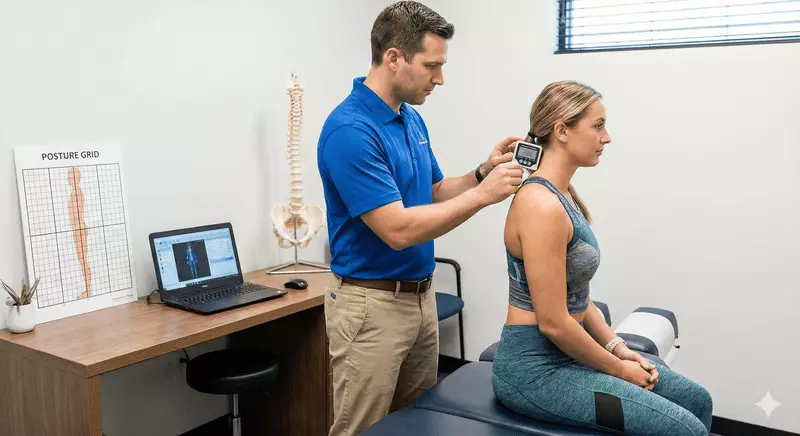
Our chiropractors use a detailed diagnostic protocol to evaluate how your body moves before beginning any rehab. This includes:
- Range of motion (ROM) testing across key spinal and peripheral joints
- Postural assessment to identify deviations or collapse patterns
- Dynamic movement screens to evaluate coordination, balance, and joint control
- Muscle testing for identifying weakness, inhibition, or overcompensation
These findings determine how rehabilitation exercises are selected and sequenced — ensuring maximum relevance to your postural needs and clinical presentation.
Chiropractors Identify Contraindications to Rehab Exercise
In some cases, rehabilitation exercises may be temporarily deferred due to clinical risks. Before beginning your exercise plan, our chiropractors check for:
- Disc herniations or nerve root compression
- Inflammatory joint disease or acute flare-ups
- Unstable spinal segments or ligamentous laxity
- Recent trauma, fractures, or post-surgical states
If any contraindications are found, your chiropractor will begin with manual therapy, pain relief protocols, or spinal stabilisation before reintroducing exercise.
Chiropractors Personalise Exercises Based on Diagnostic Findings
Once cleared for movement therapy, your chiropractor designs a customised rehabilitation plan using:
- Identified postural faults (e.g., rounded shoulders, pelvic tilt)
- Motor control imbalances between stabilisers and mobilisers
- Current pain-free movement thresholds
- Your unique functional and lifestyle demands
As your recovery progresses, exercises are retested, modified, or progressed to match your improved function.
Chiropractic Rehabilitation Exercise Protocols by Region and Goal
At Freedom Clinics, every chiropractic rehabilitation exercise protocol is tailored to the specific body region that requires correction, support, or restoration. By targeting each area with precision, we help patients recover from dysfunction, regain motor control, and achieve long-term spinal health.
This regional precision ensures that every movement contributes to the broader goals of your professional chiropractic care.
Lumbar Spine – Exercises for Core Stabilisation and Lower Back Recovery
Chiropractic rehabilitation exercises for the lumbar spine are focused on core stability, which is essential for patients with lower back pain.
Research by Harvard Medical School emphasises that core-stabilisation exercises are an evolving and highly effective strategy for reducing pain and improving function. Findings published by Harvard Health Publishing indicate that training the deep abdominal and spinal muscles improves the trunk’s capacity to support the lumbar segments, thereby providing a protective mechanism against the mechanical strains that contribute to chronic discomfort, essential for patients with:
- Lower back pain
- Lumbar disc compression
- Postural collapse in the lumbopelvic region
Goals include:
- Activating the transverse abdominis and multifidus
- Reducing load on the spinal discs
- Building hip-spine coordination
Recommended exercises:
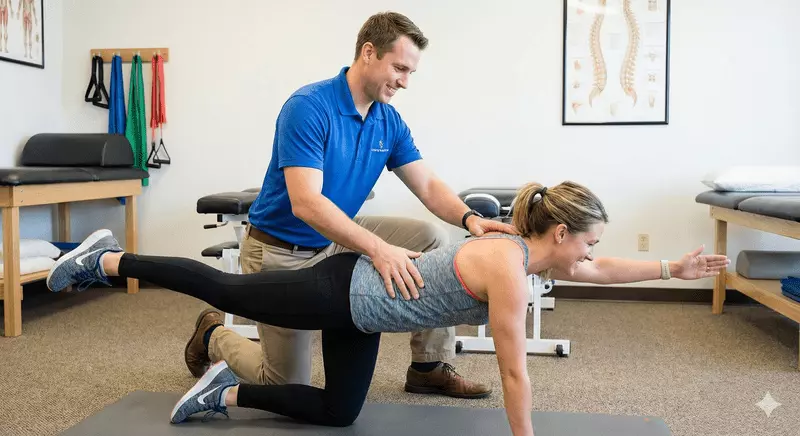
- Bird-dog (quadruped opposite reach)
- Supine glute bridges
- Side planks with regressions
- Dead bug holds with breathing control
Specifically retraining these deep tissues is a cornerstone of clinical management for chronic back pain.
Cervical Spine – Postural Re-education and Deep Neck Flexor Activation
Neck-focused chiropractic rehabilitation is used for:
- Forward head posture
- Neck tension headaches
- Cervical instability

Objectives:
- Retrain deep cervical flexor activation
- Decrease upper trapezius dominance
- Restore upright cervico-thoracic alignment
Prescribed movements:
- Wall-based chin tucks
- Isometric neck flexor holds
- Supine cervical nods
These protocols are vital for correcting postural distortions and reducing chronic neck pain symptoms.
Thoracic Spine – Mobility Restoration and Extension Strengthening
For patients with thoracic stiffness, slouched posture, or upper back fatigue, chiropractic rehab includes:
- Extension-based mobility drills
- Postural scapular activation
- Proprioceptive feedback for thoracic upright control
Typical exercises:
- Foam roller thoracic extensions
- Wall angels
- Prone Y raises
- Quadruped thoracic rotations
Pelvis and Hip – Glute Strength and Pelvic Stabilisation
Pelvic and hip rehabilitation protocols target:
- Anterior pelvic tilt
- Sacroiliac joint (SIJ) dysfunction
- Glute deactivation syndromes
Chiropractic rehabilitation exercises aim to:
- Reactivate gluteus medius and gluteus maximus
- Improve pelvic alignment during gait and load
- Correct overuse of lumbar extensors or hip flexors
Common exercises:
- Resistance band clamshells
- Single-leg glute bridge
- Hip airplane with reach
- Lateral step-down with control
Restoring this balance is often necessary for resolving compensatory issues like referred sciatic nerve discomfort.
Home-Based Chiropractic Rehabilitation Exercises
At Freedom Clinics, we believe that effective spinal recovery doesn’t stop when you leave the clinic. That’s why our chiropractors prescribe structured home-based chiropractic rehabilitation exercises to help patients maintain momentum between visits and accelerate their long-term musculoskeletal resilience.
Why Chiropractors Prescribe Home-Based Exercises
Chiropractors integrate at-home rehabilitation into your care plan for several reasons:
- To reinforce corrected movement patterns after spinal adjustments
- To maintain muscle activation and neuromuscular control between sessions
- To promote patient independence and responsibility
- To reduce recovery time through frequent, low-load exposure to therapeutic motion
These exercises are selected based on your clinical goals, postural imbalances, and functional test results — ensuring every home drill serves a measurable purpose.
What a Home-Based Chiropractic Rehab Program Typically Includes
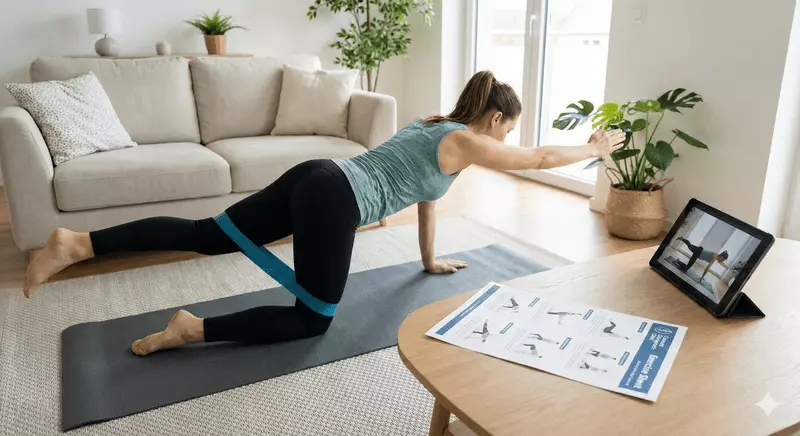
Each home-based chiropractic rehabilitation program is built around condition-specific and goal-specific outcomes. Common components include:
- Spinal mobility drills (e.g., cat-cow, thoracic reach-throughs)
- Postural training (e.g., scapular retractions, chin tucks)
- Core activation (e.g., glute bridges, dead bug holds, side planks)
- Balance and proprioception work (e.g., single-leg stance, tandem walking)
- Neck control exercises (e.g., supine cervical retraction, isometric holds)
These exercises are:
- Safe and equipment-free
- Prescribed with sets, reps, tempo, and breathing cues
- Adjusted regularly based on feedback and results
Drills such as scapular retractions are particularly effective at improving functional shoulder movement.
How Chiropractors Monitor and Progress Your Home Exercise Plan
Chiropractors at Freedom Clinics ensure your home-based chiropractic rehabilitation exercises are effective and safe by:
- Reviewing your execution in-person during follow-up visits
- Adjusting intensity, range, or complexity as needed
- Reassessing posture, mobility, and muscle activation to inform progression
- Providing visual aids, handouts, or digital platforms to reinforce adherence
Your program evolves as your body adapts — keeping pace with your recovery and helping you transition from pain relief to postural optimisation and spinal resilience.
Integrating Rehabilitation Exercises with Chiropractic Adjustments
At Freedom Clinics, we integrate chiropractic rehabilitation exercises with chiropractic adjustments to provide a complete approach to spinal recovery. This synergy between passive care (manual adjustments) and active therapy (targeted exercises) delivers faster relief, longer-lasting results, and greater patient independence.
Why Chiropractors Combine Adjustments and Rehabilitation Exercises
Chiropractic adjustments are effective in correcting joint misalignments and relieving nerve pressure. However, without postural retraining and muscle activation, these changes can regress. That’s why rehabilitation exercises are essential for:
- Stabilising joints post-adjustment
- Reinforcing optimal spinal positioning
- Reprogramming neuromuscular coordination
- Reducing recurrence of the original dysfunction
This combination ensures your spine not only moves better but also stays better aligned over time.
How Chiropractors Sequence Adjustments and Rehabilitation Exercises
At Freedom Clinics, each care plan is structured to maximise synergy between manual and active therapies. Typically:
- Chiropractors perform adjustments first to restore joint function and reduce pain
- Then, rehabilitation exercises are prescribed to stabilise and protect the new alignment
- Over time, the rehab plan progresses to address full-body mechanics and prevent relapse
This sequence turns passive structural change into active postural control and long-term function.
Benefits of Integrated Chiropractic Care
Patients who follow a combined treatment approach experience:
- Faster symptom resolution
- Fewer recurrences and flare-ups
- Improved posture and core activation
- Greater functional mobility
- A more sustainable recovery path
By integrating chiropractic rehabilitation exercises with your adjustment protocol, we help you not only recover, but evolve — reinforcing your alignment, your movement patterns, and your long-term resilience.
Reprogramming neuromuscular coordination in this way helps protect damaged spinal discs.

Frequently Asked Questions About Chiropractic Rehabilitation Exercises
At Freedom Clinics, we frequently address patient concerns around the use, safety, and progression of chiropractic rehabilitation exercises. The answers below reflect the clinical protocols we follow and are designed to support clarity, confidence, and better outcomes.
Are chiropractic rehabilitation exercises safe for all conditions?
Yes. Chiropractors carefully assess your spinal and neuromuscular status before prescribing any chiropractic rehabilitation exercises. These movements are tailored to your diagnosis, range of motion, and risk factors, ensuring safety even for acute or post-injury presentations.
How do chiropractic rehabilitation exercises differ from physiotherapy exercises?
Chiropractic rehabilitation exercises are directly aligned with your spinal adjustment outcomes. They focus on:
- Reinforcing spinal alignment
- Improving postural control
- Preventing joint relapse
Unlike general physiotherapy, chiropractic rehab is deeply integrated into your structural care plan, not just symptomatic relief.

How often should I perform my chiropractic rehab exercises at home?
Chiropractors typically recommend:
- Daily sessions in the corrective phase
- 2–3 times per week during maintenance
- Adjusted frequency based on your pain levels and clinical goals
Your chiropractor will set a customised cadence based on ongoing progress evaluations.
Do chiropractic rehabilitation exercises change as I improve?
Yes. Your program evolves with your body. As posture, strength, and control improve, your chiropractor will increase the complexity or intensity of your rehabilitation exercises — introducing new movement planes, resistance, or dynamic control drills.
Can I do chiropractic rehab exercises without seeing a chiropractor?
No — not safely or effectively. Chiropractors perform biomechanical diagnostics to ensure exercises are appropriate. Self-prescribing chiropractic rehabilitation exercises can reinforce dysfunction or exacerbate injuries. Always consult a qualified professional.

Our Chiropractors


References
- Alkhathami, K. et al. (2023). Effectiveness of spinal stabilization exercises on movement performance in adults with chronic low back pain. International Journal of Sports Physical Therapy. https://ijspt.scholasticahq.com/article/68024
- Bussieres, A. E., et al. (2018). Spinal manipulative therapy and other conservative treatments for low back pain: A clinical practice guideline. Journal of Manipulative and Physiological Therapeutics. https://www.chiropractic.ca/wp-content/uploads/2018/05/Bussieres-2018-Spinal-Manipulative-Therapy-and-Other-Conservative-Treatments-for-Low-Back-Pain.pdf
- Harvard Health Publishing. (2022). The best core exercises for lower back pain. https://www.health.harvard.edu/pain/the-best-core-exercises-for-lower-back-pain

