
Understanding the Chiropractic Treatment Plan
At Freedom Clinics, Canary Wharf, every chiropractic treatment plan is a structured, multi-phase care protocol tailored to your body, your lifestyle, and your recovery goals. Unlike one-off treatments, a well-designed chiropractic care plan helps correct root issues, improve function, and sustain long-term results.
Book your appointment
Patients often ask:
“Why do I need a treatment plan — can’t I just come in for a few sessions?”
The answer is simple: short-term relief rarely leads to lasting change. A structured plan ensures that we address the cause of your pain, not just the symptoms, and guide you toward recovery with clear milestones and adjustments as needed.
Each treatment plan includes:
- A phased roadmap, guiding you through:
- Phase 1 – Relief: reduce pain, swelling, and nerve irritation
- Phase 2 – Rehabilitation: restore strength, stability, and range of motion
- Phase 3 – Maintenance: support your posture and prevent recurrence with long-term care
- A personalised session frequency, determined by:
- The nature and severity of your condition
- How you respond to early treatment sessions
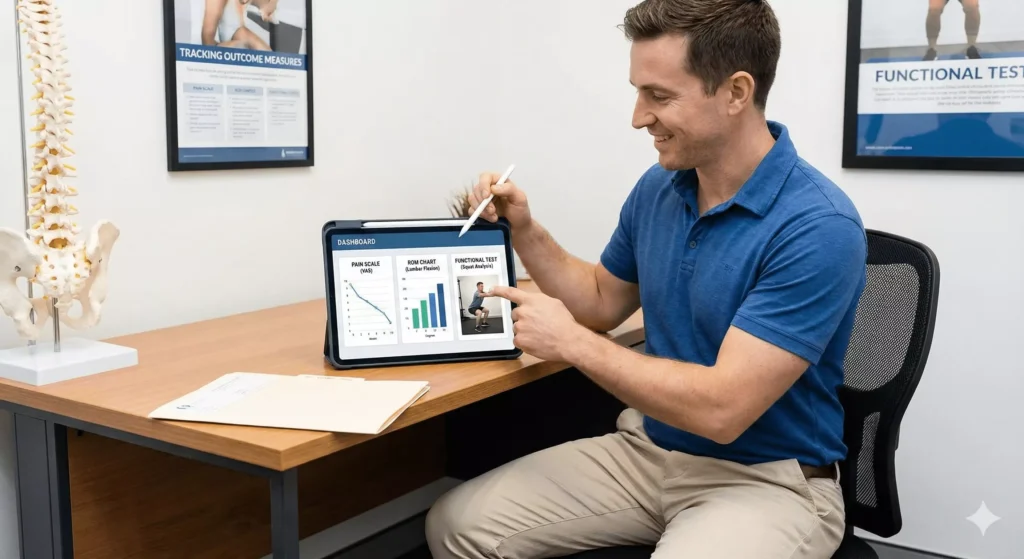
- Defined outcome checkpoints, assessed with:
- Range of motion (ROM) tests
- Pain scales (VAS) and symptom tracking
- Functional goals (e.g., lifting, walking, sleep)
- Ongoing home care support, including:
- Rehabilitation exercises to accelerate your recovery
- Ergonomic advice and posture corrections
- Sleep position coaching and movement education
Your chiropractic treatment plan is reviewed regularly. As we gather feedback and track your progress, we make evidence-based adjustments — increasing or decreasing session frequency, modifying techniques, and updating your rehab program.
By anchoring care in a clear, goal-driven treatment strategy, we give you the best possible chance for fast recovery, lasting relief, and improved function.
What to Expect on Your First Visit
Your first visit at Freedom Clinics Canary Wharf marks the beginning of your personalised chiropractic treatment journey. This initial consultation and patient intake session lays the foundation for your tailored treatment plan — identifying root causes of your symptoms and aligning care with your recovery goals.
Step 1: Your Patient Intake
Your appointment begins with a detailed chiropractic consultation, designed to capture:
- Your health history, including past injuries, medical conditions, and surgeries
- The nature of your symptoms, including duration, location, intensity, and triggers
- Key lifestyle factors such as work habits, sleep posture, and physical activity levels
This personalised intake ensures that your care protocol is medically sound and aligned with your expectations and wellness targets.
Step 2: Your Clinical Examination
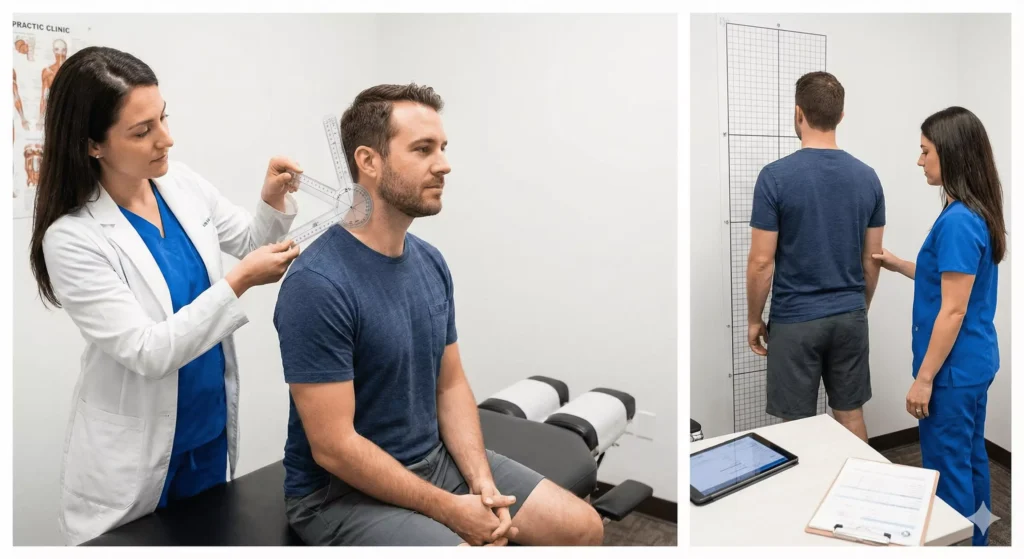
Following intake, we perform a comprehensive physical examination that may include:
- Spinal and postural analysis to check for misalignment or asymmetries
- Neurological testing to assess nerve function, reflexes, and muscular response
- Orthopaedic evaluations to identify joint restrictions, instability, or pain patterns
- Range of Motion (ROM) testing to quantify movement restrictions and flexibility loss
These objective tests help us diagnose underlying dysfunctions and shape your rehabilitation strategy with precision.
Step 3: Your Treatment Roadmap and Consent
We conclude your first visit by outlining your personalised chiropractic treatment plan, which includes:
- A clear explanation of clinical findings and their relevance
- Recommended session frequency, goals, and expected outcomes
- An overview of techniques we may use, such as adjustments or mobilisation
- What to expect during each phase of care
The General Chiropractic Council (GCC) in the UK states that registrants must obtain and record valid consent before commencing or amending assessment or care, and that consent is an ongoing process grounded in patient autonomy and clear explanation of benefits and risks. This codifies the practice of securing informed consent prior to treatment.
Before initiating treatment, we always secure informed consent — ensuring you fully understand and approve your plan before proceeding.
Answers to Common First Visit Questions
What happens during a chiropractic first visit?
We assess your health history, perform spinal and joint tests, and build your care plan.
Will I get treated during my first visit?
In most cases, yes — provided your assessment confirms you’re a good candidate for care.
How long is the first appointment?
It typically lasts 45–60 minutes, depending on the complexity of your condition.
Is the plan the same for everyone?
Not at all. Your treatment is tailored to your assessment results and personal health goals.
By the end of your first appointment, you’ll leave with a clear understanding of your diagnosis, a structured treatment strategy, and confidence in the personalised plan ahead.
How We Determine Your Session Frequency
Your session frequency — how often you receive chiropractic care — is a core component of your structured treatment plan. It plays a crucial role in determining your recovery timeline, long-term results, and how quickly you can return to full function.
At Freedom Clinics, we don’t generalise. We calculate your optimal care cadence using clinical findings, your personal health goals, and how your body responds in the early stages of treatment.
What Affects Your Chiropractic Session Frequency?
Wondering how often you should see a chiropractor? The frequency of your visits is personalised and influenced by:
- Condition severity
Acute pain or injury often requires a higher frequency of care (2–3× per week initially). - Symptom duration
Chronic issues may call for extended plans with measured progression. - Functional impairment
Limited mobility, poor posture, or high daily demands increase treatment frequency. - Response to initial care
Your body’s early reaction to adjustments helps guide future session scheduling. - Patient goals and lifestyle
Athletes, desk workers, or individuals managing stress may need a different pace of care.
Your session frequency is always tailored — based on your clinical profile and desired outcomes, not a fixed formula.

Our Evidence-Based Frequency Guidelines
Here’s a general outline of how treatment intervals evolve through your care phases:
| Phase of Care | Objective | Session Frequency | Estimated Duration |
|---|---|---|---|
| Relief Phase | Reduce pain and inflammation | 2–3× per week | 2–4 weeks |
| Rehabilitation Phase | Restore movement, stability & strength | 1× per week | 4–8 weeks |
| Maintenance Phase | Prevent recurrence & promote wellness | 1× per month (or as needed) | Ongoing |
These guidelines adapt dynamically based on outcome measures and patient feedback. No two recovery journeys are the same.
Reassessing and Adjusting Frequency
Your session frequency is never static.
We continuously reassess progress using:
- Pain scales (e.g., VAS)
- Range of motion testing
- Posture and movement analysis
- Functional benchmarks (e.g., walking, sleeping, lifting)
Every 4–6 sessions, we evaluate whether your visit schedule should increase, decrease, or shift focus — ensuring care remains precise, efficient, and goal-driven.
Patient Questions About Frequency
How many chiropractic sessions will I need?
Most plans start with 8–12 sessions across the first 4–6 weeks. We reassess and adjust from there.
Can I reduce the number of visits if I’m feeling better?
Possibly — we’ll advise based on healing progress and whether deeper correction is still needed.
Will I need long-term maintenance sessions?
Ongoing care helps many patients prevent relapse and maintain peak function.
What if I can’t commit to the recommended schedule?
We’ll work with your availability to create the best possible recovery structure — without compromising outcomes.
By designing your session frequency around real data and measurable progress, we ensure that every visit works smarter, not harder — helping you recover faster, stay pain-free longer, and feel empowered throughout your care journey.
Monitoring Progress & Outcome Measures
At Freedom Clinics, we believe the best chiropractic care is evidence-informed and outcome-focused. That’s why we embed a structured progress monitoring framework into every patient’s treatment journey.
We use a blend of clinical outcome measures and real-time reassessments to:
- Track your recovery accurately
- Adapt your session frequency as needed
- Ensure you’re always progressing toward your recovery goals
What Is Chiropractic Progress Monitoring?
Progress monitoring is the ongoing evaluation of your clinical improvements across multiple dimensions — including pain, mobility, posture, and function.
Many patients ask: “How do chiropractors know if treatment is working?”
Our answer: We track it using measurable, objective benchmarks reviewed at every key milestone.
Key Outcome Measures We Use
We use several types of clinical outcome measures to track how you’re responding to care:
| Outcome Measure | What It Tells Us | Tools & Techniques |
|---|---|---|
| Pain Scores | Changes in symptom intensity | Visual Analogue Scale (VAS), NRS |
| Range of Motion (ROM) | Improvements in joint flexibility & restriction | Goniometer tests, mobility assessments |
| Functional Benchmarks | Your ability to perform daily movements | Sitting/standing duration, walking/lifting capacity |
| Postural Analysis | Shifts in alignment or compensation | Digital scans, physical assessment |
| Neurological Checks | Nerve integrity and reflex response | Sensory testing, reflex tapping, motor strength |
These metrics provide a 360-degree view of your clinical picture, helping us refine care with every session.
When and How Reassessments Happen
We conduct structured clinical reassessments:
- At the end of each care phase (e.g., relief → rehab)
- Every 4–6 sessions during active treatment
- Whenever progress stalls or changes unexpectedly
During reassessments, we compare your new data to baseline results and evaluate your readiness to transition to the next phase.
How Outcome Data Guides Treatment Changes
We use outcome data to:
- Adjust session frequency for faster or slower responders
- Modify techniques (e.g., from adjustment to soft tissue release)
- Re-align short-term goals to match current function
- Identify when specialist referral or diagnostics may be required
For example, if your pain scores drop but your ROM remains limited, we may shift toward rehabilitation exercises to restore flexibility.
FAQs About Outcome Tracking
How do chiropractors measure treatment progress?
We use objective outcome measures like pain scales, ROM tests, and posture evaluations to monitor improvement.
Will I be shown my progress data?
Yes — you’ll receive updates during reviews and can request a summary at any point.
What if I’m not improving as expected?
We adapt your care strategy, investigate other contributing factors, or explore additional treatments if needed.
Are progress reviews part of every phase?
Absolutely. From your first visit to your final reassessment, progress tracking is embedded throughout your care plan.
A Task Force convened by the U.S. National Institutes of Health (NIH) recommends standardised reporting for chronic low back pain that includes core outcomes such as pain intensity (e.g., VAS/NRS) and physical function, alongside a minimum dataset. This supports routine use of validated pain scales and functional measures to track clinical progress.
The Freedom Clinics Advantage
Our data-driven approach ensures that your chiropractic journey is guided by more than just intuition. Every treatment milestone, adjustment decision, and care transition is rooted in your progress — as measured by real outcomes.
This not only helps you heal faster but also keeps your care transparent, adaptive, and aligned with your goals.
Integrating Home Exercises & Lifestyle Advice
Your home exercise routine is a vital extension of your personalised chiropractic treatment plan. At Freedom Clinics, we integrate both at-home rehabilitation and lifestyle modifications to accelerate recovery, build spinal stability, and promote long-term musculoskeletal health.
These self-management strategies empower you beyond your sessions — helping you stay aligned, active, and symptom-free every day.
Why Home Exercises Matter in Chiropractic Care
Home exercises reinforce the work done during your in-clinic treatments by:
- Strengthening supporting muscles
- Enhancing flexibility and joint control
- Maintaining spinal alignment between sessions
- Supporting injury prevention and resilience
You might wonder: “Why do I need home exercises if I’m already being adjusted?”
Because chiropractic adjustments realign, but exercises stabilise. Together, they ensure your results are both fast and lasting.
Types of Prescribed Exercises
We personalise your home movement programme based on your condition, mobility level, and treatment phase. These typically include:
| Condition Focus | Example Exercises |
|---|---|
| Low Back Pain | Bird-dog, pelvic tilts, spinal decompression |
| Neck Pain/Tension | Chin tucks, scapular squeezes, resistance band pulls |
| Postural Dysfunction | Wall angels, core activation drills, glute bridges |
| Joint Stiffness | Controlled mobilisations, proprioceptive retraining |
All exercises are demonstrated during your visit, with clear instructions to ensure correct technique and progression at home.
Lifestyle Adjustments for Long-Term Results
Lifestyle changes are a powerful part of your recovery — especially if daily habits are contributing to your symptoms.
We provide individualised guidance on:
- Workstation ergonomics: screen height, chair setup, lumbar support
- Sleep posture: optimal mattress type, pillow positioning
- Stress management: breathing drills, desk posture resets
- Activity pacing: modifying workload intensity during recovery
These behavioural adjustments reduce physical strain and improve your body’s ability to recover between sessions.
How Self-Management Boosts Your Recovery
Embedding self-management strategies into your daily routine has far-reaching benefits:
- Improves treatment outcomes and speeds recovery
- Builds movement habits that prevent symptom recurrence
- Reduces the need for frequent manual therapy
- Encourages autonomy and body awareness
Concerned about time? Even 10 minutes a day of focused movement can dramatically enhance your healing capacity.

FAQs: Home Exercises & Chiropractic Support
Do I have to do the exercises every day?
We tailor your plan to be realistic and sustainable. Most routines require just 10–15 minutes daily.
Can I do them wrong and cause injury?
We teach every movement step-by-step in the clinic. You’ll only be prescribed safe, clinically approved movements.
What kind of lifestyle changes actually help?
Ergonomic improvements, stress management, and sleep hygiene all make a significant difference — especially in chronic or posture-related conditions.
Will I need to do these exercises forever?
Many patients continue a core set of movements for wellness maintenance — much like stretching or going to the gym.
Empowerment Beyond the Adjustment Table
Your healing doesn’t stop at the end of a session. By integrating targeted home exercises and lifestyle improvements, we equip you with the tools to actively participate in your recovery and protect your results long after formal treatment ends.
This self-directed approach creates stronger outcomes, reduces flare-ups, and ensures your progress is sustainable.
You can accelerate progress with our guided rehabilitation exercises so your at-home work reinforces every in-clinic adjustment.
Transitioning to Maintenance & Preventative Care
Completing your active treatment is a major achievement — but sustaining those results requires an intentional next step. At Freedom Clinics, we support your recovery long-term by transitioning you into a structured maintenance care plan and a preventative wellness strategy.
Think of it as ongoing dental checkups — but for your spine. The goal is to stay well, not just get well.
What Is Maintenance Care?
Maintenance care refers to periodic chiropractic sessions after you’ve completed your main treatment programme. These visits focus on:
- Preserving spinal alignment
- Preventing the recurrence of symptoms or dysfunction
- Optimising posture and joint function
- Monitoring musculoskeletal health proactively
This stage of care forms the foundation of your long-term spinal wellness strategy.
How Maintenance Differs from Active Treatment
| Aspect | Active Treatment | Maintenance Care |
|---|---|---|
| Goal | Correct dysfunction, relieve symptoms | Sustain outcomes, prevent relapses |
| Visit Frequency | 1–2× per week | Once every 3–6 weeks |
| Focus | Clinical correction | Functional monitoring and optimisation |
| Patient Profile | Symptomatic, functionally limited | Stable, pain-free, independent |
Common question: “Why would I continue chiropractic care if I feel fine?”
Because pain-free doesn’t mean dysfunction-free — spinal issues often build silently over time.
When You’re Ready to Move into Maintenance
You’ll typically transition when:
- Pain levels are consistently low or absent
- Functional goals (mobility, posture, strength) have been met
- You’re confident and consistent with self-management strategies
- Your progress has plateaued at a healthy baseline
We’ll evaluate your clinical outcome measures and discuss your goals before adjusting to this new phase.
Preventative Care Strategies to Support Your Spine
Preventative care expands beyond adjustments. It includes tools and habits to reduce daily strain, enhance resilience, and support total-body health:
Home Exercise Continuity
- Maintain spinal and core strength
- Support joint mobility and muscular balance
- Reduce sedentary deconditioning
Ergonomic & Lifestyle Supports
- Workstation setup reviews
- Sleep hygiene (mattress, pillow positioning)
- Posture and movement coaching
- Recovery planning for high-demand lifestyles
Together, these interventions form your personalised relapse prevention plan.
FAQs About Maintenance & Prevention
Is maintenance care covered by insurance?
Some policies support preventative care — we’ll help you verify your benefits.
Can I just come back if pain returns?
Of course, but preventative care often reduces the need for reactive treatment and keeps you performing at your best.
How often should I come for maintenance sessions?
Most clients benefit from monthly visits, but frequency depends on your stress load, posture habits, and activity level.
Is there proof that preventative chiropractic care works?
Yes — studies show it reduces relapse rates, improves function, and enhances quality of life.
Your Long-Term Spinal Wellness Plan
Your spinal health journey doesn’t stop at recovery — it evolves into maintenance. By embedding ongoing chiropractic care and preventative strategies into your lifestyle, you build resilience, reduce re-injury risk, and support optimal performance in every aspect of life.
To keep results stable after discharge, explore our personalised maintenance care schedule and relapse-prevention strategies.
At Freedom Clinics, we’re here not just to fix, but to fortify — so your results last well beyond your last adjustment.
What to Expect at Freedom Clinics
From your first step into Freedom Clinics, your experience is designed to feel smooth, informative, and empowering. Every part of our clinic onboarding process is tailored to deliver not just comfort — but clinical clarity, outcomes, and a personalised chiropractic treatment plan from day one.
We believe that a great patient experience begins with transparency, respect, and results-focused care.
Your First Chiropractic Consultation – Step-by-Step
Wondering what your initial visit will involve? Here’s what to expect:
1. Warm Welcome & Check-In
You’ll be greeted by name, assisted through any paperwork, and introduced to your care team.
2. Health History & Patient Goals
We discuss your medical background, current symptoms, and personal recovery objectives.
3. Orthopaedic & Neurological Assessment
A detailed exam evaluates joint function, muscle activation, spinal posture, and reflex patterns.
4. Baseline Outcome Measures
We record key data: pain scores, range of motion, functional limitations — essential for progress tracking.

5. Personalised Treatment Plan
Using your clinical findings, your chiropractor designs a structured care roadmap with staged goals and milestones.
6. First Treatment (if appropriate)
Most patients begin hands-on care at their first visit — this may include spinal adjustments, mobilisation, or soft tissue therapy.
Making Your Clinic Journey Smooth & Effective
Everything about your time with us is structured for both comfort and clinical success:
- Online Booking & Digital Reminders
Easily manage appointments and receive reminders — no paperwork headaches. - Progress Monitoring Built-In
Regular reassessments ensure your plan stays aligned with your recovery pace. - Clear Communication Always
From session expectations to insurance coverage, we explain it all — clearly and openly.
FAQs About Your Visit
What happens during my first chiropractic consultation?
You’ll undergo a full assessment, receive your diagnosis, and (if appropriate) begin your treatment plan.
Do I need to bring anything with me?
Just wear comfortable clothing and bring any relevant medical records or scans.
Is treatment included in my first session?
Yes, if there are no red flags or contraindications. Most patients start treatment immediately.
How soon will I receive my full treatment plan?
It’s created during your initial visit, based on your goals and exam findings.
Are outcome measures really necessary?
Absolutely — they help track your progress and guide your care phase by phase.
Ready to Start Your Treatment Plan?
Choosing Freedom Clinics means choosing a chiropractic clinic that values your time, listens to your goals, and supports your journey from assessment to outcome.
If you’d like a broader overview of conditions we treat and methods we use, visit our chiropractic hub.
Book your first appointment today and experience a new standard in chiropractic care — where every visit builds toward measurable recovery.
Reviewed by Tanesa Mohan

Our Chiropractors


References
- General Chiropractic Council. (2025). Guidance for Registrants: Consent (in effect 1 January 2026). https://www.gcc-uk.org/assets/publications/Consent_Guidance_2026_EN.pdf
- Deyo, R. A., Dworkin, S. F., Amtmann, D., Andersson, G., Borenstein, D., Carragee, E., … Weiner, D. K. (2014). Report of the NIH Task Force on research standards for chronic low back pain. The Journal of Pain, 15(6), 569–585. https://pubmed.ncbi.nlm.nih.gov/24787228/

