
Top of Foot Pain – Causes, Symptoms, Diagnosis & Treatment
Top of foot pain — also known as pain on top of the foot or dorsal foot pain — is a common issue that can disrupt everyday activities like walking, running, or even standing for extended periods.
At Freedom Clinics Canary Wharf, our podiatry specialists in London E14 diagnose and treat the full range of conditions affecting the dorsal (top) aspect of the foot, including:
- Extensor tendonitis from overuse or tight footwear
- Metatarsal stress fractures from repetitive impact or running
- Midfoot arthritis and bone spurs from degenerative joint changes
- Nerve entrapment syndromes such as compression of the superficial or deep peroneal nerves
Using a combination of expert podiatric assessment, advanced diagnostic imaging, and customised treatment plans, we work to identify the precise cause of top of foot pain and provide targeted solutions to restore mobility and comfort.
Medically reviewed by: Dr Priya Anand DPM. Last update: 18th May 2026
Book your appointment
Understanding Top of Foot Pain (Dorsal Foot Pain Anatomy & Risk Factors)
The top of the foot (dorsal surface) extends from the toes to the ankle and contains structures that are essential for movement and weight-bearing:
- Extensor tendons – responsible for lifting the toes and supporting movement
- Metatarsal bones – forming the top arch of the foot and absorbing load
- Midfoot joints including the Lisfranc joint – stabilising the arch
- Superficial and deep peroneal nerves – supplying sensation to the dorsal foot
Common triggers for pain on top of the foot include:
- Mechanical stress from running, jumping, or tight-fitting shoes
- Structural issues such as flat feet, tarsal coalition, or cuboid syndrome
- Inflammatory disorders including gout and arthritis
- Neurological causes such as nerve compression or entrapment
If you are experiencing dorsal foot pain when walking, running, or wearing shoes, our Canary Wharf podiatry team can provide a full assessment and evidence‑based treatment tailored to your condition.
Causes of Top of Foot Pain
There are multiple possible causes of top of foot pain, ranging from mechanical injuries to joint degeneration and nerve compression syndromes. At Freedom Clinics Canary Wharf, our podiatrists examine the location, severity, and activity triggers to pinpoint the underlying cause.
The most common causes fall into four categories: mechanical & overuse injuries, joint & structural conditions, biomechanical factors, and inflammatory or neurological disorders.

Mechanical & Overuse Causes
Extensor Tendonitis – A leading cause of pain on the top of the foot, extensor tendonitis involves inflammation of the extensor tendons along the dorsal midfoot. It is often caused by tight footwear, repetitive motion, or overtraining, with pain worsening when walking, running, or lifting the toes.
Metatarsal Stress Fractures – Small cracks in the metatarsal bones from repetitive impact, common among runners and athletes. Top of foot pain from stress fractures typically worsens during activity and improves with rest.
Dorsal Compression Syndrome – Compression of the dorsal foot joints during movement, often aggravated by shoe pressure or sports mechanics.
Joint & Structural Conditions
Midfoot Arthritis & Bone Spurs – Degenerative changes in the midfoot joints, particularly the Lisfranc joint, can cause persistent dorsal foot pain. Bone spurs may develop, pressing on soft tissues.
A review by the University of Sunderland and affiliated researchers found that degenerative (post-traumatic) arthritis of the midfoot — especially following a Lisfranc joint injury — frequently manifests as dorsal foot pain and is often associated with osteophyte (bone spur) formation pressing on adjacent soft tissue.
Lisfranc Injury – Damage to the Lisfranc ligament complex in the midfoot, often from twisting or high-impact trauma, results in severe swelling, bruising, and pain across the top of the foot.
Tarsal Coalition – A congenital fusion of tarsal bones that limits mobility, alters gait, and can lead to midfoot pain.
Biomechanical Conditions
Flat Feet (Pes Planus) – Flattened arches can increase pressure on the dorsal midfoot, leading to discomfort during weight-bearing activities.
Cuboid Syndrome – Dysfunction of the cuboid bone in the lateral midfoot can cause pain radiating to the top of the foot.
Inflammatory & Neurological Causes
Gout – Uric acid crystal deposits in joints, particularly the first metatarsophalangeal joint, may cause acute pain, swelling, and redness, sometimes radiating to the top of the foot.
Rheumatoid Arthritis & Osteoarthritis – Autoimmune or degenerative changes can affect midfoot joints, causing stiffness and chronic dorsal foot pain.
Nerve Entrapment – Compression of the superficial or deep peroneal nerves can cause tingling, numbness, or burning on the top of the foot.
Symptoms & Severity Indicators of Top of Foot Pain
The symptoms of top of foot pain range from mild discomfort to severe, activity‑limiting pain. Identifying your symptoms — and their severity — can help determine whether you need rest, self‑care, or a specialist evaluation at Freedom Clinics Canary Wharf.
Common Symptoms of Top of Foot Pain
Patients with top of foot pain often experience:
- Localised tenderness on the dorsal surface of the foot (often over the metatarsals or midfoot joints)
- Swelling along the top of the foot, which may extend toward the ankle
- Bruising or discolouration in cases of Lisfranc injury or metatarsal stress fracture
- Pain during walking, running, or pushing off the forefoot
- Sharp pain on dorsiflexion (lifting the toes), typical of extensor tendonitis
- Stiffness or reduced flexibility in the midfoot joints, common with arthritis
- Tingling, numbness, or burning sensations over the dorsal foot, suggesting nerve entrapment

Condition‑Linked Symptom Patterns
Different causes of top of foot pain have distinct symptom patterns, which help guide diagnosis:
| Symptom Pattern | Possible Condition |
|---|---|
| Pain worsens with activity, improves with rest | Metatarsal Stress Fracture |
| Pain aggravated by tight shoes | Extensor Tendonitis, Dorsal Compression |
| Sudden redness, swelling, severe joint pain | Gout, Acute Arthritis |
| Severe swelling, bruising, inability to bear weight | Lisfranc Injury |
| Tingling, numbness, burning on top of foot | Superficial or Deep Peroneal Nerve Entrapment |
Severity Indicators – When to See a Podiatrist
Seek urgent podiatry assessment at Freedom Clinics Canary Wharf if you experience:
- Inability to bear weight on the foot
- Rapid swelling or bruising after an injury
- Persistent top of foot pain lasting more than 1–2 weeks
- Neurological symptoms (numbness, tingling, or weakness)
- Recurring dorsal foot pain that interferes with daily activity
For related symptom patterns and podiatry guidance, see our podiatry symptoms hub.
Diagnosis of Top of Foot Pain at Freedom Clinics Canary Wharf
Accurate diagnosis is essential for effectively treating top of foot pain. At Freedom Clinics Canary Wharf, our podiatry specialists use a combination of clinical examination, diagnostic imaging, and gait analysis to determine whether your pain is caused by extensor tendonitis, metatarsal stress fracture, midfoot arthritis, Lisfranc injury, or nerve entrapment.
Physical Examination
The diagnostic process begins with a comprehensive physical assessment to locate pain and identify contributing factors:
- Palpation over the metatarsal bones, Lisfranc joint, and midfoot structures to pinpoint tenderness
- Range of motion testing to assess joint mobility and detect stiffness from arthritis or ligament injury
- Mulder’s sign and neurological evaluations for possible nerve compression or neuroma
- Gait observation to identify biomechanical issues such as flat feet, overpronation, or cuboid syndrome
Diagnostic Imaging
Where clinical assessment indicates possible structural or soft tissue injury, targeted imaging is used to confirm the cause of dorsal foot pain:
- X‑rays to reveal metatarsal stress fractures, Lisfranc injuries, or degenerative arthritis changes
- MRI scans to detect ligament tears, extensor tendonitis, or other soft tissue injuries
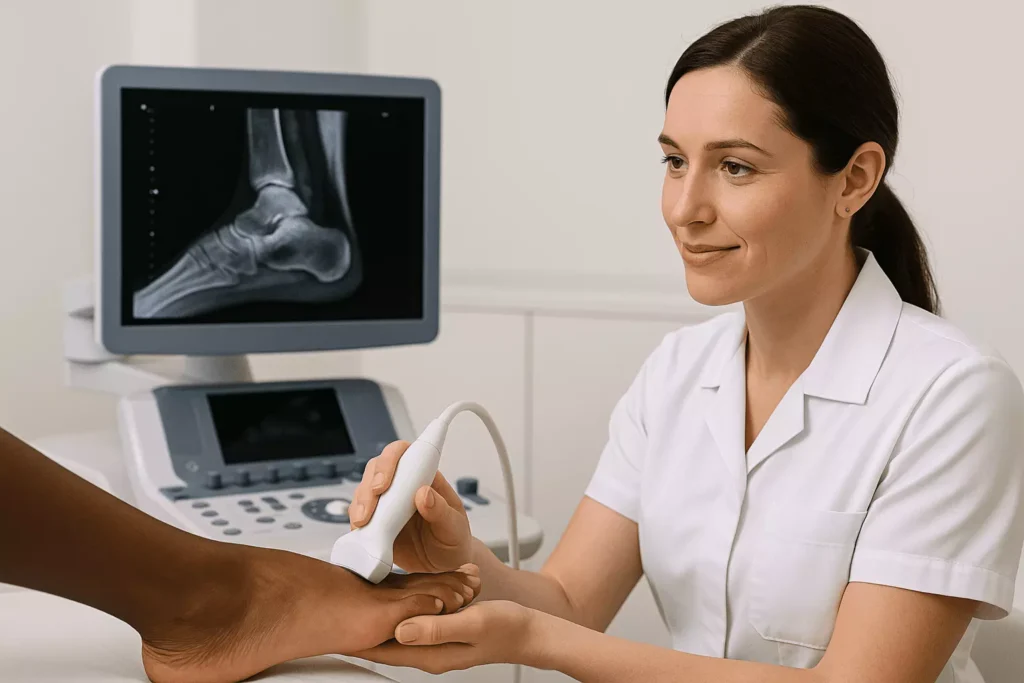
- Ultrasound for real‑time evaluation of tendon inflammation or nerve entrapment
- CT scans for complex conditions such as tarsal coalition
Gait & Biomechanical Analysis
Biomechanical imbalances are a common contributor to top of foot pain. Our gait analysis evaluates:
- Arch collapse in patients with flat feet
- Abnormal pronation or supination patterns that increase midfoot strain
- Loading patterns across the forefoot and midfoot linked to cuboid syndrome or midfoot overload
- Orthotic recommendations to correct gait issues and prevent recurrence
Diagnostic workflow and post-traumatic arthritis risks are covered in our Lisfranc injury diagnosis and treatment.
Treatment Options for Top of Foot Pain
The appropriate treatment for top of foot pain depends on the underlying cause. At Freedom Clinics Canary Wharf, our podiatry team creates individualised care plans to address conditions including extensor tendonitis, metatarsal stress fracture, midfoot arthritis, Lisfranc injury, and nerve entrapment.
Our goal is to relieve pain, restore function, and prevent recurrence through a combination of conservative care, orthotics, rehabilitation, and advanced medical interventions.
Conservative Management
For mild or early‑stage dorsal foot pain, particularly from overuse injuries such as extensor tendonitis:
- RICE protocol (Rest, Ice, Compression, Elevation) to reduce inflammation and swelling
- Activity modification to reduce stress from running, jumping, or repetitive loading
- Footwear adjustments to alleviate pressure on the dorsal midfoot

Orthotics & Supportive Devices
Custom orthotics are a cornerstone of treatment for top of foot pain related to biomechanical issues such as flat feet or cuboid syndrome:
- Bespoke insoles to redistribute load and reduce strain on the midfoot and dorsal structures
- Supportive braces or immobilisation boots to protect the foot during recovery from Lisfranc injuries or stress fractures
Rehabilitation & Physical Therapy
Restoring mobility and strength is essential for long‑term recovery from top of foot pain:
- Targeted strengthening exercises for the foot and ankle to improve stability
- Stretching routines for tendons and ligaments to prevent stiffness
- Gradual return‑to‑activity plans for athletes and active individuals
Medical Interventions
In persistent or severe cases of top of foot pain, advanced medical treatment may be necessary:
- Non‑steroidal anti‑inflammatory drugs (NSAIDs) to manage pain and swelling
- Corticosteroid injections for stubborn arthritis or tendonitis unresponsive to conservative care
- Surgical consultation for severe Lisfranc injuries, tarsal coalition, or advanced midfoot arthritis
When recurrent pressure is the driver, explore custom orthotics for midfoot pain.
Prevention & Long‑Term Care for Top of Foot Pain
Preventing top of foot pain is possible with the right combination of footwear, orthotic support, strengthening exercises, and ongoing podiatry care. At Freedom Clinics Canary Wharf, we focus on proactive strategies to minimise recurrence and maintain long‑term foot health.
Choosing the Right Footwear
Footwear plays a critical role in reducing the risk of dorsal foot pain:
- Choose shoes with sufficient dorsal clearance to avoid pressure on the extensor tendons
- Select shock‑absorbing soles to reduce metatarsal impact during walking or running
- Ensure a secure midfoot fit to prevent Lisfranc ligament strain
Research by the Foot Health Research Group at University of Southampton (2018) found that ill-fitting shoes — including those with insufficient upper (dorsal) clearance — are strongly associated with foot pain, including pain on the dorsal aspect of the foot.

Orthotics for Prevention
Custom orthotics can help prevent top of foot pain in patients with flat feet, cuboid syndrome, or other biomechanical issues:
- Support the foot arch to reduce dorsal loading
- Improve weight distribution to minimise pressure points on the top of the foot
- Reduce overuse injury risk for athletes and active professionals
Exercise & Strengthening
Strength and flexibility are key to preventing recurring top of foot pain:
- Stretch the extensor tendons and Achilles to maintain mobility
- Strengthen foot and ankle muscles to stabilise the midfoot
- Incorporate balance training to improve proprioception and reduce injury risk
Lifestyle & Routine Foot Care
Ongoing lifestyle adjustments help reduce the risk of dorsal foot pain:
- Maintain a healthy weight to reduce stress on the midfoot joints
- Modify activities to avoid repetitive overloading
- Schedule regular podiatry check‑ups at Freedom Clinics Canary Wharf for early detection and prevention of foot conditions
For assessment steps, footwear changes, and pressure offloading, see our flat feet podiatry guide.
FAQs About Top of Foot Pain
The podiatry team at Freedom Clinics Canary Wharf answers the most common questions about top of foot pain, helping patients understand its causes, diagnosis, treatments, and prevention strategies.
What is the most common cause of Top of Foot Pain?
The most common cause of top of foot pain is extensor tendonitis, often due to tight footwear or repetitive overuse. Other frequent causes include metatarsal stress fractures, midfoot arthritis, and nerve entrapment.
How do I know if my Top of Foot Pain is serious?
Top of foot pain may be serious if there is severe swelling, visible bruising, inability to bear weight, or if pain lasts more than 1–2 weeks. These symptoms can indicate a Lisfranc injury, stress fracture, or advanced arthritis, which require immediate podiatric assessment.
Can running cause Top of Foot Pain?
Yes. Running is a common trigger for top of foot pain due to repetitive stress on the metatarsals, extensor tendons, and midfoot joints. Proper running shoes, orthotics, and technique adjustments can reduce the risk of injury.

How is Top of Foot Pain diagnosed?
Diagnosis of top of foot pain at Freedom Clinics Canary Wharf involves:
- Physical examination to pinpoint the source of pain
- Diagnostic imaging (X‑ray, MRI, ultrasound) to identify fractures, ligament injuries, or tendon inflammation
- Gait analysis to detect biomechanical issues such as flat feet or cuboid syndrome
What is the best treatment for Top of Foot Pain?
Treatment depends on the cause. At Freedom Clinics Canary Wharf, we commonly recommend:
- RICE protocol for overuse injuries
- Custom orthotics to correct biomechanical imbalances
- Physical therapy to restore function
- Corticosteroid injections for severe inflammation or arthritis
How can I prevent Top of Foot Pain from coming back?
Prevention of top of foot pain focuses on:
- Wearing shoes with proper dorsal clearance to avoid tendon compression
- Using custom orthotics for support and pressure distribution
- Maintaining flexibility and strength with targeted exercises
- Booking regular podiatry check‑ups at Freedom Clinics Canary Wharf to monitor foot health
Book a Podiatry Appointment for Top of Foot Pain at Freedom Clinics Canary Wharf
If you’re experiencing top of foot pain, our expert podiatrists at Freedom Clinics Canary Wharf provide precise diagnosis and tailored treatment to help restore comfort and mobility. We serve patients across Canary Wharf, London E14, and the surrounding areas, ensuring expert care is conveniently accessible.
Contact Information
Address: Freedom Clinics, Canada Place Shopping Mall, 34 North Colonnade, Canary Wharf, London E14 5HX
Telephone: 0203 197 9100
Email: canarywharf@freedomclinics.com
Opening Hours
- Monday – Friday: 7 am–8 pm
- Saturday: 10 am–4 pm
- Sunday: 10 am–4 pm
Book Your Appointment Today
Booking your podiatry appointment is quick and easy:
- Online Booking: Book Your Appointment
- Phone: Call us on 0203 197 9100
- Visit in Person: Drop in to our Canary Wharf clinic during opening hours
Our podiatry team will:
- Conduct a comprehensive assessment of your top of foot pain
- Create a custom treatment plan targeting the root cause
- Provide preventive advice to reduce recurrence and maintain long‑term foot health
Learn more about our full podiatry and chiropody services in Canary Wharf.

Our Podiatrists & Chiropodists


References
- Kurup, H., et al. (2020). Midfoot arthritis — current concepts review. Foot & Ankle Surgery, 26(2), 179-186. https://doi.org/10.1016/j.fas.2020.04.005
- Buldt, A. K., et al. (2018). Incorrectly fitted footwear, foot pain and foot disorders: A systematic review and narrative synthesis. Journal of Foot & Ankle Research, 11(1), 43. https://doi.org/10.1186/s13047-018-0284-z

